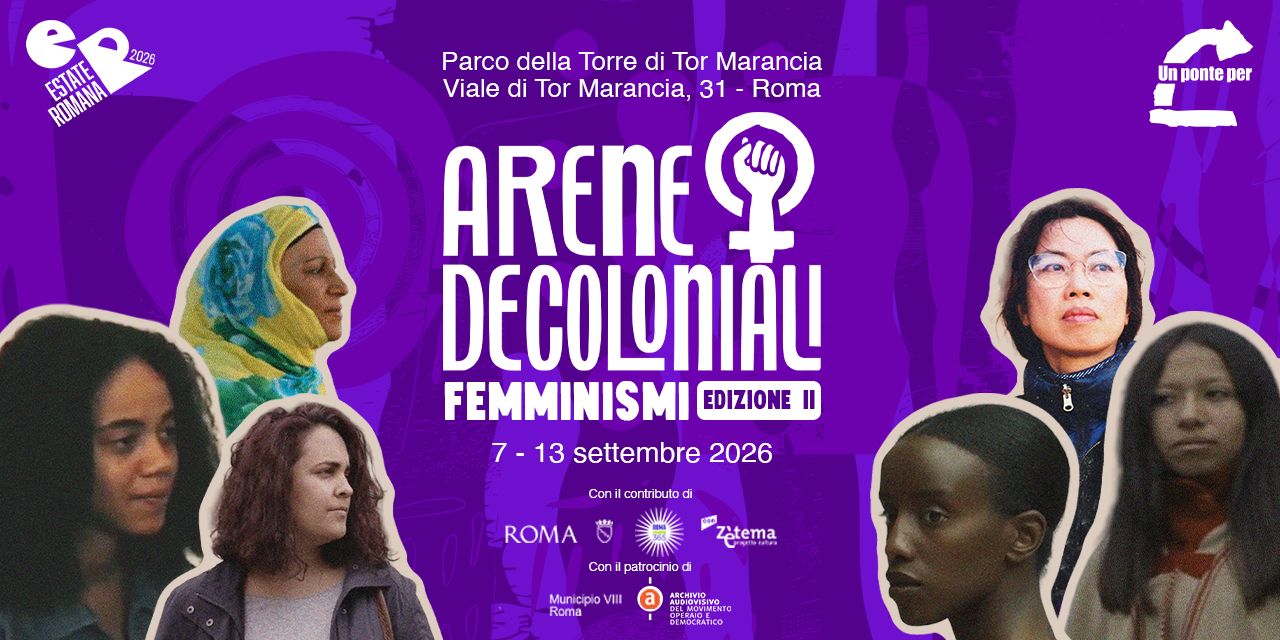
DECOLONIAL ARENAS 2026 KICKS OFF
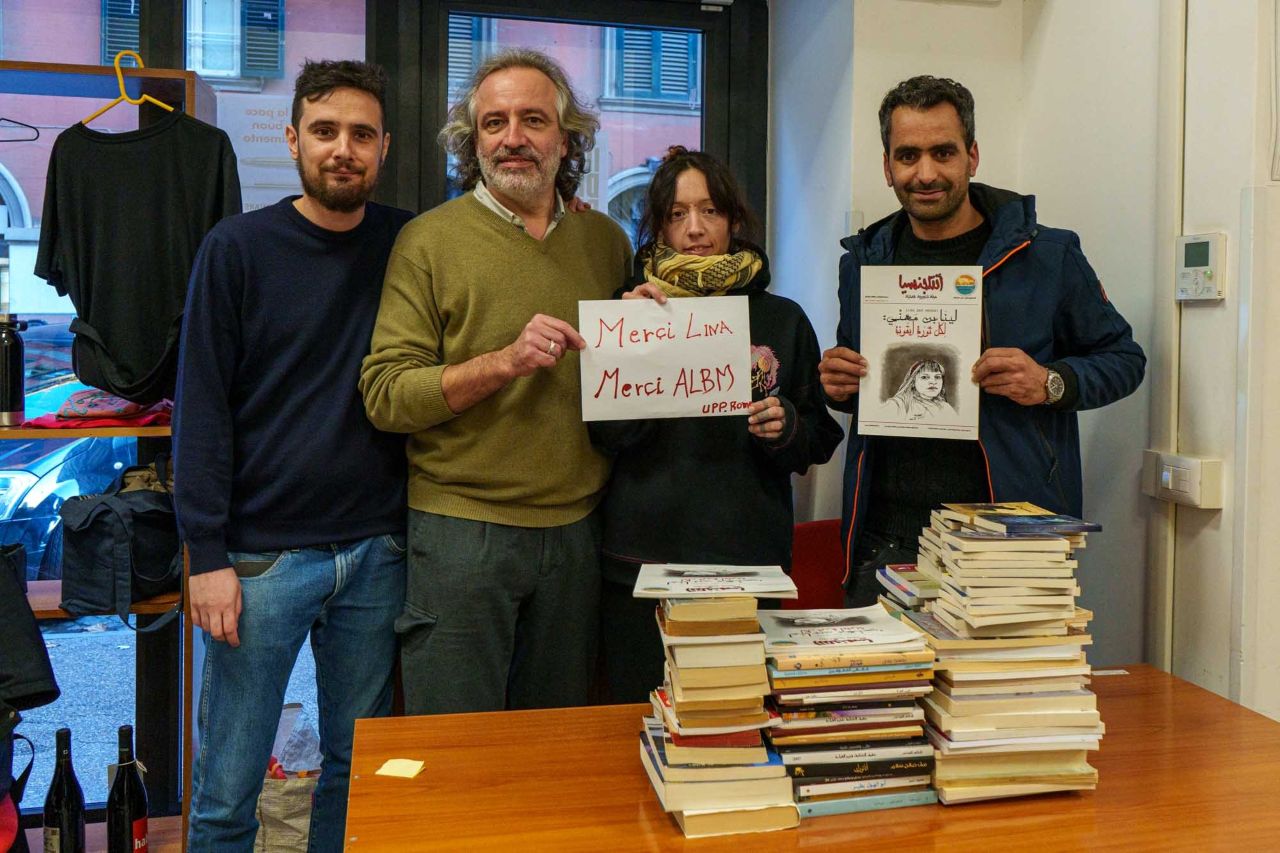
Entering prison with a trolley full of books is, every time, an act of mutual trust: we bring stories; the prisoners give us their time, their attention and their questions. This is the inspiration behind ‘Kutub Hurra – A Bridge of Books across the Mediterranean’: the simple yet radical idea that being able to read in one’s own language is the first step on a journey towards recognition and dignity.
Since 2022, we at Un Ponte Per have been working with the Tunisian association Lina Ben Mhenni, local partners in Iraq and Lebanon, and a network of Italian organisations to ensure that libraries in Italian prisons finally have books in Arabic, reading groups and spaces for dialogue amongst prisoners.
Whilst the Arabic-speaking prison population in our country accounts for around 30 per cent of the total, there is, by contrast, a near-total absence of books in Arabic in prisons, thereby depriving thousands of people of their right to read, to study and to access culture.
“Kutub Hurra” is therefore an initiative that puts into practice a vision of horizontal and decolonial cooperation: the books we take to Italian prisons are, in fact, donations from civil society in the southern Mediterranean, which cross the sea to break down borders.
For me, as someone who knows those places well, entering a prison is always an intense experience. It brings back memories of the visits I used to make, often together with the parents of my fellow activists, who were imprisoned during our period of protest in Morocco, between 2011 and 2019, against the largest silver mine ever built in North Africa.
I used to take school books with me, which I would give to prisoners during my visits so that they could continue their studies. This has helped me to understand, at least in part, the people I interact with today in Italian prisons. Perhaps this is also why, despite the challenges we face in doing so, I never give up. For me, being there is the least I can do.
Working with prisoners often means coming face to face with the deprivation of their most basic rights. That is why every activity must be organised with respect and sensitivity towards their anger, sadness and despair – feelings often caused by violent actions on the part of the security forces, or following the loss of their homes. That is why I do not give up when I find the reading room turned into a cell, or when I find the classroom dirty and without chairs, or even when people curse at me: my heart truly understands the hearts of those who live there every day, and the least I can do is spend a little time with these people, whilst continuing to work to ensure that their living conditions are improved.
That is why it is so important for me to be part of this project. Because when a prisoner writes to us saying that sitting down to discuss books ‘encouraged even the shyest among us to take part’, they are telling us that shared reading helps to restore a person’s sense of self beyond their crime and their sentence. When a note arrives at Sollicciano prison saying “thank you for thinking of us”, we are reminded that recognising a language is to recognise an identity and a history. When, in Padua, a mixed group of Arabic-speaking and Italian people read a novel by Ghassan Kanafani together, they are building a shared vocabulary within places often marked only by silence, misunderstanding and anger.
“Kutub Hurra” was set up precisely for this reason: to make the prison environment more inclusive, to use books as a tool for empowerment, and to connect civil societies on both sides of the Mediterranean through equal partnership. Not ‘aid’ handed down from above, but exchanges; not ‘projects for’, but ‘projects with’.
Over the years, we have expanded our work to 13 prisons, whilst also establishing partnerships with two public libraries, from Padua to Genoa, from Viterbo to Rome, via Florence, Pisa and Livorno. We have been able to deliver 1,032 Arabic-language books, which were sent from Tunisia, Iraq and Lebanon in 10 consignments, thereby reaching 1,500 prisoners, who have also taken part in over 200 group reading and writing workshops.
In the first few months of 2026 alone, we were able to deliver 100 books in Arabic to Padua Prison, whilst also organising an online meeting between prisoners and the Lina Ben Mhenni Association, thereby creating a symbolic and tangible bridge between the prison and the outside world, and ideally connecting the prisoners with the Mediterranean that unites us all, and with the solidarity networks across Italy that support the project. A further 80 books arrived at Bologna Prison, and 70 at Prato Prison.
These figures confirm that ‘Kutub Hurra’ is an initiative made possible by collaboration between organisations, associations and individuals working on the ground – over 18 in Italy alone – who, by building relationships of trust, bring to life the cultural activities that accompany the delivery of the books. This, in fact, becomes a genuine journey of inclusion and cultural exchange: a moment when people can once again feel human and enjoy their rights.
We wrote this some time ago in our biannual magazine, and we continue to reiterate it today: ‘Dignity comes from a book’ is not just a slogan; it is a way of looking at people and their rights, both inside and outside the walls of a prison.
“Kutub Hurra” continues along this path, with the same gentle determination as someone who hands a book through the bars and waits patiently for it to be opened.

Mohamed Ed-Daoudy – Project Assistant at Un Ponte Per