DECOLONIAL ARENAS 2026 KICKS OFF
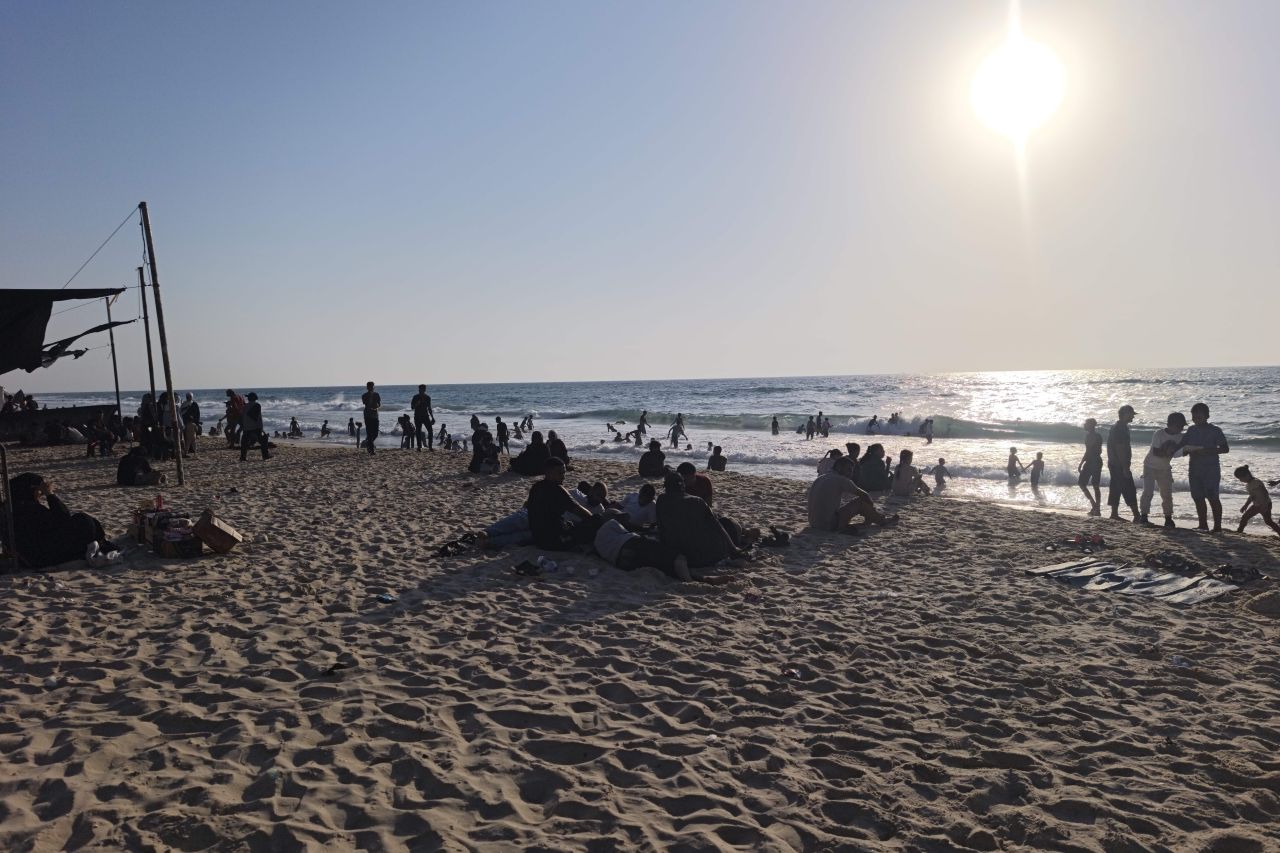
As Gaza’s summer heat intensifies, the sea has become one of the few places where people can escape the suffocating heat inside the tents. A few days ago, my friends from the displacement camps and I agreed to meet at sunset for a game of volleyball. We set up an old net on the sand and chipped in to buy a new ball, just to give ourselves two hours that felt a little closer to the life we knew before the genocide.
Some of the others had already arrived, while a few were still in the camps. I went to bring them with me, thinking I would only be gone for a few minutes.
Ahmed was the first person I went to see. He lives with his family in a camp not far from the beach and had been looking forward to playing with us.
When I reached Ahmed's tent, I called out for him, but his mother answered from inside.
"He's gone to the community kitchen (Takiya)"
It wasn't surprising. On many days, Ahmed and his family rely on the meal they receive from Takiya and can't afford to miss the food distribution.
I followed the road to the kitchen until I reached a line of men and children. Each of them was waiting quietly to get got meals.
I found Ahmed standing halfway through the line. He smiled when he saw me.
"We are all waiting for you," I said.
He laughed, lifted the pot slightly, and replied,
"Let me make sure we've got lunch first."
I stood beside him.
The heat was intense, even as sunset approached. There was no shade to protect people from the sun, and the line inched forward, one small step at a time, as everyone tried to reach the front before the food ran out.
A few minutes later, the food distribution began.
When it was Ahmed's turn, and shortly afterward, someone announced that there was no hot meals left.
Those at the end of the line turned around and walked back toward the tents.
Ahmed watched them and said quietly,
"Every day, people leave with nothing."
It was not an unusual scene. Even months after the so-called ceasefire, thousands of families across Gaza still rely on community kitchens for their daily meal. But these kitchens can only serve what supplies are available. When food deliveries are delayed or stocks run out, many families have no choice but to return to their tents empty-handed.
Together, we headed toward the neighboring camp.
On the way to the beach, we came across another line. This time, it wasn't people waiting for food, but rows of empty plastic jerrycans with their owners standing nearby, watching the road and waiting for the water truck.
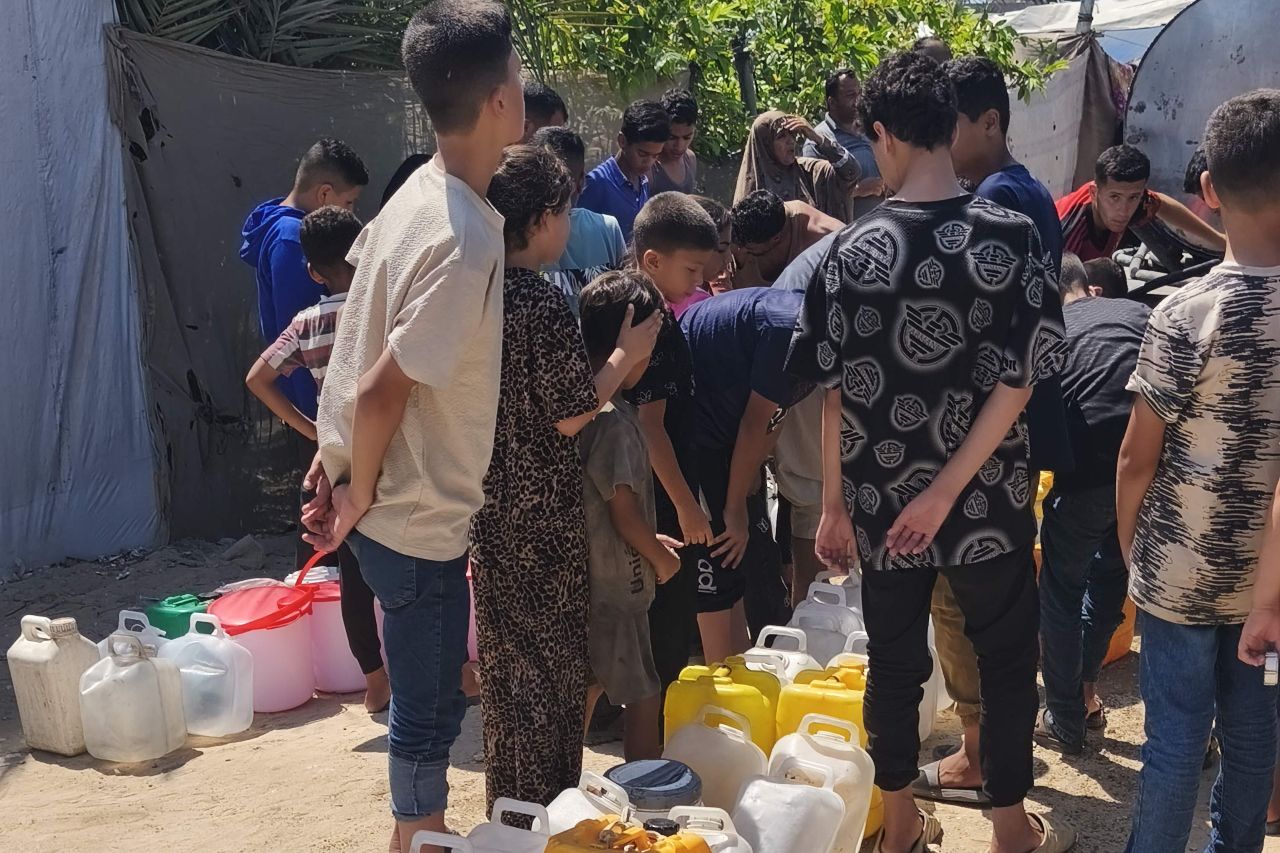
Youssef was among them.
He spotted us before we reached him and greeted us with a wave.
"We're heading to the beach," Ahmed called out. "Come with us."
Youssef smiled apologetically.
"Just give me five minutes to fill the jerrycans."
A few minutes later, we heard the rumble of a truck engine. Within moments, people from every direction hurried toward it, grabbing their jerrycans. It felt as though the entire camp had been waiting for that sound.
We waited for Youssef.
Once they were full, we helped him carry them back to his tent. He set them down by the entrance and paused for a moment to catch his breath.
As he drank a glass of water, he said,
"If I miss the truck today, we could end up going several days without water."
In Gaza, families never know when the next water truck will arrive. The moment people hear its engine, or word spreads that it is on its way, they drop whatever they are doing and rush toward it. Until today, thousands of families still depend on these trucks because much of Gaza's water infrastructure has been damaged and safe drinking water remains scarce. For many, securing water is still an essential part of daily life.
Youssef finished his water, pulled the tent flap shut behind him, then looked at us.
"Come on," he said. "Who's next?"
Only Khalil and Mohammad were left. They are cousins and live in the same camp. We started walking toward them, talking as we went, when an Israli explosion suddenly cut through our conversation.
We all stopped.
A few moments later, people began turning toward the rising smoke, while others ran in its direction. News spread quickly among those passing by: another Israeli strike nearby, with people killed and wounded.
We stood there for a few minutes, trying to make sense of what had happened.
Then Ahmed looked toward the smoke and said,
"If we'd taken the other road, that could have been us."
No one said a word.
We kept walking in silence.
We had set out to collect two friends for a game of volleyball, yet even this short walk was enough to remind us that genocide had never left Gaza. The so-called ceasefire has brought neither an end to the bombing nor to the fear of being killed at any moment. As people struggle to hold on to what remains of their daily lives, the genocide continues, a reminder that what Gaza is living through is not peace, but a war that has simply taken different forms.
We found Khalil getting ready to take his father to have his bandages changed. His father was one of many wounded people in need of specialized medical care. But like thousands of patients across Gaza, he had been unable to leave the Strip for treatment, and the medicine and care he needed were not consistently available.
We asked him to come with us, but he told us.
"You guys go ahead," he said. "I'll catch up once I'm done with my dad."
We left him with his father and continued to Mohammad, who was teaching at a temporary learning space where he volunteers in the camp.
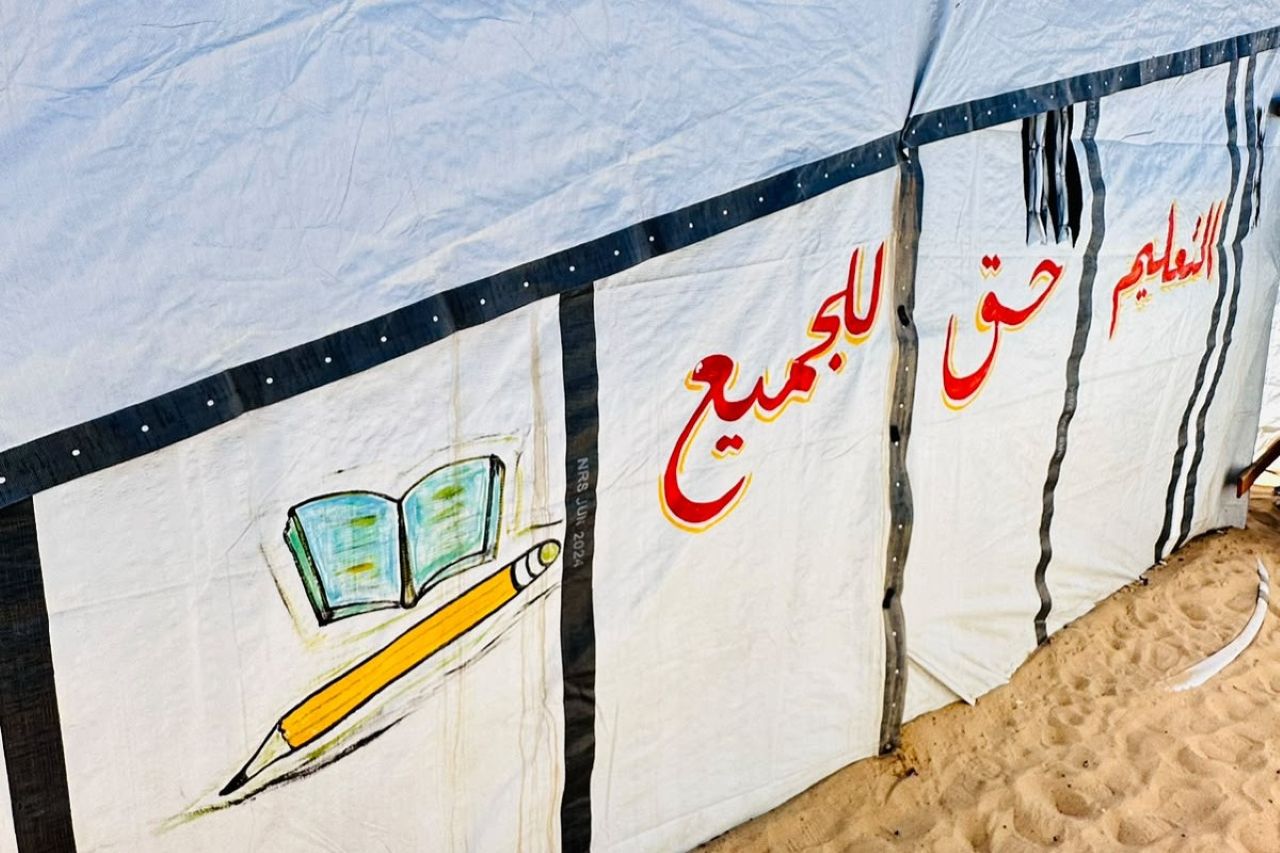
We found Mohammad inside his tent that had been turned into a classroom for children.
Every morning, the bedding is folded away and a mat is spread across the floor. Then the children begin arriving one by one, carrying worn notebooks and pens that have survived months of war and displacement. They sit together in a small circle while Mohammad and a group of volunteers try to give them two hours that feel a little like the life they knew before the genocide.
When the lesson ended, Mohammad stepped outside with a smile, gathering up a few notebooks.
"Come on, teacher," we called. "You're taking too long."
He laughed.
"Just let me close up the tent, then I'll come with you."
Since schools were destroyed by the Israeli occupation or turned into shelters, temporary learning spaces like this have become the only alternative for thousands of children across Gaza. As Gaza's education system faces an unprecedented collapse, volunteers like Mohammad and his sister, Dalia, are trying to keep children connected to learning, even if only for a few hours each day.
Mohammad pulled the tent flap closed behind him and joined us.
For the first time that afternoon, almost all of us were finally together, and we headed toward the sea.
By the time we reached the beach, the sun was beginning to set.
We started playing. We laughed when someone missed an easy return and argued over a few disputed points, just as we used to years ago.
For a brief moment, life seemed to recover something of its old shape.
During a break, we sat on the sand, catching our breath. One of my friends was scrolling through his phone. Then he looked up and said quietly,
"Do you realize today marks a thousand days since the Genocide began?"
A brief silence followed.
No one replied.
A few moments later, someone stood up and sent the ball back over the net, and the game resumed.
But as I walked back to my tent that night, I couldn't stop thinking about what he had said.
That day, I had left my tent simply to gather my friends for a game of volleyball. Instead, the journey took me through a food line, a water truck, a nearby Israeli airstrike, a father waiting for medical treatment, and a tent that had become a classroom.
That was when I realized the journey had never really been about gathering friends. It had become a portrait of what life in Gaza looks like after more than one thousand days of genocide and nine months of the so-called ceasefire, a life measured not by what has returned, but by what people manage to wrest back from it each day.

Hassan Herzallah – Correspondent in Gaza