DECOLONIAL ARENAS 2026 KICKS OFF
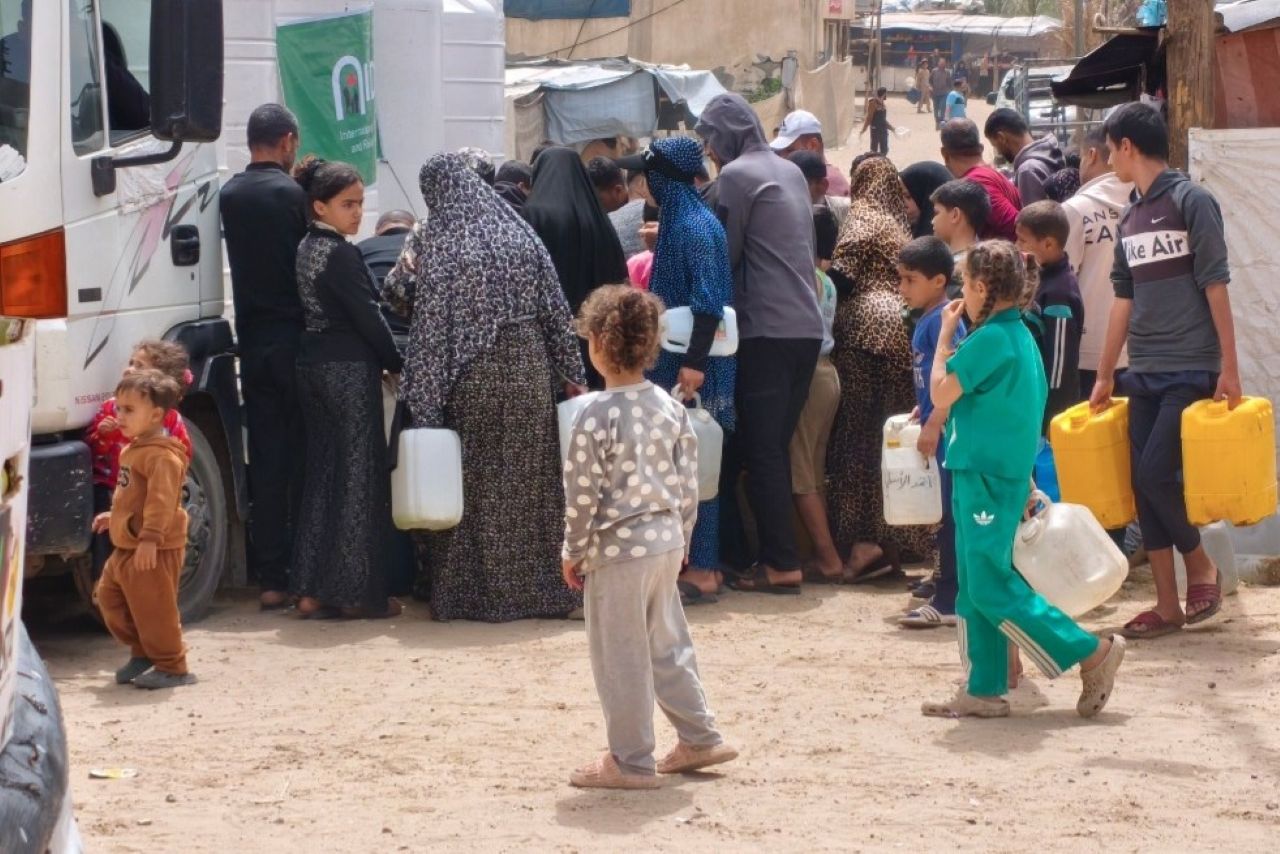
Before people wake up in other parts of the world, the search for water has already begun in Gaza.
Empty plastic jerrycans line up in uneven rows, some cracked, others barely holding together, as voices rise with the approach of a water truck. Shouting, calling, hurried footsteps on rough ground, and bare feet trying to outrun time.
Then, the sound of a horn.
My brother Mohammed and I rush out, barely having washed our faces. There is no time to think, only to reach the front of the line. All we want is to fill a few jerrycans with water. Sometimes, there is not even time to put on shoes. Being just a few minutes late can mean going an entire day without water.
In Gaza today, people are not just searching for water. They are running after it.
Before the genocide, water was not something we thought about. With electricity, a simple switch would turn on the pump, and water would flow up to the rooftop tank without effort. It took nothing more than opening a tap.
But with the start of the war, everything changed. I remember the early days after electricity was completely cut. My father, Mohammed, and I would carry jerrycans from downstairs up to the rooftop, trying to fill the tanks by hand, while the constant buzz of drones filled the sky above us and explosions echoed nearby. In those moments, even filling water was no longer routine. It became a race against time, and against fear.
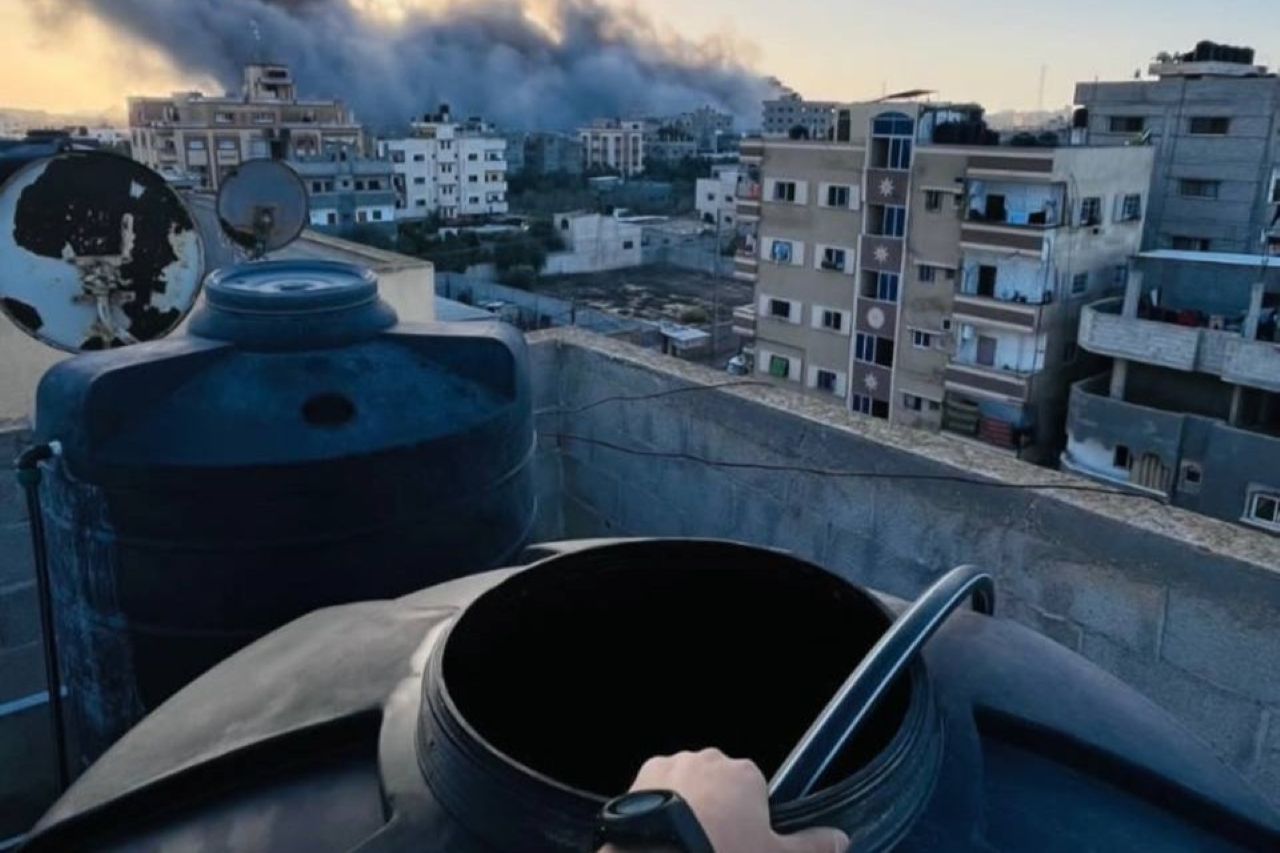
Time passed, the water crisis in Gaza has not eased, even after what is called a ceasfire. The problem is not only scarcity, but also the quality of water itself, which is often unsafe. Many struggle to access water regularly, and even when they do, the amounts fall far below basic daily needs.
This is largely due to the destruction of water infrastructure by the Israeli occupation, turning access to water into a daily challenge.
This crisis did not begin today. For years, over 90% of Gaza’s water has been undrinkable. The genocide and the destruction of water infrastructure by the Israeli Occupation have pushed the system to the brink of collapse, making access to water a daily struggle.
Since municipal water stopped, everything shifted. What once flowed through pipes disappeared, and we became entirely dependent on water trucks. We began filling yellow jerrycans, one after another, waiting for deliveries that might or might not arrive.
Water no longer reached us. We had to chase it.
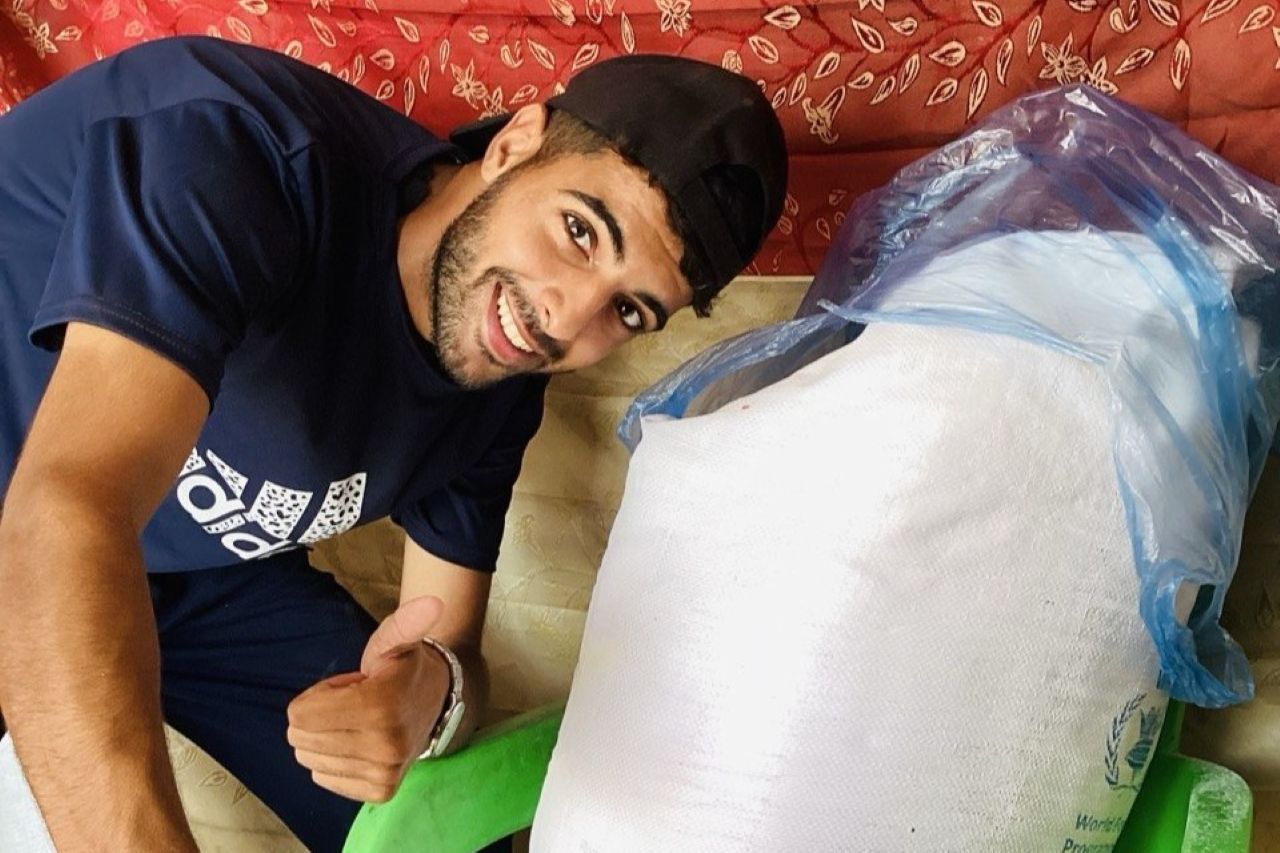
Hamoda, 21, from al-Mawasi in Khan Younis, lives this reality every day. Before the war, getting water was simple. “We had electricity, we had municipal supply. We used to run the generator and pump water easily,” he says.
Even when we were still in our homes, buying water was affordable. But fear never left. I remember filling the rooftop tank while shelling echoed nearby and drones hovered overhead. Water was no longer just a daily necessity. It became tied to fear.
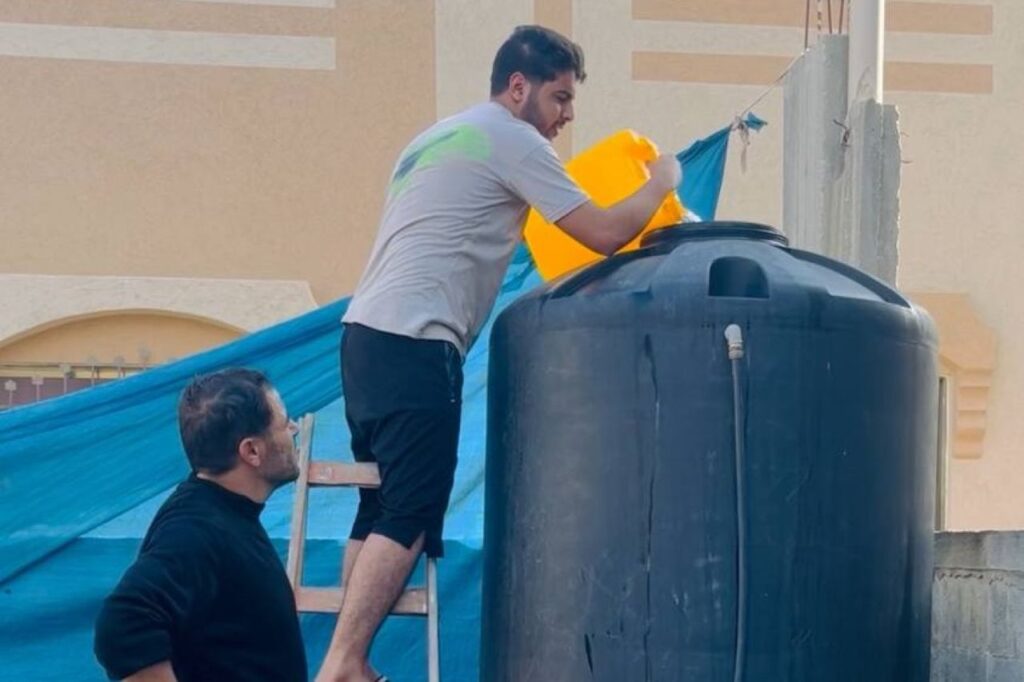
Then came displacement, and with it, a new reality.
Water trucks now arrive every three days, if they arrive at all, and there is no guarantee of quality.
“Sometimes it’s drinkable, sometimes it’s not, but we have no choice.”, he says.
The problem goes beyond taste or salinity. It is about health.
He recalls how his pregnant mum fell ill after drinking the water and had to go to the hospital, where doctors warned her not to drink it. “But what’s the alternative?”, he says.
The alternative is buying water, if you can afford it.
In a collapsed economy, that is not the case for most families. Prices have surged. What once cost a few shekels now costs many times more. With little cash in circulation, even buying water becomes complicated.
“Most of our relatives can’t even afford water,” he says.
The question is no longer whether water is available, but who can afford it.
In this reality, getting water has become a heavy daily burden, often falling on those least able to carry it.
On many days, I am not the one who goes to fetch water. My younger brother, Mohammed, 13, takes on that responsibility. We have two sisters, and I am often away, so the burden falls on him.
He stands for hours in crowded lines, trying to secure a spot before the water runs out. There is no real system, just an open race. Whoever reaches first fills.
When he finally manages to fill the containers, the amount is never enough for a full day.
“What I can carry isn’t enough,” he says.
But it does not stop with our household. After we lost my uncle, his daughters have come to rely on us as well. I try to fill water for them whenever I can, as access is even more difficult for them in such crowded conditions.
In this reality, fetching water is no longer a routine task. It is a daily burden shared by everyone, often carried by the youngest.
These conditions are forcing children to take on responsibilities far beyond their age, in an environment that offers little safety or dignity.
The situation becomes even more severe when the water crisis intersects with illness. With limited treatment and scarce resources, it turns into what can only be described as a silent health crisis.
During my volunteer work in displacement camps in al-Mawasi, I saw that not everyone faces the water crisis in the same way. Those with chronic illnesses, especially kidney patients, suffer the most. For them, it is not just about finding water, but finding clean and safe water.
It is no longer about waiting in line, but about searching for a specific kind of water that may not even be available.
Even during holidays, when joy is supposed to come first, some families are fighting a different battle: securing water that will not harm their children.
They are forced to buy it daily, despite the high cost, because there is no alternative.
While others run after water trucks, these families face a different dilemma. Even the available water is not suitable for them.
In Gaza today, some cannot find water at all. Others find it, but cannot drink it.
Here lies the harshest contradiction. Water, meant to sustain life, has become a source of illness. The crisis is no longer only about access, but about its impact on health.
Even with signs of limited improvement, such as the restoration of water access thousands of children, according to UNICEF, these gains remain partial and do not reflect the daily reality in displacement camps.
In some areas, small water solutions offer a degree of stability.
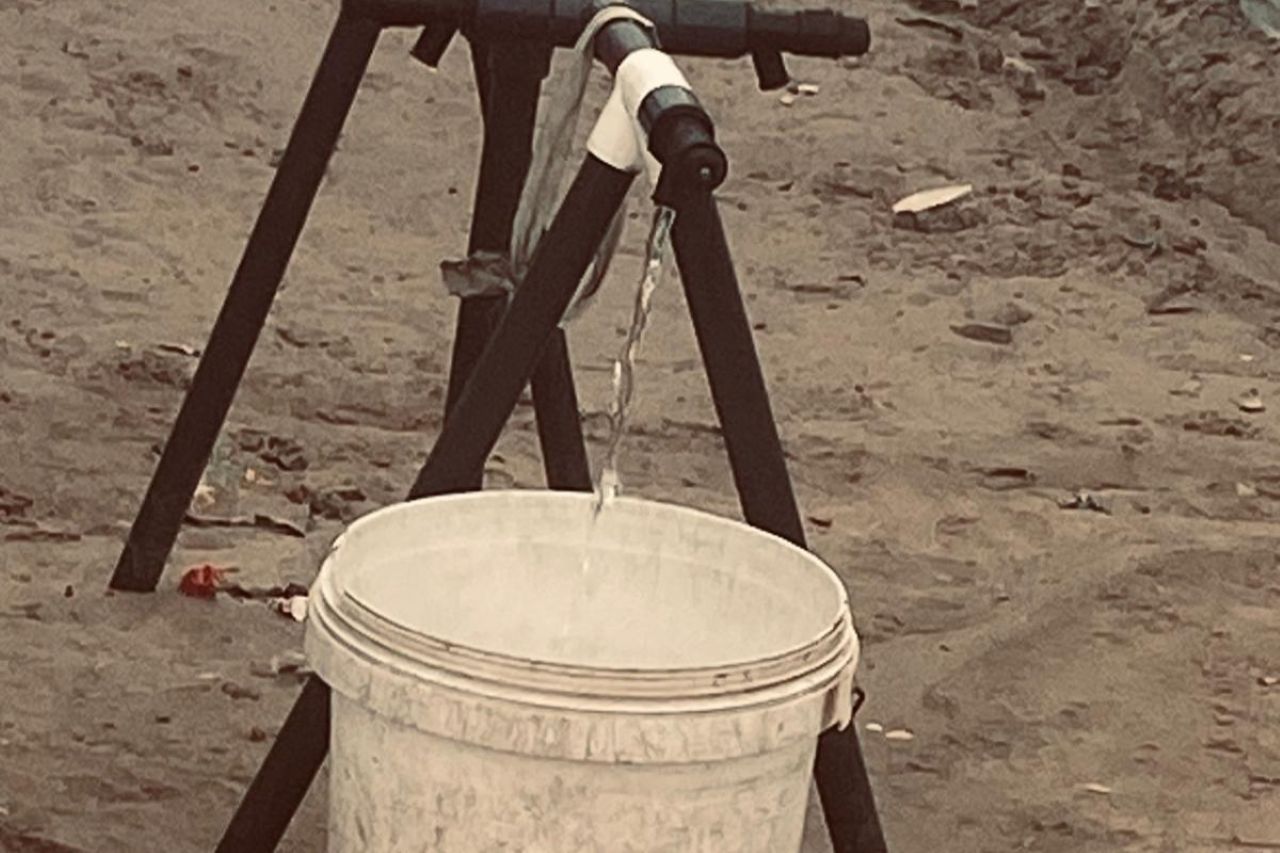
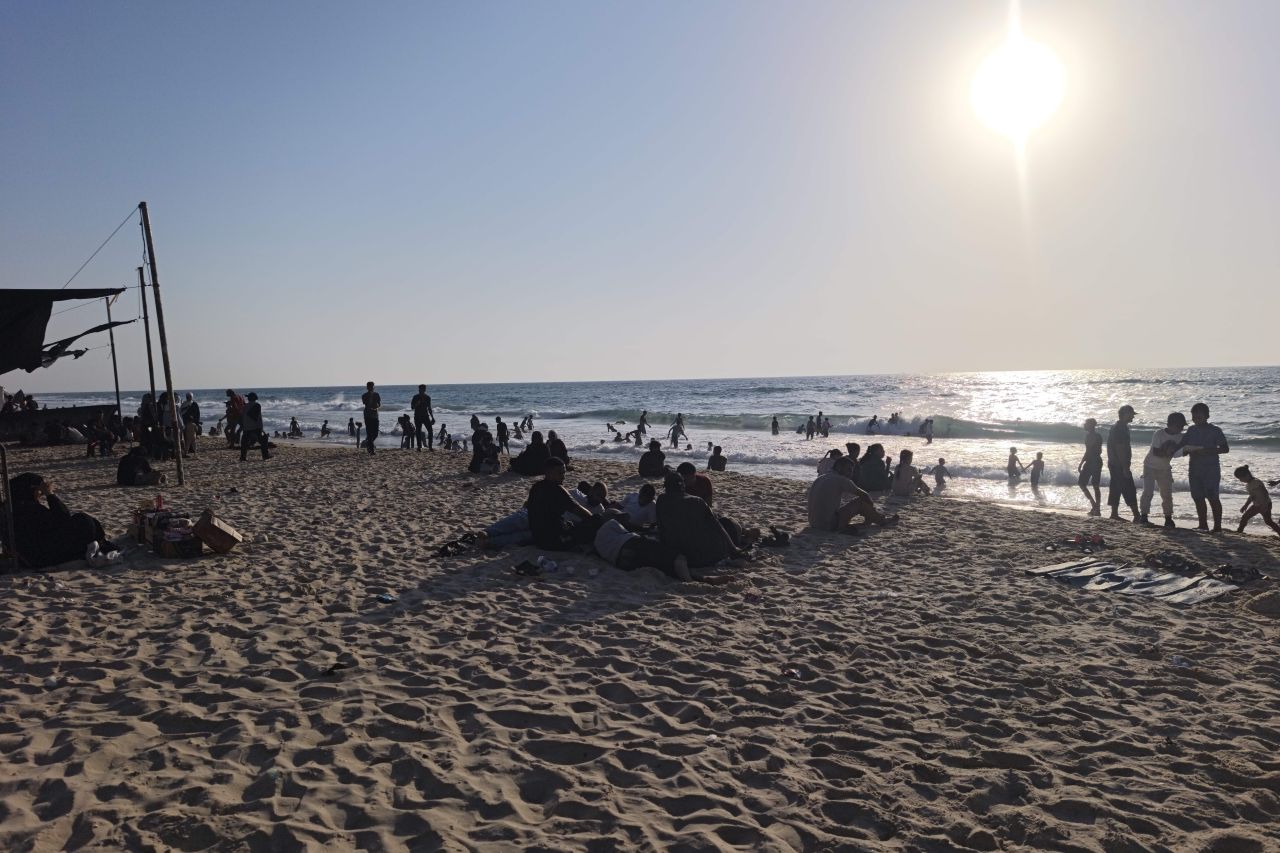
In camps I visited, shared water barrels are refilled every two days, reducing the need to chase trucks and creating a rare sense of stability. In nearby camps, simple wells have been built, allowing people to access water without waiting for trucks, even if the quality is not always sufficient.
But this reality is not everywhere. In other areas, trucks rarely arrive, and access remains unpredictable. This unevenness reveals a simple truth: even suffering is not equally shared.
From what I have seen and heard, the issue is not just water, but the sense of stability and security it brings. People are not only searching for water. They are searching for stability, for a day that can be anticipated, for a moment not dictated by whether a truck arrives or not.
Despite these efforts, solutions remain limited and out of reach for many. As temperatures rise, the demand for water increases, and so does the daily burden.
In Gaza today, water is no longer just water. It is a daily story that captures the full weight of the crisis we live through.

Hassan Herzallah - Correspondent from Gaza