DECOLONIAL ARENAS 2026 KICKS OFF
March wasn’t an ordinary month. There wasn’t a single feeling I hadn’t experienced.
People in Gaza are living between the harshness of difficult conditions, the fragility of a ceasefire, and the media blackout on what is happening here. In every tent, there is a story. In every corner, there is suffering that many overlook.
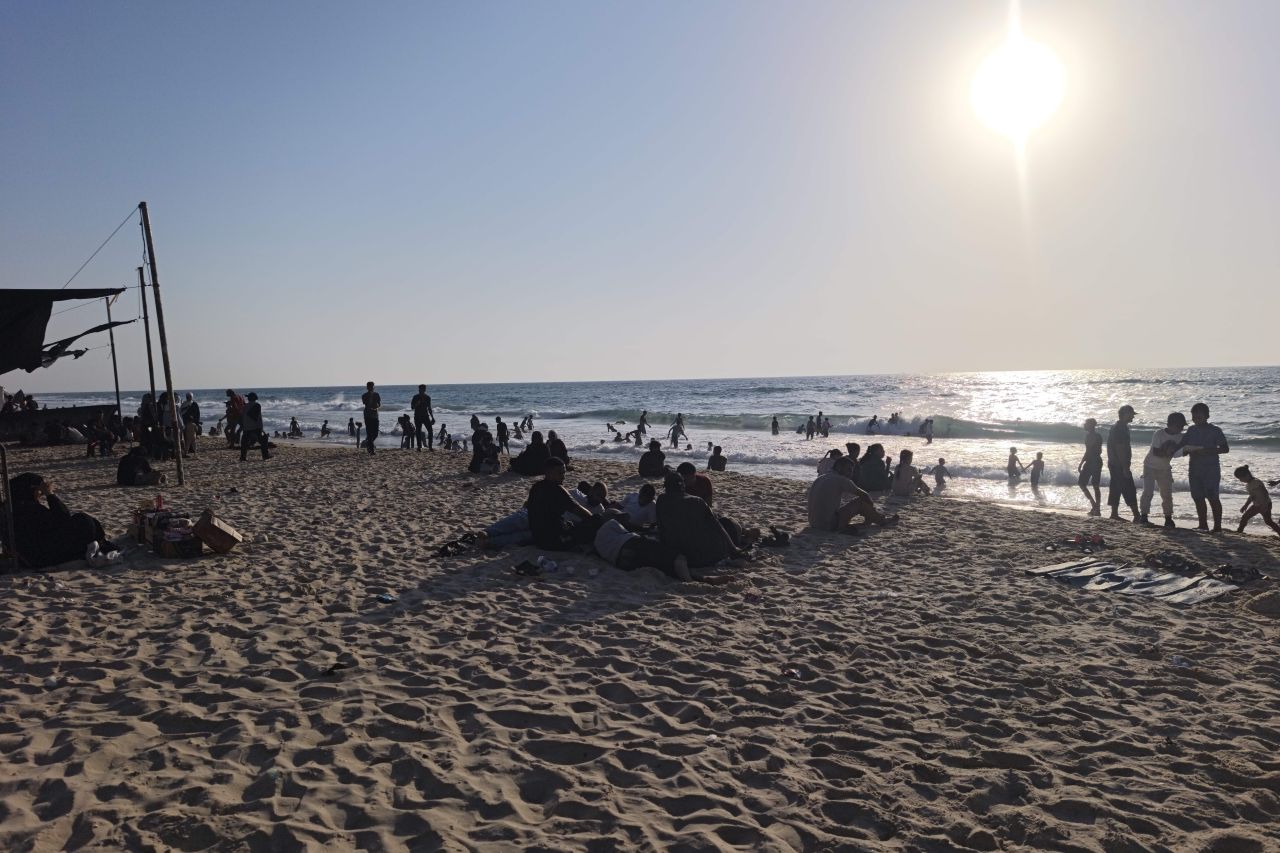
At the beginning of April, I was standing by the sea, trying to think through everything I had lived during the month of March. For us in Palestine, March was not just one month, but several months compressed into one, due to the intensity of events that revealed the reality left behind by a genocide that has not ended to this day.
I began to remember the moments when we wanted to gather with my relatives at my grandmother’s place. We prepared everything, but in a single moment, the weather suddenly changed, and we were forced to stay in our tent out of fear that something might happen. So my family decided that I would go alone.
The journey took more time than I expected. I couldn’t find any means of transportation, not even a horse-drawn cart, and I arrived after the call to prayer. On my way, I remembered that we used to own a car in the past, but now, we have forgotten what a car even looks like.
Even the family gathering we used to have at my grandmother’s place has become something difficult to reach because of the harsh conditions we live in—conditions imposed on us by fear: fear for our fragile tents from rain and storms, and the absence of transportation that we once had.
In this month, I came to understand more deeply the impact and consequences of what the Israeli occupation has done to us. From the moment we invited a woman we know to join us for iftar during Ramadan, but she refused because of what had happened to her teeth and her inability to remove the maskfrom her face.
Then my thoughts moved to the moment when Eid came. We are used to visiting relatives during Eid. My father, being the youngest among his siblings, was the closest to them, and he loved that we visit all our relatives on the first day of Eid.
But on that first day, it seemed that my father did not want to visit anyone, for a reason I did not know. Even though he missed seeing his brothers and sisters in the nearby camps and in different places, I asked him why, but he did not answer. Still, I insisted that we go out together, and eventually we did.
We went to visit one of our relatives - my aunt, who is very close to my father. Her husband was also my father’s friend. When we sat there, she had prepared sweets for us, and it was beautiful to see her after a long time. We began talking about the situation here and how difficult and limited life in the tents has become.
In the middle of the conversation, I asked about her husband,
Forgetting something important—that he had been missing since their home was bombed.
I do not know how I forgot that in that moment. I felt as if something heavy tightened around my chest. My father quickly tried to change the subject, and we continued talking about our past lives—how simple and beautiful they once were.
After a few minutes, we left my aunt’s tent. I expected my father to say something, but he did not.
Then we went to my another aunt, who is one year older than my father. When we arrived, she was very happy to see us, because we are trying to hold on to the traditions of Eid that they were used to.
She told us that she truly wants to visit us, but she cannot—there is no transportation like before, no cashmoney, and she has a problem with her knee that makes it difficult for her to walk long distances, especially since most of the roads are muddy and cracked.
As for us, the daily struggle of fetching water, charging phones, and handling basic needs that were once simple prevents us from even thinking about visiting anyone.
Then she began to talk about her home - how beautiful it was inside. She had bought it just a few months before the genocide, but she did not even have time to memorize its details before everything changed. A single paper forced her to leave Rafah and move into displacement, to an unknown future.
At that moment, she was speaking, but her eyes were speaking even more —filled with grief.
Then her young son came in and said:
“I want to play inside the house.”
He meant the tent next to them.
She replied:
“In home, I had prepared a room for him, but he never saw it. When we were displaced, I was still pregnant with him. Today, Amjad has never seen a home, and he does not know what the word ‘home’ means. The only home he knows is a tent made of cloth.”
After that, we visited more relatives and then returned to our tent.
At that moment, my father said something to me:
“I didn’t want to visit anyone because everywhere we go, there is a different kind of pain in every family we meet.”
Then my thoughts moved to March 21, Mother’s Day. I had planned to write article about it. I went to one of the camps to conduct interviews. I asked a woman about Mother’s Day.
Her eyes filled with tears as she spoke about her missing son. She did not know whether he was killed or imprisoned. I found myself hating the question I had asked.
Then I spoke to another man who told me that he had lost his entire family—his children—and that he was the only survivor. I returned to my tent and abandoned the idea of writing.
Then my thoughts moved to March 30, which is Land Day in Palestine, and at the same time, it was my mother’s birthday.
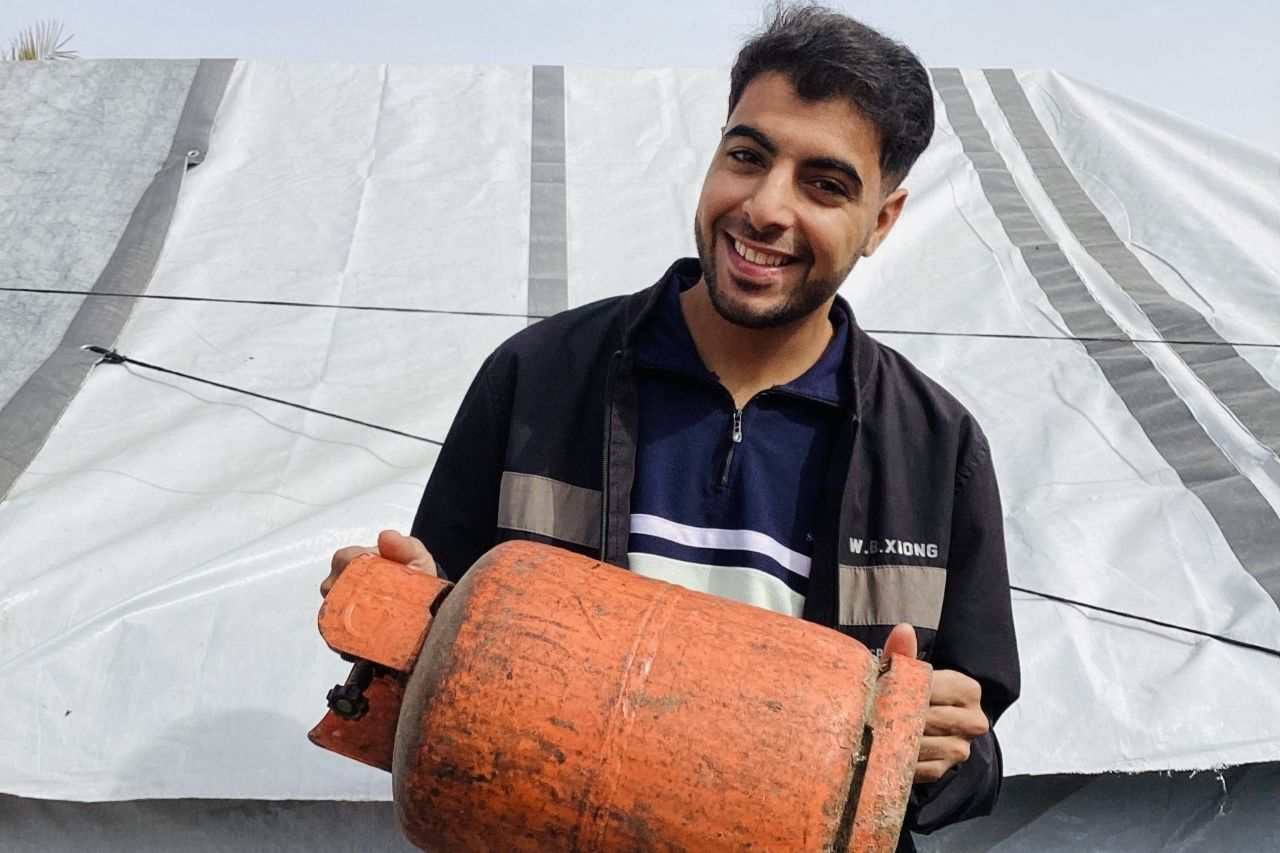
I wanted to surprise her with a gift. It was not a bag, or perfume, or even a ring - but two kilos of gas, so she would not have to cook using fire especially now, as crossings remain tightly restricted, allowing in only limited supplies, while cooking gas becomes harder to find and increasingly out of reach.
When I went to buy the gas, my friend Al-Nahhal was with me. I kept asking him:
“Do you think my mother will be happy with this gift, or will she laugh?”
He kept telling me that she would be very happy.
Then, in the middle of the conversation, I asked him:
“What did you get your mother for her birthday or Mother’s Day?”
He sighed and said:
“My mother was killed during the genocide.”
I froze. For a few moments, I didn’t know what to say or do. It felt as though my words had turned into chains tightening around my neck. I returned to the tent. My mother was very happy with the unusual gift, but there was still a heavy feeling inside me because of that moment with my friend.
As I stood by the sea, I remembered my father’s words again. Meeting people in Gaza may bring back some of the beautiful moments that once existed, but it also reveals everything that has been lost. Sometimes, a single word or a small detail is enough to open a flood of memories.
My father did not say anything, but his silence was heavier than everything I had heard that day.
On March 30, it was Land Day.
But it was not as we once knew it.
It was no longer a story from the past, but a reality we live every day…
To be connected to a land you can no longer reach.
In Gaza, meeting people is no longer what it used to be.
It carries more of what we have lost than what remains.
All these small details, all these stories, are reflections of a reality created by the Israeli occupation, while the world remains silent.
Perhaps that is why the question is no longer what we are living through…
but how we are still trying to live.

Hassan Herzallah - Correspondent from Gaza