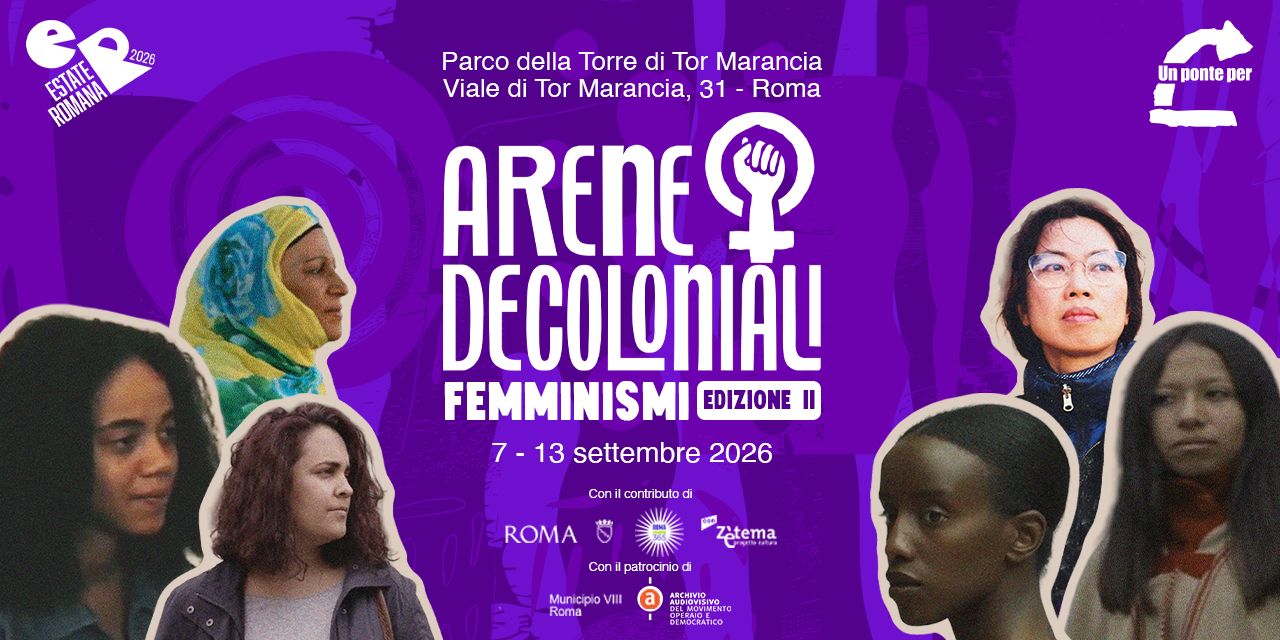
DECOLONIAL ARENAS 2026 KICKS OFF
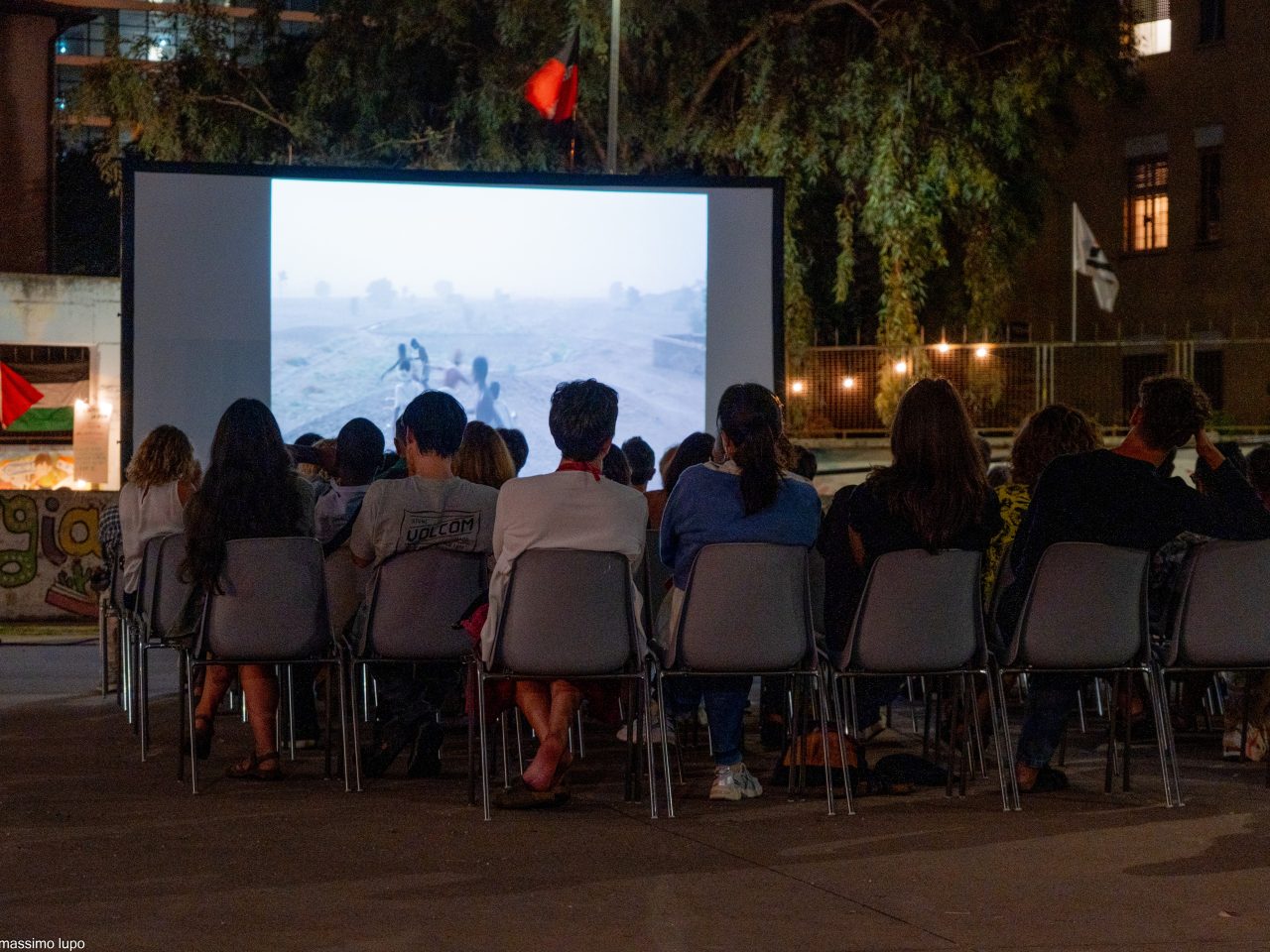
From 8 to 14 September in Rome, the first edition of Arene Decoloniali took place, a festival conceived by Un Ponte Per with the aim of opening an unprecedented and urgent space for reflection in the Italian cultural scene.
For seven days, cinema, literature and debates brought back to the centre what has been repressed for too long: the memory of Italian colonialism, anti-colonial resistance and the consequences of a Eurocentric outlook that still shapes politics, culture and society.
A MEMORY REMOVED
In Italy, colonialism has been removed from collective memory. Massacres, deportations, racist laws and concentration camps have been systematically concealed, leaving room for the self-absolving myth of Italians as good people. A process that not only concerns the past, but also profoundly affects the present, influencing narratives on migration, the Mediterranean and international relations.
With the Decolonial Arenas, we have chosen to break this silence, offering critical tools to address the colonial legacies that still run through us.


CINEMA AS A SPACE OF RESISTANCE
At the heart of the festival was cinema, understood as a political and cultural practice capable of deconstructing the colonial gaze.
From the screening of Adwa - An African Victory by Haile Gerima - which has been awarded the 2025 Decolonial Arenas Prize - which restores the memory of the Ethiopian victory against Italy, to Soleil Ô by Med Hondo, which recounts the migratory experience and post-colonial identity, to Abandon de poste by Mohamed Bouhari, with its ironic and disenchanted look at colonial stereotypes and the "new slaves" of western society.
The festival closed with Andrea Segre's L'ordine delle cose (The Order of Things), which takes the viewer inside the Italian policies of refoulement in Libya.
Each film was a piece of a narrative that overturned perspectives and gave back a voice to colonised and migrated subjectivities. The cinema thus proved to be not only a means of denunciation, but also a laboratory for imagining new forms of storytelling and new practices of solidarity.
As Soumaila Diawara, guest speaker at the festival, recounted:
"Arene Decoloniali is not simply a review that seeks to inform people, but is also a form of resistance, which overturns a distorted narrative especially about colonialism. It is an initiative that can not only inform about historical responsibilities, but also unite people who are often far apart, on a common path'.
To also maintain the direct thread with Palestine and the genocide resistance actions, we hosted the Global Sumud Flotilla link.


BETWEEN MEMORY AND RESIGNIFICATION
The festival did not limit itself to recounting the past. It traversed symbolic and political issues that are still alive: from the stealing of works of art in the colonies to the re-signification of commemorative monuments, such as the one to the fallen of Dogali, which still defines the Italian soldiers who fell in Ethiopia as 'heroes'.
A tribute to Pier Paolo Pasolini, on the 50th anniversary of his death, also offered an opportunity to reflect on his critical but ambivalent view of Africa and the East.
And it was during these evenings that one of the most moving moments took place: the unexpected meeting with Gimè Ahmed, one of the African students interviewed by Pasolini in the documentary Appunti per un'Orestiade africana. Having arrived in Italy from Eritrea over fifty years ago, incredibly, he had never seen Pasolini's film, despite having searched for it for a long time. We welcomed him on stage and his emotion, his story became for us the very symbol of this first edition of Arene Decoloniali: a place of memory, encounter and deconstruction.
BEYOND ANTI-COLONIALISM: TOWARDS DECOLONIALISM
Decolonial Arenas proposed an approach that goes beyond the condemnation of colonialism as a historical fact. To decolonise means to recognise how the Eurocentric vision has structured cultural, political and even aesthetic categories.
It also means questioning concepts such as 'development', 'aid' or 'solidarity', which have often reproduced logics of domination.
We also brought into the festival our experience of international cooperation: not as an act of generosity, but as a practice of reparation, and as building alliances between civil societies, capable of changing the living conditions of oppressed people together.


AN APPOINTMENT THAT WANTS TO TAKE ROOT
This first edition marked the beginning of a journey: a cultural and political process that does not want to limit itself to the event, but intends to continue to grow and contaminate other spaces.
Special thanks go to the many people who participated each evening and to those who enriched the debates: Papia Aktar of ARCI Rome, Takoua Ben Mohamed, Maria Coletti, Marco Dalla Gassa, Leonardo De Franceschi, Soumaila Diawara, Silvano Falocco of the Yekatit 12-19 February Network, Daniela Ionita of the Italians Without Citizenship Movement, Angela Mona, Marina Pierlorenzi of ANPI Rome, Daniela Ricci and Micaela Veronesi of the National Film Archive of the Resistance, Lorenzo Teodonio, Alessandro Triulzi, Vito Varricchio.
Many thanks to directors Haile Gerima, Dagmawi Yimer and Francesco Di Gioia, and allə artistsə who made the closing night unforgettable: Khalifa Abo Khraisse and Valbona Kunxhiu, Mario Eleno and Manuela Mosè, Luca Chiavinato.
Decolonial Arenas has opened a removed wound and, at the same time, a space of possibility: an arena where memory meets resistance, and the future can finally break free from the shackles of the colonial past.
And this is just the beginning, the journey continues: in anticipation of the second edition in 2026, we will continue to offer new initiatives and insights.
Follow the @arene_decolonials page on Facebook and Instagram to stay updatedə.