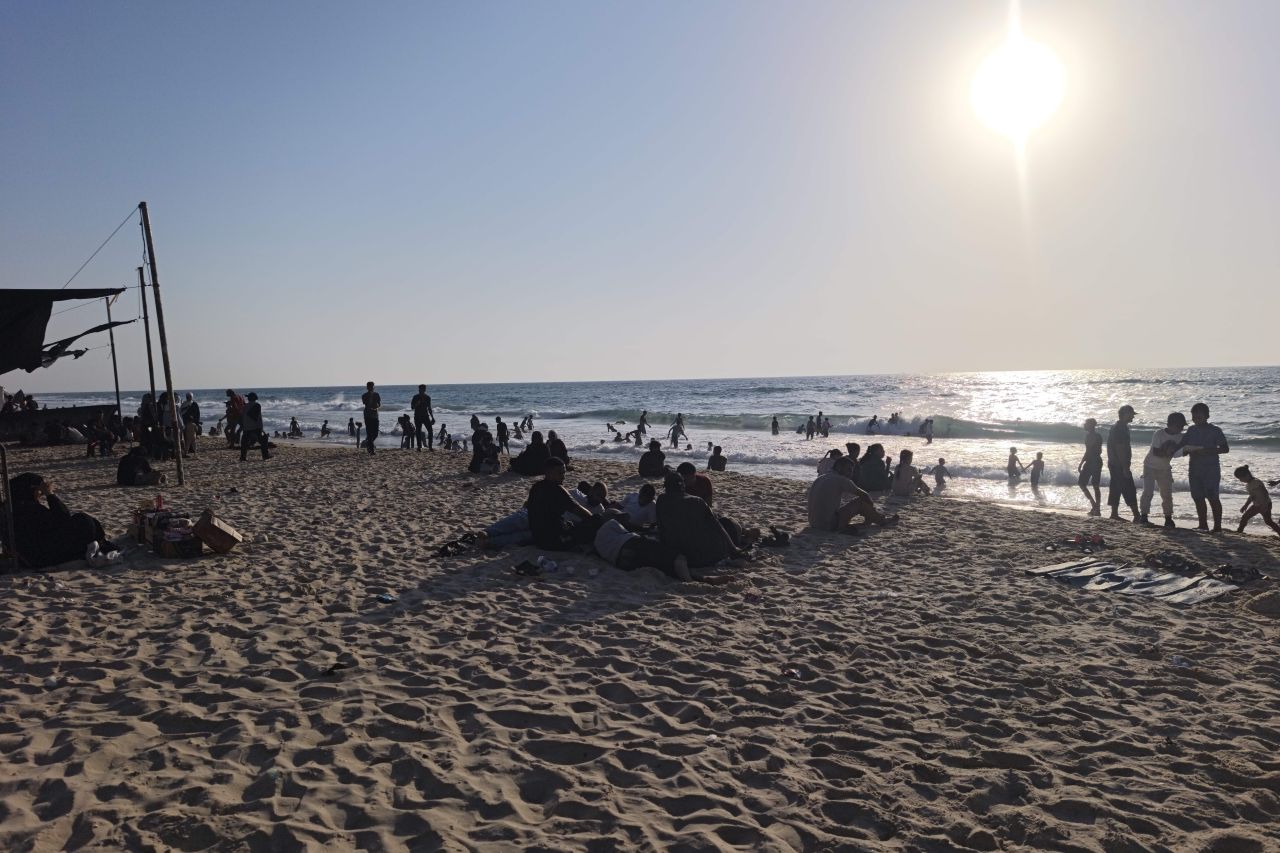
WAITING FOR THE SUN. A THOUSAND DAYS OF GENOCIDE
Hassan Herzallah is a translator, writer and storyteller from Gaza. He contributes to various international publications. For the “Water for Gaza” campaign, he chose to share his first-hand account with Un Ponte,documenting his life under siege and displacement. He is in his third year of studying English translation at the Islamic University of Gaza and is continuing his studies online after the university was bombed.
“So you’re a refugee; you’re not from here.”
At first I thought he was joking, but that sentence kept echoing in my mind all the way back to the tent.
In the final days of the semester, we were set a university assignment: to translate a text into English about refugees around the world. It seemed like a routine task, just one of the many academic obligations squeezed in between online lectures, and at first I didn’t think much of it.
I opened the file on my phone and started reading. It was about people forced to leave their homes, the loss of stability, and the search for safety in unfamiliar places. I began looking for the most appropriate Arabic words – expressions that would convey the meaning as accurately as possible.
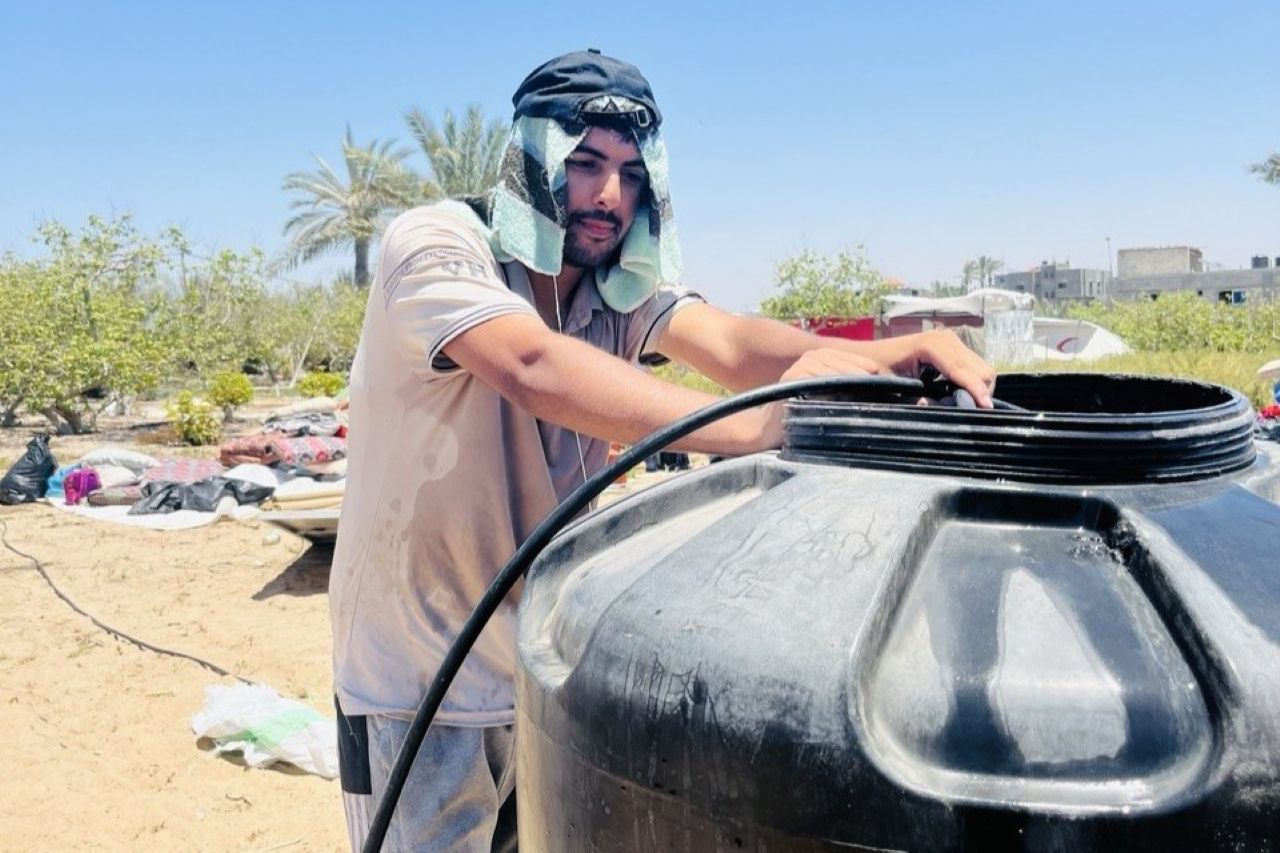
My concentration was interrupted: outside, I heard the sound of the water tankers arriving. I rushed out with the empty jerrycans and made my way over to the lorry. Ever since we were displaced, this has become a daily occurrence in the camp.
Before the war, getting water simply meant turning on a tap. Now it means waiting for a water tanker that may or may not turn up.
I joined the queue with dozens of other people clutching the same jerry cans. Children, women and men. After a long wait and several attempts to fill them, I returned to the tent with just enough water to last a single day.
Then I went back to the text. But I couldn’t keep my concentration for very long.
My mother came into the tent and told me that there was talk of the border crossings possibly being closed due to the new escalation between Israel and Iran. This usually means rising prices, shortages of essential goods and even stricter restrictions on movement imposed by the Israeli occupation. These updates have now become part of daily life, not just passing news items.
I put my phone away again and went out in search of something to eat.
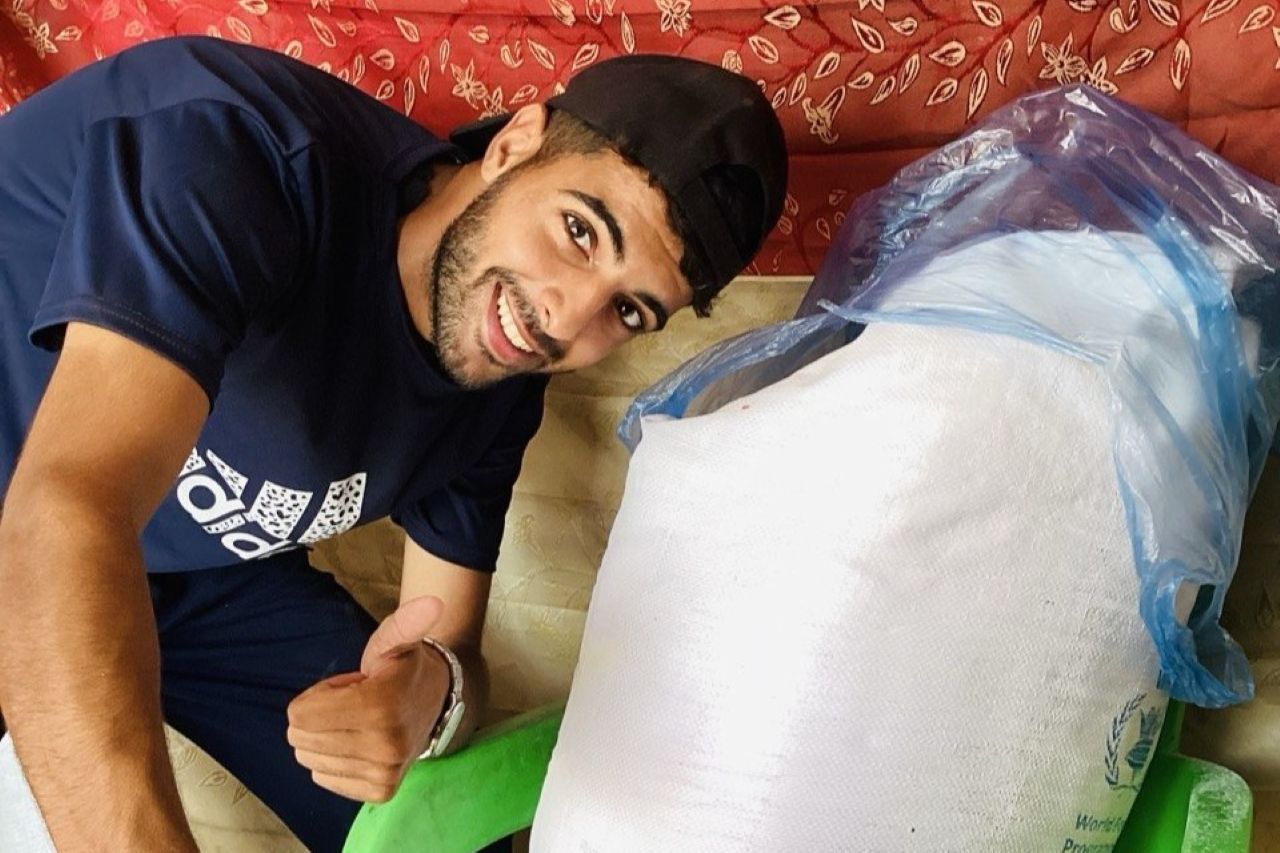
Food is no longer seen as a meal, but as a fundamental necessity for survival in Gaza. In times of famine, a sack of flour can represent a victory and become the fine line between a day one can endure and one one cannot face. Food is no longer what it was before the war; it has become a constant struggle to secure the bare minimum needed to carry on.
I took the first available means of transport: a donkey-drawn cart. On the way, the driver turned to me and asked:
“Where are you from? I feel as though I’ve seen you before.”
“From Rafah,” I replied.
He remained silent for a moment.
“So you’re a refugee… you’re not from here,” he said.
At first I thought he simply meant to point out that I was from a different area, but he was using the word ‘refugee’ instead of ‘displaced person’ for a reason. I reflected on the way these terms are used in everyday language in that very place.
I didn’t reply straight away. That sentence, however, stayed with me throughout the journey.
A few hours later, I went back to my text. This time, I focused on just one word: refugee. I immediately remembered what the cart driver had told me a short while earlier.
I read that word over and over again. As a translator and writer, I had come across it countless times in academic texts and articles. But at that moment, it ceased to be merely a term to be translated. It became a question.
What does it really mean to be a refugee? Is it simply someone who crosses a border and leaves their own country? Or can displacement take another form, even without ever having left one’s home? I put the question aside and carried on with my day.
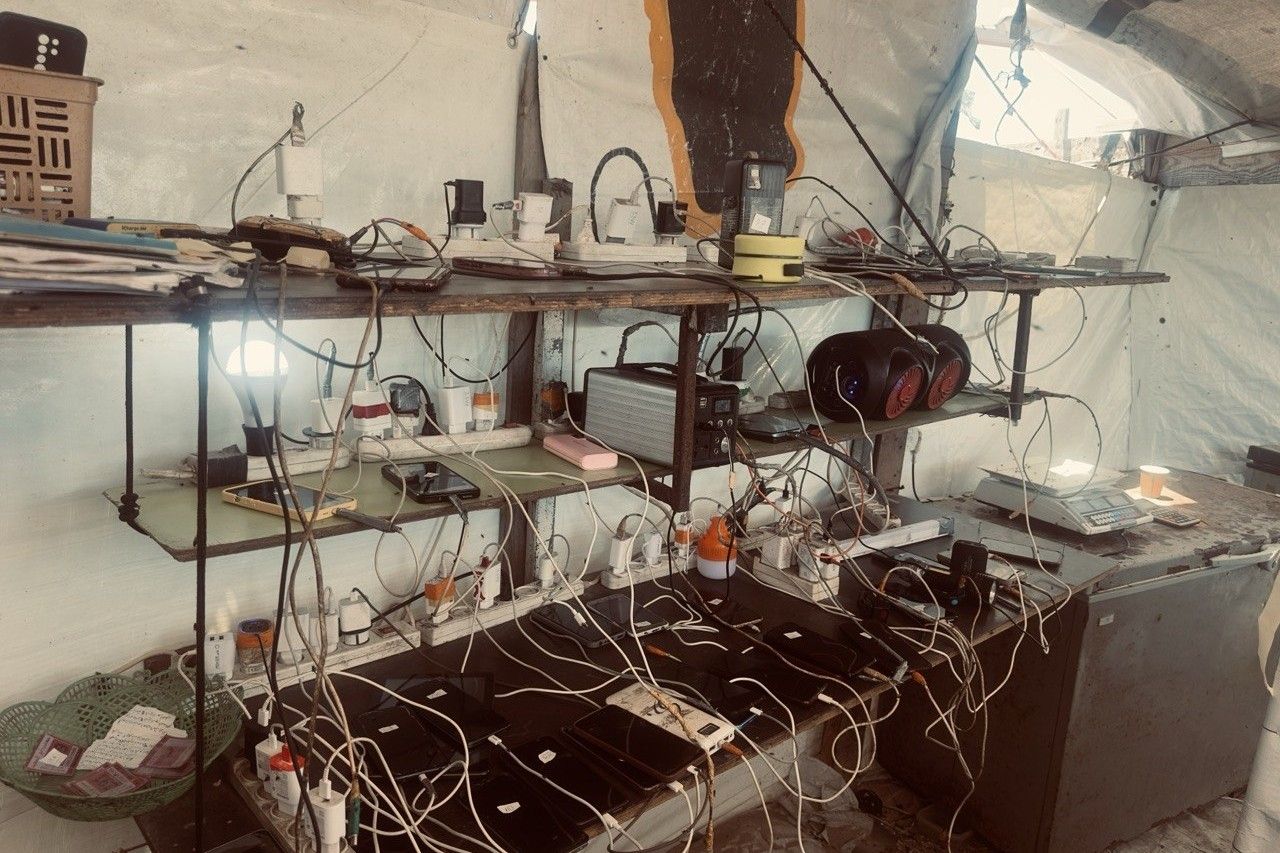
I noticed that my phone’s battery was running low, so I went to a charging point. Without electricity, mobile phones have now become much more than just a means of communication. I use mine to study, keep up with the news and stay in touch with the outside world. Even charging it involves waiting for what feels like an age.
When I finally managed it, I went back to my text. I tried to concentrate, whilst the sounds of life in the camp echoed around me: the constant comings and goings of people, the conversations and the children’s voices, separated from us only by a sheet of fabric.
It was at that moment that I began to relate the text to my own day: water , the search for food, waiting to charge my phone, constantly moving between temporary places. I was no longer translating a text about refugees; I was experiencing the reality it described.
Before the war, I used to wake up to go to university lectures. These days, I wake up thinking about water.
Before the war, I used to carry my laptop and study materials with me. Today, my computer has been destroyed and I’m carrying jerry cans of water.
Before the war, I used to plan for exams, projects and the future. Now I plan how to get hold of what I need just to get through a single day.
I have come to realise that displacement is not just about losing one’s home. It is also about losing the people, the routines, the landmarks and the familiar faces that once gave meaning to a place.
In the camp, few faces are familiar to me. People come from different parts of Gaza, each carrying with them memories of the places they come from; yet none of us truly belongs to the place where we now live.
There is no longer an old road to return to, nor a neighbourhood whose landmarks I recognise instinctively. Places are now identified by temporary markers: the name of a camp, the number of a tent, or even the colour of the tarpaulin covering it.
I no longer define myself solely by the town I come from, but also by the camp where I live and the tent, which has become my current address.
Over time, I have come to realise that the sense of displacement goes far beyond the loss of a physical place. It concerns the loss of the ability to recognise the world around me. The task of translation, together with the realities of that day, felt to me like a journey through the memories of years of genocide and continuous displacement. It forced me to rethink the meaning of being a refugee.
I found myself living in a place that feels alien to me, even though I have never left my city. Here, displacement is not just about the loss of a home; it is also about the loss of that sense of belonging that once made the world recognisable.
That day I realised that being a refugee does not necessarily mean crossing a border. Sometimes it begins when the faces that gave meaning to a place disappear.
My home is still just a few kilometres away. I know the road leading there by heart. Yet, because of the ongoing Israeli military restrictions and evacuation orders, it remains out of reach.
Today, more than 117.8 million people worldwide are refugees or have been forcibly displaced – the highest number ever recorded. But displacement is more than just a statistic. It is the experience of losing one’s home, rebuilding one’s life amidst uncertainty and learning to find one’s way in a world that no longer feels familiar.
In Gaza, at least 1.9 million people – around 90 per cent of the population – have been forcibly displaced, many of them on multiple occasions. Families have fled the bombardments and evacuation orders, finding themselves in tents, damaged buildings and makeshift shelters that bear little resemblance to the lives they once led.
Perhaps, in the end, what we call ‘dreams’ here are often simply rights that people elsewhere take for granted.

Hassan Herzallah – Correspondent in Gaza