WAITING FOR THE SUN. IN GAZA, FINDING WATER IS A MATTER OF SURVIVAL
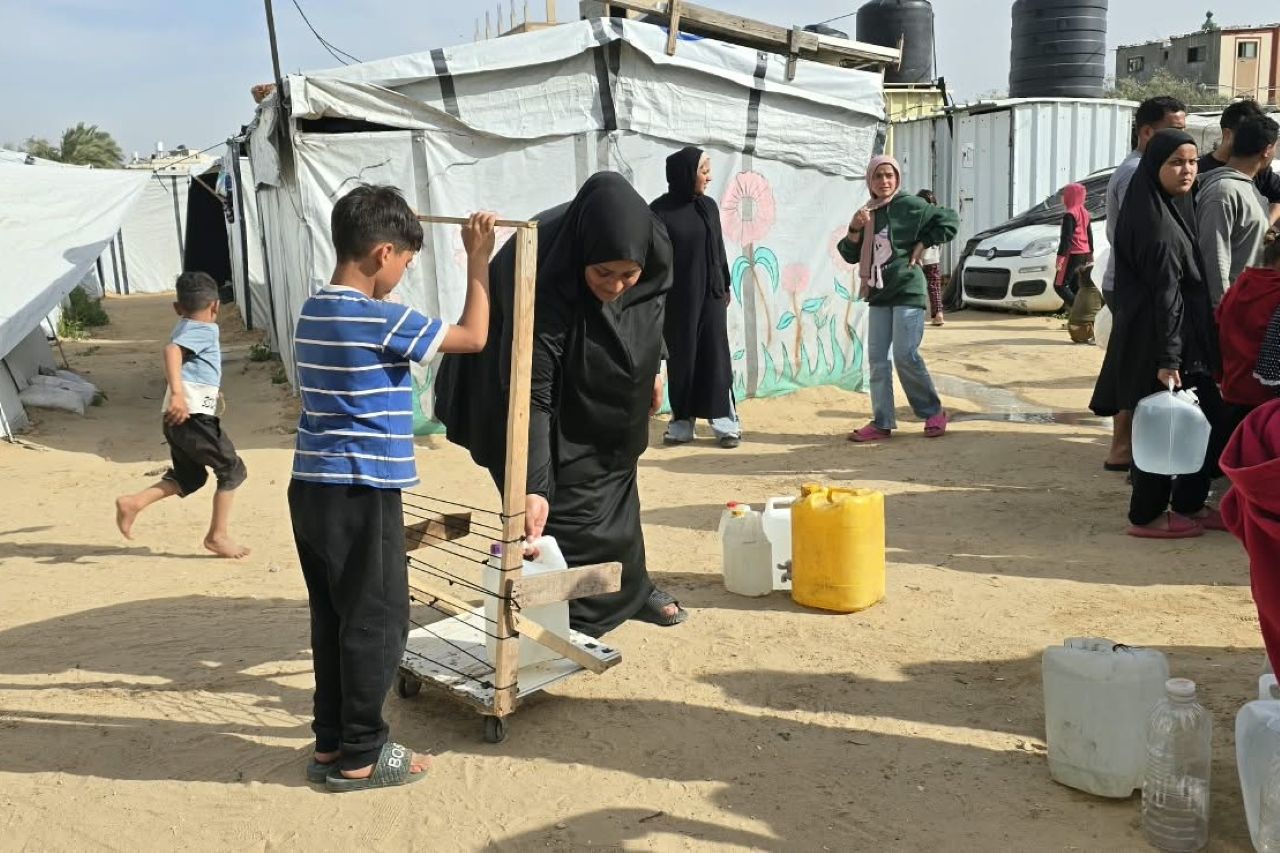
In Gaza, fetching water is no longer simply a daily struggle to find a source or wait for hours to fill jerrycans. At times, it has become a dangerous undertaking. In the mornings, as people gather to collect the water they need for drinking, cooking and washing clothes, gunfire from Israeli naval boats or from areas near Israeli military positions along the "Yellow Line" can be heard, adding another layer of fear to a journey they have no choice but to make.
Early each morning, I place my water jerrycans outside the camp gate, trying to secure a place in the queue before the truck arrives. The water truck usually comes in the morning, and if I do not secure my place, I may not get the chance to fill my jerrycans.
But the routine I knew had become dangerous. In mid-November, at around 6:30 a.m., water jerrycans lined the street outside the camp gate, while children made their way to schools set up in tents across Al Mawasi displacement camps. I was lying inside my tent, unable to fully fall asleep for fear of missing the water truck. I couldn't leave the camp until I was sure the truck had arrived, so I could fill our jerrycans with water for my family.
I heard the water truck's horn. It usually came to the camp twice a week, so my brother Mohammed and I rushed out. But just as we were about to reach it, gunfire erupted from several directions. Some of the shots were coming from the Israeli naval boats, while others came from Rafah, the city where I had lived all my life and which Israeli forces now occupy. Dozens of people stood ahead of us, including children heading to school and women. Suddenly, everyone threw themselves to the ground.
I was particularly worried about Mohammed. On an earlier occasion, when he had gone to the sea to learn to swim, he had faced a similar situation while in the water, hearing gunfire and explosions from the Israeli naval boats. He froze in place and nearly drowned. After several minutes, the gunfire stopped, but we couldn't return to our tent. We had to keep heading toward the water truck, despite the fear those few minutes had left us with.
The queue at the water truck was not limited to those displaced in our camp. People from nearby displacement camps also came, carrying jerrycans and various containers in an effort to get the water they needed. Some needed water for drinking, while others needed enough for cooking, washing clothes or bathing. As the queue stretched, getting water was not always as simple as filling jerrycans and leaving. Some people had to walk long distances to reach the truck, and the amount they managed to get might not be enough to meet their families' daily needs, forcing them to make another trip to collect more.
But the burden of fetching water is not the same for everyone.
In displacement camps, many women are responsible for securing water for their families, on top of the other daily challenges they face. The responsibility is even greater for women who lost their husbands during the ongoing genocide. More than 28,224 women have been widowed since the war began. For many of them, providing for their families is no longer a choice, but a responsibility they must shoulder alone amid the harsh conditions of displacement.
Children also find themselves taking on responsibilities beyond their years. While some children attend schools set in tents in camps, others stand in water queues, trying to secure their families' needs. More than 71,000 children in Gaza have lost one or both of their parents. For some of these children, fetching water is no longer simply a way of helping their families, but has become part of their daily responsibilities, at a time when they should be focused on learning and playing.
Access to water is shaped not only by the responsibilities people carry, but also by their ability to know what is happening around them. Nedaa Ghaza, 34, is a deaf woman living in a displacement camp. When the water truck arrives in the area, she cannot hear its horn announcing its arrival. While many people rely on the horn or the voices of others as they make their way toward the truck, Nedaa faces an additional challenge: knowing when the truck has arrived and getting there in time to fill her jerrycans.
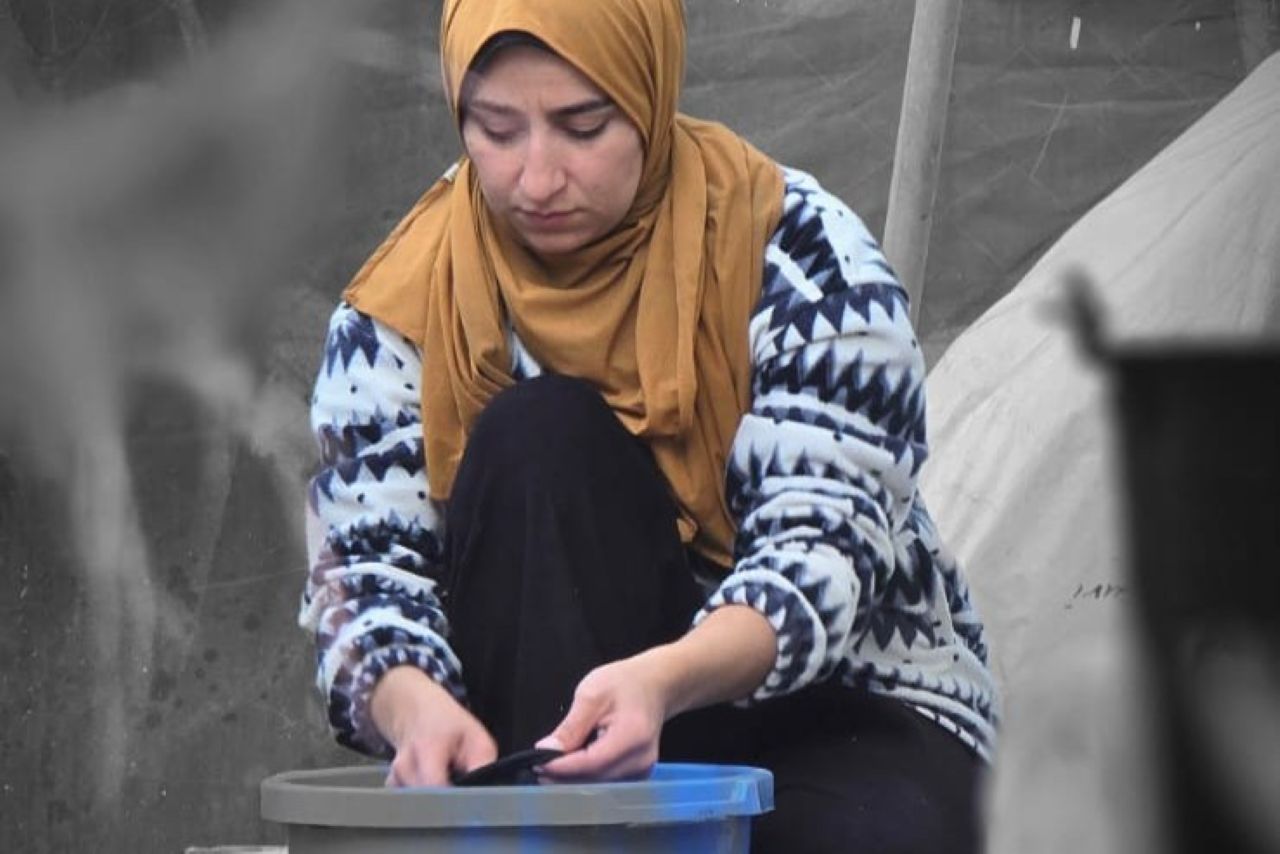
After we finished filling our jerrycans, I returned to the tent, still thinking about those few minutes when we had thrown ourselves to the ground, the women carrying the responsibility of providing for their families, the children who had made securing water part of their daily tasks, and Nedaa, who cannot hear the truck's horn announcing its arrival.
Fetching water had become more than a matter of waiting and carrying jerrycans. It meant facing risks that should never have been part of such a daily task. I kept thinking about how much we had managed to get and whether it would be enough to meet our needs until the next truck arrived.
Everything was temporary. That is what we thought at first. But I don't know when these temporary conditions became a daily routine we now live with, without knowing when it will end.
Fetching water had become yet another task we had to carry out every day, regardless of what we might face along the way..

Hassan Herzallah – Correspondent in Gaza