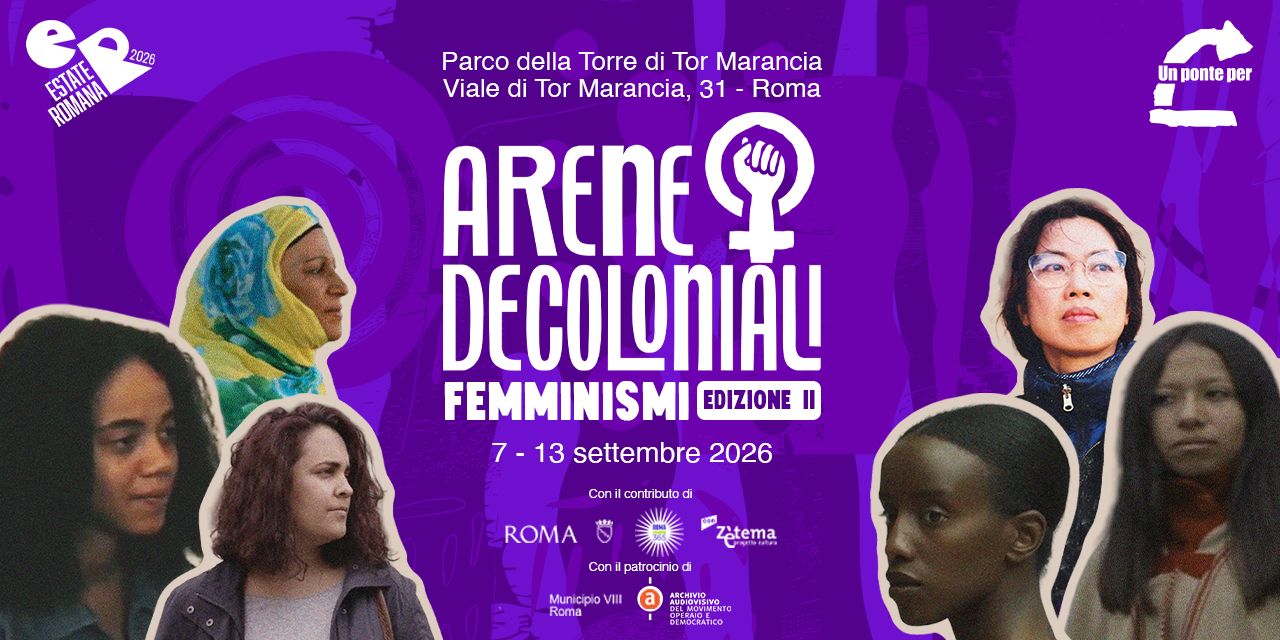
DECOLONIAL ARENAS 2026 KICKS OFF
by Silvia Abbà - ICSSI* International Coordinator and author of the book 'My place is everywhere. Voices of women for another Iraq'.
Talking to young Iraqi women and men, it is surprising how much History - the one we read in school books - is intertwined with concrete personal stories, how great events have become embedded in their daily lives, determining their course, geography, and timing. Sahar Salam is a 29-year-old Baghdad woman, who has been working with Un Ponte Per for the past three years as the project manager of "Al Thawra Untha" (The Revolution is Woman), funded by the Dutch Ministry of Foreign Affairs.
"I have lived my whole life in Baghdad, except for two years, since 2008, when my family was forced to move to another governorate. The first week after our return to Baghdad we received an envelope with bullets in it and we said 'Either we stay, or we leave for good'. We decided to stay and take our chances. Luckily it worked out well for us."
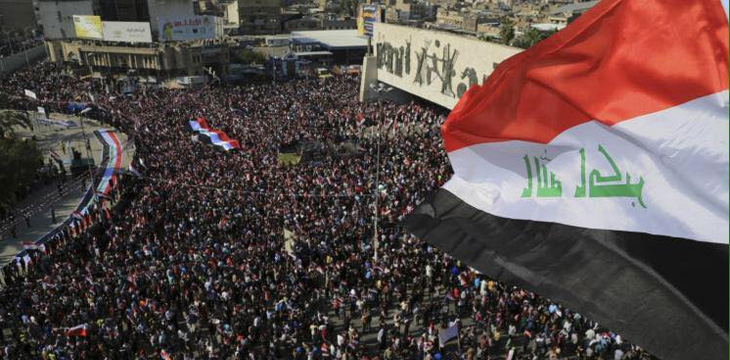
Sahar refers to the years of civil conflict that followed the US-led military intervention by the international coalition. The second Gulf War, which started in March 2003, now 20 years ago. She grew up in the new Iraq, in a country without dictators, formally democratic, where women were supposed to be - finally - free. Yet the protests that broke out in October 2019, bringing thousands of people to the squares of Iraqi cities, speak of endemic corruption, a lack of basic services and serious inefficiencies. They are a symptom of a deep crisis of legitimacy of the sectarian system inaugurated in the aftermath of the ouster of Saddam Hussein and the Ba'th party from power. Similar protests, however, had already erupted in previous years. The real novelty this time was the massive participation of women, in the squares and in the virtual spaces of social media.
"Before 2019, there had been several other, smaller protests that had no real effect. The October Revolution was a historic moment for feminism because women were at the forefront,' she says. Today, new generations are denouncing the distortions of what was supposed to be the new Iraq, and young women in particular are raising their heads to loudly assert their right to exist, to choose for themselves and their country.
"Being a feminist means making sure that women are treated fairly. To defend their rights regardless of background, religion, nationality,' Sahar explains. The voices of Iraqi activists and feminists guide us in the weaving of new alliances that are sorely needed today to build, together, a world in which we can all be free.
*Iraqi Civil Society Solidarity Initiative (ICSSI) is an Iraqi and international coalition of activists fighting for justice, respect for human rights and peace in Iraq. https://www. iraqicivilsociety.org/