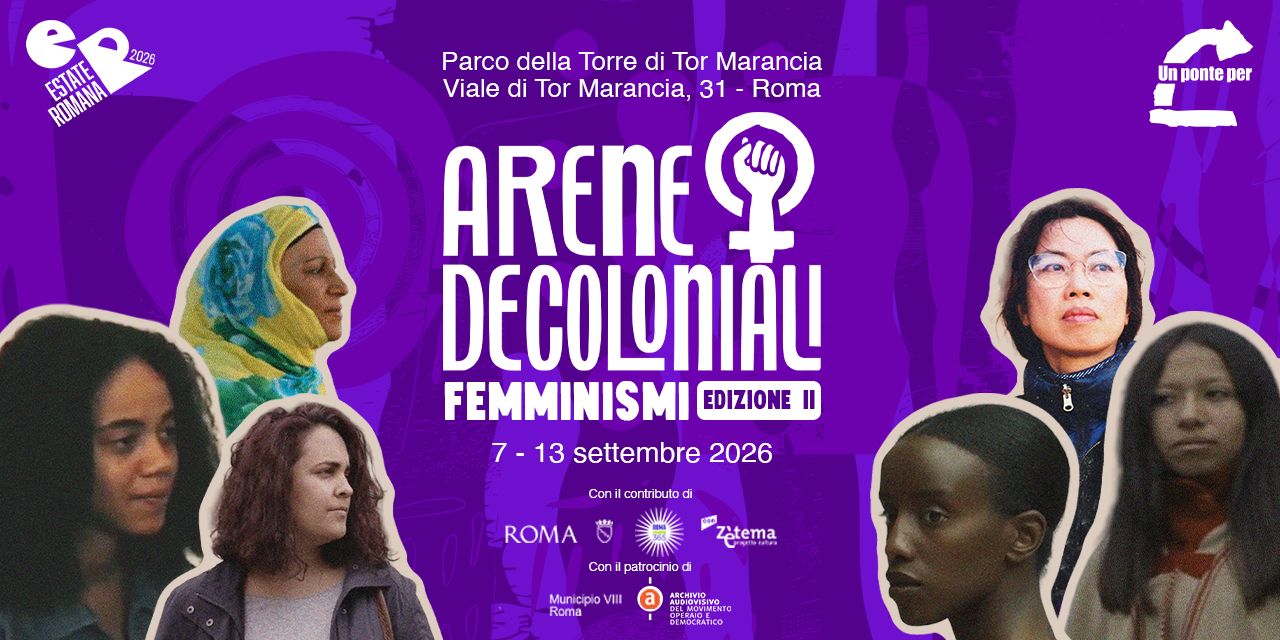
DECOLONIAL ARENAS 2026 KICKS OFF

Hospitals without drugs for life-saving operations. Clinics in camps for displaced people without medical staff. Ambulances at a standstill for lack of fuel. This is the devastating reality we began telling you about six months ago, when we saw with our own eyes the effects of the Trump administration's suspension of USAID funding last March.
These have been terrible months, in which we have witnessed day after day the deteriorating health conditions of thousands of people. Since the early months of the year, many organisations have suspended or stopped their operations in the region altogether, and camps for displaced people have been hardest hit. Essential services such as food and water distribution, health care, nutrition and protection have failed, making life even more difficult for those already living in precarious conditions.
In camps like Abo Khashab and Serekaniye, we at Un Ponte Per, together with our partner KRC, have remained the only ones to guarantee health services, albeit with enormous difficulties, forced to drastically reduce the activities of our clinics, limiting them to emergencies and transfers to hospitals.
But hospitals were also gradually losing their ability to provide free care to the population: by the end of April, only one out of sixteen public hospitals remained fully functional throughout north-east Syria. This meant that pregnant women, children and people with chronic or life-threatening illnesses no longer had access to essential and often vital care. Paying the highest price, once again, were displaced people living in camps.
In the meantime, another important change has transformed the Syrian scenario: the reduction of services in the camps, combined with the new political situation following the fall of the regime, has pushed many families to return to their areas of origin. Today we are witnessing a gradual emptying of the camps and the repopulation of areas like Deir ez-Zor, which had remained inaccessible for years. But the return takes place in devastated contexts: there is a lack of water, energy, livelihoods, health services and basic infrastructure.
To helplessly witness the difficulties these people were experiencing, to see the crisis in a health system that we have been supporting for fifteen years to make it solid and free, and to have to suspend the contracts of Syrian colleagues with whom we had shared a long journey, were very hard tests. But it was our sense of responsibility towards them and the local communities that pushed us forward.
Crucial at this time was the support of our donor community, which responded to our appeals to cover basic health needs and gave us the strength to continue to seek new funding and to denounce the injustice of the cuts.
So, after months of effort, we finally started to see the first results.
Since July, part of the US funds have been released, while thanks to UN support, a new project has started that allows us to partially resume support to the Hassakeh National Hospital (HNH), the main medical facility in the region, a referral point for over 700,000 people.
This project aims to strengthen the patient referral system by linking primary health care facilities to the HNH in order to improve access to specialist care. The aim is to remove economic barriers that prevent people from receiving treatment by reactivating essential services. Concretely, UPP will support the hospital by covering the full cost of surgery, diagnostic tests and treatment for the displaced population living in the camps.
We cannot forget the stories of the people we have met in recent months - like Hanan and Nasser. For them, and for all the families who continue to resist in this tormented region, every step forward is crucial. It will take time to measure the consequences on these people's health of the irresponsible decision to suspend funding, in Syria as well as around the world. But it is necessary to recount them, so that we do not forget and so that those who made these decisions assume their political responsibility.
Our work is not finished. We will continue to look for funds, to strengthen solidarity networks and to amplify the voices of those who otherwise would not be heard. But if today we can say that something is starting to move again, it is only thanks to those who did not leave us alone.

Lavinia Brunetti - Health Programme Manager of Un Ponte Per