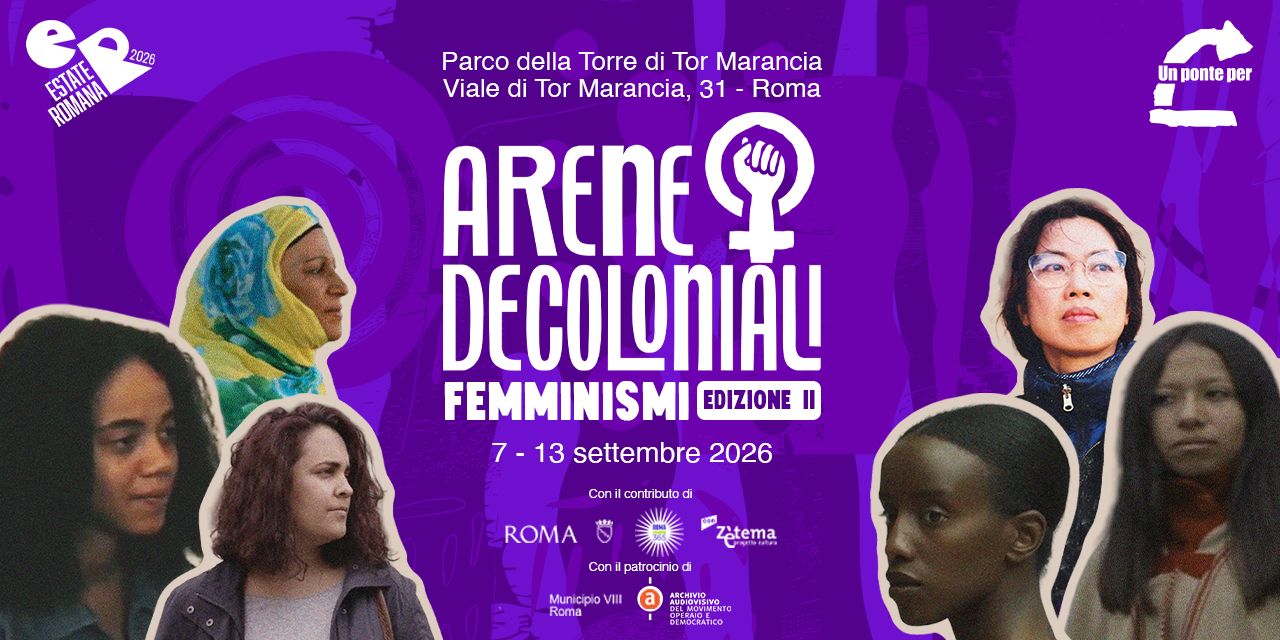
DECOLONIAL ARENAS 2026 KICKS OFF

Raqqa is a territory marked by deep and layered fragility. In recent years, the political and social context has been shaken by continuous shocks: internal instability, the cut in funding for humanitarian aid. All this in a region already affected by thirteen years of war, a severe economic crisis, international sanctions and the heavy consequences of the Daesh (ISIS) occupation.
The result is an enormous need for essential services, particularly in education and protection.
In December 2024, with the arrival of new waves of displaced people from the rural areas of Aleppo and Afrin, all schools in Raqqa were closed to accommodate families in buildings turned into collective centres. Even when the situation partially stabilised, 38 out of 51 schools remained closed, compromising the education of an entire generation and, along with it, their future opportunities.
The consequences of past conflicts are still evident: many schools are unusable or severely damaged by bombing, leaving entire communities without safe spaces for children and adolescents to learn.
The absence of functioning schools not only deprives people of the right to education, but also takes away a protected place, increasing the risks of exploitation, child labour and early marriage.
At the same time, this context has had a very serious impact on protection services for women, girls and children. There is an increase in child labour, early marriage, domestic violence, psychological stress and social isolation. Strong discrimination against displaced families and those returning from camps, such as Al-Hol, also persists.
Opportunities for reintegration and access to work remain extremely limited, especially for women, in host communities already facing profound economic and social difficulties.
In this scenario, it is evident how much non-formal education and protection are deeply intertwined needs: learning cannot be ensured without a safe environment, just as protection cannot be ensured if children and caregivers do not have access to structured, stable educational spaces where they can find normality and future perspectives.
This is all the more true in a context like Raqqa, where the presence of recently displaced persons and returning families makes it urgent to create places that foster not only access to services, but also coexistence, social cohesion and integration between groups experiencing tension, stigma and mutual marginalisation.


THE 'BUILDING FUTURES' PROJECT
The Building Futures project was created precisely to strengthen the Safe Spaces of Un Ponte Per for children and women and girls, and to rebuild what was destroyed: skills, educational paths, community networks.
Thanks to the support of theItalian Buddhist Institute Soka Gakkai and in collaboration with local partner DOZ, Un Ponte Per worked in an integrated manner on protection, education and social cohesion.
In 13 months of the project, 40,850 people were reached in Raqqa, helping to reduce the educational and protection barriers affecting children, adolescents and women in contexts marked by vulnerability and insecurity.


A STORY THAT TELLS THE VALUE OF THESE SPACES
N. is 18 years old and came to our Women and Girls Safe Space in Raqqa after years of family violence. She was frightened, withdrawn, without any faith in the future.
Through the one-to-one interviews with the counter gender violence programme workers and the psychosocial support sessions, she found for the first time a space where she could feel safe to speak out, understand her rights and begin to rebuild her self-esteem.
By participating in the literacy group, she acquired new skills and made connections that helped her come out of isolation. Today she looks to the future with greater serenity and wishes to support other girls in her community.
Stories like hers are frequent. Facilitators tell how these paths transform not only the lives of women and children, but also their own:
"When we see the children regain confidence and the mothers - often heads of families - feel less alone in coping with parenthood and economic difficulties, we realise that our work is really changing something".
In a fragile context like Raqqa, these spaces are much more than a service: they are places to start again.
A JOURNEY THAT COMES FROM AFAR
Un Ponte Per has been working in the protection sector in Syria since 2017, initially integrating this work into health programmes and, since 2020, inaugurating the first Safe Spaces. Over the years we have contributed to UN strategy documents, data analysis from the field and capacity building of local organisations and institutions.
Despite the chronic uncertainty of funding - which often jeopardises the continuity of activities - we have chosen not to abandon communities, but rather to reach out to the most isolated ones.
For us, supporting local communities is not a single project, but a mission.
And non-formal education, as well as health and protection, is an integral part of this mission: a bridge between the present and the future, between the crisis and the possibility of building a different society, by Syrian people for Syrian people.
Every time a centre threatens to close due to lack of funding, we know that dozens of women will lose a safe space and hundreds of children the only place to study and regain a sense of normality.
That is why we continue, even when it is difficult.
Continuing on this path means offering Raqqa - and everywhere else for that matter - the chance to shape a generation that is not defined solely by the experience of conflict. Today, non-formal education is the only channel of access to learning for thousands of children and must remain closely integrated with protection activities.
Safe Spaces are among the few places where children and women can learn, talk, feel protected, receive guidance and support. They are spaces that belong to communities and that, together with communities, must be allowed to grow.
At a time of political and social transition, Syria needs, more than ever, citizens who are educated, informed, and able to participate in rebuilding its future.
Ambra Malandrin
Protection & Education Coordinator