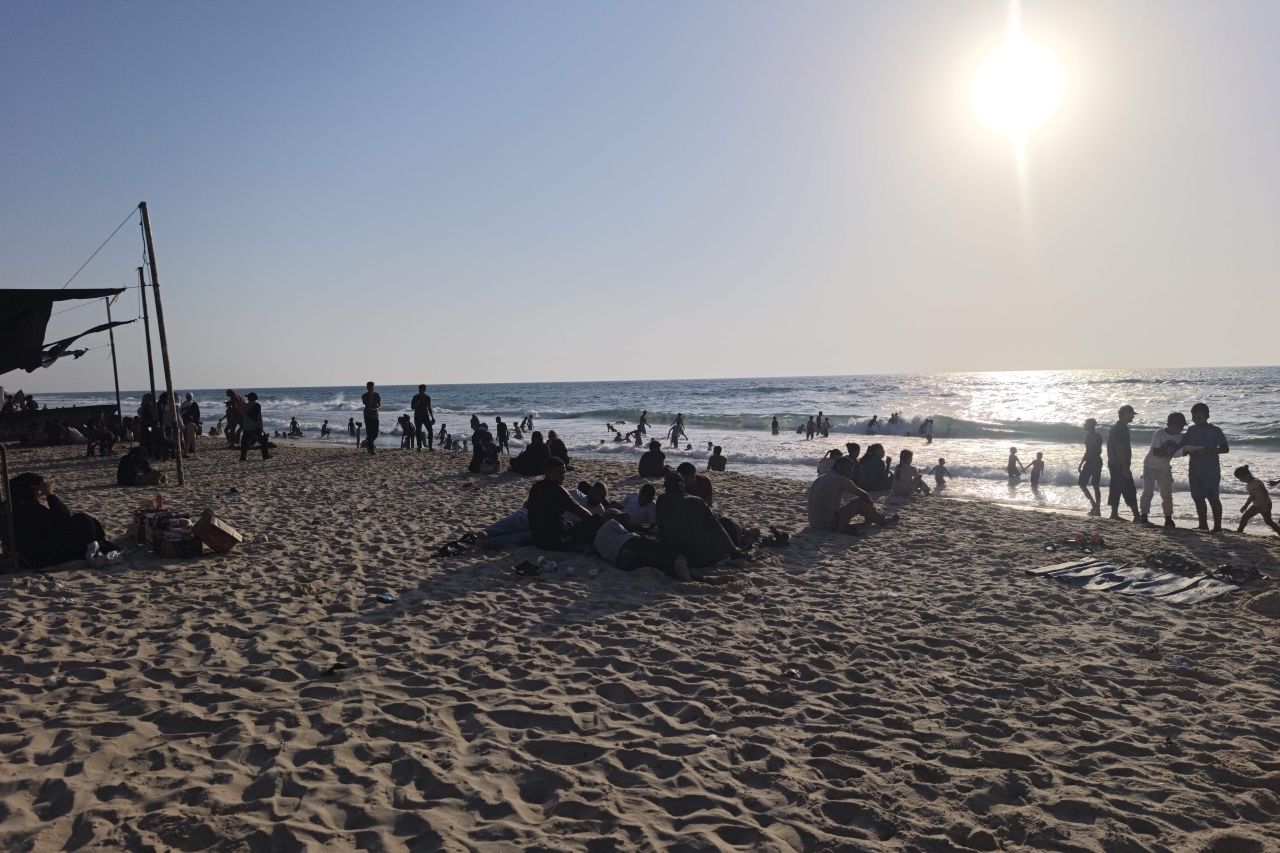
SYRIA. BACK TO LIFE
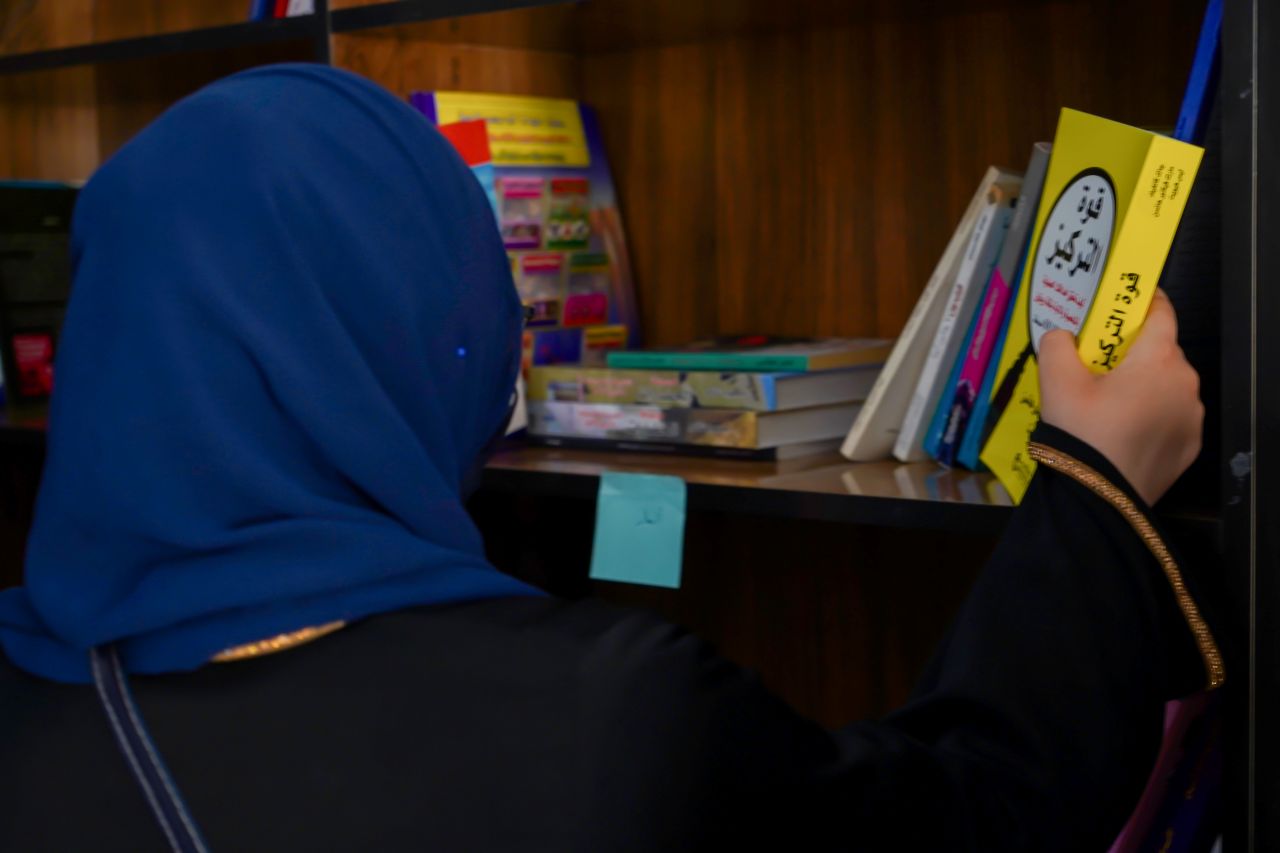
The first letter of the Arabic alphabet is the alef. They are writing it during a literacy lesson in an informal settlement for displaced people, near Raqqa. The girls are aged between 15 and 17, but have never been able to attend school. They were born at the start of the war. The conflict has spanned almost their entire lives. Watching them learn that first letter brings home just how much has been taken from them, but it also reveals a new possibility taking shape.
Since I started working in Syria, I have learnt just how long – and uncertain – the wait can be. In the informal settlements where we arrive with our partners, thousands of people have been living for years in accommodation that was meant to be temporary. They come from different towns and villages; they have left behind their homes, jobs and ties. Some families have fled several times. They would like to return, but in their places of origin they still find destroyed homes,a lack of services and social barriers that hinder access to safe housing and livelihood opportunities. Meanwhile, life goes on here: sons and daughters grow up, more children are born, and people carry on mending their tents and building homes out of mud and straw.
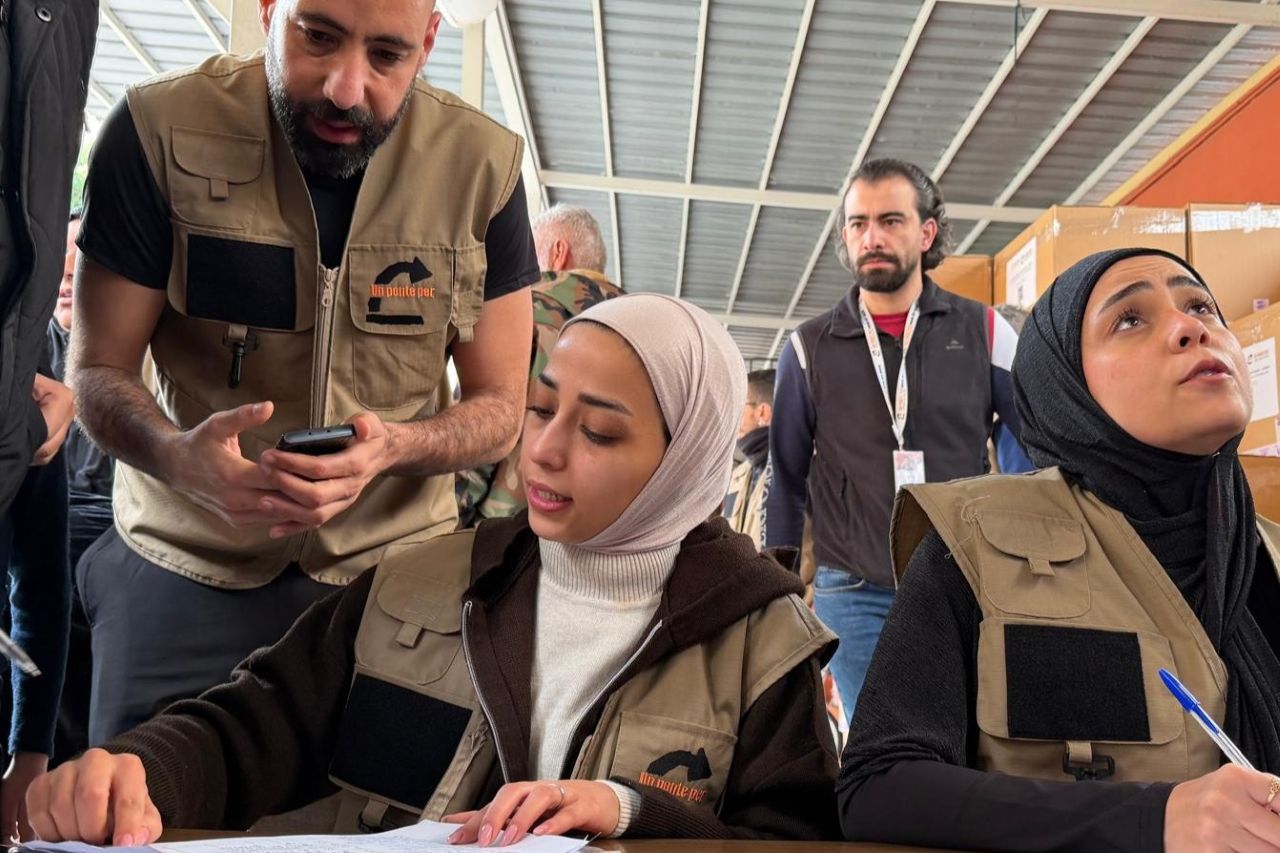
In one of these settlements, we have recently launched new activities with DOZ, our Syrian partners specialising in protection. Under the tent where we are based, there is a mix of activities: games for children, psychosocial support sessions, lessons for teenage girls and sessions dedicated to women’s health. During a session on breast cancer prevention, I met a mother who, at the end, asked to stay and watch the girls’ literacy lesson. She can already read and write but wants to see how our facilitators teach, so that she can help her daughters at home: they work in the fields and are unable to attend. Behind that request lies an attempt to carve out space for learning within days already filled with the struggle to survive. We’d love to see her daughters at the next lesson too, but we know that to make that happen, a notebook, a pencil and an ‘alef’ drawn on a sheet of paper aren’t enough on their own.
The girls describe days spent working on farms from dawn to dusk, low wages and situations in which it is difficult to protect themselves from harassment and exploitation. Marriage may seem the only way out, even when it means getting married whilst still children. But when we ask what they would like to learn, other aspirations emerge: to have a trade, to earn an income independently. Their words remind us that protection also means making more sustainable alternatives a viable option.
A little further on, another woman proudly shows me the house she built all by herself, mud brick by mud brick. She is 56 years old, supports a family of eight children on her own, and has opened a small shop selling essential goods. She walks with difficulty, but she takes us to see what she has managed to achieve. Her story predates our arrival. It speaks of the efforts of so many women who hold their families together, cope with health problems and find a way to carry on, day after day. Our task begins with recognising this strength and understanding what support is lacking.
Today, Un Ponte Per operates in the governorates of Hassakeh, Raqqa and Aleppo. Our expansion beyond the north-east brings us into contact with diverse communities united by similar needs. In the rural areas of Aleppo, we are supporting the reopening of 22 healthcare facilities. In Hassakeh, we continue to support clinics in camps and villages; in Raqqa, alongside medical care, we provide safe spaces for women and operate a mobile unit that reaches the most isolated settlements.
Behind this geography lie very real distances. A doctor’s appointment may require a journey that a family cannot afford. A woman who has survived violence may decide not to seek help because she fears judgement or does not know who to turn to. A child may be excluded from school because they have to contribute to the family income. Over the years, these connections have become increasingly central to our work; listening to one problem almost always leads to discovering many others.
That is why we combine healthcare, protection, psychological support and education. We train our staff to listen without judgement and to guide those in need towards the right support. We have also expanded our support for communities through awareness-raising and training on mental health. Years of war and displacement have exacerbated physical and psychological health conditions, often leaving people without diagnosis or treatment, even for psychiatric disorders. We also work on environmental health; the lack of waste collection services often leaves families with few options for disposing of waste, which ends up piling up and polluting an already arid landscape.
We are seeking staff to ensure the continuity of public services and to create opportunities for self-reliance, in a country that is changing day by day, with all its territorial and socio-cultural characteristics. It is a daily commitment, shared above all with our Syrian colleagues who are working for their own communities.
Perhaps Syria, too, despite its millennia-old history, is searching for its own ‘alef’. A starting point from which to begin rebuilding itself, amidst what remains, what it has lost, and what is still missing.
For these girls, learning to write opens up a real path that should always have been there. For us, being there means supporting them, so that after that first letter, other words, opportunities and choices may follow. And so that, together with their country, they can shape their own future.
Ambra Malandrin – Protection & Education Coordinator at Un Ponte Per