DECOLONIAL ARENAS 2026 KICKS OFF
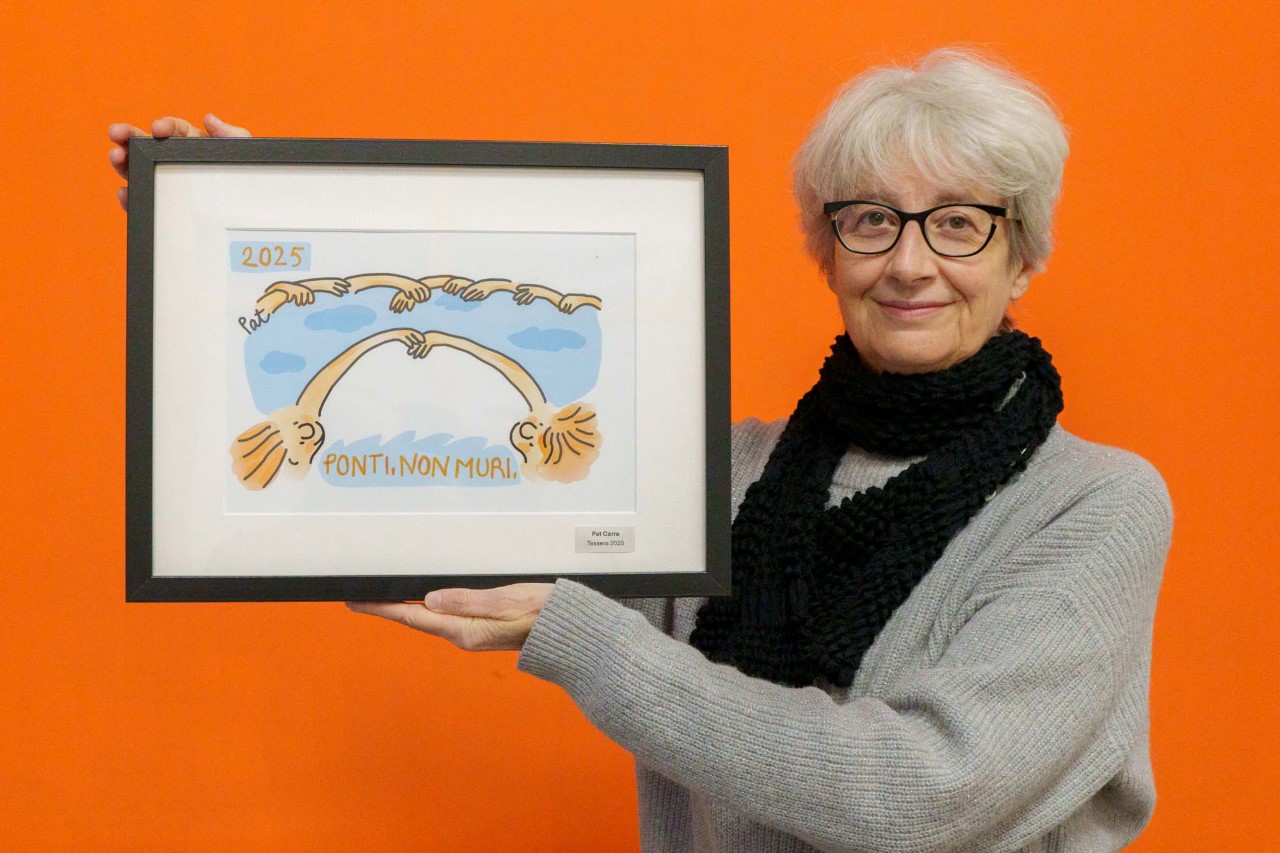
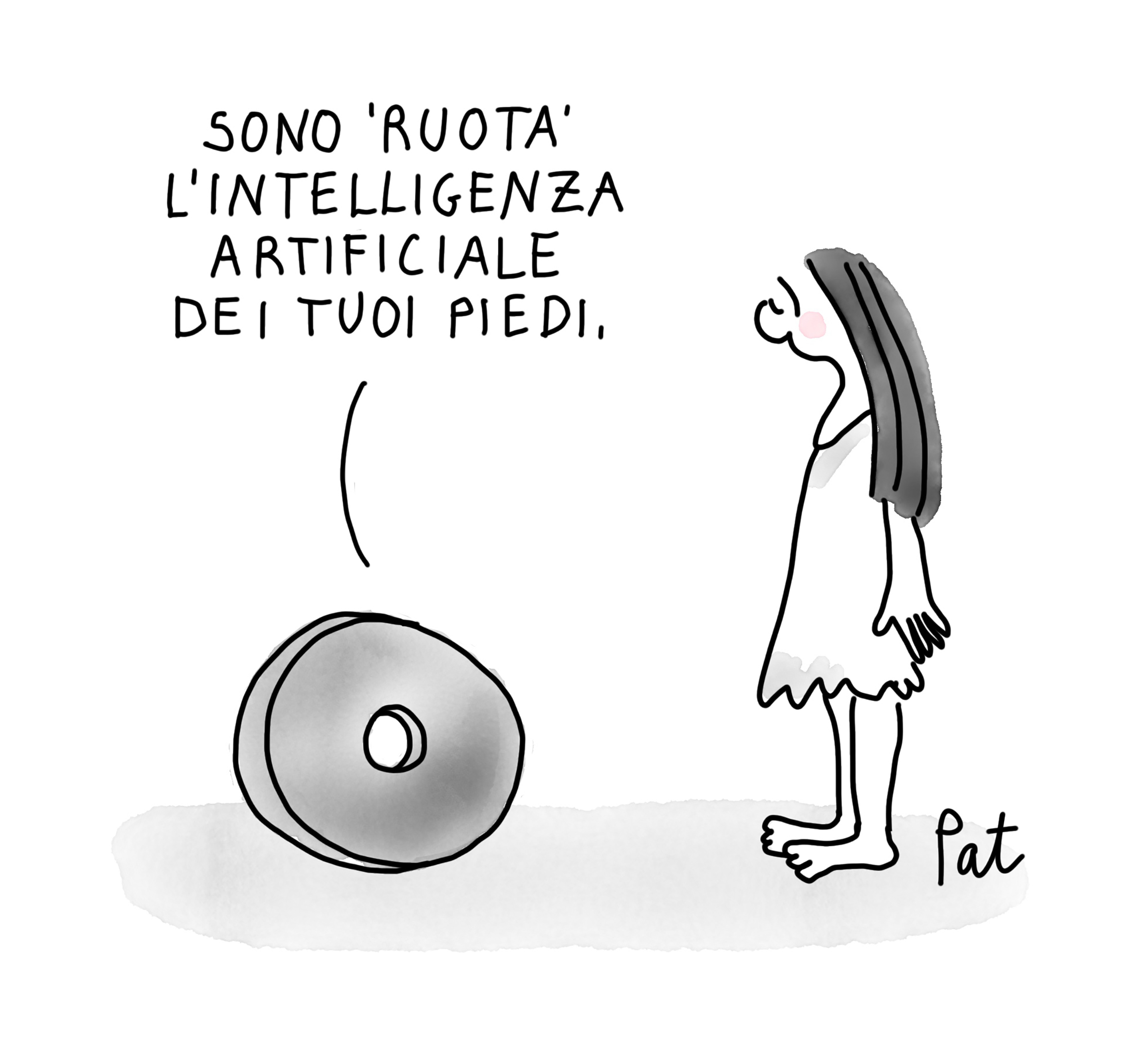
Cartoonist, feminist, author, ironic activist, Pat Carra is many things, and all intertwined. Born in Parma, she has lived in Milan since 1977, a city that she feels has been disrupted by the so-called 'urban regeneration' of recent years. This year Pat donated to us at Un Ponte Per la Tessera 2025. We met her for the occasion and she told us about her life journey, through the weapons she masters best: cartoons. Let's start from the beginning.
Although she started working at a very young age, she never attended an art academy - "my drawing was born self-taught, far from the academic canon" - and perhaps it is precisely this freedom that "allowed me to build a more direct, personal, edgy language and graphic style".
Even as a child, Pat says she felt the need to use drawing to react and process anger in the face of bullying.
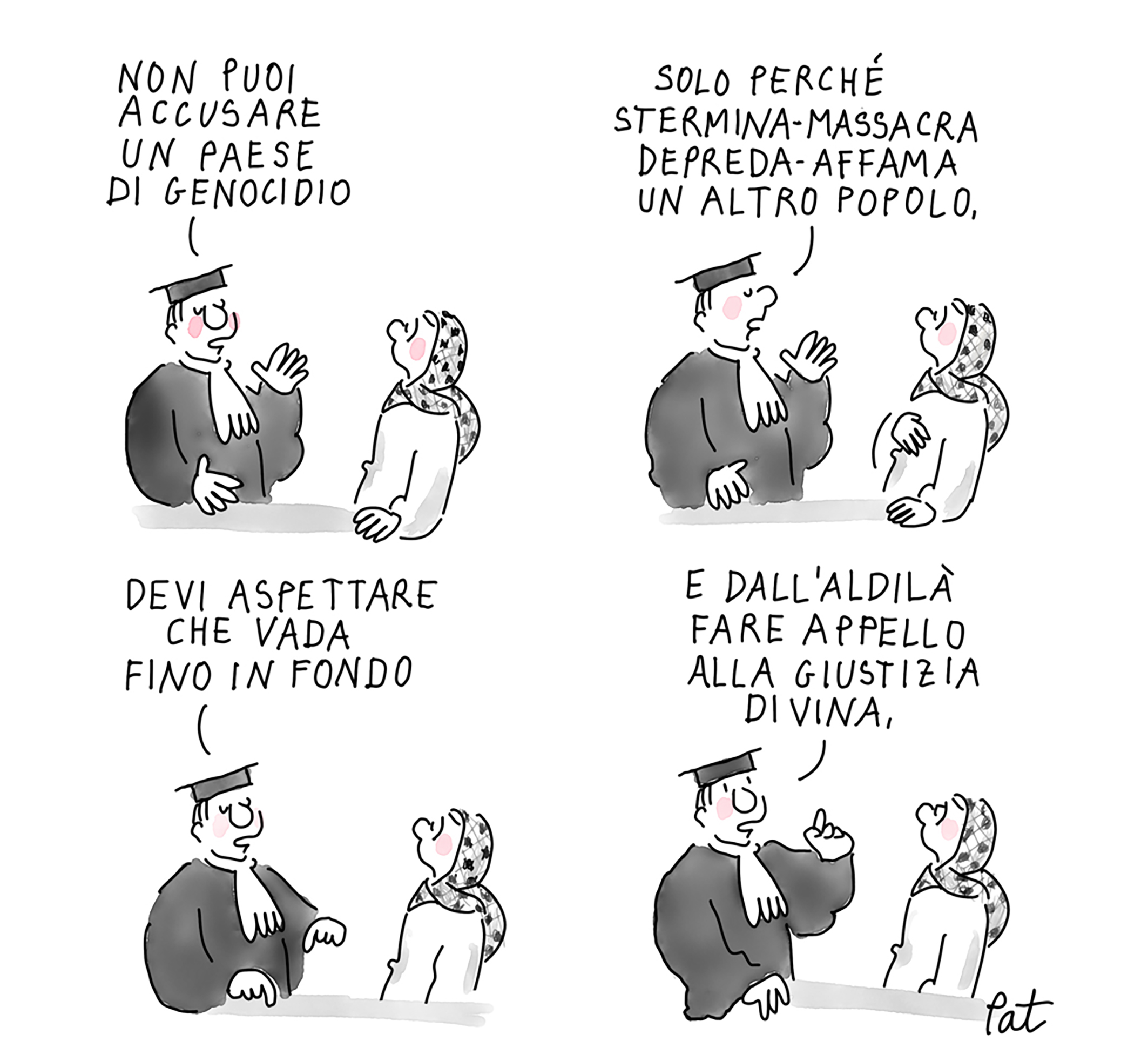
Then, the encounter with feminism. "In the 1970s, I started publishing with feminist collectives: posters, books, catalogues. Always using irony and a satirical key'. This is how the cartoon became political expression and a tool for critical thinking, an alternative to established ideologies. "Humour is the only form that has allowed me to never really embrace a preconceived slogan. It is my guarantee of authenticity." In 2019, after the closure - due to a Bayer-Monsanto legal attack - of the historic Aspirin magazine, Pat co-founded Weeds. Weed-resistant forms of life, a self-deprecating, eco-humorous publishing project. "There we understood many things: about pesticides, about agro-industry, about the power of humour as an antidote. We don't call ourselves eco-feminists so much as eco-humourists'.
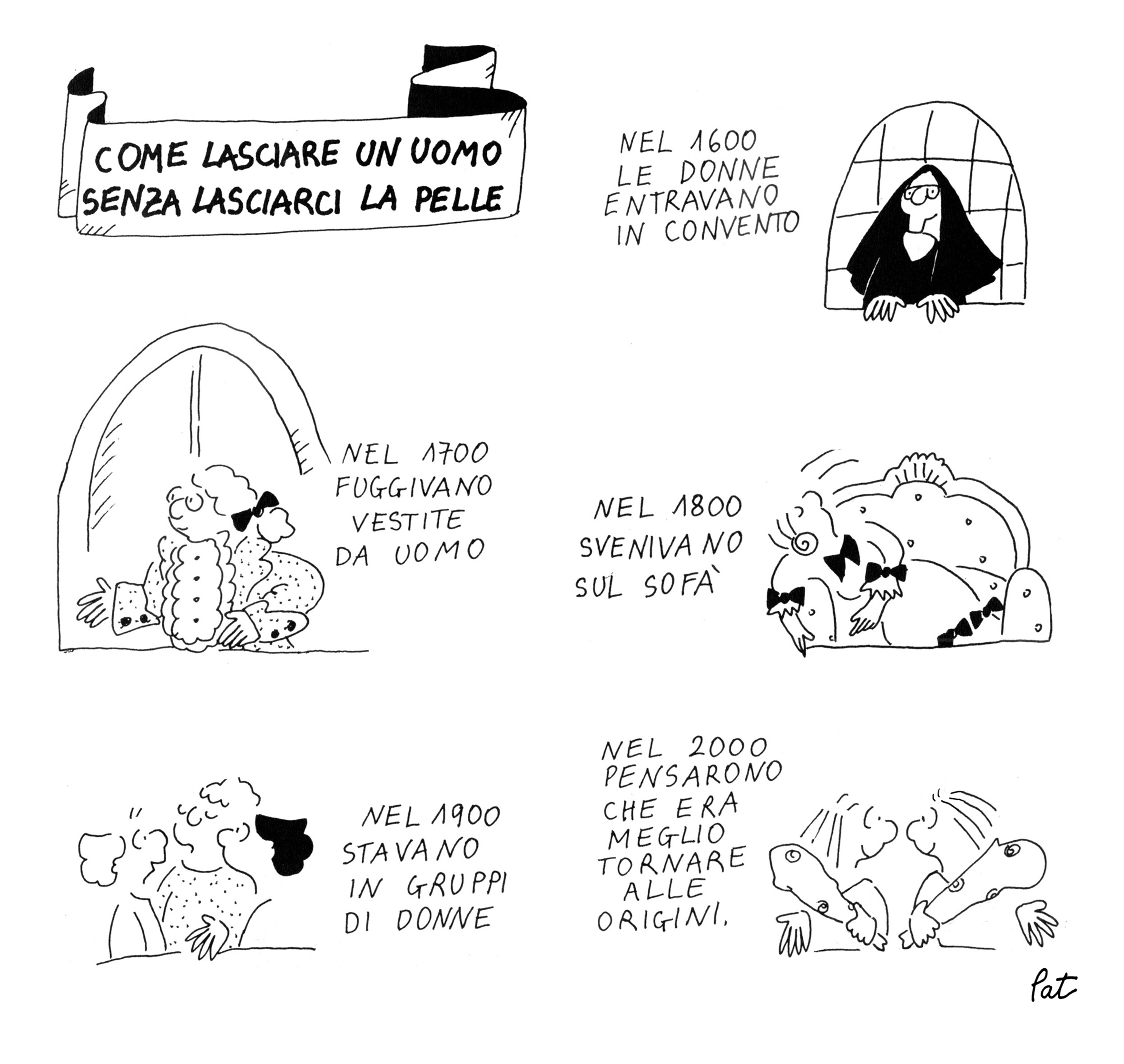
Many of her works intertwine feminist reflection, war and systemic violence. Like the cartoon strip How to Leave a Man Without Leaving Your Skin, published in 1987, unfortunately still very topical. "It is a strip on gender violence, when the term feminicide was not yet used. A comic strip that for me remains central, because it goes beyond the pain, it tries to find a way to save itself. The return to the club symbolises just that'.
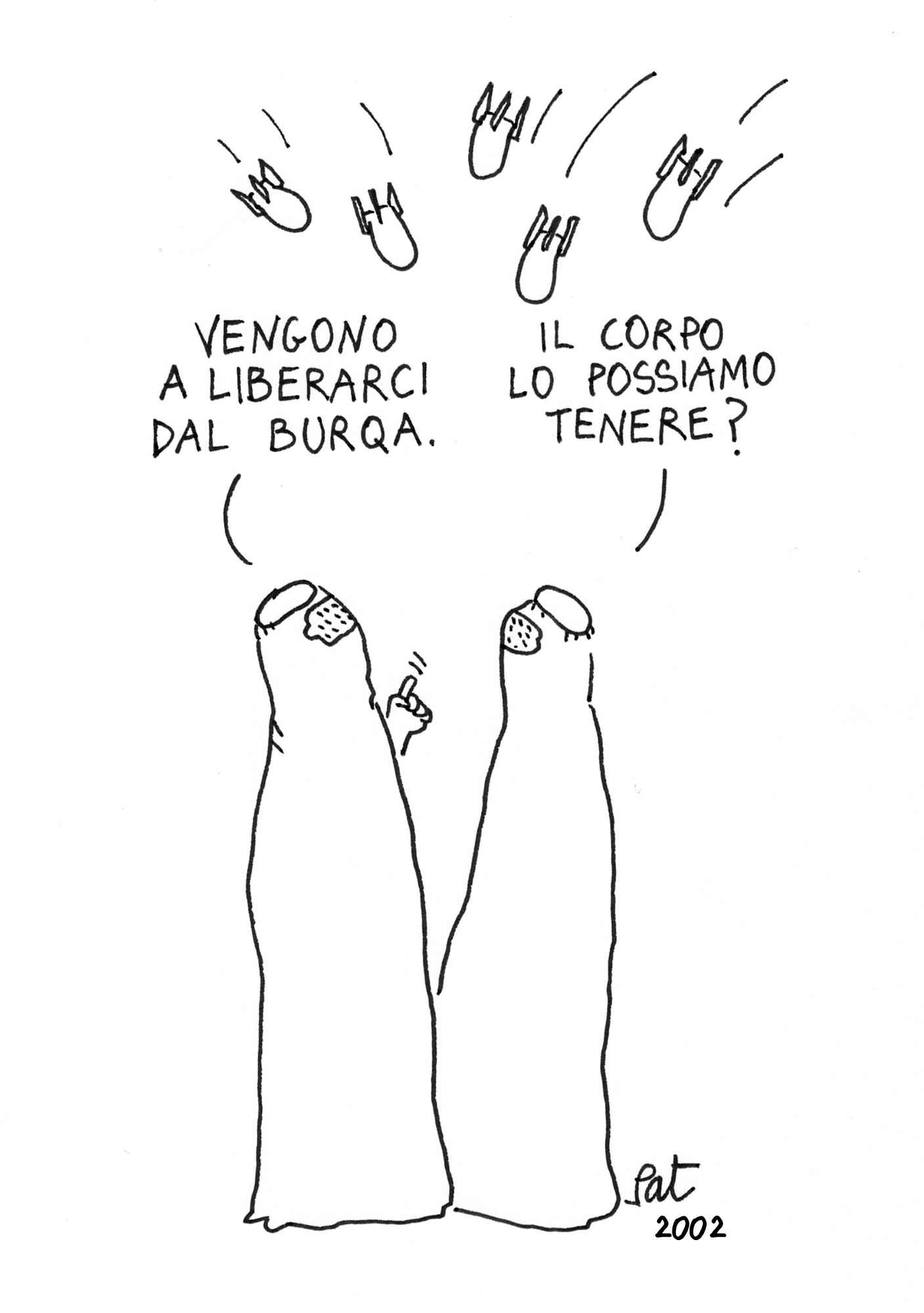
Pat was among the first to depict the connection between war and patriarchal violence with cartoons. "I started with the war in the Balkans, then Afghanistan and post-9/11 Iraq. One of the cartoons showed two women wearing burqas while it rained bombs: one said They come to free us from the burqa, the other asked Can we keep the body?".
War, which for the cartoonist personifies the ultimate patriarchal embodiment: 'Vandana Shiva says that extinction is the only way patriarchy deals with things that are alive and free. It is what people like Trump or Netanyahu do with bombs, along with many other powerful people, men and women'. Despite the moment in history when wars and genocides go on live social, Pat has not lost faith in the future. "I trust young people. I see in them a new, real sensibility that turns less to the other side".
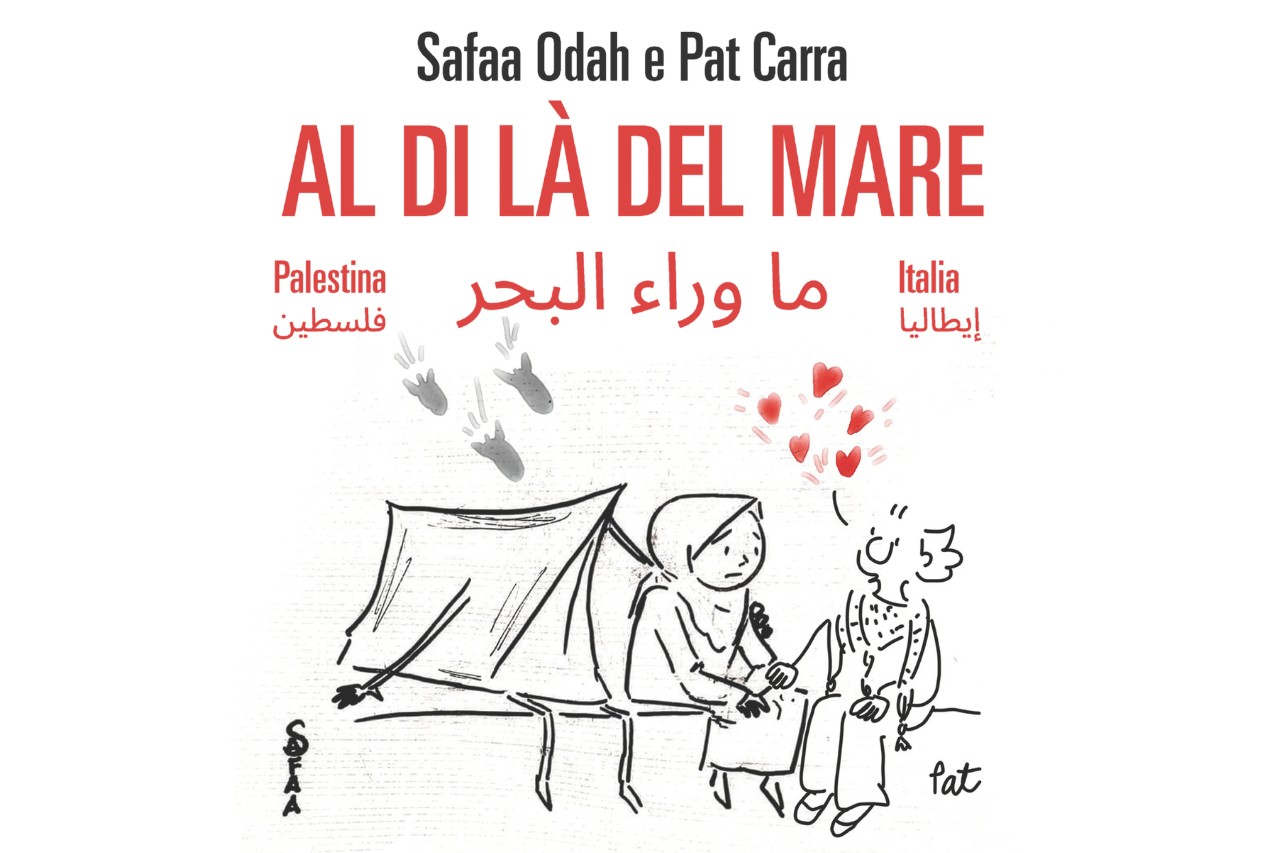
Disillusionment with Western institutions, particularly European ones, is strong - 'the abstract idea of rights has chiselled itself into nothingness' - instead, trust remains in real connections with people. "For me, Un Ponte Per is a living interweaving with a piece of the world. The tile I drew, with those bodies stretching out like a bridge, comes from there. It is the body that connects, it is the relationship of human solidarity that builds'. Like the one for Gaza and its people, subjected to unspeakable suffering. "I have been in continuous contact for months with Safaa Odah, a Palestinian cartoonist from Gaza.
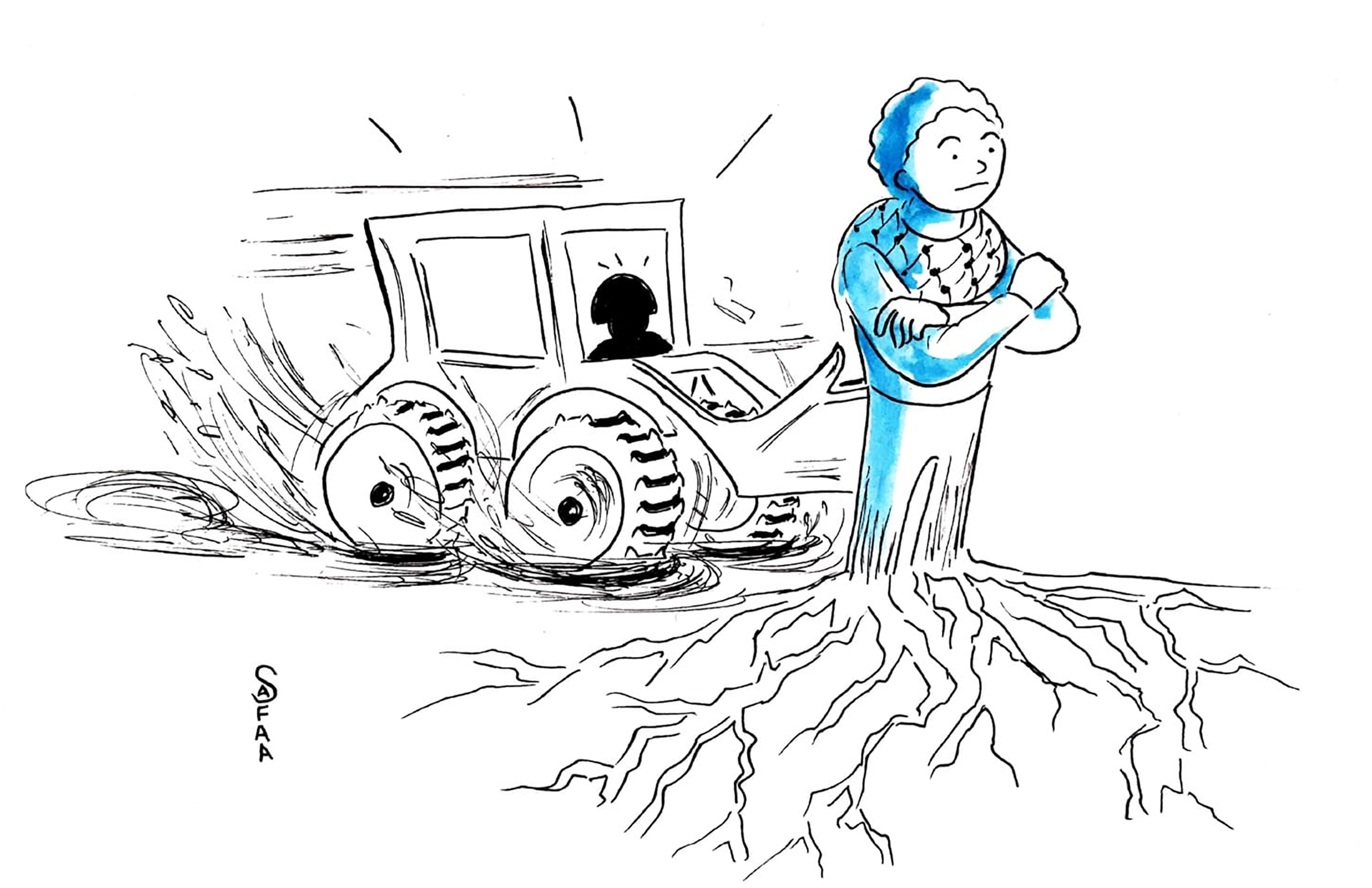
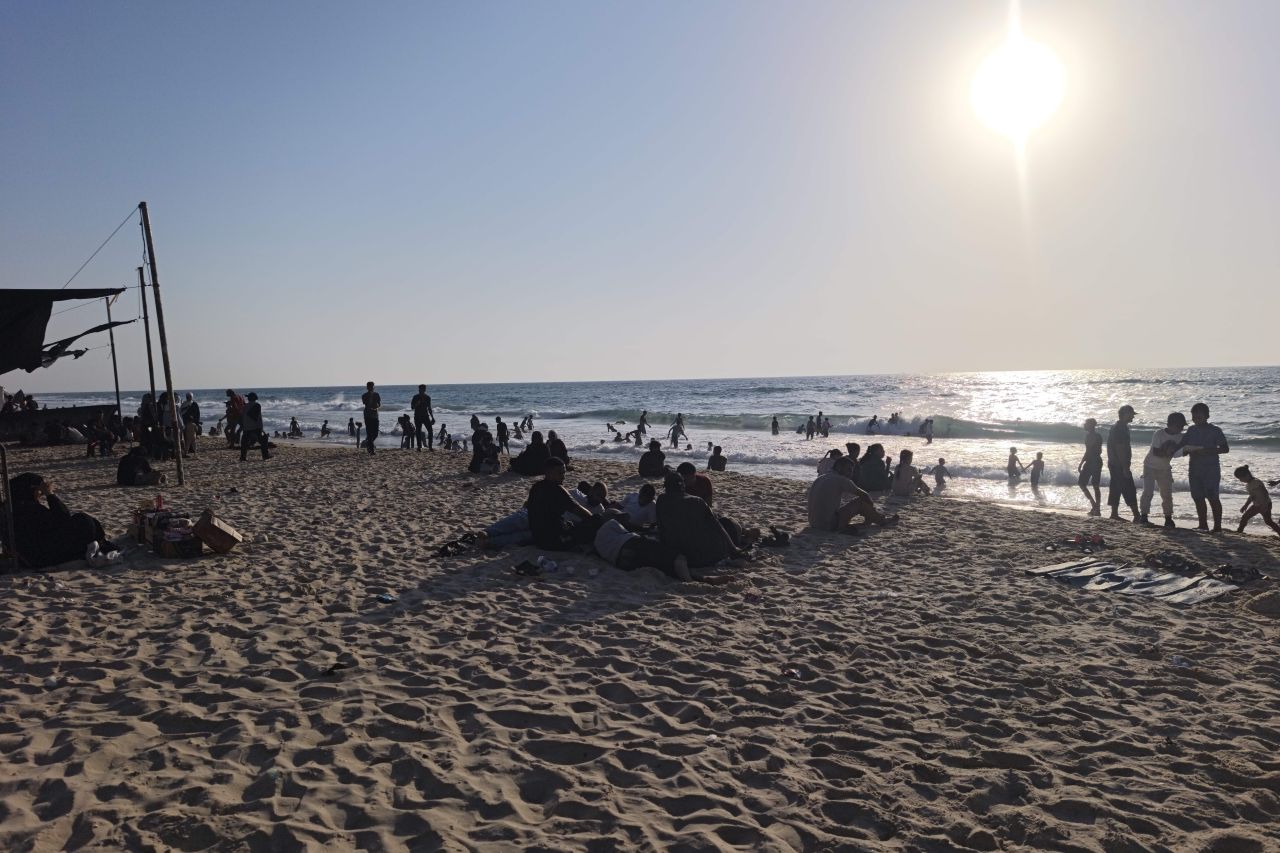
A tent in Palestine, his weekly column in Weeds, is for me and the editorial team the strongest bridge at the moment. Safaa cannot leave the Khan Yunis refugee camp, yet we manage to continue writing to each other. I live in anxiety when a reply from her is late in coming. Words, like comics, build bridges when they seem impossible. I sincerely hope to embrace her one day live'.
After many years of career, today Pat also looks with concern at the digital world and the evolution of work, 'too often throttled by platforms'. In his latest book, The Digital Labourer and Other Stories, he reflects on the continuity between agricultural and technological exploitation. "I tried to parallel the agricultural struggles of the farm labourers with the allotment of the web and global technocracy. From there the idea of the digital labourer was born: one who fights against the big web oligarchs. Amazon, Google, the major social platforms, they are the new masters. And our bodies - even in front of the computer - continue to pay a high price for their wealth'.
Pat Carra continues to experience art in some ways as a physical gesture, an exercise in endurance, unafraid of the pitfalls of artificial intelligence."I tried to ask the AI just one question: can you make a cartoon about war? It replied that you can't do humour on such serious topics... and to think that I have done so many."