DECOLONIAL ARENAS 2026 KICKS OFF
After 13 years of uninterrupted conflict and war, Syria - forgotten by the international community and out of the media headlines - is back in the news for yet another crisis affecting its population. What has been happening since the end of November is a direct consequence of turning our eyes away from that context, forgetting a conflict that continues uninterrupted with a devastating impact on the lives of hundreds of thousands of people.
From Aleppo to Idlib to Hama, the situation is serious and is affecting the population and the possibility of action by humanitarian actors.
We at Un Ponte Per have been present in the North East of Syria since 2015, working side by side with a number of long-standing local partners - including the Kurdish Red Crescent (Heyva Sor a Kurd - KRC) and Doz International, with interventions aimed at ensuring free access to healthcare, rebuilding the local health system, creating Safe Spaces to support women and children survivors of war and gender-based violence with psychological support and education.
Today, we can only observe what is happening with deep concern and anguish for our colleagues, friends and the entire population. With our ambulances and Mobile Medical Units we are preparing to receive new flows of people fleeing, restless, seeking shelter, moving to where they are most needed to provide first aid and guidance. In the coming hours, we expect at least 120,000 people to arrive.
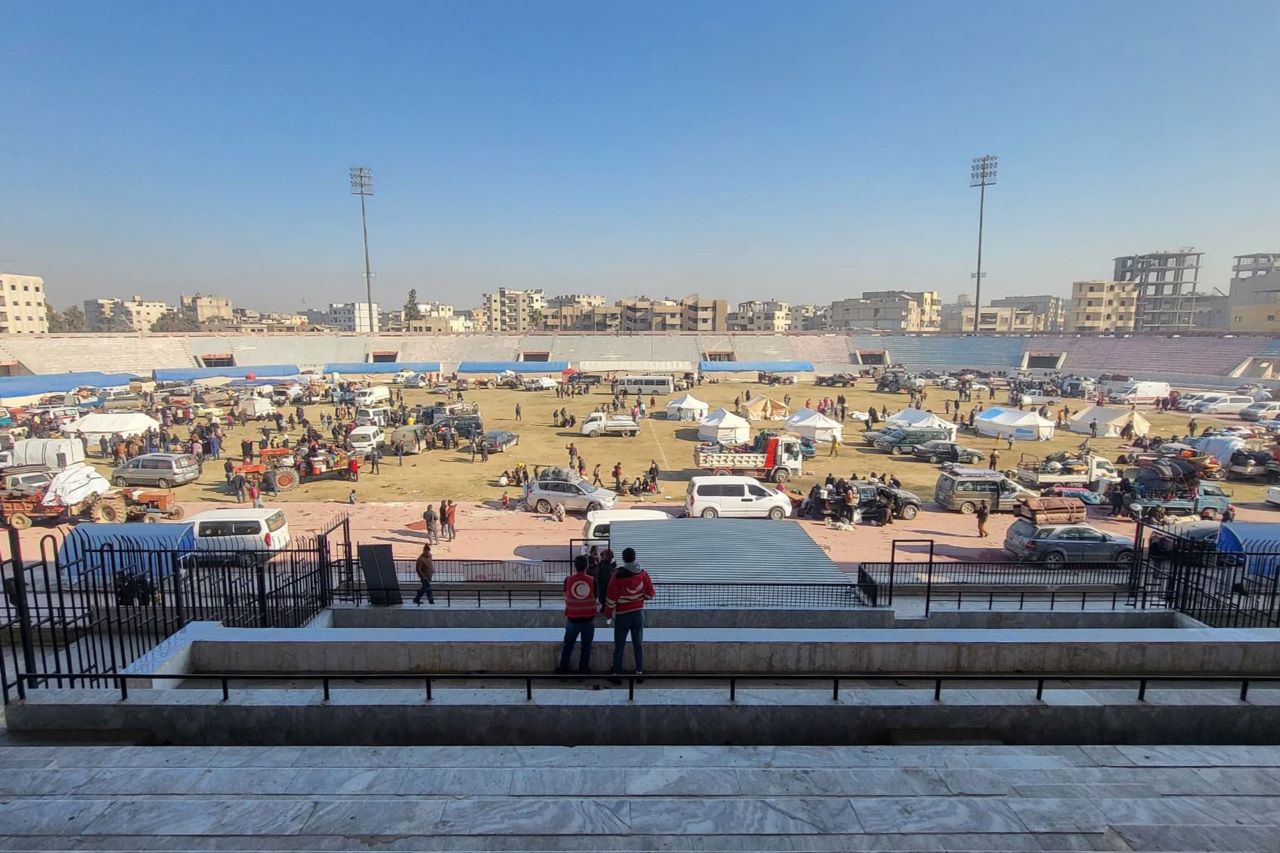
In the city of Raqqa, still in rubble and far from overcoming the page of war that has engulfed it, we have set up a first aid point in the city stadium together with KRC to receive people fleeing. These are mainly Kurdish people, previously displaced from Afrin, who are now leaving Aleppo moving eastwards.
In the meantime, we are reconverting our work in Raqqa into first aid interventions: the Safe Spaces that usually support women and children survivors of gender-based violence, operational thanks to our local partner Doz International, are providing first reception, orientation and psychological support to the people arriving, who have joined those fleeing Lebanon in recent weeks. And it was precisely with our colleague Dilbrin, from Doz, that we had spoken a few days before this new crisis erupted, while another one was already unfolding on the ground: that of the Syrian people who had fled the war in Lebanon in recent years, forced to retrace their path in reverse, to escape this time the Israeli offensive on Beirut.
"The situation is very complicated, because Raqqa remains a city deeply wounded by the war, still partially in rubble, lacking schools, health facilities, normal living spaces for people," Dilbirin told us, explaining how the Safe Spaces for women and children opened together had become an important reference point for the population over the years. Both for those in Raqqa, who had finally found a place where they could be supported psychologically, and who had recently also started to provide remedial classes for children forced to drop out of school; and for the Syrian population arriving from Lebanon. "They already knew us because we had helped them in the past. When people came back, they knew they could count on us like you count on long-time friends. In Safe Spaces, we were able to direct them to services provided by other organisations, to give them a hand in putting conflict-torn lives back together again," Dilbrin said. Now, they will be joined by new flows of internal migration generated by this umpteenth emergency.
Since 27 November, in fact, the fighting front has been volatile, changing from day to day and making it extremely difficult to predict future scenarios. At the moment, the cities of Aleppo, Idlib and Hama are suffering the worst conditions, where heavy bombardment is reported, hitting key facilities such as water plants, schools, hospitals and clinics, making it very difficult to provide treatment and first aid.
Therefore, thanks to the valuable work of our colleagues and local partners, we will continue to do our utmost to support the population as we have always done, and as long as necessary.