DECOLONIAL ARENAS 2026 KICKS OFF

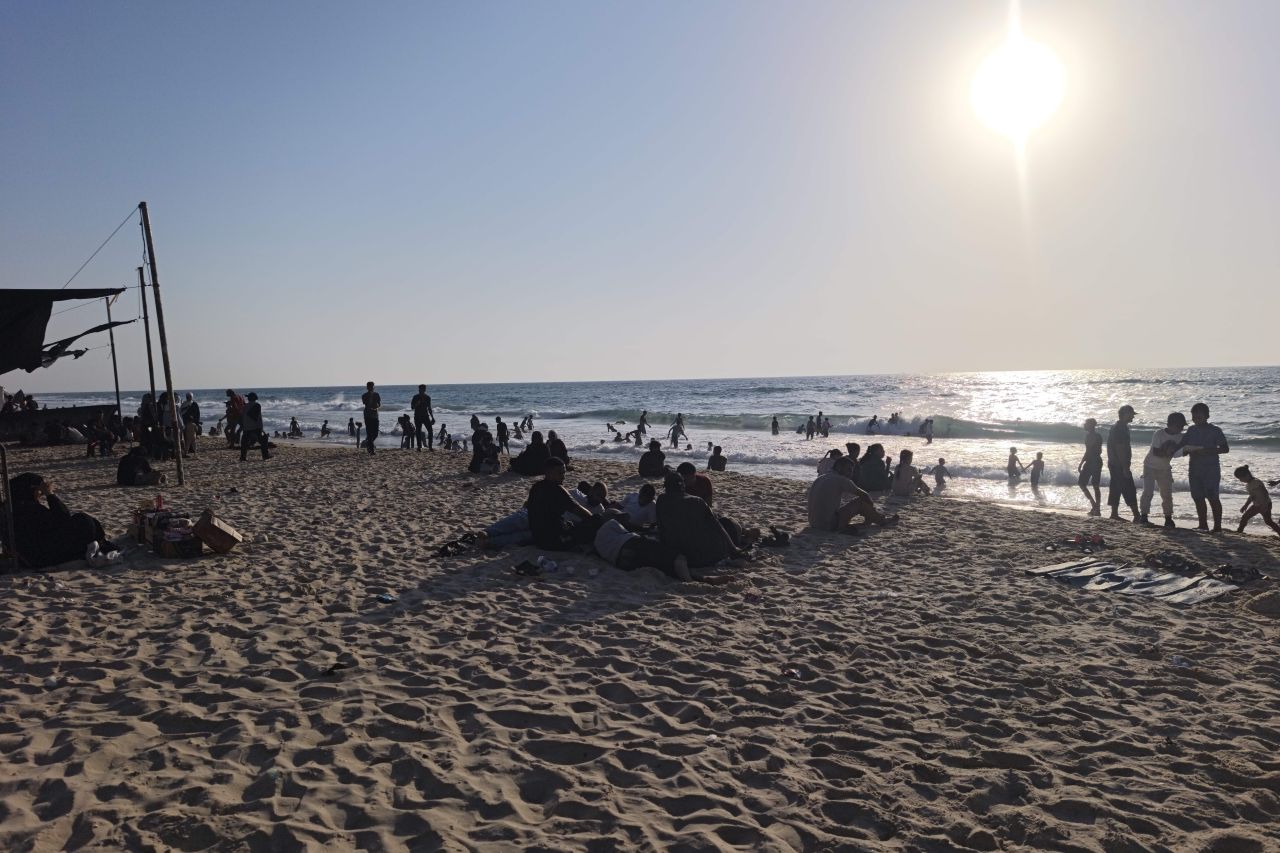
In Gaza, we all know each other. But most of all, we know the shelling. "If you hear them, it means you are safe," we use to say. In Gaza, which has sacrificed itself for the whole world, a cease-fire has come into force but there is still no safe place.
Even after two years of extermination, people are neither angry nor desperate. They have learnt to rejoice in the little things, despite living an indescribable everyday life. A few days ago I managed to talk to my mother: she told me that she had bought a small molokhia plant to prepare a lunch. "I planted it near our tent in Deir el Balah," she told me. "I cooked seven meals with it." He also planted basil and mint. She did it this time, and every time she and the rest of my family had to move, change refugee camps, change tents. And each time she left, she said goodbye to her plants. It is her way of keeping her relationship with the land alive. It is her way of saying: I am staying here.
Beit Hanoun, my town, no longer exists today. There is no home to return to. Yet I walk its streets every night, as soon as I fall asleep. I talk to people, the wounded and those who are no longer there. But it is not enough for me, I wish I could feel their same fatigue. I wish I could tell my mother we are going home. "Come on, Mum. Let's carry this mattress together," I would tell her. The people of Gaza who were killed will never be forgotten, and sooner or later we will come back to keep each other company in heaven.
These days I often think of the Nakba. At the time, the forced evacuations in Gaza lasted three days, and we talked about it for the next 70 years. Now that we have two years of displacement behind us, we have at least two thousand years of stories to tell.
"IF YOU FEEL PAIN, YOU ARE ALIVE. IF YOU FEEL THE PAIN OF OTHERS, YOU ARE HUMAN'.
In Gaza, after two years of genocide before the eyes of a complicit world, people feel they have done all they could to remain human. They managed to send us smiles as they tried to survive a plan of extermination, amidst bombings, hunger and thirst. Amidst the devastation of schools, infrastructure, hospitals and lack of medicine. Amidst the rubble of their own country, still full of life, dignity and pride.
In Gaza, people have chosen as always to cling to life and land. And with the mobilisations of solidarity around the world, they stopped feeling alone. They realised that people understand where the evil lies, they felt they had comrades and allies everywhere, who were able to shout in the squares and speak out for them. People who have taken to the sea - like the activists of the Global Sumud Flotilla - to whom they have said 'even if you have not reached Gaza, you have reached our hearts'. They saw families donating, trying to help even with small gestures.
To those who have been demonstrating for two years at our side; to those who for two years have been waking up at night or sleeping with a heavy heart because of the images they have received; to those who have filled the streets and squares; to those who have donated to help us survive: we thank you no more. You have taught us, shouting in the squares 'we are all Palestinians': we are comrades in the streets and in the struggle, Gaza has opened your eyes and 'taught you life'.
For this we do not thank you any more. But we want to tell you that we heard you. Even when we had too much pain in our hearts. Even when we were standing in line for a piece of bread or some water. Even in the din of the bombs. We Gazawi listen with our hearts more than with our ears, we see with our conscience more than with our eyes.
YOU HAVE EXTENDED US A HAND. NOW WE NEED TWO
With much tenderness and just as much firmness, we say to you: you extended us a hand that allowed us to move forward, one day after another, allowing us to believe that a century of propaganda could be dismantled, leaving room for our voice. Today, we ask you for two hands.
Because the genocide in Gaza continues. The bombs may stop, but not the consequences of two years of extermination and destruction. Today, the Strip is reduced to rubble. Over 70,000 people have been killed, at least 20,000 of them boys and girls, and who knows how many thousands are still under the rubble. Ten per cent of the population no longer exists. Some 4,000 families have been wiped off the population register forever. There are over 180,000 injured people without access to health care, drinking water, food. And 53% of the Gaza Strip remains occupied by Israeli military forces: this means that over two million people are forced to live in 180 square kilometres, 13 thousand per square kilometre.
How do they survive? Same as before. Our house was already besieged: it was just a little wider.
But Israel mainly controls the agricultural land necessary for the population to survive. In the past two years, the people have also exhausted their savings: if for so long they were able to get by with the supplies they had put aside, today the people literally have nothing left.
AN UNCERTAIN FUTURE
Paradoxically, it is when the bombs stop that the most difficult phase begins. It seems impossible to even think about, in light of the images we have observed. But as long as one is focused on survival, there is no time to ask questions. Now, however, we lack answers.
How will we rebuild Gaza? That is what we ask ourselves every single day. And the only possible answer, perhaps, is 'as always'. There are already teams of volunteers everywhere cleaning up the streets, removing rubble, trying to get the hospitals up and running again, and clearing schools of the families who have found refuge there. Because they know very well that the first step is to enable the children not to give up their education. That is what brings life back.
Seeing all this destruction before us feels like living in a desert, without a beginning or an end. And it seems impossible to start again. But then, one day after another, we always do. We just have to start.
It is not over yet. The war is not over. But neither is our hope.

Sharif Hamas - Communication Officer of the "Water for Gaza" campaign