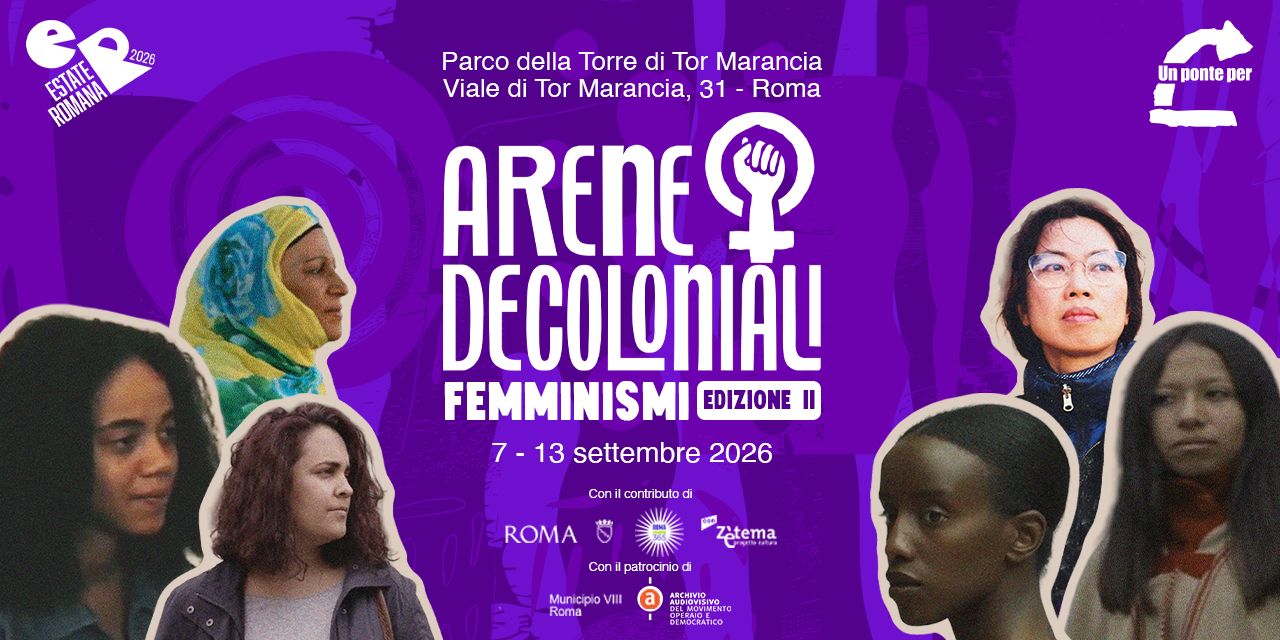
DECOLONIAL ARENAS 2026 KICKS OFF
Press release
Iraq. 30 years ago with Operation Desert Storm the First Gulf War began
On the night of 16-17 January 1991, a US-led coalition launched bombing raids on Baghdad. A war began whose consequences are still tangible and in the course of which the NGO "Un Ponte Per" was founded. A streaming event retraces the season of opposition to the war that developed in Italy with its protagonists.
Rome, 14 January 2021 - At 2:38 a.m. on the night between 16 and 17 January 1991, just 18 hours and 38 minutes after the expiry of the ultimatum sanctioned by the United Nations, OperationDesert Storm, the most impressive Allied military action since 1945, began.
In what would be the first conflict in history to be televised live, 90,000 tons of bombs would be dropped, marking a new point of no return to what was considered acceptable by global public opinion. The imagery that that war helped to create would lay the foundations for the long series of Western military interventions in the Middle East in the years that followed.
A Middle East in which, in the years to come, the voices and stories of the thousands of civilians affected - women, children, the elderly - would find no place. But how many were the victims of those 40 days in which more bombs fell on Iraq than in the entire Second World War? Estimates speak of around 200,000 people, but the long-term consequences would have affected many more. Among the most serious were the illnesses caused among children by the use of chemical weapons, the effects of which would be felt for years.
It was in those terrible days that the Italian pacifist association Un Ponte Per (UPP) was founded, which later also became an NGO, thanks to the voluntary initiative of women and men who chose not to give in to complicit silence in the face of the havoc that was being committed, also due to the Italian military contribution.
Started as a campaign of solidarity towards the stricken population, with some initiatives of civil disobedience - such as the illegal import of Iraqi dates in violation of the embargo declared on Iraq - UPP would later be structured as a non-governmental organisation, continuing to operate and remain at the side of the Iraqi people for the next 30 years.
Today, UPP continues to work in solidarity, cooperation, development and peace building in a country that still bears the scars of that war on its skin.
Thirty years after that dramatic night, what are the still tangible consequences in a country like Iraq, which has continued to face seasons of war, violence, terrorism? How many of those long-term effects continue to leave their mark in a Middle East that seems to know no peace?
This and much more will be discussed in a series of events that Un Ponte Per has organised to commemorate the thirtieth anniversary of its birth, but above all to celebrate the strength and courage of those peoples tried by wars alongside whom it has walked in these decades.
A series of public events, online and live, will start on 16 January, with a streaming event entitled "The watershed. Reflections on a war that refounded the world", in which we will look back at the season of opposition to that war with some of the protagonists of the peace movement of the time.
Guests include Chiara Ingrao, Giuiana Sgrena, Domenico Gallo, Raniero Lavalle, Luisa Morgantini, Don Renato Sacco, together with Fabio Alberti and Alfio Nicotra of Un Ponte Per.
Link to the event: https://www.facebook.com/events/2843775075835558/