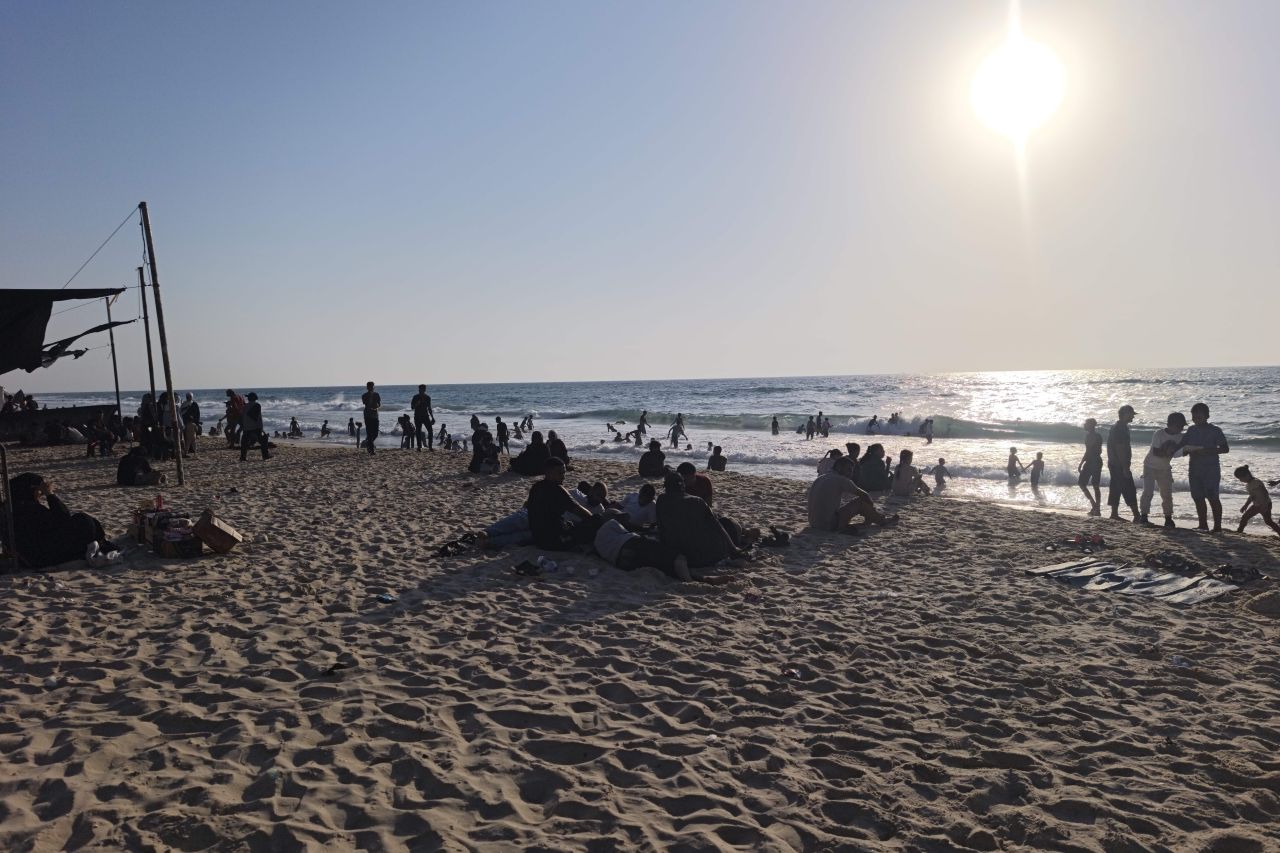
WAITING FOR THE SUN. A THOUSAND DAYS OF GENOCIDE

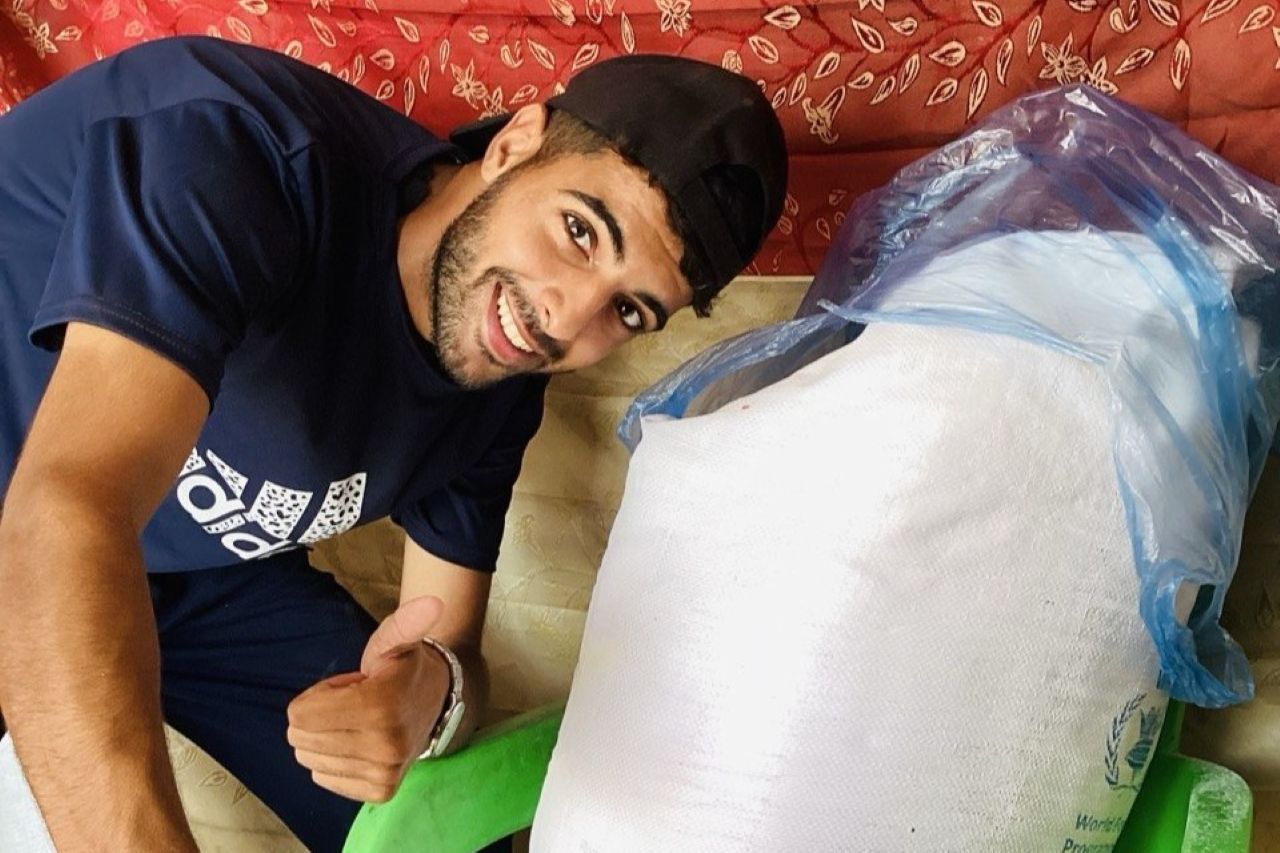
Hassan Herzallah is a translator, writer and storyteller from Gaza. He collaborates with several international newspapers. For the "Water for Gaza" campaign, he chose to share with Un Ponte Per his direct testimonydocumenting his life under siege and displacement. She is in her third year of studies in English translation at the Islamic University of Gaza and continued her education online after the university was bombed.
Gaza, 30 December 2025
It was midnight, and it was raining heavily. Strong winds threatened to tear apart the tent that shelters my family and me. I was exhausted and unwell, feeling the weight of every step and a cold that seemed to sink into my hands and feet, as if winter had entered every part of me.
I tried to sleep, but who could sleep in a camp during such rain? Every drop made the situation feel heavier, as if we were trapped with nowhere to hide. I stepped outside and could only see people dreaming of rights that had become so hard to reach. At the same time, messages from my friends appeared on my phone, talking about the approaching end of the year and plans for the next one. I remembered myself here in Gaza, where even holding onto basic rights feels like chasing impossible dreams.
By morning, around ten o’clock, it felt more like five, as thick clouds blocked any sunlight. I was waiting for the day to begin so I could buy a plastic canopy for our tent, which had become weak and no longer protected us from the rain that had fallen in the past days. My whole family was still asleep. I wanted to make myself a cup of tea while waiting for my friend Hamouda, whose tent had completely flooded the night before, and who needed to buy some wood, plastic sheets, or even a new tent.
There was no news about the cooking gas cylinder we had filled at the end of October, which was supposed to be refilled monthly. So, we were forced to use the last of it for absolute necessities, relying entirely on fire. I tried to light a fire using any paper or wood I could find, but the intense cold and the wet wood made it almost impossible.
I heard Hamouda calling, so we decided to get something to drink on the way from any nearby supermarket—juice or anything else. I asked him if his phone had any charge so we could pay through the banking app, since I hadn’t been able to charge my phone the night before due to the lack of sunlight, and his phone was dead too. I had six dollars in cash, so I bought juice and a biscuit for two dollars, but the shopkeeper didn’t have change. We returned the items, still frustrated by dealing with worn-out money, even after the ceasefire had been declared.
We arrived at the place selling tents. My friend bought a small tent for $500, while I bought plastic canopy at $40. Since we needed two, we quickly headed back using the available transportation, especially the donkey cart in Khan Younis. On the way, the weather suddenly changed, and the sky became heavily overcast, while Hamouda’s belongings were left outside, and his family was waiting for him to set up the new tent and arrange the rest of their things.
We arrived at the camp, and I first went with him to help set up the tent, since he couldn’t do it alone. I stayed until we finished, then hurried back to our own tent to cover it with the canopy. As soon as I got inside, I asked my mother to check the weather forecast - during winter in Gaza, the first thing we do every day is follow the weather. She said, “A strong wind is coming this time, but the rain isn’t too heavy.” The morning passed, and I managed, with difficulty, to charge my phone just enough for studying or writing this diary.
By midnight, there was no sound from anyone, and no light in the camp except the faint glow of my phone. I began to hear the rain and very strong winds. After a few minutes, voices came from outside - from neighbors. When I stepped out into the rain, I saw that some tents had been torn apart by the force of the wind, and people didn’t know what to do. I felt a deep pain inside from everything we were going through in the camp. Minutes later, the plastic canopy I had bought to protect our tent were ripped away - the wind was stronger than anything I could do.
I couldn’t sleep all night, trying to hold onto the canopy and tie them to anything I could find, but the wind kept tearing them away every time. My body was completely exhausted, and I felt sick from repeatedly going out into the rain to protect my family’s tent.
When I finally had a moment, I checked my phone to see what was happening in the rest of the world.
I saw people celebrating their achievements as the year came to an end - greetings being exchanged, brightly lit streets, people gathered together, continuing their lives as if everything were normal. Here in Gaza, however, we recognize the end of the year only through winter, a season we cannot withstand no matter how much we try to prepare for it.
What hurts most again is that all our dreams for the new year here in Gaza are simply basic rights that already exist elsewhere.

Hassan Herzallah - Correspondent from Gaza