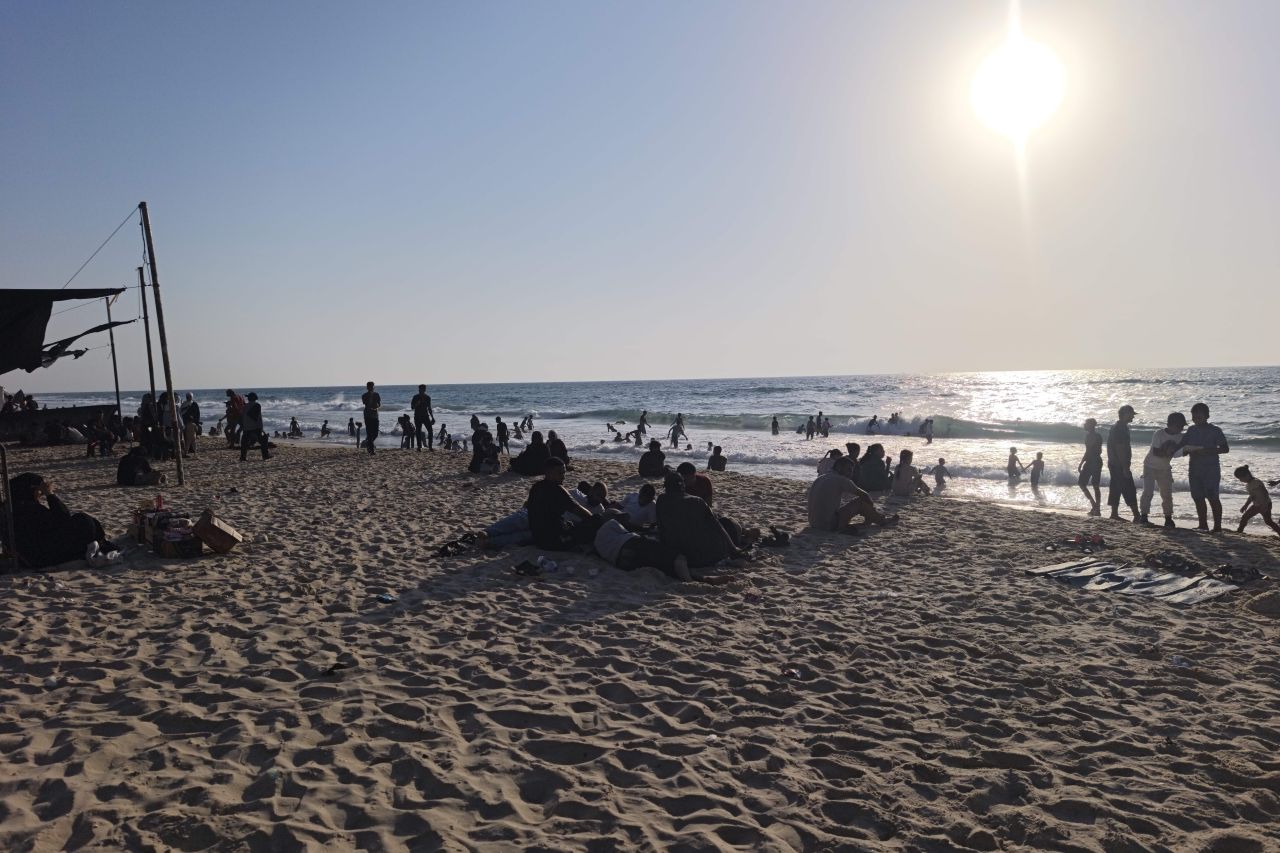
WAITING FOR THE SUN. A THOUSAND DAYS OF GENOCIDE

Un Ponte Per responds to the criminalisation of activism in Italy and around the world with two protection programmes for human rights defenders. Protecting democracy.
A worrying phenomenon is growing in Italy and Europe: the criminalisation of protests and dissent is eroding civic and democratic space. In recent years, new regulations have significantly restricted civil liberties and fundamental rights guaranteed by the Constitution. And these are not isolated incidents, but a structural process: from the Security Law, which affects all popular movements across the board through the introduction of new crimes and harsher punishments; to mass surveillance, such as the use of spyware installed on activists' phones that violates privacy, to gag lawsuits, which directly affect freedom of expression, and SLAPPs, intimidation lawsuits aimed at silencing activists, journalists and organisations. Finally, the recent 'anti-Semitic decree' which, if passed, risks becoming a further tool of repression, hitting those who demonstrate solidarity with the Palestinian population and fight against the ongoing genocide.

According to CIVICUS Monitor Watchlist (December 2025), Italy is among the countries where civic space is under serious threat (classification: "obstructed"). This is no longer just a perception: even non-violent protest actions are punished with disproportionate penalties. For a peaceful roadblock, for example, one can now risk up to two years in prison. The aim seems to be to limit political action from below, on the one hand by turning certain administrative offences into criminal offences, and on the other hand by abusing administrative measures, such as heavy fines, urban daspo, travel bans and participation bans, which do not require a trial but significantly affect freedom of movement and public participation. All this has a deterrent effect: many activists give up mobilising for fear of the legal consequences. Less protest, less dissent, less democracy. It is a process of authoritarian acceleration that threatens the very heart of European democratic life.
In this scenario, consistent with our commitment to the protection of human rights, we have chosen not to limit ourselves to political solidarity and denunciation, but to build concrete instruments of protection for those who defend human rights. "Shelter City Roma" and the "Protection Hub" embody our human, civil and social rights-based approach, putting justice, dignity and freedom at the centre of our work.
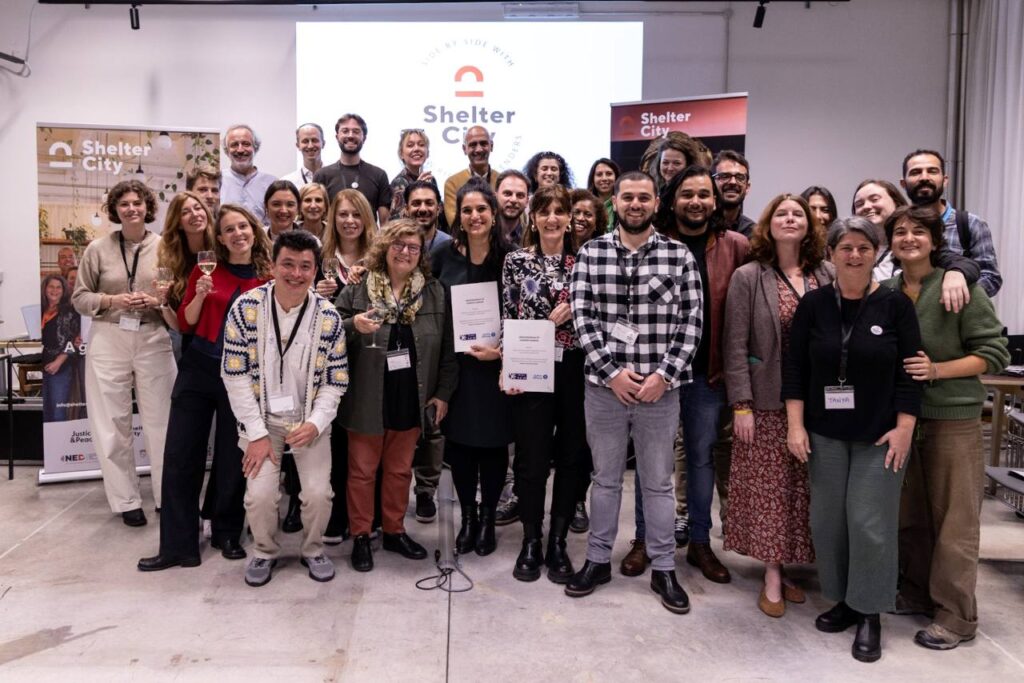
"SHELTER CITY: ROME BECOMES SHELTER CITY
The 'Shelter City' programme was born in the Netherlands in 2011, in response to the repression of human rights defenders outside Europe. In many regions of the world, defending fundamental rights is considered a crime: activists, journalists and members of civil society are exposed to threats, persecution, arbitrary arrests and systematic violence. 'Shelter City' offers them a period of protection and rest in cities perceived as safer. In just a few years, the programme has grown into an international network of 26 cities, spread across Europe, Latin America and Africa, with a simple but powerful idea: to make cities bastions of democracy, local spaces capable of guaranteeing global protection. In 2023, Rome officially joined the international network through the collaboration between Un Ponte Per and the In Difesa Di network, with the support of the 8th Municipality. Roma Capitale and Roma Città Metropolitana also signed a motion. Rome is officially a city of refuge, with the aim of developing a replicable model that can also become a reference point for other Italian cities.

The programme fully embodies our values of participatory democracy, decolonising international cooperation, and enhancing the aspirations of the activistə accoltə. It provides temporary shelter for human rights defenders at risk, offering a period of mental and physical rest from political activity. The first objective of the project is to guarantee protection, understood in a holistic sense, combining physical, medical, psychological, legal, social and digital support. Providing protection is not enough, but it is essential to avoid isolation and promote integration into daily life. Rome thus becomes part of a transnational network that builds social cohesion and defends democracy from below, fostering encounters between different cultures, languages, religions and traditions, in line with our vision of peaceful and equitable coexistence between peoples.
THE 'PROTECTION HUB': WHEN THE THREAT IS HERE
When 'Shelter City' was born, Europe and Italy were considered 'safe and democratic harbours'. Today the situation is different. What coherence would our commitment have if we only defended those who are at risk abroad without protecting those who are criminalised at home?
Out of this awareness came the 'Protecion Hub', a nationwide programme designed to support those who defend human rights in Italy and find themselves under attack. The Hub represents an evolution of our work: from an international cooperation organisation to a civic entity that protects those who defend rights in Italy as well. Createdas a reaction to the Security Decree, the Hub offers legal, psychological and digital protection to activists, organisations and movements under pressure, connecting existing networks without replacing them. The Hub is not a mere service provider, but a social laboratory to create exchange of expertise and experiment with new forms of concrete solidarity.
CONCRETE PROTECTION: THE CASE OF ROBERTO MALINI AND LISETTA SPERINDEI
An emblematic example of the Hub's intervention is the case of Roberto Malini and Lisetta Sperindei, activists affected by a EUR 2 million SLAPP (Strategic Lawsuit Against Public Participation) lawsuit brought by Fox Petroli, a world record for compensation demanded from individuals. SLAPP lawsuits exploit the disparity of resources between whistleblowers and large economic or political actors. It is the classic 'David versus Goliath' effect: for a company losing a case is irrelevant, but for activistsə or a small NGO it can mean years of stress, unsustainable legal costs and the end of a public engagement. The 'Protection Hub' intervened by offering legal support, but did not stop at the individual case: it initiated the creation of a dataset of repression cases followed, useful to monitor trends, document violations and produce reports for advocacy. The dataset is linked to a document database to share good legal practices, winning strategies and useful materials for advocacy.
TWO SIDES OF THE SAME FIGHT
"Shelter City" and "Protection Hub" are therefore not isolated initiatives, but parts of a common design embodying a strong principle: activists protecting activists . Building ever stronger links between local protection and transnational solidarity means concretely realising our mission: to prevent violent conflicts by building networks for social justice, fostering encounters between cultures and building cohesion. Because defending those who defend rights means, everywhere, defending democracy and promoting a vision of peaceful and equitable coexistence between peoples.

Lorenza Fiaschetti – Shelter City Rome Coordinator for Un Ponte Per