DECOLONIAL ARENAS 2026 KICKS OFF

An interview with Gulistan Issa, Project Manager of Un Ponte Per, outlines the ecological crisis in North-East Syria and the response of the Autonomous Administration, which is tackling the environmental challenges with sustainable initiatives, community management of resources and reforestation projects.
By Daniela Galié for DinamoPress*
In Northeast Syria, water has become a strategic resource and a matter of survival. The water crisis affecting Rojava is not only the result of an increasingly arid climate or old infrastructure, but the fruit of a systematic encirclement that aims to economically and socially strangle this political experience. Turkey's control of water sources and forced reduction of water flows have amplified an already dramatic shortage, exacerbated by war and international sanctions.
Once-vital rivers, such as the Xabur and Çaxçax, only flow for a few months of the year, while towns such as Hesekê survive on rationing and reservoirs. Agriculture, the mainstay of regional self-sufficiency, is in crisis. At the same time, groundwater pollution and the lack of efficient purification systems are turning drinking water into an increasingly rare commodity.
The water problem is part of a broader ecological crisis. Waste disposal, for example, is often entrusted to unregulated landfills located close to water sources. Air pollution, due to rudimentary oil refining and the massive use of diesel generators, contributes to a further deterioration of environmental quality.
Despite this, Rojava is responding strongly. The model of Democratic Confederalism has placed ecology at the centre of its politics, promoting bottom-up initiatives to counter the difficult environmental and geopolitical conditions.
Through reforestation projects, the reduction of the use of chemical fertilisers and the development of community water management strategies, efforts are made to ensure that water remains a right for all and not a weapon in the hands of external powers.
To better understand this emergency and the strategies adopted on the ground, we interviewed Gulistan Issa, Project Manager and Campaigner of the humanitarian organisation Un Ponte Per. Born in Hesekê in 1994, she lived and studied in Syria, graduating in pharmaceutical sciences from Homs University in 2017. Soon after, she started working with humanitarian organisations and now works on the ground, in Rojava, to help tackle an environmental crisis with deep political roots.
ECOLOGY AND SELF-MANAGEMENT: A MODEL OF ENVIRONMENTAL RESISTANCE
In Rojava, the Democratic Confederalism model is proposed as a project that integrates ecological principles into social organisation. The administrative autonomy of North-East Syria is based on a balanced relationship between community and nature, tackling with determination the limits imposed by available resources. The commitment to a political ecology is not only theoretical, but is translated into concrete initiatives. "A significant example is the existence at the University of Rojava of a Jinology faculty that deals with ecology and ecofeminism. This facility works to integrate ecological principles into everyday life, with a focus on the role of women in environmental management,' Issa explains.
The role of women in this transformation is crucial. Among the most active figures in this field is Berivan Omar, deputy co-chairwoman of the Local Government Department. "She and her team are doing important work, addressing environmental challenges and integrating ecological solutions into the self-government system," Issa points out.
In Rojava, sustainability is not an abstract concept, but a necessity for survival. "Ecology is considered a fundamental pillar," says Issa. "If you look at the self-management model and the social structure of the region, it becomes clear that the relationship between ecosystem and community is essential for sustainable living in Rojava."
WASTE MANAGEMENT AND HEALTH
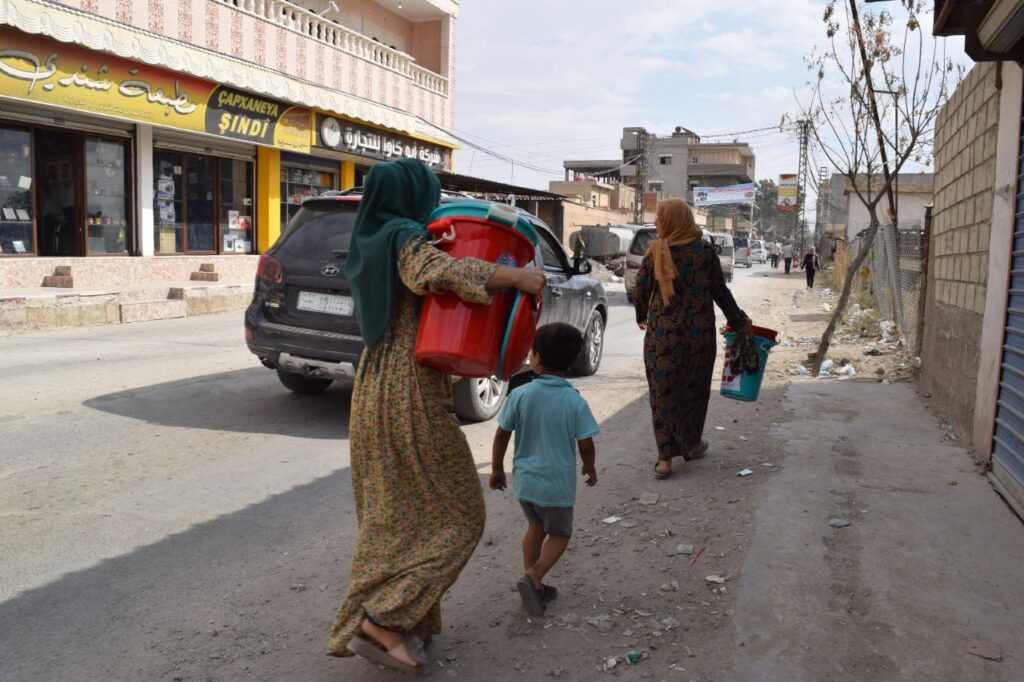
In the context of a Syrian North-East in continuous emergency, waste management represents one of the most complex challenges for the Autonomous Administration. For decades, there has been no real waste collection and disposal system, let alone a structured recycling programme, throughout Syria. In recent years, a number of experimental projects have been launched that aim to radically transform this sector, although they come up against limited budgets and insufficient infrastructure.
"With Un Ponte Per we started a solid waste management and recycling project, which was implemented in cooperation with the municipal environment department and has been going on for about two years. The initiative has introduced composting areas for organic waste, with material collected from fruit and vegetable markets and restaurants. However, the available resources do not allow us to cover the entire region due to an extremely limited budget. We cannot intervene in all of Hasakê, Qamişlo or the rest of Rojava'.
The role of local administrations has been decisive. "The municipalities have made a great effort to equip themselves with waste collection vehicles and to provide dedicated composting spaces," Issa continues.
Today, the pilot project initiated in Hasakê has made it possible to separate waste into categories - paper, plastic and organic waste - and to link this process to local economic cooperatives. "Through cooperatives linked to self-government, recyclable materials are sold to one of the few recycling companies in the region. The proceeds are reinvested in social projects. One of the most concrete examples of this initiative is the creation of a space for women: with the funds from the sale of cardboard and plastic, some cooperatives opened a small gymnasium and sports club. Next to the gymnasium a space for children was set up, allowing women to have time for themselves'.
In addition to solid waste, Rojava also faces the problem of medical waste disposal. Without adequate infrastructure, hospitals and clinics risk turning into hotbeds of infection, making an effective management system essential. "For the past five years, we have been running a specific medical waste management project in cooperation with the Kurdish Red Crescent," explains Issa. "We have involved more than 60 health facilities throughout the region, from Qamişlo to Dêrik, from Tabqa to Manbij."
One of the main objectives was to introduce the separation of waste by categories directly within the healthcare facilities. "We trained medical staff on how to deal with hazardous waste," says Issa. "We then built sanitary disposal areas outside the cities to avoid contamination."
Today, there are more than 15 dedicated medical waste disposal areas in Rojava. The process involves several steps: 'The waste is collected daily by municipal staff and transported to the dedicated areas. Here they are disposed of through a system that includes glass shatterers, volume reducers for needles and syringes, and incinerators for contaminated materials such as masks, gauze and gloves'. The project was then handed over to the local authorities. "The municipality and the health department, together with the Kurdish Red Crescent, now manage this system, carrying out the separation and disposal procedures".
Nevertheless, the difficulties remain enormous. "Unfortunately, in the current context, projects like these are considered secondary to the humanitarian emergency and security. Yet without effective waste management, the region's environmental crisis is only likely to worsen'. The work carried out in recent years shows, however, that change is possible, even under the most difficult conditions.
DEMILITARISING WATER
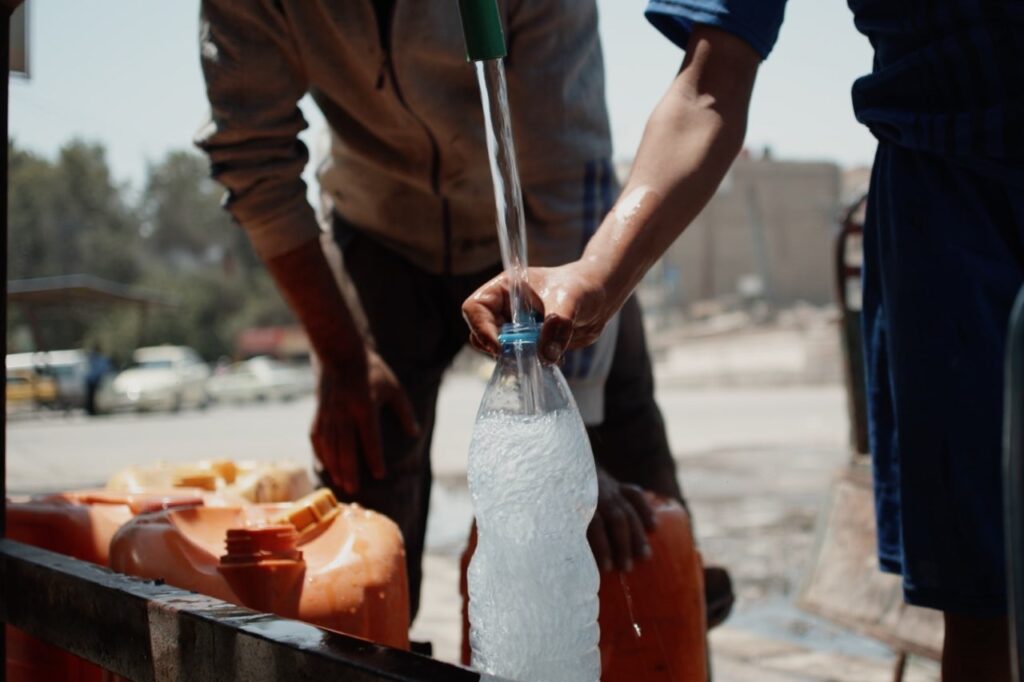
In Rojava, water management has become a political and humanitarian battle. The construction of large dams on the Tigris and Euphrates rivers by Turkey, despite international agreements, has drastically reduced the water flow to Syria and Iraq. But the problem is not limited to drought: water is now an instrument of geopolitical pressure, used to suffocate the Syrian North-East.
"From the beginning, Turkey has not respected agreements on water management," explains Gulistan Issa. "But the situation worsened with the occupation of some strategic areas, such as the Alok water station, the main source of water for 1.5 million people between Hasakê, Tel Tamer and Al-Hol."
The Turkish invasion of Serekaniye in 2019 marked a turning point. "Since then, the Alok station has been under the control of the pro-Turkish Syrian army, which has stopped its operations, depriving not only Kurds but also Arabs, Yazidis and Christians of water," Issa points out. 'Hasakê now depends on private wells, with water of dubious quality, while in the Al-Hol camp, the largest and most unstable in the region, the lack of water has aggravated sanitary conditions, increasing the risk of epidemics such as cholera and COVID-19'.
The use of water as a tool of war has had devastating consequences on the population. "The people who fled Afrin were forced to move several times: first to Tell Rifaat and Shahba, then to Raqqa and finally to Hasakê, where they now live in schools that have been turned into emergency shelters".
In order to solve the water crisis, the Rojava self-government sought an agreement with pro-Turkish forces to reactivate the Alok station: in exchange for the supply of electricity, the water flow was supposed to be restored. "But while the self-government respected the terms, water only came intermittently, once a week for a few hours," Issa complains.
To further complicate the situation, Turkey has intensified the bombing of energy infrastructure, hitting strategic plants in Derik and Derbasiya. 'On the one hand they demand electricity, on the other hand they bomb the power plants,' Issa explains.
Turkey did not only control drinking water, but also targeted hydropower production. 'The Tishreen dam, which fed Kobane, Raqqa and even Hasakê, was hit repeatedly,' Issa recounts. "The goal is clear: to create an energy collapse that would make life impossible in the region."
In response, the population organised protests at the dam, resisting even in the cold of winter. In the face of this emergency, the international community has remained silent. 'Water has become a weapon of war, yet no one intervenes'.
UPP and other organisations continue to lobby for the demilitarisation of water.
POLLUTION AND WAR
In Rojava, air pollution and environmental degradation are not only the result of chaotic industrialisation, but also a direct consequence of war.
'Oil extraction and refining in north-east Syria pose a serious health risk,' Issa explains. "Many people suffer from respiratory problems and cancers. Most cancer patients in the region are forced to travel to Damascus to receive treatment, because the necessary facilities are lacking here'. Living conditions are so poor that problems such as toxic emissions take a back seat. "People do not have access to drinking water every day, so air quality becomes a secondary problem," says Issa. "Raw diesel is used for heating in homes, often in rudimentary stoves that fill the room with toxic fumes."
The war has prevented the development of more sustainable infrastructure. "There are no advanced processing facilities and oil is refined using primitive methods outside the population centres," Issa explains. 'The situation is aggravated by the fact that Rojava is constantly under attack. Without security, no long-term project can be realised'. Dependence on oil is therefore inevitable. 'Building a new Syria would require a stable economy, safe water and a development plan'.
In addition to oil refining, the Turkish bombardment has had a devastating environmental impact. "Drone attacks and air raids are contaminating underground water reserves," Issa complains. "Due to a toxic leak, one of the lakes in Arisha has been poisoned, killing all the fish. It is an ecological catastrophe'.
The long-term consequences of this environmental degradation are incalculable. "We are not just talking about air pollution, but a systematic poisoning of the ecosystem," Issa explains.
BUILDING A SUSTAINABLE FUTURE
Despite technical limitations and reduced resources, Rojava continues to seek new solutions. "Democratic Confederalism actively involves local communities in resource management," Issa explains. Ecological transition, although hampered by war, remains a shared goal. "Courses on water quality are organised in Kobane and the water department has always participated enthusiastically," says Issa. "We provide modern tools for monitoring, but the real driver for change is the commitment of the population."
Training of health and technical staff is also a priority. "Local authorities are always looking to expand their competencies," explains Issa.
International restrictions have aggravated the situation. "After the USAID funding freeze, many essential services have been affected," Issa complains. "Despite some exceptions for life-saving programmes, many facilities have been left without support."
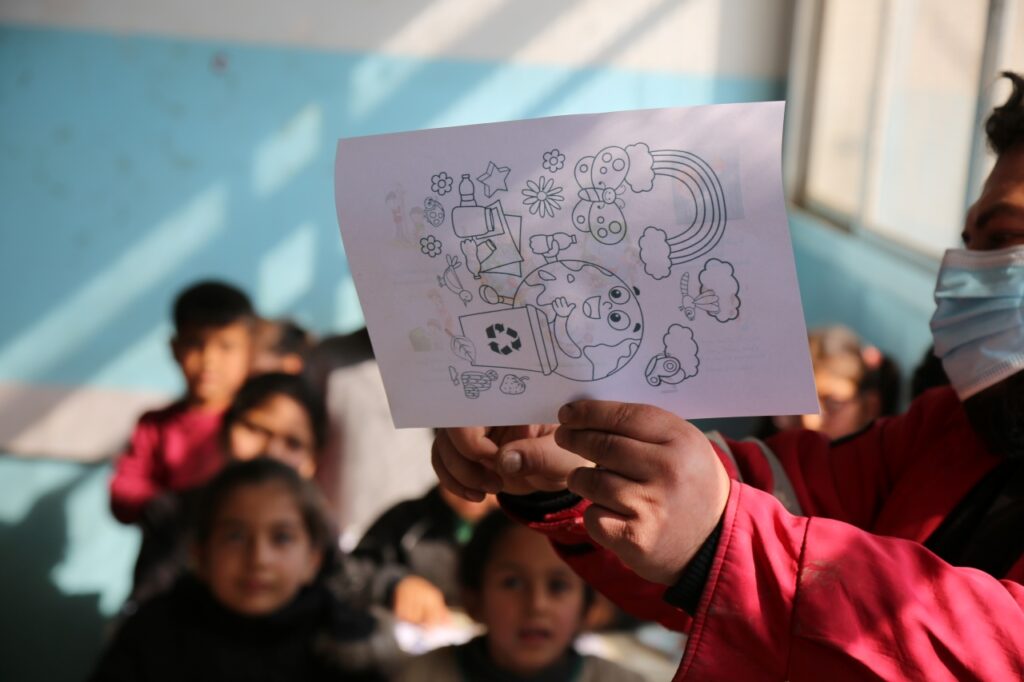
Alongside local institutions, numerous civil associations are contributing to environmental awareness. "Organisations such as Green Tress and Green NES are promoting reforestation and care for the land," says Issa. "They have even started educational programmes in schools, where every student has planted a tree in the courtyard to learn how to take care of it.
Rojava's vision is one of a future based on sustainability and self-sufficiency. "We want a green Syria, a Rojava full of water and vegetation," Issa states with determination. "Once this region was called Al-Jazeera, the island surrounded by the Euphrates, Khabur and Tigris rivers. Now the Khabur has almost disappeared, the Euphrates is drying up and the Tigris is constantly threatened'.
The obstacles are enormous: bombings, border restrictions, reduced budgets and an unstable political situation. Despite everything, hope is not lost. "We are fighting for a Rojava that can live without war, without water shortages, without pollution," Issa concludes. "And even if everything seems difficult today, we know that another future is possible.
*This article was originally published on DinamoPress and is available at this link: https://www.dinamopress.it/news/ambiente-e-assedio-la-battaglia-ecologica-in-siria-del-nord-est/