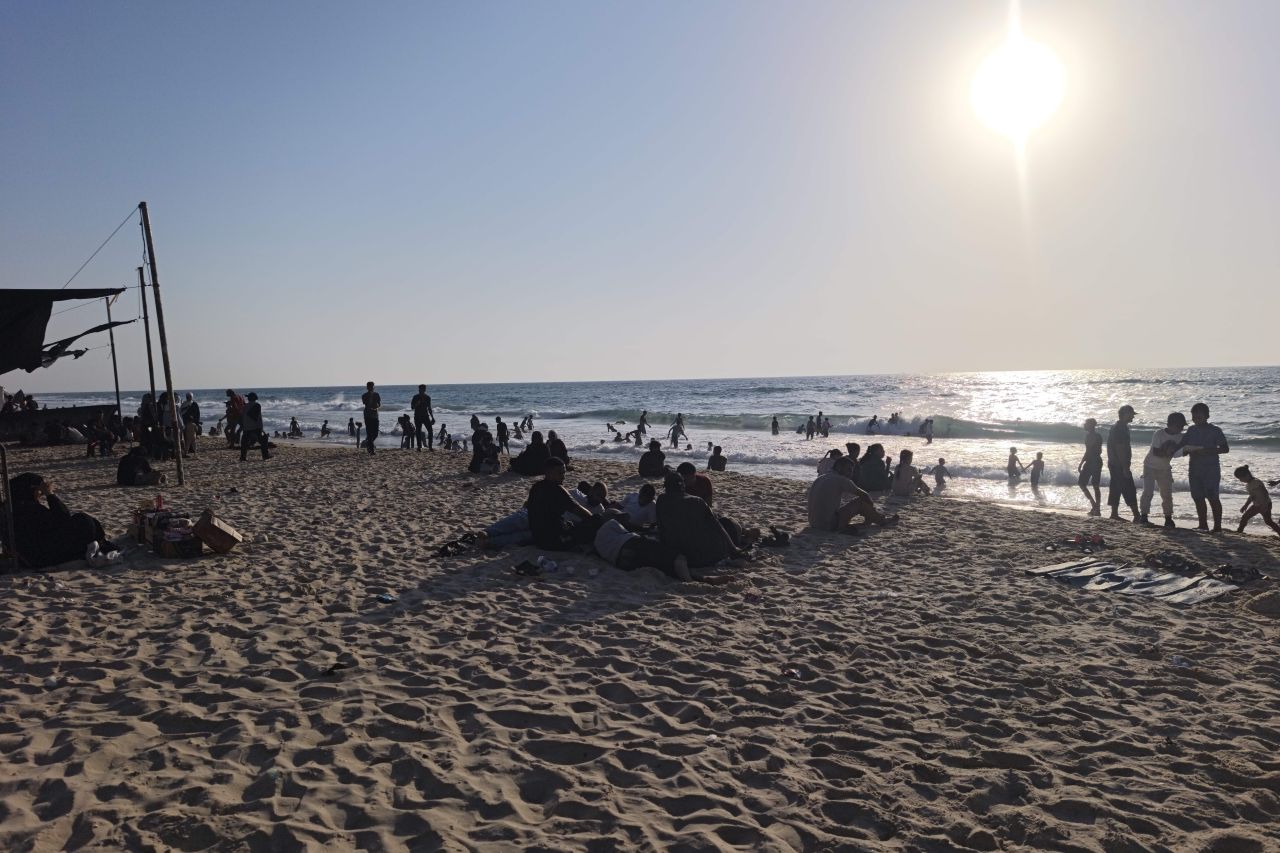
WAITING FOR THE SUN. A THOUSAND DAYS OF GENOCIDE

Ambra Malandrin, head of the project "Building futures: promoting peace through education" financed by 8x1000 funds from the Soka Gakkai Italian Buddhist Institute, tells "Il Nuovo Rinascimento" about the results of the first months of activity in the Safe Spaces we set up in Raqqa, which for years have continued to guarantee protection services to women and children.
WHAT DOES THE PROJECT 'BUILDING FUTURES: PROMOTING PEACE THROUGH EDUCATION' CONSIST OF? WHAT ARE ITS OBJECTIVES?
The humanitarian crisis situation in Syria is very delicate, there are serious shortages of essential services, including education. An estimated 2.4 million children are out of the education system and there is a very high illiteracy rate. Children aged 12-14 are sent to work and girls are forced to marry.
The city of Raqqa is still scarred by the occupation of Daesh (ISIS). This occupation has broken down the social fabric and led to an increase in child labour as families live in economically degrading conditions.
One of the aims of the project is to provide non-formal education to eliminate the gap between those who go to school and those who do not: due to high costs and lack of facilities many families are unable to support their sons' and daughters' education. Through the project we provide them with literacy and basic numerical skills for illiterate women; remedial schooling for children out of the education system, to facilitate their reintegration into formal schooling; extracurricular support courses for children who, despite attending school, find it difficult to study due to social hardship or lack of educational support.
Non-formal education also includes peace-building and conflict resolution training. Another objective is psycho-social protection and support, which aims to support the development of personal resilience to overcome problems arising from crisis situations and trauma and to counter abuse, child labour and gender-based violence.
THE PROJECT WAS SUPPORTED WITH 8X1000 FUNDS FROM THE SOKA GAKKAI FOR THE THIRD YEAR. CAN YOU SHARE THE RESULTS ACHIEVED SO FAR?
Your contribution has been crucial, starting in 2022 we reached 4,400 individuals in just six months with protection projects, through individual support, recreational activities and psycho-social support. In 2023, we reached 18,000 people through radio campaigns and one-to-one sessions, with awareness-raising initiatives focusing on topics such as gender-based violence prevention, child protection, women's rights and the rights of persons with disabilities. We have seen a positive impact on the population, particularly in Raqqa where safe spaces have been created for girls who are survivors of gender-based violence. This year, with the inclusion of other educational and peacebuilding activities, we reached in just three months about 130 children and women with educational activities, 160 with protection interventions and more than 10,000 people with an International Day of Peace radio programme. We also train local staff on gender-based violence issues to make the project sustainable for the future.

HOW DO YOU DEVELOP NON-FORMAL EDUCATION AND WHAT RESULTS DO YOU EXPECT?
Non-formal' education is flexible and responds to different needs of people. It has three basic components: integrating children who have been excluded into the national education system, filling the educational gap that does not allow them to attend classes with their peers. The second component is school preparation, i.e. after-school courses, to support children who have difficulties in studying due to social hardship or poor educational and economic support and therefore drop out of school. This aspect of non-formal education includes tutoring in certain subjects, such as mathematics, science and English. In our centres there is a room where children can stay between classes to do their homework with a teacher to help them.
The last component is basic numeracy and literacy for tutors. This improves the women's practical skills but also strengthens their educational role within the family, promoting greater autonomy and increasing their employment possibilities. Peace education is always integrated into recreational activities, e.g. conflict resolution and climate change, and mixed sessions with approximately 500 participants are planned to create community dialogue and reduce intergenerational tensions, but also to develop greater civic awareness.
WHAT ARE SAFE SPACES AND WHAT KIND OF ACTIVITIES DO THEY INVOLVE?
UPP-DOZ Safe Spaces are protected environments where women and children can access psychosocial support, educational activities and protective services in an inclusive and respectful context. One of these Safe Spaces is dedicated to girls and another to children and adolescents. Their aim is to provide protection, e.g. there is an integrated approach with sessions such as emotional and peace education.
They also discuss gender-based violence, early marriage and child labour. Cases of gender-based violence are still very high, one of them being forced marriage, in which about 80 per cent of 15-year-old girls are forced into marriage.
For this reason, in our centres women find staff trained by UPPs(case workers) who can effectively support them in cases of violence and can access them more easily because they are in the same places where women go for other activities; therefore, they do not have to openly declare to their family members (often the abusers themselves) that they are going to the anti-violence centre to ask for support.
There are also recreational and play activities and parenting training sessions, which aim to implement child protection capacity within families. There are many courses that involve strengthening mutual support between women because female isolation is very strong in Raqqa. There is also a place set up to take care of smaller children so that female guardians can participate in other activities while children are in contact with experts in child care.

WHAT KIND OF FUTURE WOULD YOU LIKE TO SEE REALISED THANKS TO THE PROJECT?
The impact we would like to see is radical and lasting with an emphasis on non-formal education because for us this is the key to progress and empowerment and must be pursued holistically.
We aim to realise opportunities for growth by increasing the autonomy of the people we work with and this is necessary to prevent contextual problems such as child labour and violence. Of course, peaceful education also serves this purpose, to strengthen the social fabric.
We would like to create and maintain safe environments and support people in overcoming momentary difficulties, such as the current ones, in which the Syrian population is once again experiencing a severe crisis, but we would also like these tools to have a long-term impact, as resilience tools, to build a fabric of peace that starts from the local communities themselves.
Following the recent forced displacement due to political changes and the risk of military occupation, since early December 2024, Raqqa has been facing an emergency situation in which all public schools have been converted into collective centres to accommodate over 50,000 displaced people in a matter of weeks. This has left thousands of chidren without access to education, exacerbating the already existing education gap. Displaced children are also not attending school, further increasing the need for non-formal education interventions in emergency settings. In the coming months, we will closely monitor the changes and growing demand, as evidenced by the long waiting lists for our non-formal education courses, which far exceed the resources currently available.
Ambra Malandrin
Protection & Education Coordinator