NEWS

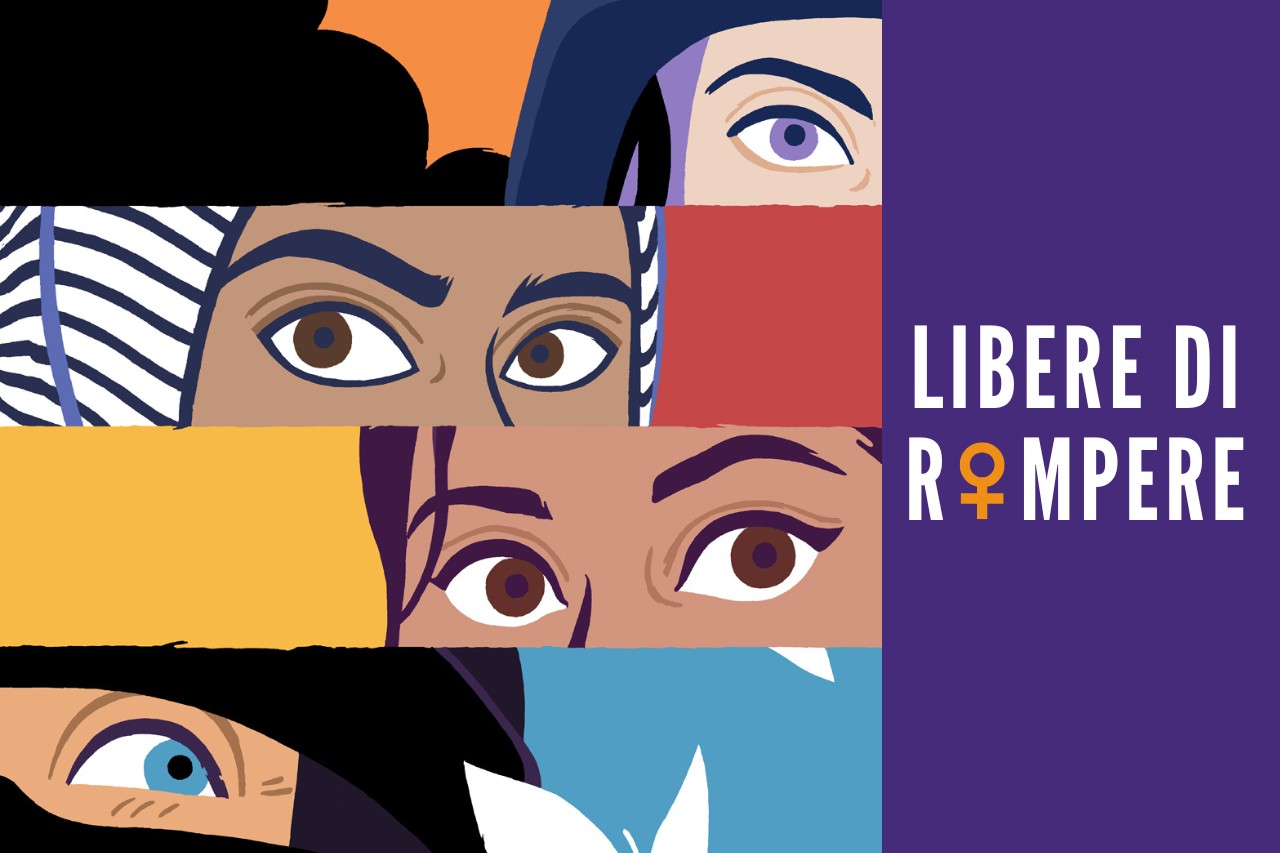
Free to break: 8 March

08 Mar 2024

Share

Oppressed. Subservient to backward societies. In need of help to free themselves. This is the perception that is still widespread in much of the western world with respect to the women who inhabit the Arab world. Women who have instead written fundamental pages of feminism in their countries, protagonists of a history that is often little known in the West.
In the contexts in which Un Ponte Per has been working for over 30 years, we have met and supported hundreds of women struggling to break down the walls of stereotypes and oppression; to be self-determined, free, participating. We have met them in Iraq, in Syria, in the refugee camps of Lebanon. And we are seeing them in Palestine, resisting brutal genocidal aggression but continuing to fight to live and bear witness.

We met them determined and free: 'free to break'.

With them in mind, last December we launched a campaign with this name, dedicated to Syria.
On the occasion of this 8 March, we want to relaunch and expand it. Thinking of all the women we have met on our path, and first of all the Palestinian women. Each of them represents herself and together a collective. Each of them has a name and a story, but represents many names and infinite stories. These stories we have tried to tell, thanks to Rita Petruccioli's beautiful illustrations.

8 March has never been, nor will it ever be, an anniversary. It is for us another day of struggle, which we share with millions of women around the world.
ZAHARA

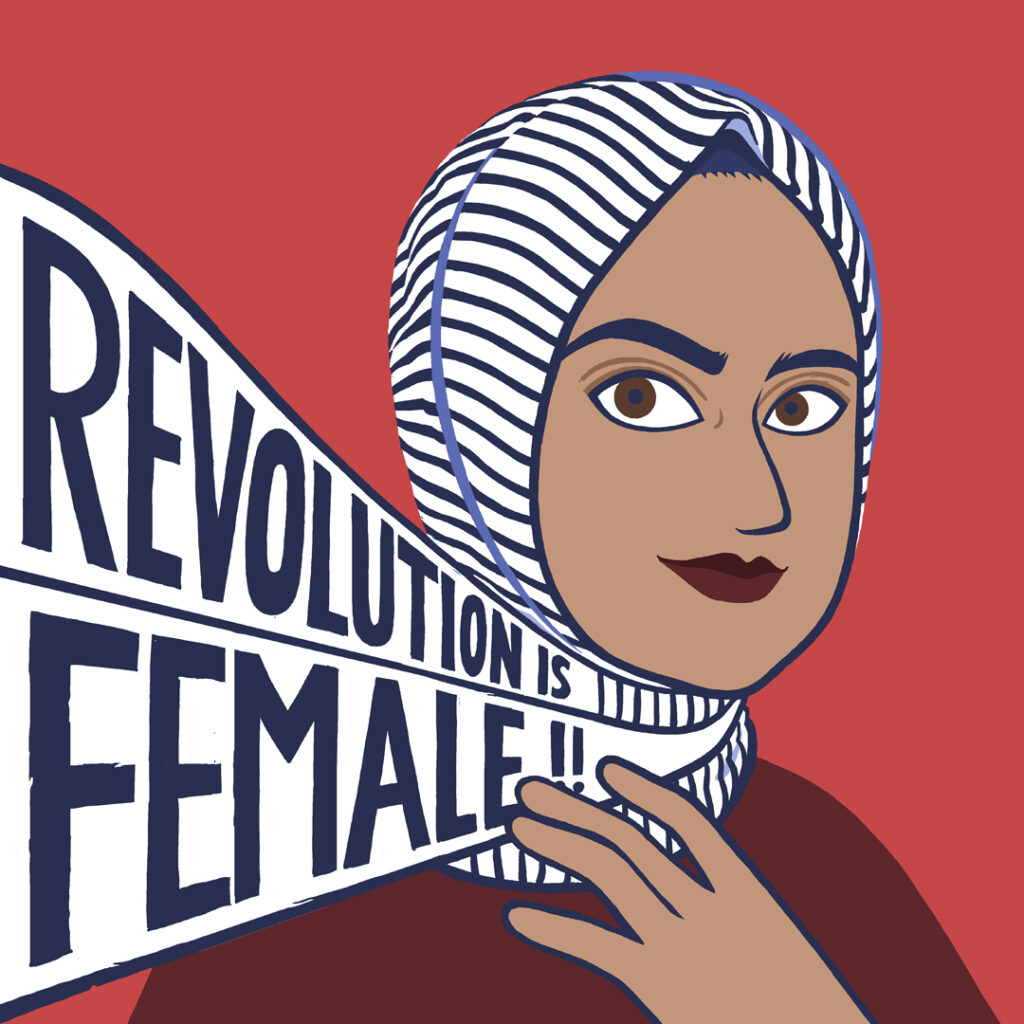
I took part in the Revolution from day one. Together with my comrades, we put up the first feminist tent in Tahrir Square,' says Zahra. "I came to the square as a citizen, a woman and a mother to claim my rights. Our tent gave a voice to those who had none and fought for all Iraqi women who demanded a life worthy of being called one.

Here is the English translation of the text you provided: The revolution is woman. On the sign that Zahra holds above her head that day in the square, it says this. Her head is wrapped in a tight veil. The square is in Baghdad, where for weeks hundreds of young people have been protesting in what will soon be known in history as the "October Revolution." Alongside Zahra, thousands of women are taking to the streets that day. It is a response to the statements made by some political figures who support the popular uprising but have called on women to step back. They say it would be better if women stayed at home. It is early 2020, and Iraqi women respond with one of the largest feminist demonstrations in the country's history. Students, workers, mothers: all united to reaffirm their right to participate. “No voice can rise above that of a woman,” “I was born Iraqi to become a revolutionary,” are some of the signs they carry. Some are participating for the first time. Others have a history of activism. Some are very young, skipping school and joining the protests with their teachers. Some are elderly, coming out of concern for their daughters, but ending up feeling the enthusiasm of the revolution and choosing to be part of it. Some care for the injured protesters. Others cook meals to keep the occupations going. Some organize "feminist tents" in Tahrir Square, where films are projected, books are read, and discussions are held on how to build collective practices. Others paint murals on the city's walls depicting women's freedom to occupy public space. Some wrap their heads in the Iraqi flag. Others in colorful veils. The older women prefer black. Yet they all dream of the same thing: a free country. And they all believe that a woman's place is in the revolution. 

Context. October 2019. With the only interruption being the Arba'een celebrations, thousands of young Iraqis have been taking to the streets in massive protests demanding economic reforms, an end to political corruption, and rejecting the sectarian-based political quotas that have shaped Iraq's government over the past two decades. The generation leading the uprising grew up in a climate of war: from the 2003 U.S. invasion of Iraq to the ISIS conquest of large parts of the country in 2014 and their subsequent liberation, the Iraq they know is one without peace, where imagining a dignified future is difficult. Since the end of 2019, the mobilizations have evolved into civil disobedience, the peaceful occupation of bridges, roads leading to oil infrastructure, ports, and government buildings. All sectors of Iraqi society are involved in the uprising, especially students, teachers, and professionals. From the outset, it is clear that female participation is central. Tahrir Square in Baghdad, permanently occupied, is the heart of the revolution. Hundreds of tents are set up, where grassroots participation and self-organization are tested: from first aid for the wounded to community kitchens, from libraries to feminist initiatives, the tents become the site for experimentation and political development among the youth. The protests are the largest and most widespread in recent Iraqi history. After months of mobilization, the government of Adel Abdul-Mahdi is forced to resign, the ruling political class is forced to amend the electoral law, and early parliamentary elections are called.

Un Ponte Per has been present in Iraq for over 30 years. In our long journey alongside civil societies, we have dedicated much of our work to women, to fight gender-based violence together, to support their participation in public life, to support women activists in building networks that continue to fight to win their space and their right to self-determination. Together with them we produced, among other things, the booklet 'The Voice of the Revolution', which tells the story of the protesters who took to the streets in 2019-2020.
ASMAA

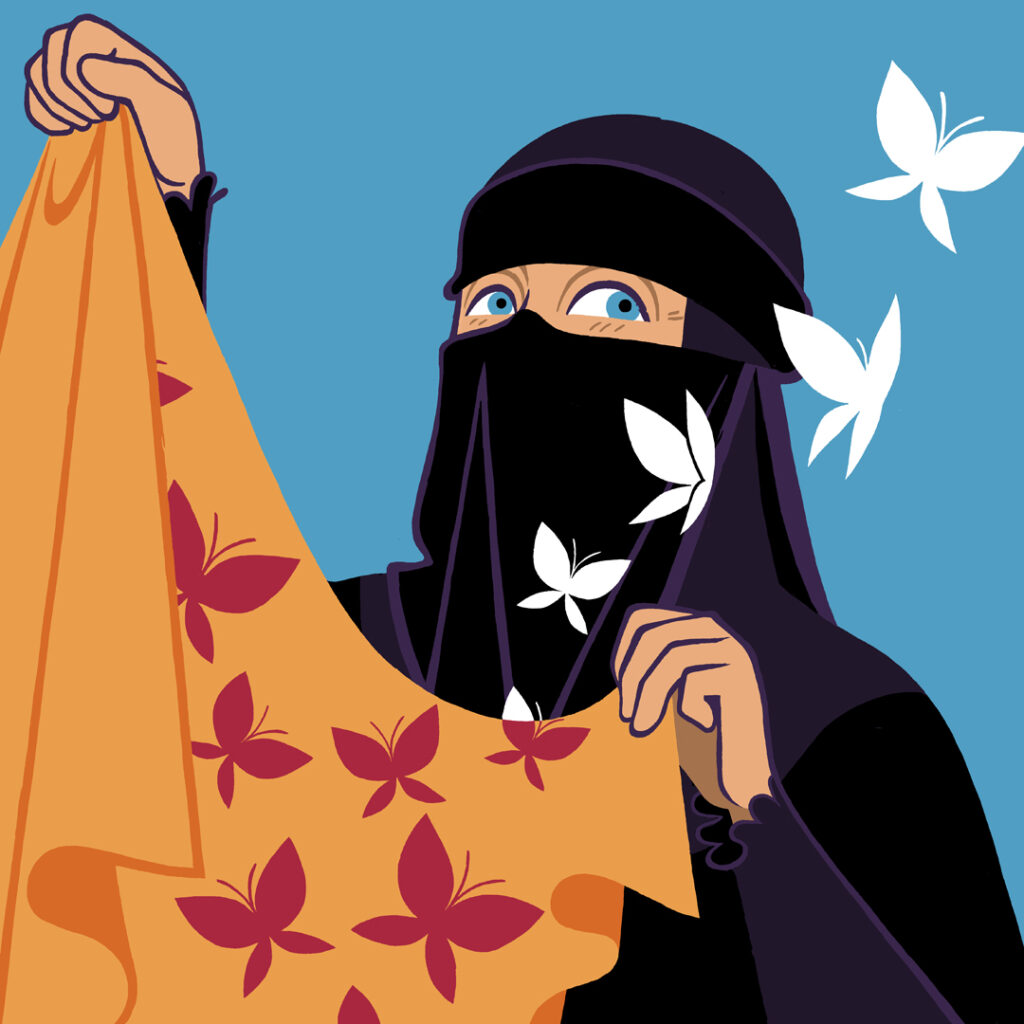
"I wanted my sons and daughters to continue their studies, and to have a better life than mine," Asmaa says. "The regulations imposed by Daesh during its occupation transformed and limited our lives. Now the situation is changing. Thanks to my shop, I am a completely new woman".

Colorful fabrics, scarves, mannequins waiting to be finished with beautiful garments in bright colors. Among jackets, pins, and long pleated skirts, drapes of fabric adorned with butterflies stand out. All around, the sound of sewing machines, needles, and measuring tapes is everywhere. Outside, on the sign, it says: "Sartoria Nour. For women and children." A name that is no accident: Nour – "light" in Arabic – was the name of Asmaa's daughter, whom she lost in the war. Today, it is her memory, and at the same time, a dream that has been realized among the ruins of that same war. A light of self-determination and hope for a woman, and for all those who have survived the conflict over these years. The small shop is run by Asmaa, whose eyes shine with enthusiasm beneath the black veil that was imposed on her for years by Daesh (ISIS) militants in their Syrian stronghold of Raqqa, and which still makes her feel protected today. She, who became a widow too young because of the war, with five children to raise on her own. She, who thought she would forever depend on the financial support of her brothers, but who instead decided to take her future into her own hands, and to allow her daughters the opportunity to study for a better, simpler life. This is how she took up her sewing machine, taught other women in her neighborhood to use it, and sold her first clothes. She eventually opened her own shop, which today allows her to live and support her family. Every woman who has survived the war and, despite countless difficulties, has managed to keep her home, her life, her family going, has made a revolution. Just like the butterflies on Asmaa's fabrics, which have taken flight with strength, courage, and determination. 
The Context. When Daesh militants entered the city of Raqqa, it was the beginning of winter 2014. It was cold, the sky gray, like a harbinger of the terrible years to come. The city would be chosen as the group's stronghold and occupied until 2017, when the long battle to liberate it – lasting over four months – left it destroyed. Seven years after those battles, the ruins still frame the sunset, serving as the stage for children’s games, the only horizon for the thousands of people who arrived here from all over Syria, also devastated by a war that has gone on unchecked for far too many years. It is here, among these ruins, that women moved like ghosts for years, deprived of all rights, forced to disappear within the walls of their homes, expelled from public spaces, from workplaces, schools, and universities. And it is still here, after that terrible chapter, that they have returned to the world outside, to make up for lost time, put their skills to use, build a different future for their daughters, and reassert their existence in the flesh. Every woman who has returned to a university classroom, to her job, accompanied in her journey of escaping violence, who has gained access to medical care or the opportunity to train to start her own business, has made both a personal and collective revolution, capable of writing a different future for Syria.

Un Ponte Per has been working in Syria since 2015. Over these years we have met so many women and worked with them in extensive protection programmes, to ensure safe spaces from gender-based violence, access to education, economic independence, medical care. We dedicated the first 'Free to Break' campaign to them in December 2023.
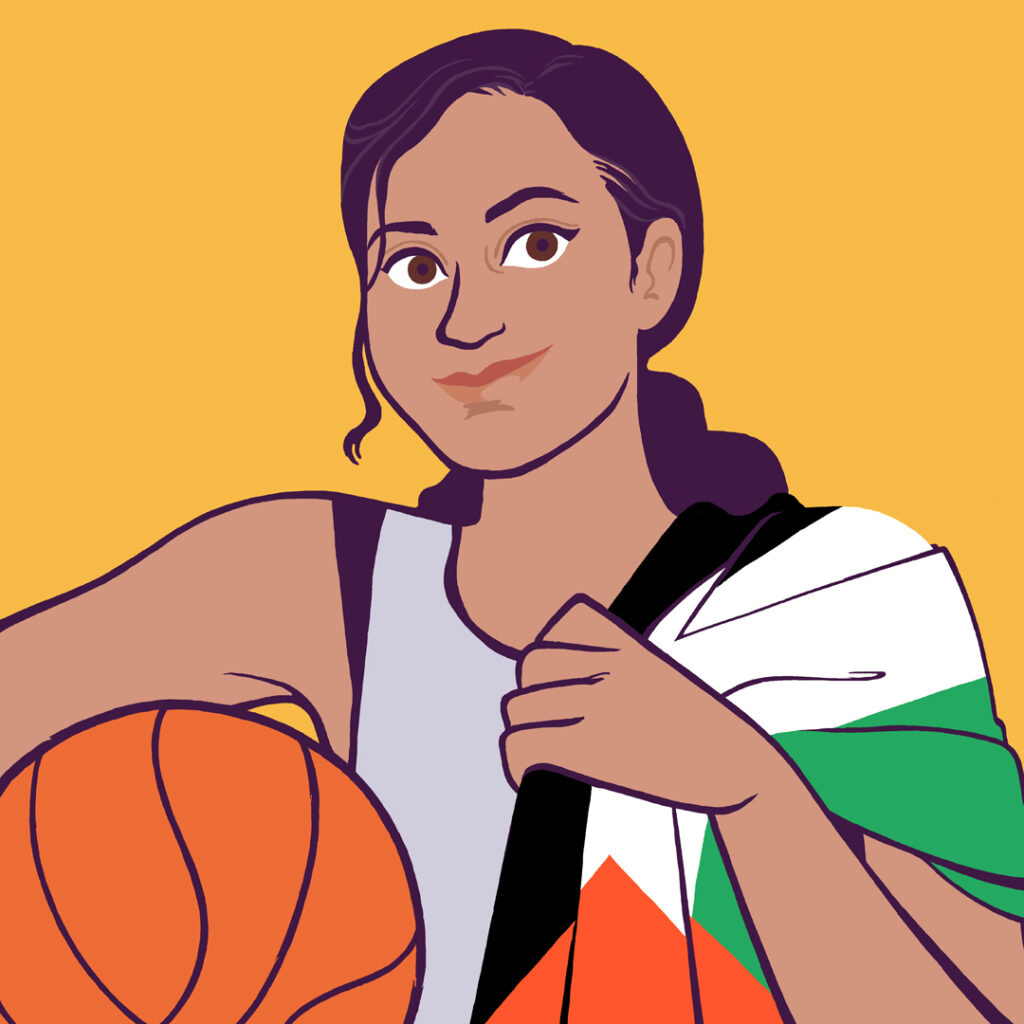
AMEENA

"With basketball my life changed, before I had nothing to do but go to school and then come home," says Ameena. "I never let go of the ball, even when I walk down the street. It makes me feel strong and safe."

Here is the English translation of the text: Confident posture, proud gaze, hair blowing in the wind: in every photo, Ameena looks like this, with a cheeky smile on her face that doesn't even try to hide the determination with which she faces life in the Palestinian refugee camp of Shatila, in Lebanon. Twenty-one years spent there, without drinking water, sewage systems, or electricity. Nothing to do except go to school and return home, occasionally play in the mud, in the suffocating alleys where no light reaches. A Palestinian refugee without citizenship: denied the right to return to her homeland, denied the right to live a normal life in Lebanon. Ameena’s life is the same as that of thousands of young women who grew up in an imposed diaspora, in refugee camps that were created as a solution to an emergency but have become the only present they know. Conservative spaces where it’s not easy for a young woman to pursue a dream—especially if it involves a basketball. “But why not us?” Ameena asked herself when, as a child, she saw her male friends playing in the small sports center built in Shatila. It was 2014 when, along with other girls, she managed to form the first-ever female basketball team in the camp. She convinced the captain to coach them too. Most people underestimated them: it wouldn’t matter, they wouldn’t be as good as the boys. They didn’t let themselves be discouraged: they trained, they became good, and thanks to exchanges with sports clubs in Europe, they even managed to travel, to see the world beyond the camp's borders. Today, Ameena is the center for the Shatila women’s team and coaches a group of girls aged 9 to 16. She passes on her passion to them, encouraging them to be strong and determined. And she never lets go of her ball, not even for a second. 

The Context. Narrow alleys, lack of light, mud on the ground. Above, between the rooftops, an intricate network of electrical cables runs between one house and another. Not even the sky is free in Shatila, a Palestinian refugee camp on the southern outskirts of Beirut, Lebanon. A place meant to be temporary, but made permanent by the injustice of history. Just over 1 square kilometer in which 25,000 people live: the daughters, granddaughters, and great-granddaughters of those who were forced to flee Palestine in May 1948, when the State of Israel was declared, and the process of ethnic cleansing against the Palestinian population reached its peak. “We’ll be back soon,” the people who fled to Lebanon in early 1949 must have thought, when they pitched the first tents in Shatila. No one could imagine that these tents would become the only possible home for generations to come, trapped in a limbo that denies them the right to return to Palestine, as well as Lebanese citizenship and the possibility of leading a normal life in the country that welcomed them. Lives suspended in an eternal present, where the past is always just around the corner—on the walls, among the houses, in the collective memory with which young generations are raised. By law, the camp cannot expand horizontally. This is why the houses have ended up being built one on top of the other, over time also accommodating Palestinian refugees fleeing the Syrian war, and later migrants without economic means, becoming today a vast slum where it is impossible to lead a normal life. It is here, among these narrow alleys and this denied sky, that one day the Shatila Sports Center was born. And it is here, since 2014, that the first-ever female basketball team has played and trained, coached by "Captain Majdi."

Un Ponte Per has been present in Lebanon since 1997. We work mainly in the Palestinian refugee camps, guaranteeing the right to education and health to Palestinian and Syrian-Palestinian refugee children through distance support programmes. We support the Palestinian Youth Club, a group of 80 Palestinian athletes in the camp, and together we built the first sports centre in Shatila
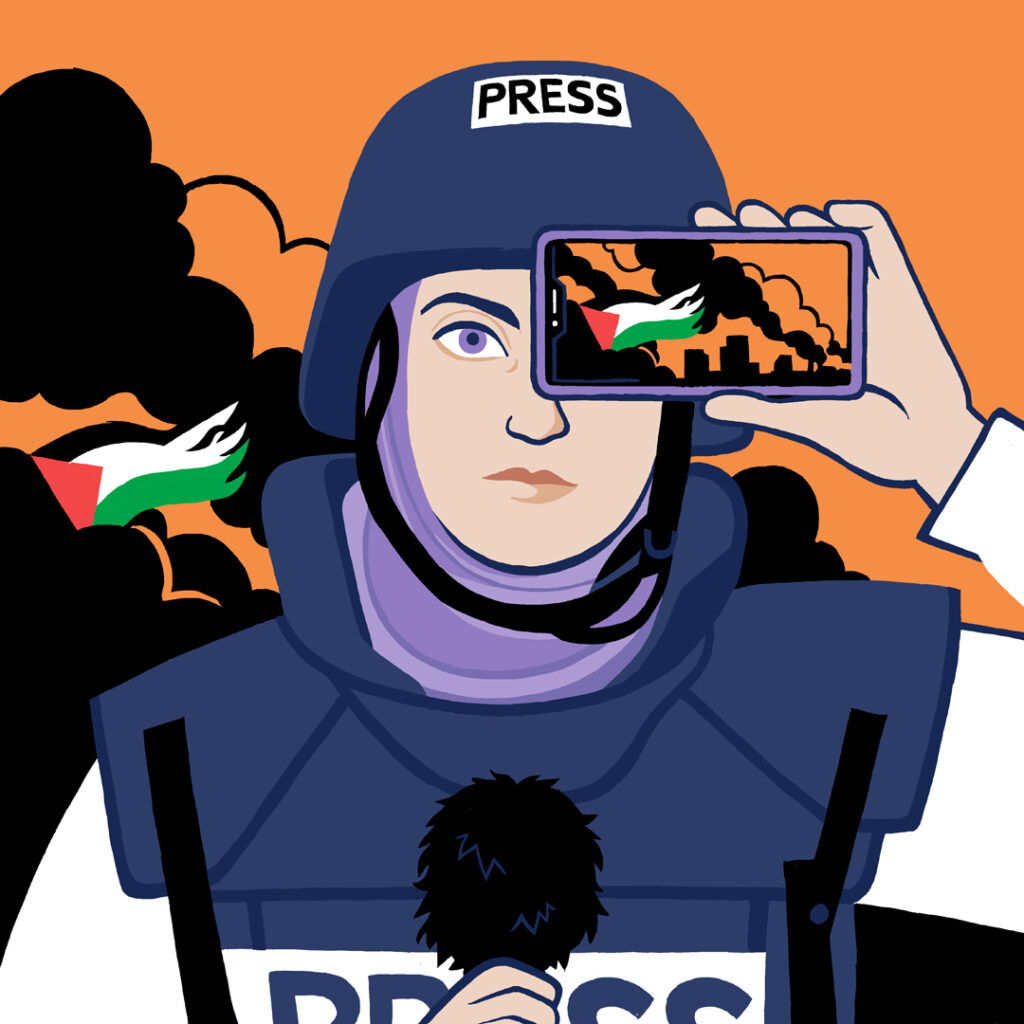
BISAN, YOUMNA, HIND

"Hello everyone. I am Bisan from Gaza. And I am still alive."

"Today my heart broke once again. My little girl asked me to show her the photos from when she was born. I realised they were all in our PCs, left under the rubble of our house. I won't be able to show her the photos. I will never see them again'.

"I know I should have left. But I couldn't leave my Gaza alone."

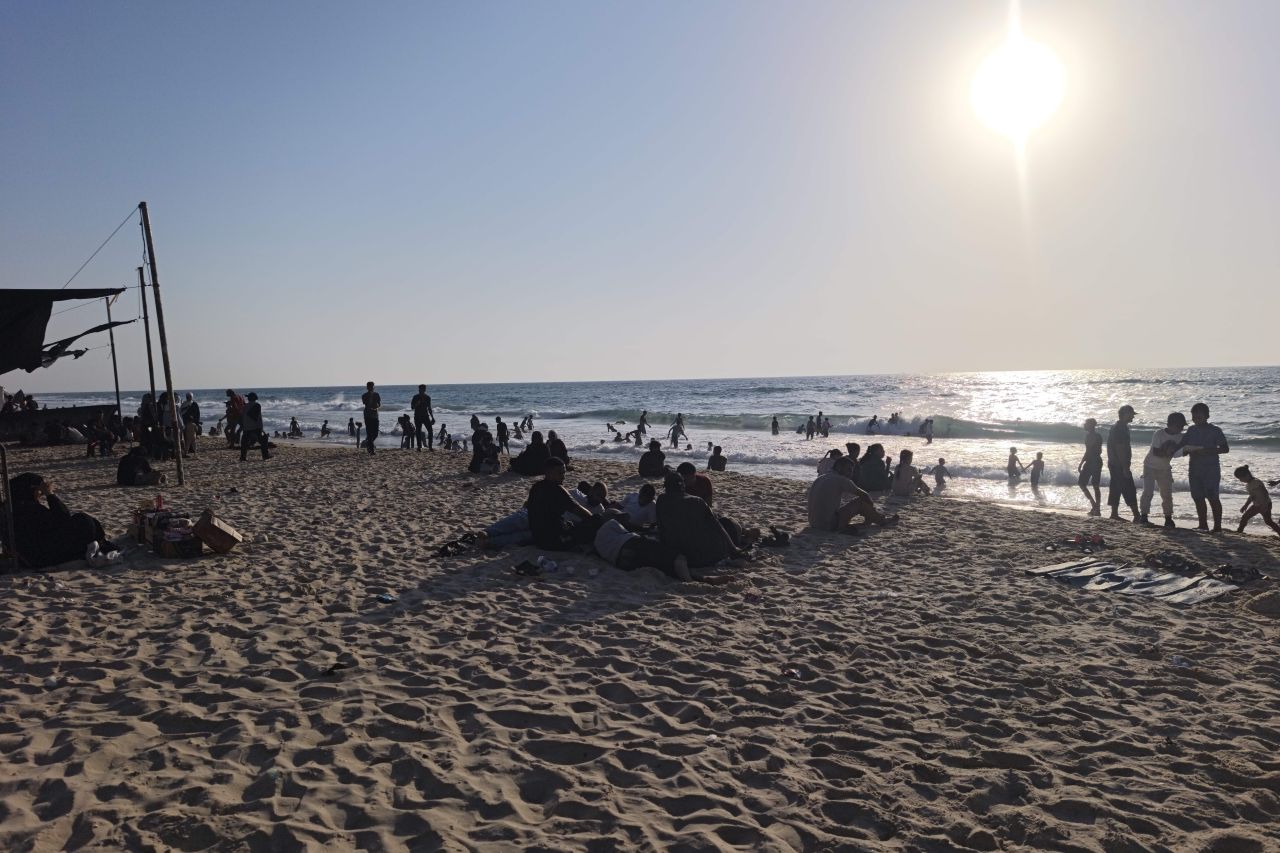
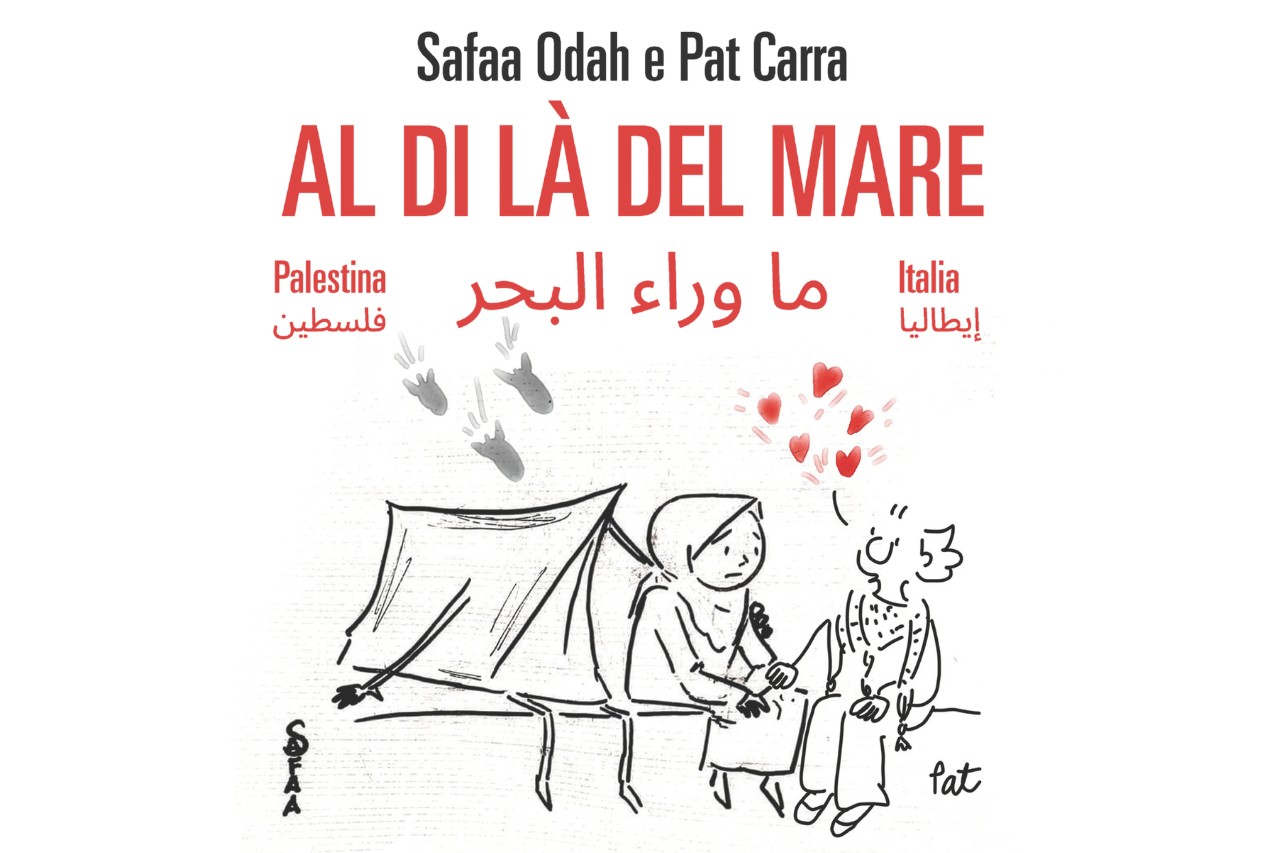
Here is the English translation of the text: Bisan Owda, who, before this genocide, used social media a lot, but as a young influencer like so many other girls in the world. Youmna El-Qunsol, Al Jazeera correspondent, who continued her live broadcast while bombs were falling beside her, holding her helmet steady with just one hand. "Press," it said on her helmet, "press." Today, journalists like her have become a target of Israeli bombings because they are the ones telling the world about the horror of a genocide. Hind Khoudary, a freelance journalist, who, while reporting live the news of the killing of her colleague and friend, emotionally repeated, "Sorry, I don't want to cry." All of them have lost their homes, family members, friends, and memories. All of them are now displaced, forced to live in tents or makeshift shelters; often separated from their husbands and children, evacuated from Gaza to seek shelter while they remained behind to document the horror. Forced to recharge their phones and batteries wherever they can, whenever they can, searching for satellites through which they can send images, stories, and reports, so that the rest of the world cannot say, "We didn’t know." Forced to raise their voices above the noise of the bombs when they are live on air. During the brief humanitarian pause last November, all of them went to breathe fresh air on the Gaza beach, asking themselves when it would be possible to do so again. There, where just a short time ago cafés, hotels, and beach resorts full of young people, music, and life stood. Where today, only rubble remains, and an horizon where even the sea has been occupied. All are still alive, yet all have lost their lives in different ways.
The Context. Since last October, the Palestinian population in the Gaza Strip has been subjected to a genocidal military offensive by Israel. The indiscriminate killing of thousands of people, the deliberate targeting of water and electricity plants, the military siege and blockade of humanitarian aid, the demolition of hospitals, schools, universities, shelters, and civilian buildings, represent a clear attempt at the total annihilation of the Gaza Strip and its inhabitants. But the story in Palestine did not begin on October 7. Turning a blind eye to the Israeli settler colonialism, the military occupation and apartheid regime in the occupied territories (the West Bank and East Jerusalem), and the complete siege of Gaza, has made possible what we are witnessing today: an unprecedented humanitarian catastrophe in recent history. To date, the civilian death toll from this offensive has reached the unimaginable figure of 30,000, including at least 13,000 children. Thousands more may still be trapped under the rubble. In Gaza today, people are dying of hunger and thirst, as a result of Israel’s genocidal decision to block humanitarian aid. Even the press is being prevented from entering Gaza today: international journalists are denied access to a war zone that cannot be told. The only people witnessing what is happening are Palestinian journalists, who, in order to show the world the horror of this genocide, are paying a very high price: already, 120 have been killed by Israel. Among them, many are women. Courageous professionals who do their work every day, most of them displaced and forced to separate from their families and children. On this International Women's Day, we offer them our most sincere and solidary tribute.

Un Ponte Per does not operate directly in Palestine. We did not agree to submit to control and blackmail by the Israeli authorities, and we have always believed that the Palestinian issue needed a political solution, as well as humanitarian intervention. We have been in Palestine for years as volunteers and activists. Following the unprecedented emergency created by the Israeli offensive against the Gaza Strip, we launched the 'Water for Gaza' campaign in February 2024, to support our local partner - the Union of Agricultural Work Committees (UAWC) - and bring clean water to the Gaza Strip.


NOTIZIE

ULTIME NEWS

NEWSLETTER

Iscriviti alla nostra newsletter gratuita

Ricevi aggiornamenti, storie di impatto e opportunità di volontariato direttamente nella tua casella di posta
Iscriviti
Who we are
What we do
Join
Support us
News
Subscribe
Join our newsletter to stay up to date on our projects.
Subscribe
© 2025 Copyright UN PONTE PER
chevron-down