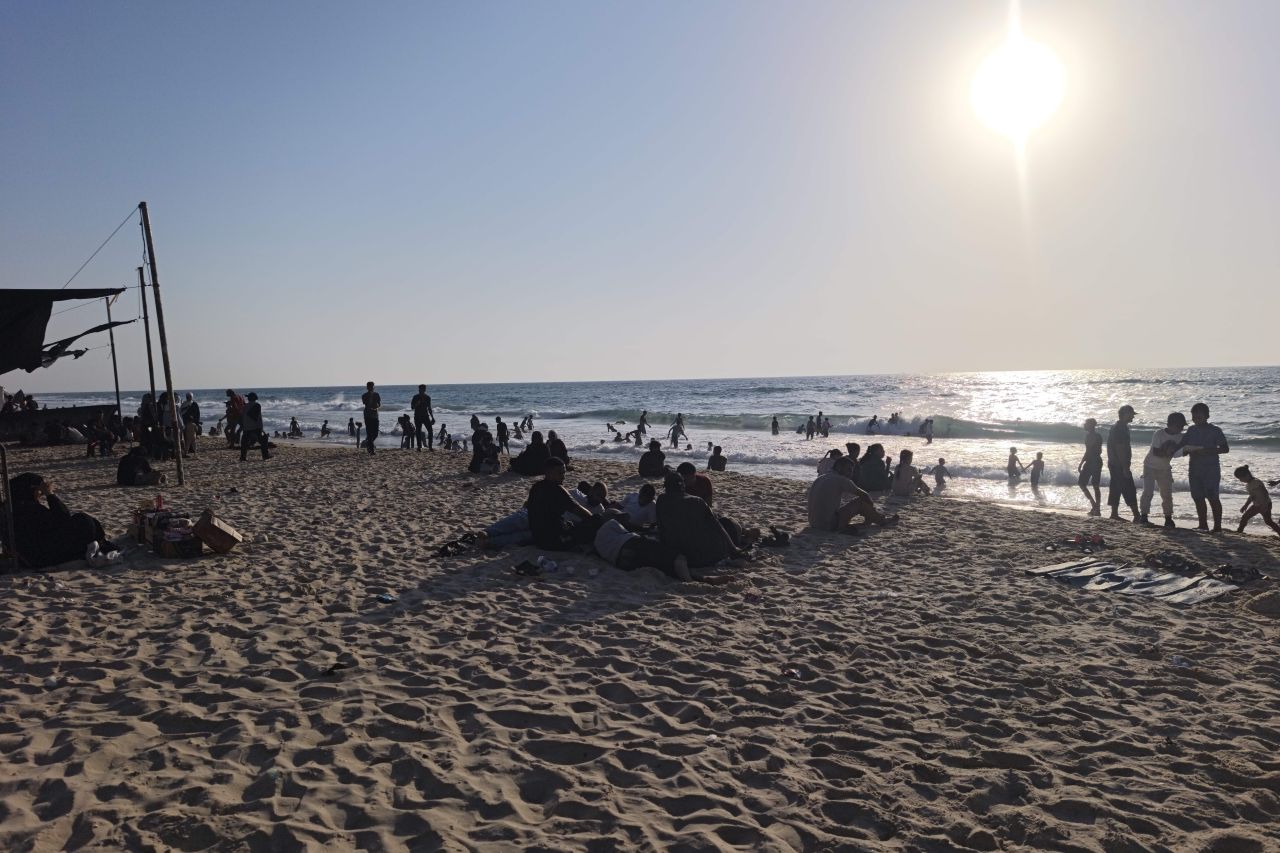
WAITING FOR THE SUN. A THOUSAND DAYS OF GENOCIDE
Press release
Sanremo. Un Ponte Per, open letter to Amadeus: invites Russian and Ukrainian conscientious objectors to the festival
The Italian pacifist organisation writes an open letter to the host of the 73rd edition of Sanremo, asking that in addition to Ukrainian President Zelensky, space be given during the Festival to the testimony of Russian and Ukrainian conscientious objectors.
Rome, 31 January 2023 - "Invite the Russian and Ukrainian conscientious objectors to the Sanremo Festival": this is what Alfio Nicotra and Angelica Romano, co-presidents of the Italian organisation Un Ponte Per, write in an open letter addressed to Amadeus, the Sanremo Festival presenter.
"We have learnt with favour," write the two Co-Presidents of Un Ponte Per, Alfio Nicotra and Angelica Romano, "that during the Sanremo Festival, space will be given to the terrible war in progress unleashed by the Russian Federation's invasion of Ukrainian territory, which has been claiming tens of thousands of victims for almost a year.
'This is not the place,' Nicotra and Romano point out, 'to go into the merits of whether or not it is opportune to give space, in a television event watched worldwide, to the President of Ukraine Volodymyr Zelensky. We merely note that Zelensky already enjoys unprecedented media coverage. On the contrary, it seems to us that the testimony, expressed at the risk of their lives and their freedom, of thousands of Ukrainian and Russian conscientious objectors has been completely ignored by public TV and the Italian and European media system'.
"After crossing the tortured territory of Ukraine several times with humanitarian aid and pacifist caravans, Un Ponte Per launched a campaign in support of the Peace Builders, the organisations of the objectors and the pacifist movements of both countries, to cover the legal costs of the trials", continue the two co-presidents, emphasising the importance of giving space to voices such as those of Russian objector Alexander Belik, or Ukrainian objectors Vitaliy Vasyliovych Alekseienko and Andrii Kucher, who "in the delirium of nationalist hysteria choose to put the repudiation of war before the barbaric logic of arms".
"These are very young boys who risk their lives and their freedom, condemned by special courts for their courage," write Nicotra and Romano again, who ask the Festival host to invite the Russian and Ukrainian objectors or in any case to give them a voice and visibility.
'Dear Amadeus,' they conclude, 'you chose as co-host of your evenings a person like Gianni Morandi who had the courage to sing a song against the war in Vietnam: "There was a boy who like me". That boy, those boys, are still there today. They are the Russian and Ukrainian conscientious objectors. Invite them to the Festival, give them a voice'.