WAITING FOR THE SUN. LIFE IN GAZA, BETWEEN TECHNOLOGY AND REALITY

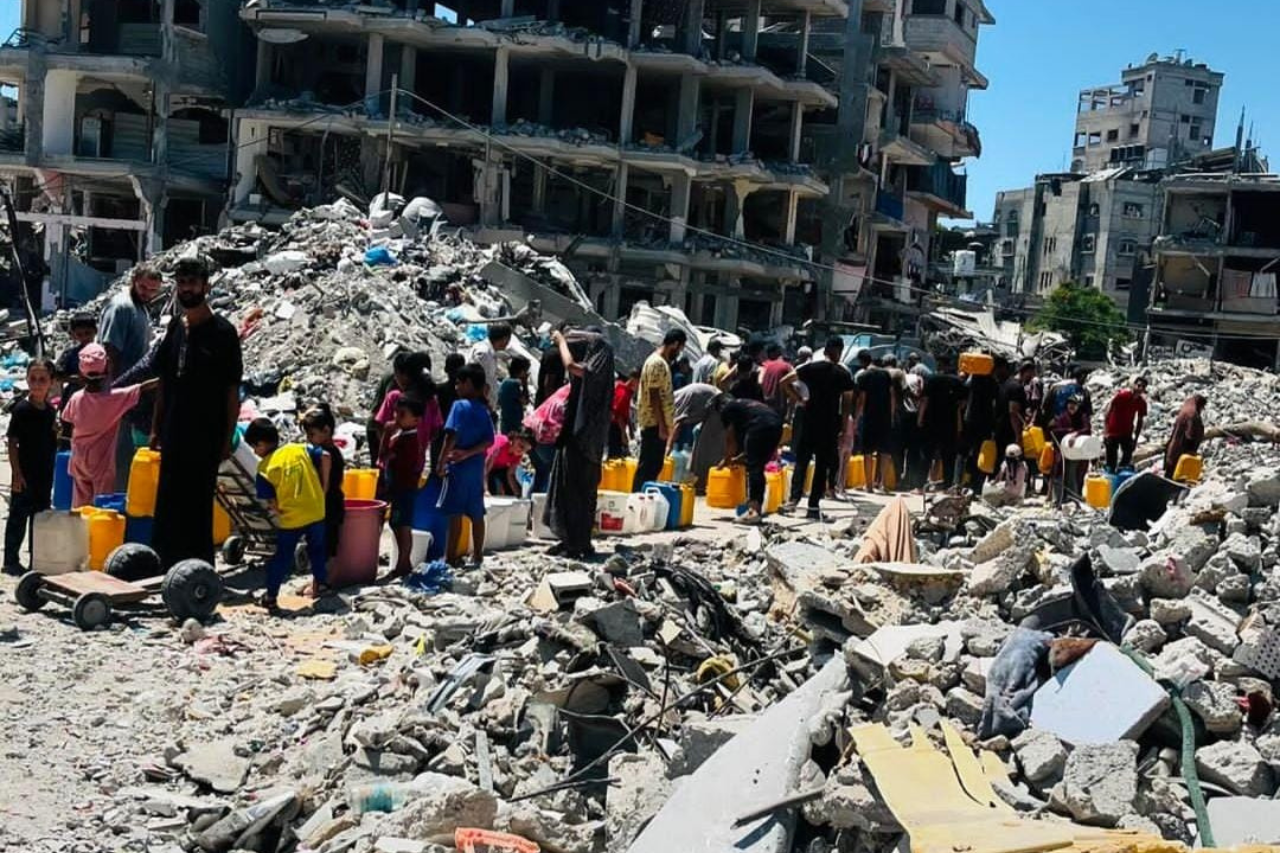
For eighteen hours, I stayed outside the tent. Rain fell on my friends and me during the night, and during the day we stood under the sun. All of this just to activate a bank account that, two years ago, I could have opened in less than thirty minutes.
In Gaza, accessing money has become a journey in itself. Every number on the screen tells a story of endurance and struggle, and every step toward reaching it teaches you what life means under the hardest conditions.
It all began when I heard that banks in central Gaza City had started allowing people to access their accounts again after being closed for more than two years.
I decided I had to go, no matter what, because we no longer know what tomorrow might bring. Three friends agreed to come with me. We arrived at 10 p.m., thinking we would be among the first. Instead, dozens of people were already there. My number was 50. Some people were sleeping at the bank’s entrance.
We waited in the street. One of my friends said, “Maybe we should come back tomorrow. This is too exhausting.” But I had made up my mind not to leave without activating my account. We all held our IDs in our hands, looking for anything we could lean on. There were no seats, no shade from the sun, and no clear system to know when our turn would come.
In the first hours, we talked to pass the time. Around 2 a.m., the cold became unbearable. Each of us tried to find a corner to shield ourselves from the wind. Our bones ached from the cold. At sunrise, the street grew even more crowded. Some people slept directly on the ground, covered with thin blanckets or pieces of cloth. Others searched for a small space to sit, resting slightly on the sidewalk. Conversations were quiet, mixed with the sound of cars arriving from time to time. Every minute felt heavy. Every hour increased our exhaustion. But we had no choice except to wait.
As time passed, I felt the weight of waiting on my body and spirit. My hands stiffened from holding my ID and water bottle. My feet swelled from standing so long. My eyes stayed fixed on the closed door that felt like a gate to another world.
Ahmad, one of my friends, whispered, “Do you think we’ll be able to activate our accounts?”
“I don’t know,” I replied, “but I’m not leaving without mine.”
As morning approached, my anxiety grew. Would I get my turn before the bank’s working hours ended? Would number 50 still count? Moments like these reveal a part of daily life in Gaza, where something as simple as accessing a bank account requires enormous effort.
At 8 a.m., the bank gates opened. By then, more than 200 people stood behind me. Two hours after the bank opened, I finally stood at the door, waiting for someone inside to come out so I could go in. It felt like a small victory, and a clear sign of the crisis we live in.
Inside, activating my account took less than 29 minutes. But that did not make the situation any less severe. For years, banks have not regularly paid out salaries or transfers. Accessing cash has become a daily struggle, even for those with bank accounts.
The money exists on the screen. The numbers are clear. But turning those numbers into physical cash is a daily battle.
For the past two years, and even now after the ceasefire on paper, many people have been forced to rely on liquidity seller. They sit in small places or narrow corners with their phones, offering one service: turning your bank balance into cash for a high commission. Sometimes this commission reached 40% or more. People lost a large portion of their own money just to access what was rightfully theirs, while prices of goods continued to rise dramatically.
The challenge did not stop there. Small change and worn-out banknotes had become another daily problem. Coins were nearly nonexistent. I had a nearly worn bill, so I took it to a place we call the "Money Clinic" to get it fixed. Later, I tried to buy bread with it. The seller looked at the bill carefully, and in the end, he refused to take it, and I walked away hungry, unable to buy bread. In moments like these, money itself feels unstable.

As a result, the salary or balance shown in the banking app becomes more of an idea than a reliable amount you can plan your month around. The number shrinks at every stage: during transfer, during withdrawal, and during purchase because of high prices and shortages. What reaches your hand is not what you actually earned. Turning digital money into tangible goods becomes an exhausting, mentally draining process.
What makes this even more complex is that this daily financial crisis is not just about numbers. It creates constant social and psychological pressure. Thinking about money is no longer about saving or planning for the future, but about how to access it quickly to cover basic needs: bread, water, charging electricity, and perhaps a little gas for cooking.
And here lies the strangest contradiction of all: our dependence on an advanced digital financial system while living an extremely primitive life in tents.
Money arrives through phone apps. Transfers happen in seconds. Balances update instantly. The process feels as if we are living in a smart, modern city with advanced infrastructure. But the physical reality around us is far from that.
We live in tents without stable electricity, without running water, and without many daily necessities. No refrigerators to preserve food. No stoves that work consistently. No reliable lighting. Yet there is a digital wallet on the phone, a banking app, and constant transfer notifications. Financial technology arrived long before many of the basic elements humans need to survive.
When I received my first payment for an article I wrote, I felt relief for a moment. The number on the screen gave me a sense of financial security. But I quickly realized that this number meant nothing if I could not turn it into bread, water, electricity, or gas.
First, I had to find a broker who would accept the transfer. Then accept the commission deducted from the money. Then find a shop that would sell what I needed and accept the worn-out cash. All of these steps just to secure basic necessities.
At the end of the day, survival in Gaza does not depend only on how much money you have, but on your ability to access it and use it under harsh conditions. Digital money exists, but physical life is extremely fragile. Modern technology advances quickly, while the basic elements of survival are completely absent.
This contradiction between the digital and the primitive, between money on a screen and fragile life in tents, summarizes the experience of living in Gaza today.
It is a difficult experience filled with challenges, but it also reveals the resilience and daily creativity people rely on to survive despite everything.

Hassan Herzallah - Correspondent from Gaza