
Jordan continues to host hundreds of thousands of refugees, the majority of whom are from Syria. Despite recent voluntary returns, many families still live in conditions of economic and social vulnerability, concentrated mainly in the governorates of Amman, Zarqa, Mafraq and Irbid. The long-term consequences of the Syrian crisis are compounded by pre-existing challenges in the country, including unemployment, poverty and limited access to protection services. Women, girls, children and people with disabilities face additional barriers to accessing their rights, whilst the reduction in humanitarian funding and the closure of certain services have further limited the support available to them.
The SPRING project aims to strengthen the protection of the most vulnerable people within Syrian refugee communities and Jordanian host communities in the governorates of Zarqa, Amman, Mafraq and Irbid. The project promotes an integrated approach that combines protection, assistance, empowerment and social inclusion, with a particular focus on women, girls, children and people with disabilities.
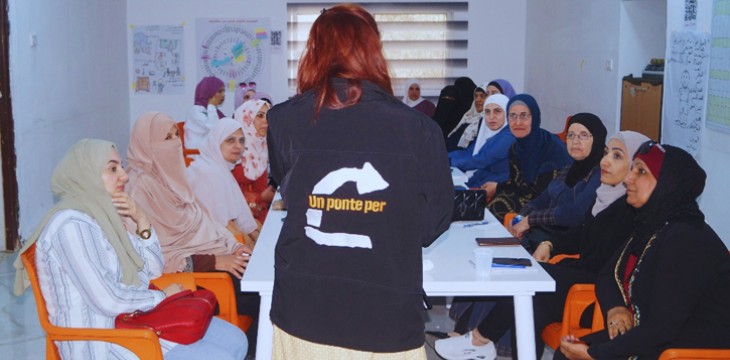
The activities include improving access to protection services through individual support programmes, services addressing gender-based violence and child protection, safe spaces and support groups for women and girls, as well as rehabilitation services for people with disabilities, delivered in part through mobile units. The project also supports the most vulnerable families in meeting their basic needs through financial assistance for protection and education, vocational training and programmes to develop transferable skills, as well as support for income-generating activities. At the same time, it promotes community-based protection by strengthening local organisations, training community leaders and service providers, raising awareness of rights, and supporting community initiatives to prevent gender-based violence.
Through SPRING, we aim to reach around 28,000 people, helping to improve access to protection services, the sense of safety and economic independence. Through information campaigns and awareness-raising activities, we also expect to reach around 100,000 people, increasing their knowledge of their rights and the services available. At community level, the project aims to strengthen the role of local civil society and to combat discriminatory social norms, particularly those that fuel gender-based violence and early marriage.
The project is being implemented by Oxfam Italia, Oxfam Great Britain and Un Ponte Per ETS, in collaboration with the Jordanian organisations Athar Association for Youth Development Society, Al-Dulail Women Special Education Society (Sayidat Al-Dulail) and Forearms of Change Centre to Enable Community (FOCCEC). The initiative is funded by the Italian Agency for Development Cooperation (AICS) and helps to strengthen inclusive and sustainable protection systems for refugees and host communities in Jordan.