Hassan Herzallah is a translator, writer and storyteller from Gaza. He collaborates with several international newspapers. For the "Water for Gaza" campaign, he chose to share with Un Ponte Per his direct testimonydocumenting his life under siege and displacement. She is in her third year of studies in English translation at the Islamic University of Gaza and continued her education online after the university was bombed.
Gaza, 30 December 2025
It was midnight, and it was raining heavily. Strong winds threatened to tear apart the tent that shelters my family and me. I was exhausted and unwell, feeling the weight of every step and a cold that seemed to sink into my hands and feet, as if winter had entered every part of me.
I tried to sleep, but who could sleep in a camp during such rain? Every drop made the situation feel heavier, as if we were trapped with nowhere to hide. I stepped outside and could only see people dreaming of rights that had become so hard to reach. At the same time, messages from my friends appeared on my phone, talking about the approaching end of the year and plans for the next one. I remembered myself here in Gaza, where even holding onto basic rights feels like chasing impossible dreams.
By morning, around ten o’clock, it felt more like five, as thick clouds blocked any sunlight. I was waiting for the day to begin so I could buy a plastic canopy for our tent, which had become weak and no longer protected us from the rain that had fallen in the past days. My whole family was still asleep. I wanted to make myself a cup of tea while waiting for my friend Hamouda, whose tent had completely flooded the night before, and who needed to buy some wood, plastic sheets, or even a new tent.
There was no news about the cooking gas cylinder we had filled at the end of October, which was supposed to be refilled monthly. So, we were forced to use the last of it for absolute necessities, relying entirely on fire. I tried to light a fire using any paper or wood I could find, but the intense cold and the wet wood made it almost impossible.
I heard Hamouda calling, so we decided to get something to drink on the way from any nearby supermarket—juice or anything else. I asked him if his phone had any charge so we could pay through the banking app, since I hadn’t been able to charge my phone the night before due to the lack of sunlight, and his phone was dead too. I had six dollars in cash, so I bought juice and a biscuit for two dollars, but the shopkeeper didn’t have change. We returned the items, still frustrated by dealing with worn-out money, even after the ceasefire had been declared.
We arrived at the place selling tents. My friend bought a small tent for $500, while I bought plastic canopy at $40. Since we needed two, we quickly headed back using the available transportation, especially the donkey cart in Khan Younis. On the way, the weather suddenly changed, and the sky became heavily overcast, while Hamouda’s belongings were left outside, and his family was waiting for him to set up the new tent and arrange the rest of their things.
We arrived at the camp, and I first went with him to help set up the tent, since he couldn’t do it alone. I stayed until we finished, then hurried back to our own tent to cover it with the canopy. As soon as I got inside, I asked my mother to check the weather forecast - during winter in Gaza, the first thing we do every day is follow the weather. She said, “A strong wind is coming this time, but the rain isn’t too heavy.” The morning passed, and I managed, with difficulty, to charge my phone just enough for studying or writing this diary.
By midnight, there was no sound from anyone, and no light in the camp except the faint glow of my phone. I began to hear the rain and very strong winds. After a few minutes, voices came from outside - from neighbors. When I stepped out into the rain, I saw that some tents had been torn apart by the force of the wind, and people didn’t know what to do. I felt a deep pain inside from everything we were going through in the camp. Minutes later, the plastic canopy I had bought to protect our tent were ripped away - the wind was stronger than anything I could do.
I couldn’t sleep all night, trying to hold onto the canopy and tie them to anything I could find, but the wind kept tearing them away every time. My body was completely exhausted, and I felt sick from repeatedly going out into the rain to protect my family’s tent.
When I finally had a moment, I checked my phone to see what was happening in the rest of the world.
I saw people celebrating their achievements as the year came to an end - greetings being exchanged, brightly lit streets, people gathered together, continuing their lives as if everything were normal. Here in Gaza, however, we recognize the end of the year only through winter, a season we cannot withstand no matter how much we try to prepare for it.
What hurts most again is that all our dreams for the new year here in Gaza are simply basic rights that already exist elsewhere.

Hassan Herzallah - Correspondent from Gaza
Un Ponte Per responds to the criminalisation of activism in Italy and around the world with two protection programmes for human rights defenders. Protecting democracy.
A worrying phenomenon is growing in Italy and Europe: the criminalisation of protests and dissent is eroding civic and democratic space. In recent years, new regulations have significantly restricted civil liberties and fundamental rights guaranteed by the Constitution. And these are not isolated incidents, but a structural process: from the Security Law, which affects all popular movements across the board through the introduction of new crimes and harsher punishments; to mass surveillance, such as the use of spyware installed on activists' phones that violates privacy, to gag lawsuits, which directly affect freedom of expression, and SLAPPs, intimidation lawsuits aimed at silencing activists, journalists and organisations. Finally, the recent 'anti-Semitic decree' which, if passed, risks becoming a further tool of repression, hitting those who demonstrate solidarity with the Palestinian population and fight against the ongoing genocide.

According to CIVICUS Monitor Watchlist (December 2025), Italy is among the countries where civic space is under serious threat (classification: "obstructed"). This is no longer just a perception: even non-violent protest actions are punished with disproportionate penalties. For a peaceful roadblock, for example, one can now risk up to two years in prison. The aim seems to be to limit political action from below, on the one hand by turning certain administrative offences into criminal offences, and on the other hand by abusing administrative measures, such as heavy fines, urban daspo, travel bans and participation bans, which do not require a trial but significantly affect freedom of movement and public participation. All this has a deterrent effect: many activists give up mobilising for fear of the legal consequences. Less protest, less dissent, less democracy. It is a process of authoritarian acceleration that threatens the very heart of European democratic life.
In this scenario, consistent with our commitment to the protection of human rights, we have chosen not to limit ourselves to political solidarity and denunciation, but to build concrete instruments of protection for those who defend human rights. "Shelter City Roma" and the "Protection Hub" embody our human, civil and social rights-based approach, putting justice, dignity and freedom at the centre of our work.
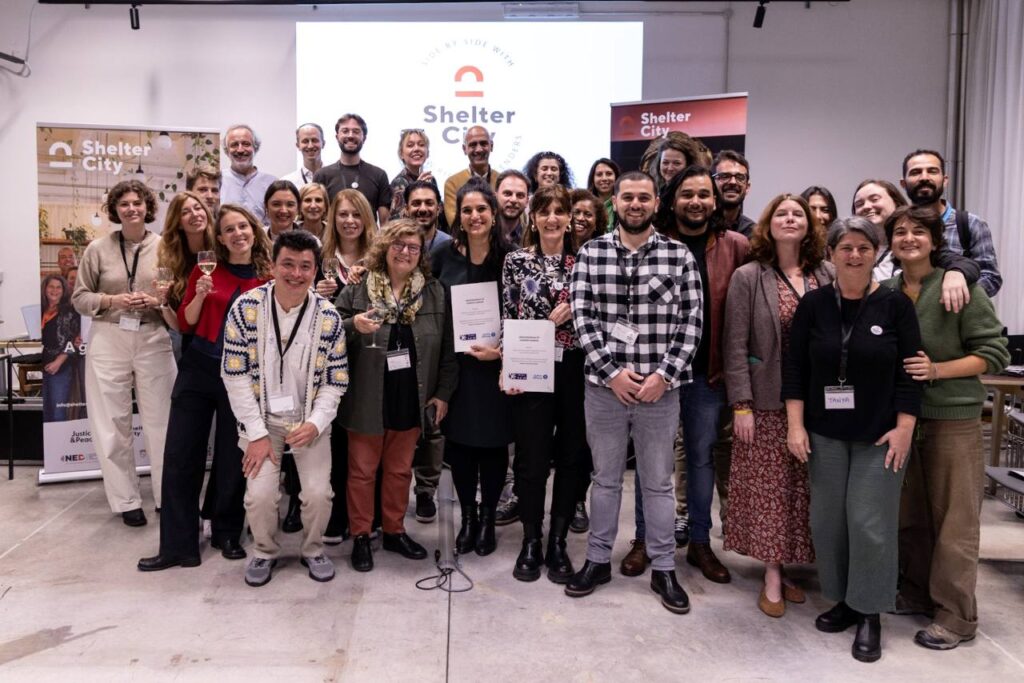
"SHELTER CITY: ROME BECOMES SHELTER CITY
The 'Shelter City' programme was born in the Netherlands in 2011, in response to the repression of human rights defenders outside Europe. In many regions of the world, defending fundamental rights is considered a crime: activists, journalists and members of civil society are exposed to threats, persecution, arbitrary arrests and systematic violence. 'Shelter City' offers them a period of protection and rest in cities perceived as safer. In just a few years, the programme has grown into an international network of 26 cities, spread across Europe, Latin America and Africa, with a simple but powerful idea: to make cities bastions of democracy, local spaces capable of guaranteeing global protection. In 2023, Rome officially joined the international network through the collaboration between Un Ponte Per and the In Difesa Di network, with the support of the 8th Municipality. Roma Capitale and Roma Città Metropolitana also signed a motion. Rome is officially a city of refuge, with the aim of developing a replicable model that can also become a reference point for other Italian cities.

The programme fully embodies our values of participatory democracy, decolonising international cooperation, and enhancing the aspirations of the activistə accoltə. It provides temporary shelter for human rights defenders at risk, offering a period of mental and physical rest from political activity. The first objective of the project is to guarantee protection, understood in a holistic sense, combining physical, medical, psychological, legal, social and digital support. Providing protection is not enough, but it is essential to avoid isolation and promote integration into daily life. Rome thus becomes part of a transnational network that builds social cohesion and defends democracy from below, fostering encounters between different cultures, languages, religions and traditions, in line with our vision of peaceful and equitable coexistence between peoples.
THE 'PROTECTION HUB': WHEN THE THREAT IS HERE
When 'Shelter City' was born, Europe and Italy were considered 'safe and democratic harbours'. Today the situation is different. What coherence would our commitment have if we only defended those who are at risk abroad without protecting those who are criminalised at home?
Out of this awareness came the 'Protecion Hub', a nationwide programme designed to support those who defend human rights in Italy and find themselves under attack. The Hub represents an evolution of our work: from an international cooperation organisation to a civic entity that protects those who defend rights in Italy as well. Createdas a reaction to the Security Decree, the Hub offers legal, psychological and digital protection to activists, organisations and movements under pressure, connecting existing networks without replacing them. The Hub is not a mere service provider, but a social laboratory to create exchange of expertise and experiment with new forms of concrete solidarity.
CONCRETE PROTECTION: THE CASE OF ROBERTO MALINI AND LISETTA SPERINDEI
An emblematic example of the Hub's intervention is the case of Roberto Malini and Lisetta Sperindei, activists affected by a EUR 2 million SLAPP (Strategic Lawsuit Against Public Participation) lawsuit brought by Fox Petroli, a world record for compensation demanded from individuals. SLAPP lawsuits exploit the disparity of resources between whistleblowers and large economic or political actors. It is the classic 'David versus Goliath' effect: for a company losing a case is irrelevant, but for activistsə or a small NGO it can mean years of stress, unsustainable legal costs and the end of a public engagement. The 'Protection Hub' intervened by offering legal support, but did not stop at the individual case: it initiated the creation of a dataset of repression cases followed, useful to monitor trends, document violations and produce reports for advocacy. The dataset is linked to a document database to share good legal practices, winning strategies and useful materials for advocacy.
TWO SIDES OF THE SAME FIGHT
"Shelter City" and "Protection Hub" are therefore not isolated initiatives, but parts of a common design embodying a strong principle: activists protecting activists . Building ever stronger links between local protection and transnational solidarity means concretely realising our mission: to prevent violent conflicts by building networks for social justice, fostering encounters between cultures and building cohesion. Because defending those who defend rights means, everywhere, defending democracy and promoting a vision of peaceful and equitable coexistence between peoples.

Lorenza Fiaschetti – Shelter City Rome Coordinator for Un Ponte Per
Hassan Herzallah is a translator, writer and storyteller from Gaza. He collaborates with several international newspapers. For the "Water for Gaza" campaign, he chose to share with Un Ponte Per his direct testimonydocumenting his life under siege and displacement. She is in her third year of studies in English translation at the Islamic University of Gaza and continued her education online after the university was bombed.
Gaza, 9 December 2025
I woke up before sunrise, the way I’ve learned to wake up two years. The tent was cold, and my hands were stiff as I tried to start a small fire to heat some water for taking shower. Winter had arrived silently this year—without warning, without mercy. The ceasefire had changed nothing.
My mother asked me again this morning, “Where will we go before the first rain begins?”
I didn’t answer. I looked at our tent—eight months old, thin, torn at the edges—and I knew she already understood.
Later that afternoon, I walked through a street in Khan Younis that I recognized from before the genocide. I used to go past this street by bus on my way to university, but now it was just ruins. The silence there is different… it’s the silence of places that no longer remember themselves.
I were searching for an apartment to survive the winter, but every place we entered felt like a reminder of what we lost. Some apartments were half destroyed, some too dangerous, some impossibly expensive. I kept walking, but inside I felt stuck between the weight of memories and the reality of the tent that awaited me.
That evening, I met two children from the camp—Adam, nine, and his little sister Bisan. They were using their hands to try to pile sand around the edges of their tent. I saw them as I walked by and gave them a shovel to help lift the sand more easily. Their little hands were red from the cold of the night and the chill of the sand.
Then Adam looked at me and said, “If it rains, our tent becomes a boat.” I didn’t know what to say. Sometimes silence is the only honest answer we have.
That night, on November 20, 2025, everything changed in just seventeen minutes.
There was no electricity in the camp. Everyone was already sleeping. I had just closed my eyes when I heard the first drop hit the tent roof. Then another. And another. My little brother Mohammad shouted, “Hassan, the water is coming in!” I jumped up.
The rain wasn’t rain—it was a storm. Water poured through the holes in the tent faster than we could stop it. My sisters Malak and Alaa tried to lift our blankets off the floor, while I pressed my bag against the largest tear in the roof, and my father was battling the flood in the other tent.
Outside, people were shouting. I heard Abu Adam shouting as water filled his tent and he wasn't know what to do. My friend Wasem was trying to carry his disabled brother to higher ground. I saw a little girl—barefoot—running behind her mother, holding a pot to catch the water falling on their belongs.
In the midst of it all, while I was trying to keep water out of our old tent, my young cousin Yosuf—an orphan—came running to me, his face pale with fear. “Come quickly… Our tent is flooded,” he said, referring to himself and his five sisters, who could not manage the flooding on their own. I felt torn between staying to protect our tent and going to help them, but my feet moved on their own toward their area.
When I arrived, I was shocked. All their belongings were almost ruined, soaked completely. Their small, modest kitchen was flooded. I tried to help them remove the water as much as I could, whispering in my head, “Please, Allah, let the rain stop.”
Those few minutes were enough to expose our weakness and helplessness in the first storm of our third winter of ongoing suffering. No one was sitting idly by—big or small, child, woman, or young man—everyone was struggling, fighting, and enduring.

Seventeen minutes.
That’s how long the rain lasted.
Seventeen minutes were enough to flood hundreds of tents. Enough to turn a quiet night into chaos. Enough to remind us that even after the ceasefire, survival is still a daily battle.
When the rain finally stopped, the cold became sharper. I sat awake for hours, waiting for another leak, another sound, another disaster. By dawn my body felt frozen, heavy with exhaustion, but I forced myself to write these lines—to remember, to record, to say that we are still here .
In the morning, I woke up to flooded streets. Water had nowhere to drain because of the lack of infrastructure, and a little boy was wading through the water in the street while we couldn’t move anywhere.
I used to love winter in Gaza. It was one of the most beautiful seasons of the year. Inside our homes, the air was warm, family gatherings were frequent, and children ran outside to play in the rain. Adults would sit by the windows, listening to the soothing sound of the falling water—a feeling unlike any other season.
But today, after more than two years of war, and even after the ceasefire “on paper,” everything has changed. We are now entering our third winter with no real solution in sight. Our tattered tents have become our only shelter, flooded from every side by rain and wind. Winter has become a season everyone fears, a witness to the suffering of Gaza’s people.
Yet, the dream of a normal life still lingers in my mind, even as the future remains uncertain. Once again, winter reminds us that Gaza continues to endure in silence, caught between the pain of the past and the uncertainty of what is to come.
Hassan Herzallah - Correspondent from Gaza
Hassan Herzallah is a translator, writer and storyteller from Gaza. He collaborates with several international newspapers. For the "Water for Gaza" campaign, he chose to share with Un Ponte Per his direct testimony, documenting his life under siege and displacement. He is in his third year of studies in English translation at the Islamic University of Gaza and continued his education online after the university was bombed.
Gaza, 24 November 2025
I was eager to dive into the sea with my fisherman friends, the same people I had come to know during the harshest days of famine. Suddenly, a large boat approached quickly, and before I could even comprehend what was happening, gunfire erupted. Israeli naval boats. Water surrounded me on all sides, and my heart pounded wildly, as if every second could be my last. I couldn’t move, and all I could think about was staying alive, trapped in the immediate danger of death or capture at any moment.
After the ceasefire was declared in Gaza on October 9, the genocide had officially stopped on paper, but the daily struggles continued, and securing even the most basic necessities of life remained an ongoing challenge.
It was six in the morning, and the weather was as unpredictable as ever these days.
I left our tent in the camp, heading out with my friend Abood to buy a bag of bread. My mother was ill, and I didn’t want to tire her out by having her knead the dough so early in the morning. I wanted to call Abood to let him know I was waiting, but his phone was dead, and there was no electricity at this early hour anyway. So, I went straight to his tent, and as soon as I called his name, he came out, smiling wearily:
“Is there any sleep left in this camp? I’ve been awake since dawn.”
We walked together to the place where bread was sold, and when we arrived, we were shocked to see a long line of people. Abood turned to me and said,
“The war is over… but when will these queues end?”
We waited until nine o’clock. When there were only about fifteen people left ahead of us, the baker called out,
“The bread is finished, everyone!”
It was a small morning defeat, but a bitter one. We returned to the tents empty-handed.
My little sister Malak and I kneaded the dough ourselves, and then I went to bake it. It was around half past ten, the usual time when water trucks pass by. I heard its horn in the distance, but I couldn’t go -the distance was too far while I was at the bakery. When I returned to the tent, I found that my brother Mohammad had already filled the water gallons.
After that long morning, I felt the need to catch my breath, so I went to the sea - the only place where I truly felt I could breathe. That moment on the shore reminded me of my relationship with the sea before the war, when I used to go there every Thursday with my friends, staying until sunset before returning to our warm homes. I never imagined that the place where I spent my happiest times would later become my last refuge.
After we were displaced from Rafah, we found ourselves living on the beach in a thin fabric tent, offering no protection from the cold or the wind. From that day on, our lives took on a new form unlike anything I had ever known. Even the simplest tasks became daily battles: charging our phones at crowded stations, running after water trucks every morning, and lighting firewood after the gas ran out - a task that could take an entire day just to prepare the simplest meal… if food was even available.
Amid all this weight, the sea remained the only place where I truly felt I could breathe. After every long day chasing the essentials for survival, I would carry a cup of hot mint tea - which took a full hour to prepare - and sit on the sand, watching the waves, as if stealing a small moment of respite from time itself.
By mid-July 2025, my relationship with the sea had completely changed. It was no longer just a temporary escape; it had become my only way to secure food for my starved family. I searched for flour in the markets, sometimes barely finding a single kilogram, and often returned empty-handed, risking my life to reach dangerous places.
I remember the day I went to the U.S. aid trap points, where I ate nothing but a small bowl of soup. The sun was harsh, bullets whizzed overhead, and I lost the ability to run until I lost my balance and everything went dark. When I opened my eyes, the people had returned from the distribution point, and my legs carried me alone toward the sea - the only refuge left for me to breathe.
From that day on, I began helping the fishermen every morning, taking a portion of what we caught for my family. I spent longer hours with them, risking the waters despite the merciless gunfire. One of them was a university student, his entire family in Egypt, dreaming of hugging his father after the ceasefire. The other two were waiting for the crossings to open to take their sick relatives for treatment. We were all there for the same reason: to keep our families alive.
As the days passed, news of the ceasefire on October 9 reached us. For me, it was not just a political announcement; it was a small window toward a postponed dream: continuing my studies in a proper environment. Even though I had studied online for a full year, my passion for the university life I had dreamed of since school remained alive.
Several weeks after the ceasefire was announced, I went to the sea to meet my fisherman friends after a period of separation due to the scarcity of food in the markets. I was eager to dive with them again for the first time since the ceasefire. Suddenly, a large boat approached, and before we could understand what was happening, gunfire erupted. They were Israeli naval boats.
At that moment, surrounded by water and with my heart racing, we realized the immediate danger. We all dived underwater, each of us on our own, trying to escape the bullets and gunfire. After long minutes swimming beneath the surface, we miraculously reached the shore safely, exhausted but alive. I felt then that our daily lives were no longer secure, and that even after the ceasefire, our existence remained fraught with danger.
Even after the ceasefire was declared in Gaza, daily suffering continues unabated. Securing the most basic necessities of life remains an ongoing struggle: there is no stable electricity, water is not consistently available, and our lives depend on queuing for even the simplest items. The crossings remain closed to students and patients, and as winter approaches, our tattered tents grow cold and damp. Life in Gaza continues to be a struggle, with daily survival - finding bread, water, and electricity - never guaranteed.
Amid all this, I’ve been accepted to universities in the UK and Finland, though travel and funding remain uncertain. I still hope to one day study at the University of Trento in Italy, holding onto the possibility that my education abroad can finally become a reality.
Hassan Herzallah - Correspondent from Gaza
Peace has never been just a word, but the very condition for life to endure and cultures to flourish. Without peace, there is no civilisation, no art, no science. Iraq, the cradle of civilisations for millennia, today offers the world a new testimony: countries scarred by war can rise from the ashes and rewrite their destiny in the language of hope.
Situated at the crossroads of geographies, Iraq lies between East and West, between the Gulf and the Mediterranean. This location was never just a matter of borders: it was (and is) a living bridge, a place where cultures intertwined and human histories converged. Here the first cities of Sumer arose, here the laws of justice were engraved in Babylon, and Nineveh flourished as a capital of art and intellect. Today, after decades of upheaval, Iraq re-emerges not as a battlefield, but as a beacon that declares to the world that hope can shine brighter than devastation.

Iraq is an open-air museum. From the Ziggurat of Ur to the walls of Babylon, from the ruins of Nineveh to the cities of the south, each stone tells a story of human resilience, creation and the eternal connection between peace and prosperity. These are not silent remains: they are living messages that whisper to every visitor: 'History began here, and here humanity can rediscover itself'. Today, Iraq opens its doors to travellers, scholars and lovers of beauty, inviting them to see how past and present meet on its land in one wonderful fresco.
Yet Iraq's greatest treasure is not its monuments, but its people, its youth. Emerging from the rubble of war, they carry out cultural, artistic and educational projects that replace the language of violence with that of creativity, transforming memories of pain into energy for renewal. These Iraqi youth are not simply the face of a new generation: they are custodians of hope, guardians of the future. They are the ones who are redefining the image of their country before the world: Iraq, a land of peace, not war.
For too long, the international media has reduced Iraq to images of conflict and division. But local stories are shattering this narrative. Youth initiatives, art movements and cultural events have crossed national borders, reaching global forums and demonstrating that Iraq cannot be encapsulated in images of destruction: it must also be read as a narrative of resilience, reinvention and rebirth.
Iraq is more than a geographical space; it is a philosophical question about the very meaning of humanity. From its ancient civilisations we learn that creativity only springs from the womb of peace. From its modern history we learn that war leaves nothing but ashes. And today, walking the streets of Baghdad or in front of the Ziggurat of Ur, the earth itself asks a timeless question: "What will we leave to future generations?"
From the land that once taught mankind the alphabet comes a new lesson: hope is invincible, and Iraq, with all its wounds and memory, is also a land of great dreams.

CHALLENGES AND WORK FOR CHANGE
It would be dishonest to talk about Iraq without acknowledging the difficulties it has gone through. Decades of conflict have left scars on its infrastructure, society and collective memory. Many people abroad continue to see it only through stereotypes of destruction and despair. However, today's reality is much richer and full of hope. The Iraqi people - especially the youth and civil society - are dismantling those images and building a new model of coexistence, creativity and peace.
And the younger generation has been at the forefront of this transformation. Through cultural initiatives, art projects, educational programmes and volunteer work, they are proving that Iraq is not a battlefield, but a fertile ground for creativity and human endeavour. They are writing a new chapter in Iraqi history, based on dialogue, mutual respect and the replacement of violence with art and development.
Civil society played a key role. Organisations like Un Ponte Per have worked for years with local communities to empower young people, promote dialogue, overcome social divisions and strengthen reconciliation. They have supported women's initiatives, promoted cohesion and trained a new generation of leaders convinced that transformation starts with small gestures that can generate big changes. Our projects have united formerly divided neighbourhoods, revitalised cultural spaces and offered children the chance to dream of a brighter tomorrow.
These efforts have not gone unnoticed. Beyond Iraq's borders, the world has begun to see that its story cannot be reduced to a war narrative. Youth initiatives and civil society projects have reached international audiences, inspiring others and demonstrating that change is possible when we unite with courage and vision.
From Iraq - the land where the first laws were written and the first letters carved in clay - I would like to speak to the global community. It is time to end the arms trade, to stop the arms race that drains the planet's resources and fuels endless conflicts. It is time for humanity to rethink its priorities, investing not in war machines, but in bridges of peace: in education, in art, in health, and in the future of generations to come.
People who have endured war and poverty deserve peace: not as a privilege, but as a basic human right. Peace is not secondary; it is essential to life itself.
Those who hold the power to shape the destiny of the world have a responsibility not to accumulate influence or wealth at the expense of other peoples, but to be custodians of peace, guardians of humanity's future and not of its conflicts.
Let Iraq bear witness that civilisations are only born in the womb of peace, and that our common future can only be built on love, understanding and coexistence. Every human being deserves to live a life of dignity, free from violence.

Jameel Al-Jameel - Communication Coordinator of Un Ponte Per in Iraq
In Gaza, we all know each other. But most of all, we know the shelling. "If you hear them, it means you are safe," we use to say. In Gaza, which has sacrificed itself for the whole world, a cease-fire has come into force but there is still no safe place.
Even after two years of extermination, people are neither angry nor desperate. They have learnt to rejoice in the little things, despite living an indescribable everyday life. A few days ago I managed to talk to my mother: she told me that she had bought a small molokhia plant to prepare a lunch. "I planted it near our tent in Deir el Balah," she told me. "I cooked seven meals with it." He also planted basil and mint. She did it this time, and every time she and the rest of my family had to move, change refugee camps, change tents. And each time she left, she said goodbye to her plants. It is her way of keeping her relationship with the land alive. It is her way of saying: I am staying here.
Beit Hanoun, my town, no longer exists today. There is no home to return to. Yet I walk its streets every night, as soon as I fall asleep. I talk to people, the wounded and those who are no longer there. But it is not enough for me, I wish I could feel their same fatigue. I wish I could tell my mother we are going home. "Come on, Mum. Let's carry this mattress together," I would tell her. The people of Gaza who were killed will never be forgotten, and sooner or later we will come back to keep each other company in heaven.
These days I often think of the Nakba. At the time, the forced evacuations in Gaza lasted three days, and we talked about it for the next 70 years. Now that we have two years of displacement behind us, we have at least two thousand years of stories to tell.
"IF YOU FEEL PAIN, YOU ARE ALIVE. IF YOU FEEL THE PAIN OF OTHERS, YOU ARE HUMAN'.
In Gaza, after two years of genocide before the eyes of a complicit world, people feel they have done all they could to remain human. They managed to send us smiles as they tried to survive a plan of extermination, amidst bombings, hunger and thirst. Amidst the devastation of schools, infrastructure, hospitals and lack of medicine. Amidst the rubble of their own country, still full of life, dignity and pride.
In Gaza, people have chosen as always to cling to life and land. And with the mobilisations of solidarity around the world, they stopped feeling alone. They realised that people understand where the evil lies, they felt they had comrades and allies everywhere, who were able to shout in the squares and speak out for them. People who have taken to the sea - like the activists of the Global Sumud Flotilla - to whom they have said 'even if you have not reached Gaza, you have reached our hearts'. They saw families donating, trying to help even with small gestures.
To those who have been demonstrating for two years at our side; to those who for two years have been waking up at night or sleeping with a heavy heart because of the images they have received; to those who have filled the streets and squares; to those who have donated to help us survive: we thank you no more. You have taught us, shouting in the squares 'we are all Palestinians': we are comrades in the streets and in the struggle, Gaza has opened your eyes and 'taught you life'.
For this we do not thank you any more. But we want to tell you that we heard you. Even when we had too much pain in our hearts. Even when we were standing in line for a piece of bread or some water. Even in the din of the bombs. We Gazawi listen with our hearts more than with our ears, we see with our conscience more than with our eyes.
YOU HAVE EXTENDED US A HAND. NOW WE NEED TWO
With much tenderness and just as much firmness, we say to you: you extended us a hand that allowed us to move forward, one day after another, allowing us to believe that a century of propaganda could be dismantled, leaving room for our voice. Today, we ask you for two hands.
Because the genocide in Gaza continues. The bombs may stop, but not the consequences of two years of extermination and destruction. Today, the Strip is reduced to rubble. Over 70,000 people have been killed, at least 20,000 of them boys and girls, and who knows how many thousands are still under the rubble. Ten per cent of the population no longer exists. Some 4,000 families have been wiped off the population register forever. There are over 180,000 injured people without access to health care, drinking water, food. And 53% of the Gaza Strip remains occupied by Israeli military forces: this means that over two million people are forced to live in 180 square kilometres, 13 thousand per square kilometre.
How do they survive? Same as before. Our house was already besieged: it was just a little wider.
But Israel mainly controls the agricultural land necessary for the population to survive. In the past two years, the people have also exhausted their savings: if for so long they were able to get by with the supplies they had put aside, today the people literally have nothing left.
AN UNCERTAIN FUTURE
Paradoxically, it is when the bombs stop that the most difficult phase begins. It seems impossible to even think about, in light of the images we have observed. But as long as one is focused on survival, there is no time to ask questions. Now, however, we lack answers.
How will we rebuild Gaza? That is what we ask ourselves every single day. And the only possible answer, perhaps, is 'as always'. There are already teams of volunteers everywhere cleaning up the streets, removing rubble, trying to get the hospitals up and running again, and clearing schools of the families who have found refuge there. Because they know very well that the first step is to enable the children not to give up their education. That is what brings life back.
Seeing all this destruction before us feels like living in a desert, without a beginning or an end. And it seems impossible to start again. But then, one day after another, we always do. We just have to start.
It is not over yet. The war is not over. But neither is our hope.

Sharif Hamas - Communication Officer of the "Water for Gaza" campaign
Hassan Herzallah is a translator, writer and storyteller from Gaza. He collaborates with several international newspapers. For the "Water for Gaza" campaign, he chose to share with Un Ponte Per his direct testimony, documenting his life under siege and displacement. He is in his third year of studies in English translation at the Islamic University of Gaza and continued his education online after the university was bombed.
Gaza, 7 November 2025
It felt almost like a dream to wake up to children in the camp shouting, “Ceasefire! Ceasefire!” — a moment of hope in the middle of the two-year nightmare we had lived through. It was no ordinary day; it was the announcement of a ceasefire in Gaza after two years of genocide. Joy filled my family and the camp, yet a lingering pain remained inside us, even after the war ended.
I had waited eagerly for any ceasefire, so I could finally meet friends I hadn’t seen for months, even years, as moving around during the war was too dangerous and people risked being targeted. We planned to gather a week later, on October 16, 2025, at the beach in Al-Nuseirat, in the heart of Gaza City.
I met my friends Mahmoud, Hussein, and Ramez; our fourth friend, Omar, was supposed to join us. His brother remains trapped under the rubble of a bombed house, leaving Omar in deep distress. His other brother is locked behind the bars of an Israeli jail; Omar had hoped he would be released on October 13 with the other detainees — but he was not. Now Omar carries the heavy pain of loss and separation, especially after seeing the joy of others whose loved ones were freed.
I spent the day with my friends, laughing one moment and grieving the next, as we remembered the sweet and painful moments of the genocide. Amid it all, one question kept coming up: How did it feel when it finally ended?
Hussein lived in Al-Nuseirat and did not have to evacuate his home during the war. He spent two years there, enduring the horrors of bombings, death, and hunger, while sheltering many displaced people. Unfortunately, some of them were killed in the attacks. Even though he never left, he lived in constant fear that one day he might have to evacuate too. When the ceasefire news arrived, his first feeling was safety, knowing his family would not have to leave their home.
Mahmoud lived in Gaza City, which was under constant bombardment, and he and his family were forced to evacuate south to escape the relentless attacks. He endured his share of the horrors of war — leaving his home and all his belongings behind, living with his family in a small room at a relative’s house, and going through every stage of the war: bombings, death, hunger, and soaring prices. When the ceasefire was announced, their first feeling was fear for their home — whether it was still standing or not. Two days later, they learned it had survived, filling them with overwhelming joy, knowing they could finally return home after more than a year and a half of displacement. All they had to do then was clean their house and resume their lives.
My friend Ramez, who lives in East Khan Younis, experienced a different kind of uncertainty. With the news of the ceasefire, his family was relieved to learn that their house — the only one still standing in their area — had survived. Yet their joy was short-lived. Israeli forces continue to target new homes in East Khan Younis every day, leaving Ramez and his family in constant fear. Each day brings a new threat, and they never know if their house — or their ability to return to it — will be taken away in an instant. The ceasefire has brought hope, but for them, danger and anxiety remain a constant companion.

As for me, I spent the first nine months in my home in Rafah ( Southern part of Gaza ) before we were forced to evacuate — a moment that felt like my soul was leaving my body. We moved to live in tents, enduring the hardships of war: the harsh summer heat, the bitter winter cold, bombings, hunger, and the lack of even the most basic humanitarian services.
What’s even more painful is that, after the war ended, I had no home to return to — mine was completely destroyed. I still live in a camp for displaced people from Rafah, my city that once sheltered over a million. Now, with no news of return, our future feels uncertain, and an emptiness eats away at us as we live without the basics of life.
I wonder — how can someone who lost their home and family feel joy after such a war? Was the end of it truly felt the same by everyone?
Now, as the days after the ceasefire unfold, life in the camp feels like a mix of relief and exhaustion. The bombings have stopped, but the struggle to survive continues in different forms. Winter has arrived, and the cold pierces through the thin tents. Every day, families try to find drinkable water, collect wood, share bread, and try to rebuild what little they can. Still, amid the ruins and the cold, I keep asking myself: can there really be joy after everything we’ve endured? After two years of genocide, will there ever come a day when a true sense of stability fills our hearts again?
Despite everything, Gaza still breathes. I see children in the camp playing among the houses that have become rubble, some goods slowly returning to the markets, and a few schools that were suspended now preparing to reopen. Yet, we in Gaza are still waiting for the sun that has long been absent.
Hassan Herzallah - Correspondent from Gaza
Raqqa is a territory marked by deep and layered fragility. In recent years, the political and social context has been shaken by continuous shocks: internal instability, the cut in funding for humanitarian aid. All this in a region already affected by thirteen years of war, a severe economic crisis, international sanctions and the heavy consequences of the Daesh (ISIS) occupation.
The result is an enormous need for essential services, particularly in education and protection.
In December 2024, with the arrival of new waves of displaced people from the rural areas of Aleppo and Afrin, all schools in Raqqa were closed to accommodate families in buildings turned into collective centres. Even when the situation partially stabilised, 38 out of 51 schools remained closed, compromising the education of an entire generation and, along with it, their future opportunities.
The consequences of past conflicts are still evident: many schools are unusable or severely damaged by bombing, leaving entire communities without safe spaces for children and adolescents to learn.
The absence of functioning schools not only deprives people of the right to education, but also takes away a protected place, increasing the risks of exploitation, child labour and early marriage.
At the same time, this context has had a very serious impact on protection services for women, girls and children. There is an increase in child labour, early marriage, domestic violence, psychological stress and social isolation. Strong discrimination against displaced families and those returning from camps, such as Al-Hol, also persists.
Opportunities for reintegration and access to work remain extremely limited, especially for women, in host communities already facing profound economic and social difficulties.
In this scenario, it is evident how much non-formal education and protection are deeply intertwined needs: learning cannot be ensured without a safe environment, just as protection cannot be ensured if children and caregivers do not have access to structured, stable educational spaces where they can find normality and future perspectives.
This is all the more true in a context like Raqqa, where the presence of recently displaced persons and returning families makes it urgent to create places that foster not only access to services, but also coexistence, social cohesion and integration between groups experiencing tension, stigma and mutual marginalisation.


THE 'BUILDING FUTURES' PROJECT
The Building Futures project was created precisely to strengthen the Safe Spaces of Un Ponte Per for children and women and girls, and to rebuild what was destroyed: skills, educational paths, community networks.
Thanks to the support of theItalian Buddhist Institute Soka Gakkai and in collaboration with local partner DOZ, Un Ponte Per worked in an integrated manner on protection, education and social cohesion.
In 13 months of the project, 40,850 people were reached in Raqqa, helping to reduce the educational and protection barriers affecting children, adolescents and women in contexts marked by vulnerability and insecurity.


A STORY THAT TELLS THE VALUE OF THESE SPACES
N. is 18 years old and came to our Women and Girls Safe Space in Raqqa after years of family violence. She was frightened, withdrawn, without any faith in the future.
Through the one-to-one interviews with the counter gender violence programme workers and the psychosocial support sessions, she found for the first time a space where she could feel safe to speak out, understand her rights and begin to rebuild her self-esteem.
By participating in the literacy group, she acquired new skills and made connections that helped her come out of isolation. Today she looks to the future with greater serenity and wishes to support other girls in her community.
Stories like hers are frequent. Facilitators tell how these paths transform not only the lives of women and children, but also their own:
"When we see the children regain confidence and the mothers - often heads of families - feel less alone in coping with parenthood and economic difficulties, we realise that our work is really changing something".
In a fragile context like Raqqa, these spaces are much more than a service: they are places to start again.
A JOURNEY THAT COMES FROM AFAR
Un Ponte Per has been working in the protection sector in Syria since 2017, initially integrating this work into health programmes and, since 2020, inaugurating the first Safe Spaces. Over the years we have contributed to UN strategy documents, data analysis from the field and capacity building of local organisations and institutions.
Despite the chronic uncertainty of funding - which often jeopardises the continuity of activities - we have chosen not to abandon communities, but rather to reach out to the most isolated ones.
For us, supporting local communities is not a single project, but a mission.
And non-formal education, as well as health and protection, is an integral part of this mission: a bridge between the present and the future, between the crisis and the possibility of building a different society, by Syrian people for Syrian people.
Every time a centre threatens to close due to lack of funding, we know that dozens of women will lose a safe space and hundreds of children the only place to study and regain a sense of normality.
That is why we continue, even when it is difficult.
Continuing on this path means offering Raqqa - and everywhere else for that matter - the chance to shape a generation that is not defined solely by the experience of conflict. Today, non-formal education is the only channel of access to learning for thousands of children and must remain closely integrated with protection activities.
Safe Spaces are among the few places where children and women can learn, talk, feel protected, receive guidance and support. They are spaces that belong to communities and that, together with communities, must be allowed to grow.
At a time of political and social transition, Syria needs, more than ever, citizens who are educated, informed, and able to participate in rebuilding its future.
Ambra Malandrin
Protection & Education Coordinator
"For the first time, I was able to explain what I was feeling and I was listened to. Before, I used to fight, I carried an aggression with me that I couldn't explain, but now I realise that I can talk, relate in a different way."
The words of K., a high school student from Zaporizhzhia, which we collected at the end of a course on emotionality and restorative practices, clearly convey the sense of our intervention this past year in Ukraine.
Among the most serious consequences of the Russian aggression, in fact, in addition to the humanitarian crisis, the devastation of territories and the environment, and the pain of so many families, there are also the hidden wounds: the impact that more than three years of war are having on the mental health of adults, young people and children, and on the relationships within communities, both those coming from the occupied territories and those that have welcomed them.
This is where we have chosen to focus our intervention with the Ukraine-Romania Joint Initiative for Social Recovery, Inclusion and Community Cohesion project, working on mental health, education, protection and dialogue as foundations for recovery and resilience.
For 16 months, together with the Bukovinian Agency for Initiatives and Development (BAID), theInstitute for Peace and Common Ground (IPCG) and the Peace Action Training and Research Institute of Romania (PATRIR), we worked with 25 local communities (hromadas) in 11 oblasts, creating spaces where people could meet, recover psychological resources and rebuild relationships fragmented by war and displacement.


THE SCHOOL AS A PLACE OF RECOVERY AND SOCIAL COHESION
We have imagined schools as centres of resilience, privileged places where change can take place starting with the younger generations, active protagonists of the community's response to the crisis.
Through training courses, 500 teachers were involved, strengthening their capacity to recognise trauma and promote psychological recovery, and 73 school leaders, training them in restorative management courses. In addition, 607 students between the ages of 5 and 17 attended courses in psychological support and resilience development. These schools have become safe and inclusive spaces that promote youth participation, dialogue and civic initiatives, contributing to long-term post-conflict social cohesion.
Listening to them also resulted in a desire to give strength to their ideas and concreteness to their abilities to face the daily challenges that war imposes. So we financially supported 15 community initiatives, focusing on social infrastructure, security, inclusion, entrepreneurship and ecological projects. And the results left us speechless.
In Kolomak High School (Kharkiv Oblast), families needed a space to provide first aid to students. The concern of parents and the inability to guarantee the safety of their children was creating a climate of growing anxiety and tension. Thus, a series of facilitated meetings between the administration, medical professionals, representatives of the parents' committee and the community gave rise to the idea of creating a medical centre within the high school. Thanks to the funding, equipment and furniture were purchased, and a medical point was also created in the shelter to ensure safety during emergencies. This was accompanied by courses on first aid and how to act in an emergency.
In the community of Hruhn (Sumy Oblast), in the border area where air raids are the order of the day, the constant threat and interruptions to the electricity supply have made it impossible for the children to continue their studies. Community representatives, educators and parents wondered how to provide them with a safe and accessible educational environment, to the point of imagining an educational space within the shelter itself. And with the funding they received, they made it possible: fire doors were installed, furniture, an uninterruptible power supply, cooler, lights, stationery and creativity materials were purchased.
In both cases, the work of our partner IPCG's experts was crucial in facilitating meetings and enabling communities to fully express fears, needs and share solutions.


HEALING INVISIBLE WOUNDS IN COMMUNITIES AND INDIVIDUALS
I worked many years in Iraq, dealing with mental health and the consequences that the violence of war leaves on people. In Nineveh Governorate, where Daesh's occupation had left deep trauma as well as destruction, we provided psychosocial support, mental health and reproductive health services for women. I know well the value of each listening, each psychological consultation, the need for accompaniment to bring out and manage trauma.
In Ukraine, this intervention was also a key part of the project. Together with our partner BAID, we trained 679 professionals - including psychologists, doctors and social workers - on mental health and psychosocial support: trauma-sensitive care, psychological first aid, and stress management during interventions under complex operational conditions. The latter has been a key component: we have to imagine that, since the beginning of the large-scale invasion, Ukrainian medical personnel and nurses have been working under conditions of constant overload and stress. Every day, they have to deal with hundreds of people suffering physically and psychologically from the war. At the same time, they themselves are under pressure from losses or worrying about their loved ones at the front.
More than 5,600 people were able to access psychosocial support services thanks to the work of trained professionals. These pathways will be integrated into the Ukrainian health and education system to ensure continuity beyond the emergency.
In addition, thanks to a targeted awareness-raising campaign, 5,500 people were informed about the support centres on the ground and the specially created care pathways.
Finally, the Explosive Ordnance Risk Education (EORE) programme reached more than 2,500 people. "In the classroom, we no longer just talk about safety, but put it into practice. The students already know how to act when it is really necessary: wearing a gas mask, providing assistance, recognising a dangerous object. It's not just about knowledge, it's about tools for life,' a teacher at Zavodskiy High School (Poltava Oblast) told us.


WITH REFUGEES IN ROMANIA
Finally, in Romania, together with the PATRIR organisation, we supported the thousands of Ukrainian refugees who left the country in the hope of finding a safe haven.
Through our intervention, we provided health, protection and legal services to over 2,100 people, as well as remedial courses, extracurricular activities and Romanian language classes, which involved 143 Ukrainian students. In parallel, cultural activities and vocational training programmes, in which over 2,000 people participated, fostered integration and strengthened links with host communities.
It has been an intense 16 months, in which we have built important ties, which we chose to conclude with an international conference in Kiev: 'From Dialogue to Action'. Hundreds of participants came to share results and relaunch our common commitment to an inclusive, peaceful and lasting recovery.
A long journey of solidarity, together with our partners and the Ukrainian communities, which proved once again that even during a war, communities can build bridges of solidarity and trust, laying the foundations for a cohesive and just future.

The Joint Initiative for Social Recovery, Inclusion and Cohesion of Ukrainian Communities project was implemented with the support of the Ministry of Foreign Affairs and International Cooperation through theItalian Agency for Development Cooperation (AICS) Kiev.

Lia Pastorelli - Desk Program Ukraine
At the end of October 2025, we coordinated the visit of a delegation of women activists from Tunisia and Libya to Italy, to bring the voice of women fighting for their rights in the Mediterranean.
Within the framework of the project "Nisaa' Lil Salam - Women for Peace", promoted by Un Ponte Per and financed by the Eight per Thousand funds of the Waldensian Church, and of the project "Kutub Hurra", financed by the Haiku Lugano Foundation, between 22 and 30 October 2025, a Libyan delegation representing the Libyan Legal Aid Organisation (LLAO) and a Tunisian one representing theLina Ben Mhenni Association (ALBM), took part in a series of events and meetings to compare and exchange views with Italian civil society in Palermo, Rome and Padua. The Tunisian delegation, however, did not receive the necessary visas to enter our country and had to resort to remote connections to take part in the meetings.
IN PALERMO, FOR THE SABIR FESTIVAL
The first appointment was on 23 October, when the delegations took part in the 'Women on the Move' event as part of the Sabir Festival in Palermo. During the meeting, the Libyan representatives brought a valuable and complex testimony on the condition of women and migrants in their country, explaining how the rate of female emigration remains very low in Libya, even after the fall of the Gaddafi regime, when a significant number of women were forced to flee the violence of militias and armed groups. Migrants, Libyan and sub-Saharan, often do not find better conditions in the destination countries and, once rejected, suffer abuse and violence in detention centres and militia-controlled locations. In the absence of official data on female migration, the Libyan Legal Aid Organisation continues to fight for the approval of a law protecting all women, Libyan and foreign, from violence.

Also at the Sabir Festival, together with Un Ponte Per and ARCI, the Libyan delegation also participated in the event 'Colonial Traces: Deportations. A confrontation with the uncomfortable memory', a meeting and presentation of the photographic exhibition 'I relegati libici a Ustica dal 1911 al 1934', which related contemporary migratory and social dynamics to colonial history, in particular the Italian colonisation of Libya and the deportation of Libyan activists to the island of Ustica. The Festival was also an opportunity for Tunisian activists to present the valuable work of the Lina Ben Mhenni Association, and in particular the Feminist School created by the prematurely deceased Tunisian activist - which culminates each year in the 20/27 Festival with workshops and activities such as the Lina Clubs, dedicated to art, creative writing, theatre and cinema - and the distribution campaigns of Arabic-language books in Tunisian and Italian prisons.
On this occasion, the women activists of the Libyan delegation discussed their legal and advocacy work, at national and international level, to implement draft laws against violence against women, irregular migration and human trafficking. They also talked about providing legal assistance to victims of violence and holding training sessions for female citizens and recent law graduates.
IN ROME, BRIDGES OF FEMINIST RESISTANCE
A few days later, in Rome, the association Casa delle Donne Lucha y Siesta, with the participation of a councillor from the metropolitan city of Rome and local activists, organised the meeting 'Bridges of Feminist Resistance'. On this occasion, the Tunisian delegation illustrated several initiatives promoted by activist Lina Ben Mhenni, such as the book distribution campaigns for detainees in Tunisia, the provision of medicines and support for patients suffering from rare diseases, as well as the documentation of the violations against protesters during the 2011 revolution.

The Libyan delegation focused on the condition of women in Libya and the challenges they face due to the legislative vacuum with respect to protection against gender-based violence, the prevalence of institutional violence and militias against women, and the dominance of a still strongly patriarchal mentality in society. The participants discussed the difficulties and threats they face in trying to promote new laws to protect women through advocacy campaigns and legislative proposals to supplement legislation that is outdated and no longer conforms to international human rights standards.
IN PADUA, WITHOUT BEING ABLE TO ENTER PRISON
Finally, a final meeting was held in Padua on 30 October, moderated by the local Guarantor of the Rights of Persons Deprived of their Liberty, which was also attended by institutional figures and representatives of civil society. Once again, Tunisian and Libyan activists illustrated their work, insisting on the importance of strengthening the role of women in reconciliation and peace-building processes in Libya and Tunisia.

Despite the request for permission submitted at the beginning of October to allow the activists to visit the Rome Juvenile Prison, the prison administration did not issue the necessary permits in time. Unlike in Rome, the Padua prison administration had issued the visit permits for 30 October. However, following the issuing of a new directive by the Central Prison Administration on 21 October, both the visit and the related activity planned with our partners in the 'Kutub Hurra' project were cancelled.
The directive revoked the authority of local prison administrations to approve activities and their permits, transferring this competence to the DAP. Although the activity was already planned and approved, the prison administration immediately implemented the new directive and suspended the previously approved planning and permits. A Ponte Per was informed of this decision less than 24 hours before the planned event. Consequently, we proceeded with a symbolic delivery of 100 books during the meeting held on 30 October at the City Hall.

Mohamed Ed-Daoudy - Contact person for the 'Kutub Hurra' programme of Un Ponte Per