War crimes, human rights violations, displacement of millions of people, humanitarian crisis: the conflict in Ukraine continues and slides towards a winter that threatens to be, if there is no ceasefire that we continue to strongly demand, harsh.
The conflict is having a very heavy impact on civil society, and communities are working tirelessly to ensure that people have access to humanitarian aid, to support social cohesion, to strengthen mutual trust and to ensure, as far as possible, security and stability for those affected by the violence.
The resilience of the Ukrainian people has been exceptional so far: the war, however, continues to reap victims and destruction. The call for a just peace is not being heeded by the international community for the time being, and this increases the suffering of civilians. The challenges are manifold, requiring the joint efforts of all national and international actors involved.
With this in mind, together with the partners with whom we work in Ukraine with the project "Peace Support Ukraine", financed by Eight Per Thousand funds of the Italian Buddhist Institute Soka Gakkai, we participated in the "Kiev Social Recovery Conference", attended by national and international institutions, humanitarian agencies, international and local civil society organisations and donors, to jointly identify priorities, needs and recommendations on the work ahead for social reconstruction and resilience building in Ukraine.
We talked about the results achieved so far, the lessons learnt, the complex scenario and the challenges that still lie ahead.
This important meeting was followed the next day by that of theUkranian Youth Forum for Joint Action: a youth forum where young people engaged in peacebuilding in the country confronted each other to identify the needs and priorities of young people for the reconstruction of the country.
The Ukranian Youth Forum for Joint Action is a platform that brings together youth movements, associations, trade unions and organisations across the country and those working in support of Ukraine during this time of war. It is a space to discuss the needs and visions of young people, and the role they can play during and after the conflict.
In fact, it was often they who were at the forefront of the response to the Russian invasion in February 2022, working on the humanitarian front, supporting the population both inside the country and in the diaspora, volunteering to rehabilitate the infrastructure and keep their communities together in the areas most affected by the war, serving in the army and in many other ways.
Young people during the war in Ukraine, both inside and outside the country, are building resilience in all sectors of society.
At the two conferences, organised by our Romanian partner Peace Action Training and Research Institute of Romania (PATRIR), we participated together with the Institute for Peace and Common Ground, the Ukranian Leadership Academy, and the Association of Middle East Studies.
We are tired of living in a world where the girls of today will be the murdered women of tomorrow.
Every day, women, girls and children are forced to face violence, abuse and unequal treatment at home, at school, in the workplace, in their communities.
25 November is the International Day against Violence against Women. We believe that feminist activism is one of the main keys to ending gender-based violence. Only by challenging and transforming social norms can violence against women be eradicated. For this reason, the women and men of Un Ponte Per have always participated and joined the mobilisations organised by the Non Una Di Meno network in Italy.
Cases of gender-based violence tragically increase in war contexts, during emergencies, economic crises, and conflicts of all kinds. Women, girls and children are the first to be marginalised, the first to be affected, but the last to be protected. Exclusionary social norms, unsafe working environments, reduced access to education are all factors that limit self-determination and economic independence, often also leading to violence and early marriages.
In West Asia, we have created safe spaces to provide protection for women and girls survivors of gender-based violence. And we have built clinics to ensure their access to reproductive health and psychosocial support.
In Syria, over the past year, we have reached and accompanied 361,000 women.
We have facilitated encounters and exchanges between women activists from Lebanon, Iraq, Syria, Tunisia and Libya: Lebanese women who have lived through the civil war, young Palestinian activists living in Lebanon as refugees, Ezidean women working to bring their community out of the tragedy of genocide, Syrian refugee girls living in camps in Iraqi Kurdistan, Tunisian women promoting equality through creative writing and art, and Libyan women fighting against violence and for freedom of association.
The active participation of women in civil society, movements and organisations is crucial for the long-term prevention of gender-based violence, especially in conflict zones.
The inclusion of women in decision-making processes not only promotes equality, but also enriches strategies to address the deep roots of violence.
Violence against women knows no boundaries. It is the same at every latitude, it affects us all, and fighting it is a common struggle.

In August nine years ago, Daesh (Islamic State) militiamen arrived in the Sinjar mountains with a specific goal: to exterminate the Ezid community, one of the oldest religious minorities in Iraq's dense mosaic.
Tens of thousands were forced to flee, while thousands were killed or enslaved by al-Baghdadi's men. It was a genocide. We were at their side in those dramatic days and witnessed what was happening.
Almost 10 years after those terrible events, on 8 November we accompanied Farhan and Ghazala, director and programme director of Youth Bridge Organisation of Sinjar (Iraq), to a hearing in Rome before the 'Standing Committee on Human Rights in the World', chaired by the Hon. Laura Boldrini within the Foreign Affairs Commission of the Chamber of Deputies.
Together with Farhan and Ghazala, we demanded that Italy also recognise the Ezid genocide, as it has already been recognised by the United Nations, the European Parliament and several national states.
Recognising a genocide means laying the fundamental foundations so that it will never happen again, it means finding solutions to protect the people who suffered it, such as family members or relatives, giving them access (and the right) to some kind of restorative justice.
Italy can play a key role at the international level to provide protection, support and stability to the Ezidic community and other religious minorities, so that history cannot repeat itself. The Standing Committee on Human Rights has undertaken to work towards this goal and we therefore hope that official recognition can be achieved as soon as possible. #RecogniseYazidiGenocide

ALONGSIDE THE EZIDIAN COMMUNITY
"We at Un Ponte Per have always considered the Ezidi activists as dear friends and courageous defenders of human rights, fighting to protect their people from persecution. When we accompanied Italian delegations to northern Iraq and wanted to make people understand how rich and complex Iraq's cultural heritage is, we always guided them to the Ezidi shrine of Lalish. But many aspects of their life and culture remained unknown to us. For example, for years we continued to call them 'Yazidis' unaware that that name represented an attempt by some to misrepresent them as followers of the Umayyad Caliph Yazid I or even to blame them for the assassination of Imam Hussein. Then, in 2014, everything changed. The scale of the previous persecutions that the ezidis had suffered in history took on the character of genocide after the advance of Daesh and its conquest of a vast area of the Nineveh Plain. Daesh occupied the offices of our partners in so many projects, the Ezidi Solidarity and Fraternity League, and our friends became internally displaced persons who had to join us in Erbil and Dohuk. From that moment on, we started to collaborate with Ezidi activists who wanted to document the human rights violations they had suffered, and prove that massacres, enslavement of women and children, forced conversions and exile could be defined as genocide. And this, in the end, was also the opinion expressed by the UN High Commissioner for Human Rights in an official report in March 2015'.
Taken from the Preface by Martina Pignatti Morano to the book "EZIDI IN IRAQ. History, memory and beliefs" by Sa'ad Salloum, published in Italian by Un Ponte Per in one of the very first publications in Italian on this topic.
It is called "Our protected house", in Arabic "Darna al Aman", the project with which Un Ponte Per, thanks to the precious support of the Otto per Mille funds of the Italian Buddhist Institute Soka Gakkai, was able to open and sustain over time three Safe Spaces in Raqqa, destined to women, girls, and children living among the rubble of a city harshly hit by years of conflict. Thanks to the collaboration with the local partner, Doz, Un Ponte Per is able to guarantee protection to children, women and girls who still have to deal with a present characterised by war and displacement.
Un Ponte Per's Safe Spaces in Syria were opened in 2021. Since then, they have been providing support, advocacy and prevention to counter child and gender-based violence every day.
In 2023 alone, they welcomed and supported almost 3,300 people including women, adolescents, children.
"These are Spaces that welcome children, women and girls, organised according to their specific needs," Ambra Malandrin, project manager, tells us."In each of these Spaces, individual and group activities take place, individual support and child protection is provided for the prevention of gender-based violence, early marriages, and the exploitation of child labour. And to provide women with support".
Thereare many activities and they are organised according to the needs identified by the local partners. In the one dedicated to children, sometimes it is enough just to play.
"The activities in the Space are play, sports, music. They are aimed at children who have lost everything due to war and displacement, and who therefore have no right to a normal childhood. Even being free to play then becomes a means of emancipation,' Ambra explains. "We then try to accompany them on a path that makes them aware of their rights and the dangers they face."
In fact, in Raqqa there are no places dedicated to children, and it is not uncommon to see children playing among the rubble, or among the skeletons of destroyed buildings, with the risk that they might run into unexploded ordnance. "One of the most important achievements we have seen is that they have a place to play safely. They often tell us that they feel comfortable in space because they can dress up, say, do what they want. We have to keep in mind that about 60 per cent of them do not go to school, so having educational sessions and regularity in their daily lives is a great support, which helps them to grow and develop their skills," Ambra emphasises. "When and if the specialised staff working in the Space encounter more serious individual problems, or safety issues, they can take immediate action and support the children individually, also involving the families," she explains. One of the aims of the work is to combat violence and exploitative child labour.
As for the space dedicated to women and girls, here too there are many activities created 'to get to know each other, create bonds and relationships, make them aware of their rights. We try to rebuild that social network that the conflict has destroyed, and to overcome the difficulties that women still have in moving around and inhabiting public space,' Ambra explains. "Before we started our intervention, we knew that only 7 per cent of women had access to gender-based violence protection services in Raqqa. And even though the war now seems far away, its effects are still a daily reality for them. Being able to access these spaces becomes central, a first step on the path to regaining their autonomy, freedom, emancipation,' Ambra says.
Recently, thanks to the support of the Italian Buddhist Institute Soka Gakkai, we started working on another important step: 'A safe transport service to and from the Spaces, identifying the areas in and around Raqqa that are most disadvantaged from this point of view. Today we are able to reach the areas from where the women and the children who attend our Spaces arrive, and accompany them safely on their way to and from home. This is very important," he emphasises. "In addition, we also use the transport service to accompany them to play football for example. We identify a suitable place, free of danger, and accompany them so that they can use it safely. This service is also dedicated to women: the aim is for them to feel free and safe not only inside the space, but also on the way there," Ambra concludes.
Combating gender-based violence in all its forms remains the central objective of Un Ponte Per's intervention in north-eastern Syria, where years of conflict have left children and women particularly exposed to risks, discrimination and difficulties of all kinds. Accompanying them in their journey to regain their right to life, to safety, free from gender-based violence remains the first step to take to build a fairer future for all.
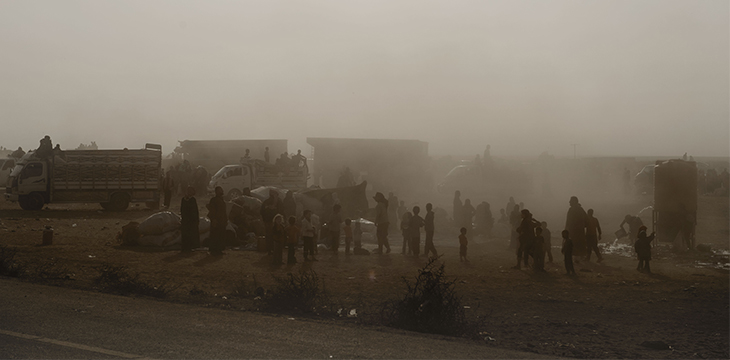
In the days when the Palestinian tragedy is back in the news, reminding the world of its urgency, the Turkish government has returned to bombing north-eastern Syria, carrying out one of the harshest attacks in the past year. It was not reported in the media, but from 5 to 10 October, the Turkish armed forces conducted an extremely harsh aggression against the population in the area. This time, civilian, infrastructure and energy targets were targeted. The bombings hit more than 150 sites in the governorates of Hassakeh, Raqqa and Aleppo, causing dozens of casualties and destroying power and water plants, which resulted in water and electricity being cut off throughout the region.
As denounced by the Autonomous Administration, the damage to infrastructure had a very serious impact on 4.3 million people, completely knocking out 18 water plants and 11 power plants, including the one in Sweidiya, which supplies gas and electricity to all the regions in the north east; and the one in Qamishlo, which supports 40 thousand families. Attacks that made the distribution of electricity and water impossible until at least 18 October. A situation that has already been denounced in the past by civil society, which is raising the alarm about the spread of diseases such as cholera due to the lack of clean water. The two hospitals in Al-Jazira and Kobane have been put completely out of service.
"This is not the first time we are facing the dramatic consequences of Turkish attacks in the area"
Luca Magno, Syria Programmes Desk of Un Ponte Per
School classes have been disrupted, leaving thousands of students attending 48 schools at home. The total number of civilian sites targeted by the Turkish armed forces reached 104, in the course of 580 air and ground raids from Derik to Al-Shahba, which hit almost the entire north-east of Syria. During the aggression, at least 50 people were killed and at least as many wounded. The population, already struggling with a severe water crisis due to the drought of the summer months, is now in dire straits and the level of damage caused to essential services exceeds the response capacity of humanitarian organisations working on the ground. As our local colleagues point out, military operations have resulted in the destruction of several power plants and, as a consequence, have brought local hospitals to their knees and caused severe damage to stocks of medicines that need to be kept in refrigerators. But the worst situation, they warn, is in the Jazira region, where the lack of clean water is threatening to cause major damage.
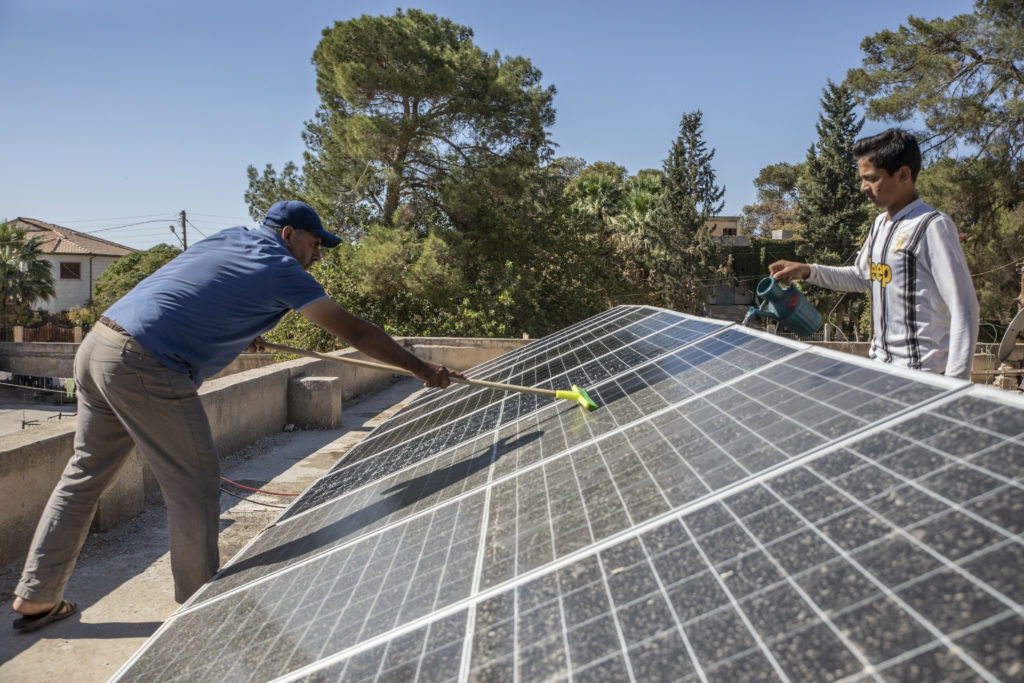
"This is not the first time we have had to face the dramatic consequences of the Turkish attacks in the area," Luca Magno, Desk Programmes in Syria of Un Ponte Per, tells us. "We are working with our partners to do our part and provide new generators and solar panels, and ensure medical assistance through the Mobile Units to cover the needs of the affected villages and camps for displaced people, such as the one in Washokhani. People are very frightened, we must reassure them, make them feel that they are not alone and that we are ready to rebuild what the war destroys, whenever necessary".
"If it looks like genocide, if it 'sounds' like genocide and if the perpetrators call it genocide, then it is genocide" cit. Andrew Murray, vice president of Stop the War Coalition
In the last few hours the number of victims of Israeli raids on the Gaza Strip has reached 10,000, almost half of whom are children. For weeks now, Israel has been bombing refugee camps, hospitals, ambulances, power plants and water infrastructure.
In Gaza, bakeries no longer make bread and soon the only water left for the civilian population will be water from the sea.
Eighty-eight UN employees and 175 health workers were killed by Israeli shelling.
Meanwhile, evidence suggests Israeli use of white phosphorus bombs in both northern Gaza and southern Lebanon. Needless to turn around: we are witnessing a genocide, whose ultimate goal seems to be to 'empty' Gaza completely, reducing it to a desert heath 'cleared' of its population.
As women and men for peace, we ask ourselves, what level of atrocity is still bearable before the international community imposes a ceasefire? How many more war crimes, how many more thousands of victims will we be forced to witness before this collective punishment on a defenceless population stops?
The slaughter must stop now, a cease-fire is needed.
***
'Water for Gaza' is our campaign to respond to the crisis resulting from Israel's complete siege of the Palestinian people.
Get active today for the Palestinian people and help us bring water to Gaza. With your donation we will provide immediate relief by guaranteeing clean water to 2000 families and support what remains of local agricultural activities.
On 27 October, a shipment of Arabic-language books destined for the Arab-speaking prison population was delivered to the Regina Coeli Prison in Rome.
The books were delivered as part of our 'Kutub Hurra - Libri Liberi' project, which we have been carrying out since 2022 together with theTunisian Association 'Lina Ben Mhenni', created in memory of the activist who died prematurely and left a vast collection of Arabic-language books.
The project is promoted thanks to a vast network of Italian realities operating within prisons, and the aim is to build a bridge of books across the Mediterranean.
The handover was made possible by the collaboration with the 'Fuori Riga' Association and the Guarantor of the Rights of Persons Deprived of Liberty of the Municipality of Rome, Valentina Calderone, who were present at the initiative.
The "Regina Coeli" Prison is the latest to be involved in the initiative: books were previously delivered to Livorno (Le Sughere Prison and Gorgona Prison), Pisa (Don Bosco Prison), Padua (Due Palazzi Prison) and Florence (Sollicciano Prison).
Since the first book delivery, which took place in May 2022, "Kutub Hurra" has managed to reach over 1,000 Arabophon detainees in 6 penal institutions in Italy (another 6 are in the process of being involved), delivering over 350 volumes in the course of 4 consignments from Tunisia, thanks to the cooperation between 8 Italian and Tunisian organisations.
The project aims to create a more inclusive prison environment through the provision of reading opportunities to Arabic-speaking inmates and prisoners and the use of books as a tool for emancipation.
In this sense, books become a means to promote cultural dialogue. Having readings and literature in Arabic also means being considered in one's entirety and dignity, a necessary starting point for any path to inclusion and rehabilitation.
We will keep you updated on the developments of our 'bridge of books' across the Mediterranean.
Every act against defenceless civilians, the taking of hostages and the violation of the victims' dignity is for us at Un Ponte Per cause for outrage and condemnation.
Throughout our history we have taken the point of view of civilian victims, without discrimination of nationality, skin colour or colonial flavour. For us, every victim is a defeat of humanity, a crime that should be fought by the international community moving to stop the violence and not to add horror to more horror.
The equation Gaza=Hamas is therefore unacceptable because it disposes to a collective vengeance on a defenceless population, which cannot escape anywhere and which sees, neighbourhood after neighbourhood, the entire area heading towards total destruction. This is why we call on the European Union and the international community to use all pressure to induce the Israeli government to end the siege of Gaza and allow relief and protection of civilians, starting with the weakest and most vulnerable.
The civilians (including children) killed during the Israeli raid will not get justice if this massacre is compounded by new massacres of other children and civilians. Just as the Palestinian children murdered in recent years by the ruthless and blind occupation of their territories have not received justice.
The slaughter must stop, the weapons must stop!
We also express alarm and concern for the humanitarian workers who are trapped in Gaza and who are witnessing the terrible things that are happening to the civilian population, whose death toll, hour by hour, is growing exponentially.
We give all our solidarity to the United Nations Relief and Works Agency for Palestine Refugees (Unrwa) who lost 9 staff members in the bombing tonight.
We find it unbelievable and irresponsible that the European Union, at the very time when one of the most densely populated areas in the world is under siege, is discussing the possible interruptionof cooperation fundsdirected to the Palestinian population.
We demand the release of every Israeli hostage, just as we renew our call for the release of the unjustly detained Palestinian political prisoners.
The massacre and destruction of Gaza in the face of the international community's immobility, may set the whole of West Asia on fire, strengthening fundamentalist sectarian components, with the risk of conflict expansion.
We must empty the wells of hatred, rebuild trust in international law, and work to replace the logic of war and weapons with that of dialogue and negotiation. Let the voices of men and women of culture rise from Arab and Israeli civil society against this bellicose drift.
Let us build bridges between civil societies because as Vittorio Arrigoni wrote, we must 'remain human, even when humanity seems to be lost around us'.
Resorting to the force of arms, the militarisation of territory, the building of walls, the apartheid system, and the denial of the Palestinian people's elementary rights have not made Israel safer.
Only a genuine peace process and decolonisation of the Palestinian territories and the implementation of UN resolutions can help rebuild mutual trust within a framework of respect for the fundamental rights of all.
'Water for Gaza' is our campaign in response to the crisis resulting from Israel's complete siege of the Palestinian people.
Get active today for the Palestinian people and help us bring water to Gaza. With your donation we will provide immediate relief by guaranteeing clean water to 2000 families and support what remains of local agricultural activities.

We are deeply saddened by the news of the tragic fire that broke out during a wedding in a small town in northern Iraq, resulting in the loss of so many innocent lives. At least 100 people are reported killed and more than 150 injured, some with very serious burns. We have been working in Qaraqosh for more than 10 years, since before theoccupation by Daesh (Islamic State), alongside religious minorities with peacebuilding programmes, rebuilding schools and health facilities.
In these hours we have received a request for support from the 'Al Horuk' hospital in Mosul, the only public facility in the Nineveh Governorate that specialises in treating burns. We are already supporting this facility and just yesterday we finished equipping the hospital's two emergency rooms, which are overflowing at this time.
In coordination with our partners, we are checking what else we can do in the emergency response. At the moment, our local staff is distributing masks and gloves, and inviting all our contacts to donate blood, which is urgently needed. Fortunately, none of our local staff were affected, but several of their loved ones were.
On this day of sorrow and sadness, we wish to express from Italy our most sincere condolences to the families of the victims and to all those affected by this terrible tragedy. All our sympathy to the Iraqi people.

OPEN LETTER:
"On 31 August, Khaled El Qaisi, respectively husband and son of the writer, was detained by the Israeli authorities and is still imprisoned under a precautionary measure pending verification of elements to formulate a charge. Last Thursday, Khaled, who has dual citizenship, Italian and Palestinian, was crossing the 'Allenby' border crossing with his wife and son after spending the holiday with his family in Bethlehem, Palestine. At the luggage and document check, after a long wait, he was handcuffed under the incredulous gaze of his four-year-old son, his wife, as well as all those present who were waiting to resume their journey. The wife's requests for explanations were not answered, rather she was asked questions and then sent off with her son to Jordanian territory, without telephone, cash or contacts, in a foreign country. In the late afternoon, the wife and child were only able to reach the Italian Embassy thanks to the human generosity of some Palestinian ladies. Khaled, a translator and student of Oriental Languages and Civilisations atLa Sapienza University in Rome, esteemed for his passionate commitment to the collection, dissemination and translation of Palestinian historical material, is one of the founders of the Palestinian Documentation Centre, an association that aims to promote Palestinian culture in Italy. Family, friends, but also those who simply had the opportunity to meet him are eagerly waiting for updates. At the moment, he has not yet been able to meet his lawyer and there is still little news about his safety. All we have heard from the consulate and his lawyer is that he will face a hearing on Thursday, 7 September. In the meantime, we imagine Khaled in complete isolation, with no contact with the outside world, with no real perception of the passage of time, under the pressure of continuous interrogations, anguished about the fate of his own son and his wife left in the lurch with the only image in his eyes of his deportation in handcuffs. The situation is therefore very serious. We await with great anxiety the resolution of this unjust imprisonment. We call on whoever has the power to do so to ascertain Khaled's health condition and, above all, to exert all necessary pressure for his speedy release.
The undersigned:
Francesca Antinucci, wife; Lucia Marchetti, mother".