Un Ponte Per, together with civil society organisations committed to the defence of human rights and the promotion of peace, is taking Leonardo S.p.A. and the Italian State to court to stop the sale of arms to Israel and is launching a fundraising campaign to support the legal action.
With the first hearing, to be held on 27 March 2026 at the Civil Court of Rome, the legal action against Leonardo S.p.A. and the Italian State, which we have promoted together with A Buon Diritto, ACLI, ARCI, AssoPacePalestina, ATTAC Italia, and Pax Christi to stop the sale of armaments to Israel, comes to life.
This is a crucial step in a battle that poses a stark question: is it legitimate to continue exporting arms to a country involved in military operations that have caused tens of thousands of civilian casualties and are the subject of serious contestation by the international community?
For us, the answer is clear: no.
A LAWSUIT TO STOP ARMS EXPORTS
On 29 September 2025, we filed a summons with the Civil Court of Rome asking that the arms supply contracts entered into by Leonardo S.p.A. - a company owned by the Italian State - with the State of Israel be declared null and void.
We consider such contracts to be contrary to Article 11 of the Constitution, Law 185/1990 on the arms trade, and international law.
This is not a symbolic protest. It is a judicial action asking the judiciary to verify precise responsibilities.
GAZA, INTERNATIONAL LAW AND ITALIANRESPONSIBILITY
After 7 October 2023, as the Gaza Strip was devastated by bombing and the conflict spread across the region, several European countries introduced restrictions on arms exports to Israel. Italy, on the other hand, did not suspend the authorisations, effectively continuing to allow supplies.
This lawsuit challenges a clear choice: to continue trading in arms even in the face of serious and documented human rights violations. We demand that this choice be judged for what it is.
A FUNDRAISER TO SUPPORT THE CAUSE
Alongside the legal action, we launched a public fundraising campaign to support the costs of the proceedings: legal fees, technical advice and communication activities.
Dealing with a large industrial group and the Italian state in court is a complex challenge that requires adequate resources.
It is an unequal but necessary battle. It is also the only way to turn indignation into a concrete act.
For months we have been watching with anger and helplessness what is happening in Gaza.
Today you can do something concrete. With this legal action you can make your voice heard and turn indignation into action.
Support the fundraising campaign >>
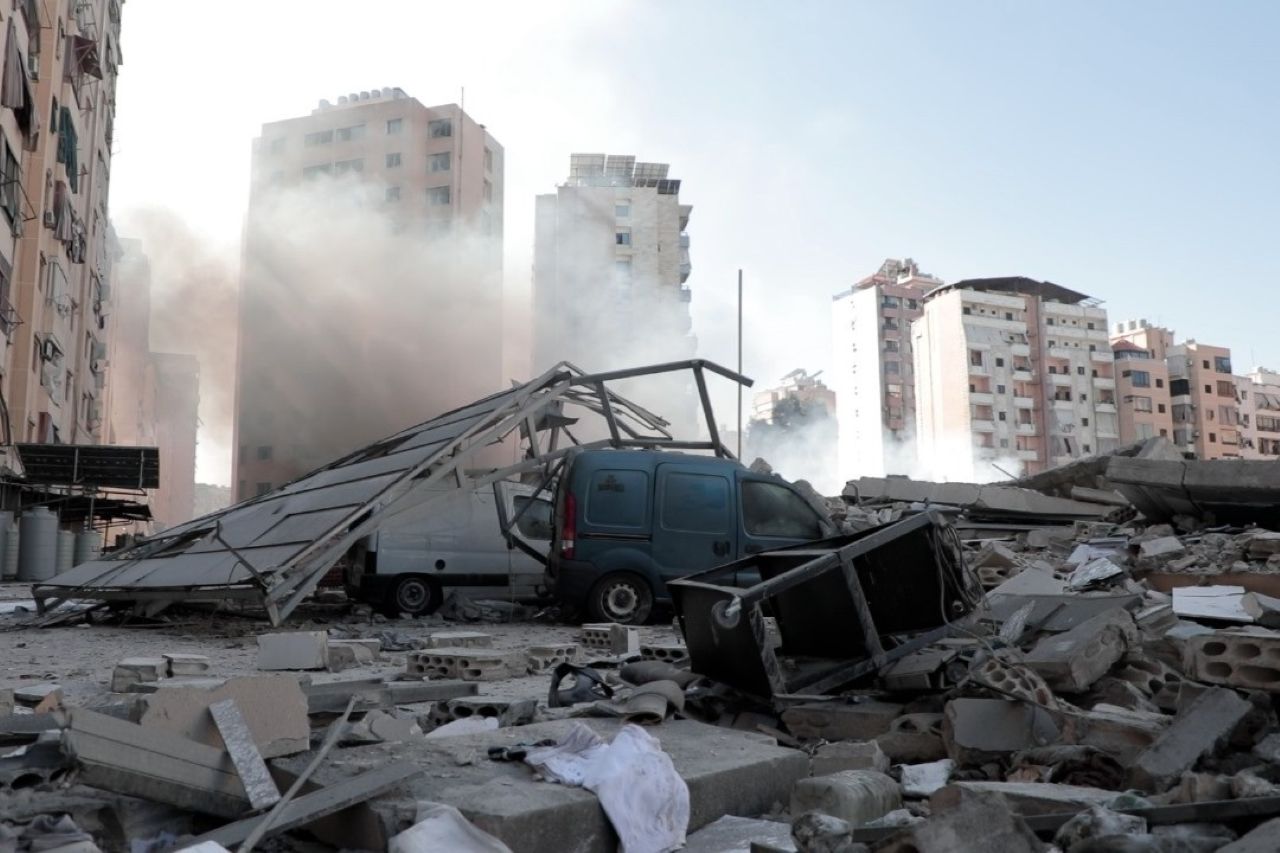
A Bridge For is responding to the new escalation of violence in Lebanon, where hundreds of thousands of people have been forced to flee their homes after Israeli bombings on 2 March 2026 that hit the southern suburbs of Beirut, the south of the country and the Bekaa Valley.
In a matter of hours, entire communities have left their homes to seek refuge in public schools and collective facilities turned into temporary shelters. Many of these spaces are not equipped to accommodate such large numbers of people and conditions are rapidly deteriorating.
"The population most affected by the attacks is in southern Lebanon. This military action represents yet another operation against Lebanon, and it is mainly the civilian population that is paying the price,' our Head of Mission in Beirut, David Ruggini, tells us.
A WAVE OF FORCED DISPLACEMENT
The Israeli army has ordered the immediate evacuation of the entire south of Lebanon, forcing thousands of people to move within hours. Among the areas included in the evacuation order is the Palestinian camp of Shatila, where Un Ponte Per supports a community sports centre and dozens of families with its Distance Support programme.
An evacuation order of this magnitude not only represents a serious violation of international law, but also leaves the most vulnerable people - the elderly, the sick, people with disabilities and families without the means to travel - unprotected, exacerbating an already acute humanitarian crisis.
This new escalation is part of an extremely unstable regional context, marked by growing tensions between Israel, Iran and Hezbollah, and risks further escalating the conflict.
Since 2023, Israeli military operations in Lebanon have had devastating consequences for the civilian population and for the country's infrastructure, which has faced a series of crises in recent years, from the Beirut port explosion of 2020, to UNRWA cuts, to the economic crisis with the subsequent collapse of essential services for the population.
OUR INTERVENTION IN THE FIELD
Un Ponte Per is present in Lebanon and is working with local partners to support displaced people who have found refuge in schools and community centres, where needs are growing rapidly.
Emergency activities include the distribution of essential goods such as family hygiene kits, nappies, water, food and sleeping materials such as mattresses and blankets, to improve living conditions in shelters and support families forced to flee.
A BRIDGE TO LEBANON
Un Ponte Per has been present in Lebanon since 1997, when it started working in the Palestinian refugee camps to guarantee the right to education and health to Palestinian children and refugees from Syria. In the wake of the humanitarian emergencies that have swept through the country, UPP has supported the local organisations with which it has been working for years in strengthening the response and distributing essential aid. Alongside local movements and realities, UPP works to support the difficult process of rebuilding social cohesion following the civil war that bloodied the country for 15 years, promoting the participation of young people and women in peace-building processes.
In Gaza, the crisis has not stopped. Despite the announcement of a ceasefire, violations numbered in the hundreds and the entry of humanitarian aid remained grossly insufficient, irregular and unfair. The war continued to affect people's bodies and living conditions, while hunger, displacement and the destruction of infrastructure made survival a daily struggle.
In this context, thousands of families continued to live without stable access to food, without functioning markets, without income, without cash. Malnutrition rates - especially among childrenə, pregnant women, the elderlyə and persons with disabilities - remained dramatically high.
And then winter came.
Heavy rains flooded tents and makeshift shelters, destroying what little the families had. Living under an impervious tarp, in the cold and mud, has meant exposing oneself to enormous health risks, especially for the most fragile. In Gaza, even the weather has become a threat.
It is within this emergency within the emergency that Un Ponte Per, together with local partners UAWC and Al-Ard, and also thanks to donations that arrived at Christmas 2025, started the new distributions.
FOOD FOR 350 FAMILIES
The first objective was to respond to an immediate emergency: access to food.
To recently displaced families - often excluded from even the small amount of aid available - we delivered 350 parcels of fresh vegetables, reaching a total of 1,925 people throughout the Gaza Strip.
"The first thing I thought when I saw them was: they finally weigh the right amount," commented Sharif Hamad, Communication Officer of the Water for Gaza Campaign. "The food parcels distributed today weigh more. There is more food inside. And, finally, there are eggs. A simple, essential food, often absent for months. It is not a symbol of abundance, but of regained minimal dignity. It is the difference between surviving and feeding. Between enduring and still being able to take care of your children'.

WATER: A LIFE-SAVING ANSWER
Next to food, access to water remains one of the most serious emergencies. Bombardments have extensively damaged water systems , sewage networks, civil and agricultural wells, almost completely disrupting the water supply. In many areas, water only exists if it is transported by truck, often at great expense and with no possibility of storing it safely.
In response to this emergency, thanks also to donations received in recent months, we have distributed 200 500-litre tanks to 200 displaced families in the areas most affected by the conflict - Rafah, Khan Younis, Deir al-Balah and Nuseirat - where homes and infrastructure have been destroyed and access to essential services is extremely limited.
The tanks allow families to safely store water received through distribution or transport by truck, reducing dependence on unsafe sources and the need to travel long distances, in a context where every journey involves serious risks to people's safety. To ensure the effective use of the tanks, each family will receive drinking water for three months, with two refills per month.
Marwa is a young mother, displaced from the north of the Gaza Strip. Her words tell what it means not to have access to water:
"I have a five-month-old baby girl. I couldn't find a single drop of water. I went from tent to tent, morning, afternoon and evening, trying to fill a bottle.
I had been displaced from the north, on foot, and I had nothing with me. When this tank arrived, I was overjoyed, because now I always have water available. God bless all those who supported this project and gave us these water tanks."

Fadi also recounts a continuous fatigue of repeated and insufficient gestures:
"We suffered from a lack of water. We carried it in pots and buckets: I had three, but they were never enough. Water was scarce, my throat was always dry. Carrying it was a struggle, as was everything else, because we had nothing to store it in. Thanks to this tank, I no longer have any difficulties and I don't have to worry about water like before.
WINTER-PROOFING SHELTERS
But eating and drinking are not enough if you do not have a dry place to sleep.
Therefore, a major part of the donations was earmarked for making the makeshift shelters safer. Between November and December 2025, tendering and procurement procedures were started for materials and equipment needed to waterproof the tents.
The delivery of the materials took place in the last week of December 2025 and about 200 families benefited from these interventions.
TOGETHER WE CONTINUE TO ENSURE DIGNITY
Operating in Gaza means facing enormous obstacles: arbitrary restrictions on the entry of aid, collapsed markets, lack of functioning banking systems, constant forced displacement and security risks for staff.
Ensuring protection, equity and dignity is a constant challenge.
Water, fresh food, safer shelters: these are partial but fundamental responses. They keep a space of life, dignity and resistance open.
In Gaza today, nothing is taken for granted. Not even being able to drink, feed oneself or the winter that passes without losing everything.
Thank you for choosing to be there.


Hassan Herzallah is a translator, writer and storyteller from Gaza. He collaborates with several international newspapers. For the "Water for Gaza" campaign, he chose to share with Un Ponte Per his direct testimonydocumenting his life under siege and displacement. She is in her third year of studies in English translation at the Islamic University of Gaza and continued her education online after the university was bombed.
Gaza, 9 December 2025
I woke up before sunrise, the way I’ve learned to wake up two years. The tent was cold, and my hands were stiff as I tried to start a small fire to heat some water for taking shower. Winter had arrived silently this year—without warning, without mercy. The ceasefire had changed nothing.
My mother asked me again this morning, “Where will we go before the first rain begins?”
I didn’t answer. I looked at our tent—eight months old, thin, torn at the edges—and I knew she already understood.
Later that afternoon, I walked through a street in Khan Younis that I recognized from before the genocide. I used to go past this street by bus on my way to university, but now it was just ruins. The silence there is different… it’s the silence of places that no longer remember themselves.
I were searching for an apartment to survive the winter, but every place we entered felt like a reminder of what we lost. Some apartments were half destroyed, some too dangerous, some impossibly expensive. I kept walking, but inside I felt stuck between the weight of memories and the reality of the tent that awaited me.
That evening, I met two children from the camp—Adam, nine, and his little sister Bisan. They were using their hands to try to pile sand around the edges of their tent. I saw them as I walked by and gave them a shovel to help lift the sand more easily. Their little hands were red from the cold of the night and the chill of the sand.
Then Adam looked at me and said, “If it rains, our tent becomes a boat.” I didn’t know what to say. Sometimes silence is the only honest answer we have.
That night, on November 20, 2025, everything changed in just seventeen minutes.
There was no electricity in the camp. Everyone was already sleeping. I had just closed my eyes when I heard the first drop hit the tent roof. Then another. And another. My little brother Mohammad shouted, “Hassan, the water is coming in!” I jumped up.
The rain wasn’t rain—it was a storm. Water poured through the holes in the tent faster than we could stop it. My sisters Malak and Alaa tried to lift our blankets off the floor, while I pressed my bag against the largest tear in the roof, and my father was battling the flood in the other tent.
Outside, people were shouting. I heard Abu Adam shouting as water filled his tent and he wasn't know what to do. My friend Wasem was trying to carry his disabled brother to higher ground. I saw a little girl—barefoot—running behind her mother, holding a pot to catch the water falling on their belongs.
In the midst of it all, while I was trying to keep water out of our old tent, my young cousin Yosuf—an orphan—came running to me, his face pale with fear. “Come quickly… Our tent is flooded,” he said, referring to himself and his five sisters, who could not manage the flooding on their own. I felt torn between staying to protect our tent and going to help them, but my feet moved on their own toward their area.
When I arrived, I was shocked. All their belongings were almost ruined, soaked completely. Their small, modest kitchen was flooded. I tried to help them remove the water as much as I could, whispering in my head, “Please, Allah, let the rain stop.”
Those few minutes were enough to expose our weakness and helplessness in the first storm of our third winter of ongoing suffering. No one was sitting idly by—big or small, child, woman, or young man—everyone was struggling, fighting, and enduring.

Seventeen minutes.
That’s how long the rain lasted.
Seventeen minutes were enough to flood hundreds of tents. Enough to turn a quiet night into chaos. Enough to remind us that even after the ceasefire, survival is still a daily battle.
When the rain finally stopped, the cold became sharper. I sat awake for hours, waiting for another leak, another sound, another disaster. By dawn my body felt frozen, heavy with exhaustion, but I forced myself to write these lines—to remember, to record, to say that we are still here .
In the morning, I woke up to flooded streets. Water had nowhere to drain because of the lack of infrastructure, and a little boy was wading through the water in the street while we couldn’t move anywhere.
I used to love winter in Gaza. It was one of the most beautiful seasons of the year. Inside our homes, the air was warm, family gatherings were frequent, and children ran outside to play in the rain. Adults would sit by the windows, listening to the soothing sound of the falling water—a feeling unlike any other season.
But today, after more than two years of war, and even after the ceasefire “on paper,” everything has changed. We are now entering our third winter with no real solution in sight. Our tattered tents have become our only shelter, flooded from every side by rain and wind. Winter has become a season everyone fears, a witness to the suffering of Gaza’s people.
Yet, the dream of a normal life still lingers in my mind, even as the future remains uncertain. Once again, winter reminds us that Gaza continues to endure in silence, caught between the pain of the past and the uncertainty of what is to come.

Hassan Herzallah - Correspondent from Gaza
Hassan Herzallah is a translator, writer and storyteller from Gaza. He collaborates with several international newspapers. For the "Water for Gaza" campaign, he chose to share with Un Ponte Per his direct testimony, documenting his life under siege and displacement. He is in his third year of studies in English translation at the Islamic University of Gaza and continued his education online after the university was bombed.
Gaza, 7 November 2025
It felt almost like a dream to wake up to children in the camp shouting, “Ceasefire! Ceasefire!” — a moment of hope in the middle of the two-year nightmare we had lived through. It was no ordinary day; it was the announcement of a ceasefire in Gaza after two years of genocide. Joy filled my family and the camp, yet a lingering pain remained inside us, even after the war ended.
I had waited eagerly for any ceasefire, so I could finally meet friends I hadn’t seen for months, even years, as moving around during the war was too dangerous and people risked being targeted. We planned to gather a week later, on October 16, 2025, at the beach in Al-Nuseirat, in the heart of Gaza City.
I met my friends Mahmoud, Hussein, and Ramez; our fourth friend, Omar, was supposed to join us. His brother remains trapped under the rubble of a bombed house, leaving Omar in deep distress. His other brother is locked behind the bars of an Israeli jail; Omar had hoped he would be released on October 13 with the other detainees — but he was not. Now Omar carries the heavy pain of loss and separation, especially after seeing the joy of others whose loved ones were freed.
I spent the day with my friends, laughing one moment and grieving the next, as we remembered the sweet and painful moments of the genocide. Amid it all, one question kept coming up: How did it feel when it finally ended?
Hussein lived in Al-Nuseirat and did not have to evacuate his home during the war. He spent two years there, enduring the horrors of bombings, death, and hunger, while sheltering many displaced people. Unfortunately, some of them were killed in the attacks. Even though he never left, he lived in constant fear that one day he might have to evacuate too. When the ceasefire news arrived, his first feeling was safety, knowing his family would not have to leave their home.
Mahmoud lived in Gaza City, which was under constant bombardment, and he and his family were forced to evacuate south to escape the relentless attacks. He endured his share of the horrors of war — leaving his home and all his belongings behind, living with his family in a small room at a relative’s house, and going through every stage of the war: bombings, death, hunger, and soaring prices. When the ceasefire was announced, their first feeling was fear for their home — whether it was still standing or not. Two days later, they learned it had survived, filling them with overwhelming joy, knowing they could finally return home after more than a year and a half of displacement. All they had to do then was clean their house and resume their lives.
My friend Ramez, who lives in East Khan Younis, experienced a different kind of uncertainty. With the news of the ceasefire, his family was relieved to learn that their house — the only one still standing in their area — had survived. Yet their joy was short-lived. Israeli forces continue to target new homes in East Khan Younis every day, leaving Ramez and his family in constant fear. Each day brings a new threat, and they never know if their house — or their ability to return to it — will be taken away in an instant. The ceasefire has brought hope, but for them, danger and anxiety remain a constant companion.

As for me, I spent the first nine months in my home in Rafah ( Southern part of Gaza ) before we were forced to evacuate — a moment that felt like my soul was leaving my body. We moved to live in tents, enduring the hardships of war: the harsh summer heat, the bitter winter cold, bombings, hunger, and the lack of even the most basic humanitarian services.
What’s even more painful is that, after the war ended, I had no home to return to — mine was completely destroyed. I still live in a camp for displaced people from Rafah, my city that once sheltered over a million. Now, with no news of return, our future feels uncertain, and an emptiness eats away at us as we live without the basics of life.
I wonder — how can someone who lost their home and family feel joy after such a war? Was the end of it truly felt the same by everyone?
Now, as the days after the ceasefire unfold, life in the camp feels like a mix of relief and exhaustion. The bombings have stopped, but the struggle to survive continues in different forms. Winter has arrived, and the cold pierces through the thin tents. Every day, families try to find drinkable water, collect wood, share bread, and try to rebuild what little they can. Still, amid the ruins and the cold, I keep asking myself: can there really be joy after everything we’ve endured? After two years of genocide, will there ever come a day when a true sense of stability fills our hearts again?
Despite everything, Gaza still breathes. I see children in the camp playing among the houses that have become rubble, some goods slowly returning to the markets, and a few schools that were suspended now preparing to reopen. Yet, we in Gaza are still waiting for the sun that has long been absent.
Hassan Herzallah - Correspondent from Gaza