"For the first time, I was able to explain what I was feeling and I was listened to. Before, I used to fight, I carried an aggression with me that I couldn't explain, but now I realise that I can talk, relate in a different way."
The words of K., a high school student from Zaporizhzhia, which we collected at the end of a course on emotionality and restorative practices, clearly convey the sense of our intervention this past year in Ukraine.
Among the most serious consequences of the Russian aggression, in fact, in addition to the humanitarian crisis, the devastation of territories and the environment, and the pain of so many families, there are also the hidden wounds: the impact that more than three years of war are having on the mental health of adults, young people and children, and on the relationships within communities, both those coming from the occupied territories and those that have welcomed them.
This is where we have chosen to focus our intervention with the Ukraine-Romania Joint Initiative for Social Recovery, Inclusion and Community Cohesion project, working on mental health, education, protection and dialogue as foundations for recovery and resilience.
For 16 months, together with the Bukovinian Agency for Initiatives and Development (BAID), theInstitute for Peace and Common Ground (IPCG) and the Peace Action Training and Research Institute of Romania (PATRIR), we worked with 25 local communities (hromadas) in 11 oblasts, creating spaces where people could meet, recover psychological resources and rebuild relationships fragmented by war and displacement.


THE SCHOOL AS A PLACE OF RECOVERY AND SOCIAL COHESION
We have imagined schools as centres of resilience, privileged places where change can take place starting with the younger generations, active protagonists of the community's response to the crisis.
Through training courses, 500 teachers were involved, strengthening their capacity to recognise trauma and promote psychological recovery, and 73 school leaders, training them in restorative management courses. In addition, 607 students between the ages of 5 and 17 attended courses in psychological support and resilience development. These schools have become safe and inclusive spaces that promote youth participation, dialogue and civic initiatives, contributing to long-term post-conflict social cohesion.
Listening to them also resulted in a desire to give strength to their ideas and concreteness to their abilities to face the daily challenges that war imposes. So we financially supported 15 community initiatives, focusing on social infrastructure, security, inclusion, entrepreneurship and ecological projects. And the results left us speechless.
In Kolomak High School (Kharkiv Oblast), families needed a space to provide first aid to students. The concern of parents and the inability to guarantee the safety of their children was creating a climate of growing anxiety and tension. Thus, a series of facilitated meetings between the administration, medical professionals, representatives of the parents' committee and the community gave rise to the idea of creating a medical centre within the high school. Thanks to the funding, equipment and furniture were purchased, and a medical point was also created in the shelter to ensure safety during emergencies. This was accompanied by courses on first aid and how to act in an emergency.
In the community of Hruhn (Sumy Oblast), in the border area where air raids are the order of the day, the constant threat and interruptions to the electricity supply have made it impossible for the children to continue their studies. Community representatives, educators and parents wondered how to provide them with a safe and accessible educational environment, to the point of imagining an educational space within the shelter itself. And with the funding they received, they made it possible: fire doors were installed, furniture, an uninterruptible power supply, cooler, lights, stationery and creativity materials were purchased.
In both cases, the work of our partner IPCG's experts was crucial in facilitating meetings and enabling communities to fully express fears, needs and share solutions.


HEALING INVISIBLE WOUNDS IN COMMUNITIES AND INDIVIDUALS
I worked many years in Iraq, dealing with mental health and the consequences that the violence of war leaves on people. In Nineveh Governorate, where Daesh's occupation had left deep trauma as well as destruction, we provided psychosocial support, mental health and reproductive health services for women. I know well the value of each listening, each psychological consultation, the need for accompaniment to bring out and manage trauma.
In Ukraine, this intervention was also a key part of the project. Together with our partner BAID, we trained 679 professionals - including psychologists, doctors and social workers - on mental health and psychosocial support: trauma-sensitive care, psychological first aid, and stress management during interventions under complex operational conditions. The latter has been a key component: we have to imagine that, since the beginning of the large-scale invasion, Ukrainian medical personnel and nurses have been working under conditions of constant overload and stress. Every day, they have to deal with hundreds of people suffering physically and psychologically from the war. At the same time, they themselves are under pressure from losses or worrying about their loved ones at the front.
More than 5,600 people were able to access psychosocial support services thanks to the work of trained professionals. These pathways will be integrated into the Ukrainian health and education system to ensure continuity beyond the emergency.
In addition, thanks to a targeted awareness-raising campaign, 5,500 people were informed about the support centres on the ground and the specially created care pathways.
Finally, the Explosive Ordnance Risk Education (EORE) programme reached more than 2,500 people. "In the classroom, we no longer just talk about safety, but put it into practice. The students already know how to act when it is really necessary: wearing a gas mask, providing assistance, recognising a dangerous object. It's not just about knowledge, it's about tools for life,' a teacher at Zavodskiy High School (Poltava Oblast) told us.


WITH REFUGEES IN ROMANIA
Finally, in Romania, together with the PATRIR organisation, we supported the thousands of Ukrainian refugees who left the country in the hope of finding a safe haven.
Through our intervention, we provided health, protection and legal services to over 2,100 people, as well as remedial courses, extracurricular activities and Romanian language classes, which involved 143 Ukrainian students. In parallel, cultural activities and vocational training programmes, in which over 2,000 people participated, fostered integration and strengthened links with host communities.
It has been an intense 16 months, in which we have built important ties, which we chose to conclude with an international conference in Kiev: 'From Dialogue to Action'. Hundreds of participants came to share results and relaunch our common commitment to an inclusive, peaceful and lasting recovery.
A long journey of solidarity, together with our partners and the Ukrainian communities, which proved once again that even during a war, communities can build bridges of solidarity and trust, laying the foundations for a cohesive and just future.

The Joint Initiative for Social Recovery, Inclusion and Cohesion of Ukrainian Communities project was implemented with the support of the Ministry of Foreign Affairs and International Cooperation through theItalian Agency for Development Cooperation (AICS) Kiev.

Lia Pastorelli - Desk Program Ukraine
More than 100 humanitarian organisations are sounding the alarm to allow life-saving aid in.
As the siege imposed by the Israeli government starves the people of Gaza, aid workers now find themselves in the same lines for food, risking injury in their attempts to feed their families. With supplies now completely exhausted, humanitarian organisations are watching their3 colleagues and local partners die before their eyes.
Exactly two months after the Gaza Humanitarian Foundation, an initiative controlled by the Israeli government, began its activities, 115 organisations are sounding the alarm, urging governments to act: open all land crossings; restore the full flow of food, drinking water, medical supplies, repair items and fuel through a UN-led system; end the siege; and agree an immediate ceasefire.
"Every morning, the same question echoes in Gaza: will I eat today?" reports an agency representative.
Massacres at food distribution points in Gaza occur almost daily. As of 13 July, the UN confirmed that 875 Palestinians had been killed while searching for food, 201 along aid routes and the remainder at distribution points. Thousands of others were injured. Meanwhile, Israeli forces forcibly displaced nearly two million exhausted Palestinians, with the latest mass displacement order issued on 20 July, confining Palestinians to less than 12% of Gaza.
The WFP warns that current conditions make operations impossible. Starving civilians is a war crime.
Just outside Gaza, in warehouses - and even inside Gaza itself - tons of food, drinking water, medical supplies, shelter items and fuel remain untouched, with humanitarian organisations blocked from access or distribution. The restrictions, delays and fragmentation imposed by the Israeli government as part of its total siege have created chaos, hunger and death. One aid worker providing psychosocial support spoke of the devastating impact on children: "Boys and girls tell their parents that they want to go to heaven, because at least in heaven there is food."
Doctors report record rates of acute malnutrition, especially among children and the elderly. Diseases such as acute watery diarrhoea are spreading, markets are empty, rubbish is piling up and adults are collapsing in the streets from hunger and dehydration. Distribution in Gaza averages only 28 trucks per day, far from the number needed for over two million people, many of whom have not received assistance for weeks.
The UN-led humanitarian system did not fail: it was prevented from functioning.
Humanitarian agencies have the capacity and supplies to respond on a large scale. But with access denied, we are stuck3 and cannot reach those in need, including our own exhausted and hungry teams. On 10 July, the EU and Israel announced measures to increase aid. But these promises ring hollow when there is no real change on the ground. Every day without a sustained flow means more people dying from treatable diseases. Girls and children starve to death while they wait for promises that never come.
Palestinian people are trapped in a cycle of hope and despair, waiting for assistance and a cease-fire, only to wake up in worse and worse conditions. This is not only physical torment, but also psychological. Survival is shown as a mirage. The humanitarian system cannot function on empty promises.
Governments must stop waiting for permission to act. We cannot continue to hope that the current agreements will work. Now is the time to act decisively: call for an immediate and permanent ceasefire; remove all bureaucratic and administrative restrictions; open all land crossings; ensure access to all throughout Gaza; reject military-controlled distribution patterns; restore a UN-led humanitarian response; and continue funding impartial humanitarian organisations. States must take concrete steps to end the siege, such as halting the transfer of arms and ammunition.
Piecemeal agreements and symbolic gestures, such as airdrops of aid or symbolic agreements, act as a smokescreen for inaction. They cannot replace the legal and moral obligations of states to protect Palestinian civilians and ensure meaningful access to large-scale aid. States can - and must - save lives, before there is no one left to save.
Appeal signed by Un Ponte Per and 114 other organisations . SUPPORT OUR INTERVENTION IN GAZA.
By Ambra Malandrin - Protection & Education Coordinator of Un Ponte Per
The'Mala Jin', as 'Women's Houses' are called in the Kurdish language, were established in Syria in 2011. The first was opened in Qamishlo, in the north-east, and immediately became a beacon of hope and resistance during some of the most difficult pages in the country's history. Created with the aim of combating gender-based violence and promoting women's self-determination, the Houses have had to overcome many challenges and obstacles over time.
During the years of occupation of territory by the Islamic State (Daesh), the Mala Jin worked in extremely dangerous conditions, facing threats from ideological systems that pervasively restricted women's freedom and rights. But even before, during the long years of the Asad regime, their capacity to intervene was severely limited by state policies that never effectively and systemically addressed the issue of violence against women.
Yet, despite the difficulties, the Mala Jin and the activists behind them have never given up, expanding their presence in the Syrian territory, and in the north east in particular. From Aleppo to Shehba, from Afrin to areas liberated from the presence of Daesh, activists have continued their work to protect, support and accompany women survivors of gender-based violence on their path to freedom and self-determination.
WOMEN'S HOMES IN TODAY'S SYRIA
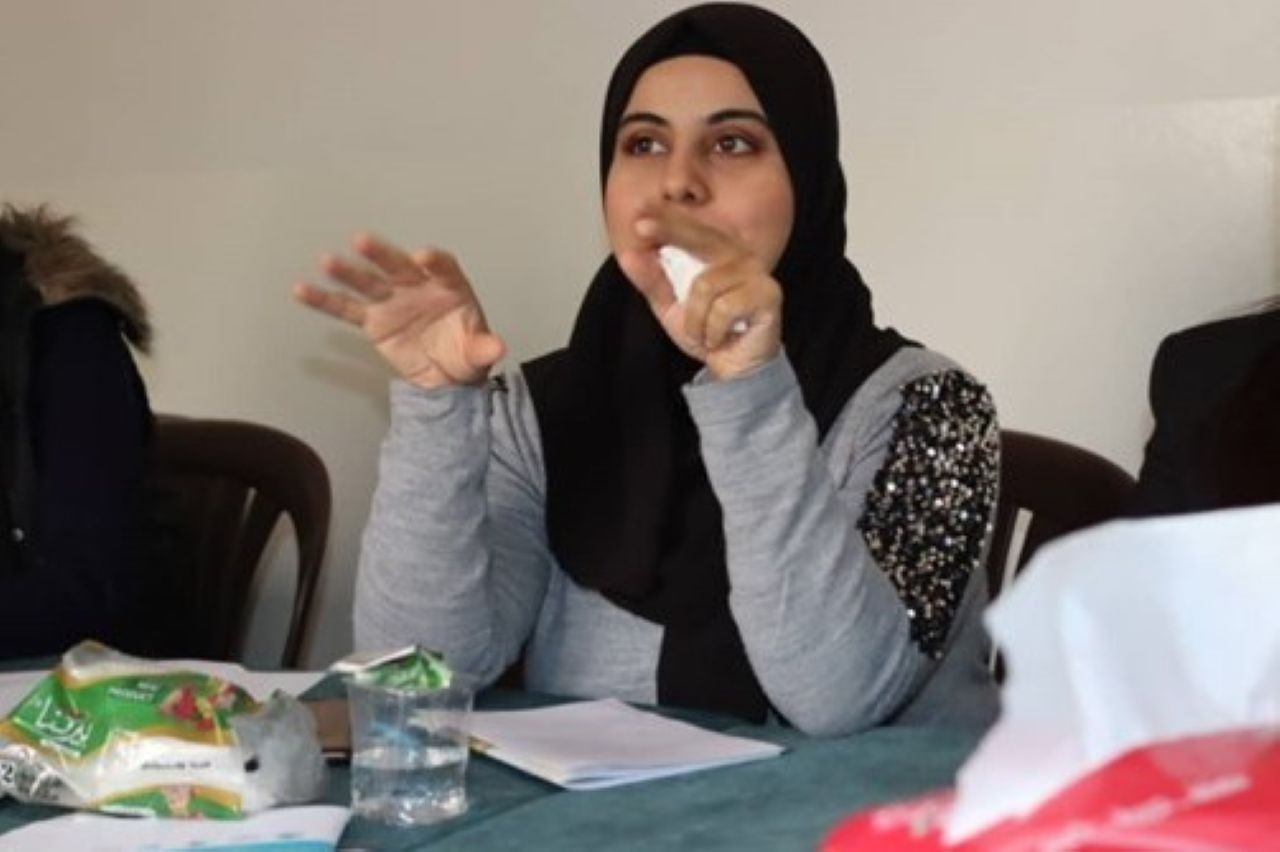
Women's Houses are social spaces dedicated to handling marital and family disputes and defending women's rights, but also safe places where survivors or those still at risk of violence can find support, support and shelter - material and economic - together with their children.
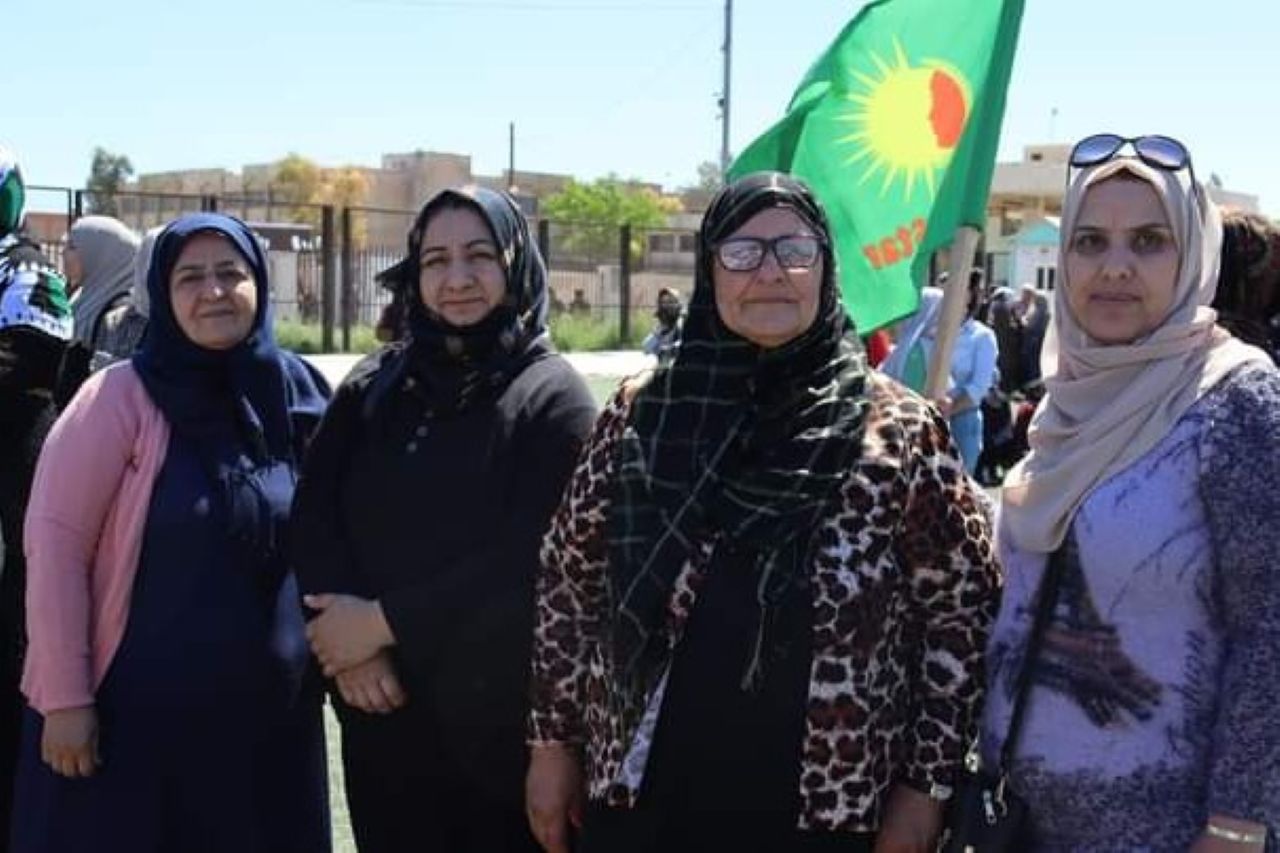
Through capillary and grassroots work, with awareness-raising campaigns, denunciation through the media and presence in the community, the Mala Jin activists, in collaboration with the North East Autonomous Administration, and in particular with the institutions dealing with gender issues, today play a crucial role in protecting women from violence and feminicide. Managed on a voluntary basis, the Women's Houses now number 22, distributed between the cantons of Hassakeh and Qamishlo, where they address all the communities present: Kurdish, Arab, Christian.
In addition to providing spaces for protection, the activists also provide psychological and legal support to the women who turn to them. Considering that there are only two institutionally supported anti-violence centres in the entire area of north-east Syria, it is clear that the role of the Mala Jin is indispensable in a context where the network of social services and support for the population is still under construction.
To this end, Mala Jin activists also work as community mediators, attempting to resolve family conflicts and ensuring that women survivors of violence can access free legal protection, while carrying out valuable awareness-raising work with educational programmes aimed at adolescents, both in schools and in community spaces. Combining direct support with awareness-raising and advocacy, the Mala Jin reality represents a milestone in the fight for gender equality and women's safety: a vital resource for creating awareness and protection.
THE CHANGING POLITICAL LANDSCAPE OF NORTH-EASTERN SYRIA
This is particularly relevant in light of the current situation in north-east Syria, which is characterised by rapid changes and uncertain developments. While the territorial borders are shifting after the fall of the Asad regime, the general conditions in the country remain unstable due to the presence of militias and continuous Turkish attacks, especially in the areas of Mambij and Kobane. Uncertainty that weighs, of course, on the work of the Mala Jin, as political negotiations between the autonomous administration in the north-east and the new government forces that have taken control of the rest of the country remain under discussion.
Closely linked to the feminist movement and the 'Kongra Star', the confederation of women's organisations in north-east Syria, the Women's Houses have suffered significant losses due to the conflicts in the area. Their work is fully in line with the political project that the North-Eastern Autonomous Administration has set itself, to break down patriarchy and gender hierarchies within the community.
OUR COMMON PATH
We at Un Ponte Per, who have been present in North East Syria since 2015, have been actively supporting the Mala Jin since 2021, when we first met them. Over the years, we have devised various projects to support their work, and to respond to the demands that the activists have made of us. Among them, that of providing ongoing training to women workers on combating gender-based violence, to make their already valuable work in the communities even more effective. But also to help with material support, by providing the Women's Houses with basic things such as computers, awareness-raising campaign materials, furniture.
Together, we collaborated in organising public events on important occasions to raise attention to the status of women, such as the 8 March mobilisations and the 16 days of activism against gender-based violence. And again, we tried to understand the needs of the population by conducting surveys and awareness-raising sessions together.
Despite these efforts, economic support remains a challenge for the Women's Houses, as well as for all the associative and political realities operating in north-east Syria. The activists still need material support, to run the spaces created for the survivors, as well as continuous training to make their impact even more effective. But they also need knowledge and visibility: in a West that retains strongly colonial postures, knowing and respecting the work and experience of feminist movements located in the geographical space of West Asia and North Africa is crucial.
In a context of militarisation, uncertainty and political instability, the presence of local feminist realities remains central. Today we pay tribute to their commitment and vision to combat gender-based violence and build a future of freedom and self-determination.
Ambra Malandrin
Protection & Education Coordinator
After months of Israeli bombardment, Lebanon is currently at the centre of a devastating humanitarian emergency that has left more than one million people displaced. Over 4,000 people have been killed and more than 16,600 injured. What is happening today? Despite daily ceasefire violations and the Israeli occupation that persists in large areas of the south of the country, Un Ponte Per is continuing to support the local response to the emergency, providing basic necessities to thousands of displaced families, in cooperation with our local partner Amel, which is at the forefront of addressing the situation. Although the ceasefire agreement called for the withdrawal of Israeli forces from the south of the country as early as 27 January 2025 - later extended to 18 February - it now seems clear that the Israeli army wants to keep portions of Lebanese territory occupied. Yet the UNIFIL contingent maintains positions in the south of the country and the regular Lebanese army is now deployed on the 'blue line' so as to implement the conditions of UN ReS. 1701/2006. This resolution, however, continues to be violated by Israel, which, by maintaining positions on Lebanese territory, does not respect the country's sovereignty while undermining the credibility of the new Lebanese institutions.
THE DIFFICULT CONDITIONS IN NABATIYE
One of the areas most affected by the consequences of the war between Israel and Hezbollah is undoubtedly the Nabatiye area, where tens of thousands of houses have been destroyed or severely damaged. Life for people displaced by winter has become extremely problematic. Shelters and collective accommodation are often unhealthy and isolated. Without heating, vulnerable people, such as children, the elderly and people with disabilities, are at risk of hypothermia and respiratory infections. Thanks to the funds raised by the Emergency Lebanon campaign and the invaluable support of Fons Català, we were able to distribute over 350 electric heaters, 350 winter kits and 350 hygiene kits to the displaced population, each of which serves a family of five. Despite the difficulties, many people are trying to return to their homes, and our commitment is to continue to support them in this obstacle course.
THE INFRASTRUCTURE SITUATION AND FOOD INSECURITY
The small Levantine country is also experiencing an exceptional food crisis. According to the WFP forecast, some 1.6 million people, or 29 per cent of the population, could suffer acute food insecurity by March 2025 due to inflation and reduced international aid. Displaced families, living in overcrowded conditions and with limited access to essential services such as water, education and health care, are again among the most vulnerable.
THE DIFFICULT RETURN TO NORMALITY
Apart from the areas that remain occupied by Israeli forces, many families are still unable to return home due to the lack of (destroyed) infrastructure and basic services. Those that have managed to return, however, face severe living conditions, without access to adequate medical care, schools and other daily necessities. Some 45 water facilities were damaged, putting access to water at risk for 497,000 people. Vulnerable groups, particularly women and children, are at higher risk of exploitation, gender-based violence, school drop-outs, child labour and social marginalisation. 60% of Syrian refugee minors and 27% of Lebanese children are out of school. The primary cause is displacement and the closure of school buildings.

THE ACTIVITIES OF A BRIDGE TO
In response to this emergency, Un Ponte Per, in collaboration with the Amel Association, launched the "Lebanon Emergency" campaign in October 2024 - with the support of Amel Italia - to support the humanitarian response of our Lebanese partners. Like Amel Lebanon, which is Lebanon's largest non-sectarian humanitarian organisation, and anyone who knows a little about the Lebanese context knows how exceptional it is to find capillary realities free of sectarian affiliations. Together with Amel, we also launched the project 'Emergency relief for the displaced population in Lebanon', supported by Fons Català in the governorate of Nabatiye, to provide basic assistance, basic necessities, hygiene kits, winter kits and food. Although conditions on the ground are very critical, the work of the local Amel operators is helping the most vulnerable people to survive and rebuild a dignified life. For this, we sincerely thank our partners on the ground, the many people and organisations who support us and also those who gave us a hand by spreading the word about our campaign.
OUR PROMISE
Un Ponte Per will continue to stand by the people in Lebanon who are slowly trying to return to their homes to rebuild their lives after yet another Israeli war and invasion. Despite the enormous challenges, we are committed to ensuring that the displaced families can receive the support they need to cope with the ongoing crisis, with the aim of alleviating their daily difficulties and so that they can regain a shred of hope for the future.