DECOLONIAL ARENAS 2026 KICKS OFF

Leonardo spa ends up in the crosshairs of legal action: Italian and international laws on arms exports would render contracts with Israel null and void.
A group of important Italian associations joined with a Palestinian citizen to ask the Civil Court of Rome to declare null and void the contracts signed by Leonardo spa and its subsidiaries with the State of Israel for the sale and supply of arms. This initiative should be seen in the context of what has been going on for over two years in the Gaza Strip. And which many authoritative voices, including the UN Independent International Commission of Inquiry on the Occupied Palestinian Territories, claim is a genocide.
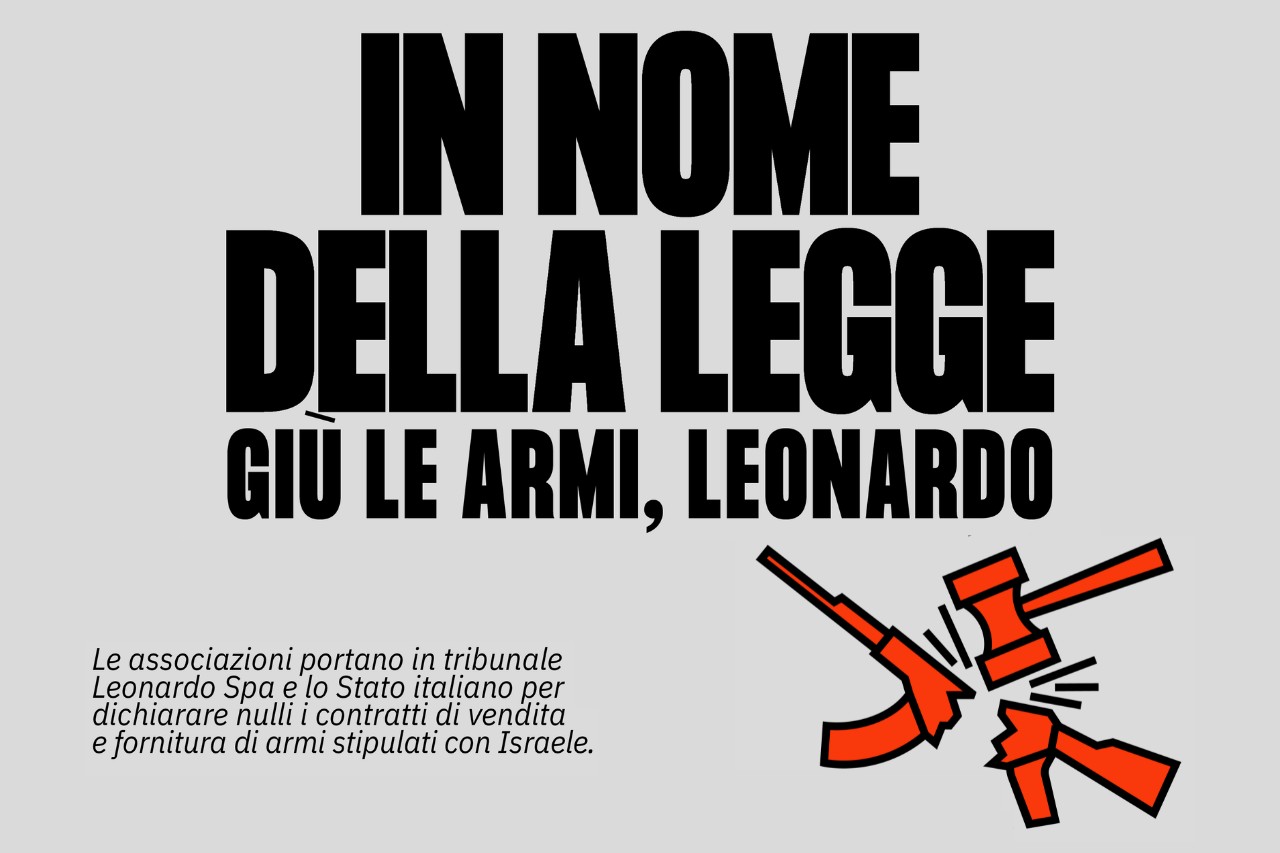
"IN THE NAME OF THE LAW LAY DOWN YOUR ARMS, LEONARDO"
'In the name of the law, lay down your arms, Leonardo' is the name given to the lawsuit filed in the Civil Court of Rome. A number of NGOs joined the complaint by Hala Abulebdeh, a Gazawi pharmacist whose entire family was exterminated by Israel: Assopace Palestina, A Buon Diritto, ATTAC Italia, ARCI, ACLI, Pax Christi, Un Ponte Per. The legal action also involves the Italian State, which with the Ministry of Economy and Finance is Leonardo's majority shareholder.
This is the second legal initiative in a short time targeting Leonardo in connection with what is happening in Gaza. In October, in fact, Leonardo's CEO Roberto Cingolani had been reported to the International Criminal Court, together with the heads of the Italian government, for 'alleged complicity in Israeli crimes'.
THE COMMITMENT OF A BRIDGE AGAINST WAR
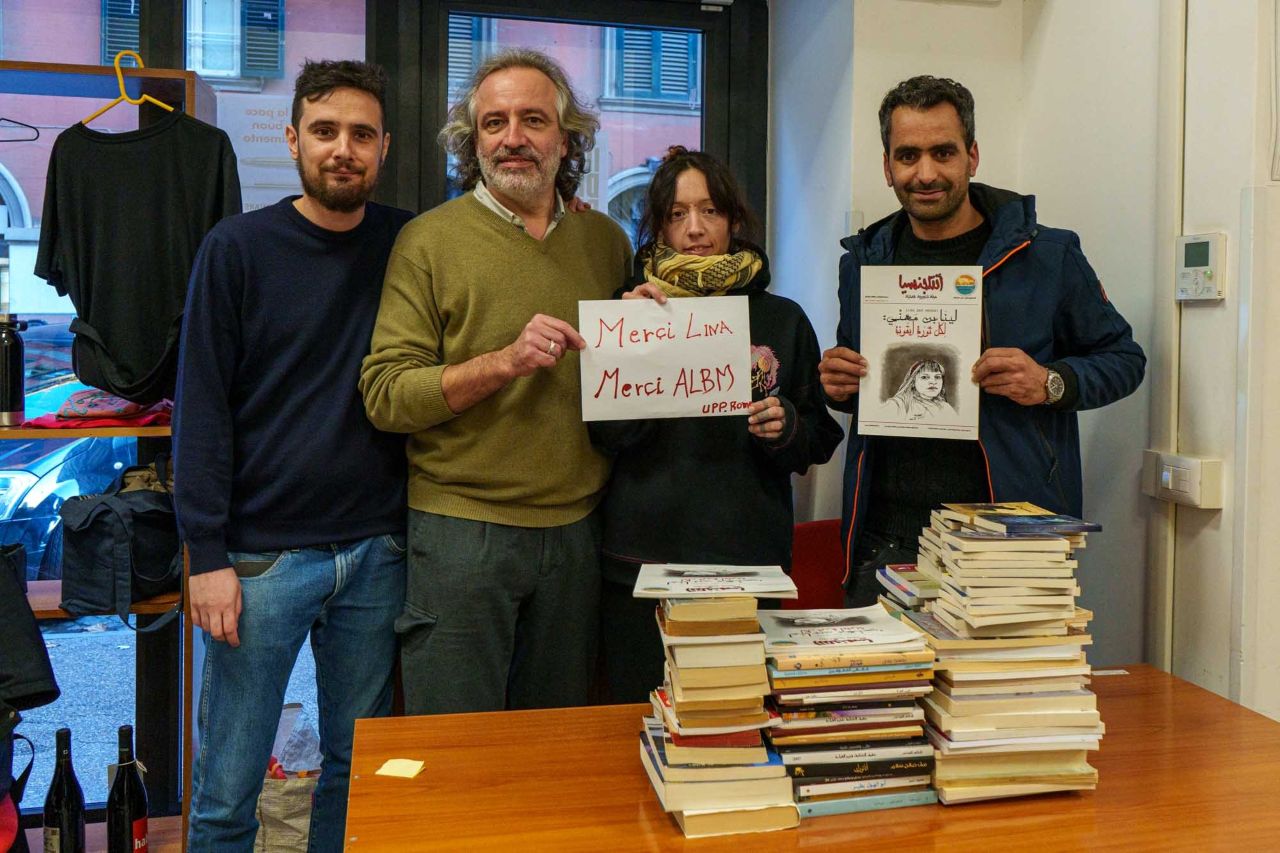
Un Ponte Per (UPP) has been working for over 30 years in countries that are the scene of armed conflicts, such as Iraq and Syria. Or the Lebanon, 'where Israeli attacks have never stopped,' explains Giulia Torrini, president of UPP.
"We see the effects of war every day. To think that in some way Italy could favour the extermination of the civilian population does not sit well with us. Suing Leonardo is not an everyday occurrence for associations like us. But it seemed important to us to do so, especially in this historical period'.
The purpose of the legal action, Torrini emphasises, is not to attack Leonardo. But to ask for verification of whether the law is actually being applied. 'The questions we are asking are those that our members and the vast majority of Italian citizens are asking. If Italy repudiates war, as Article 11 of our Constitution states, why does it sell weapons to countries at war? Our aim is for the cause to be talked about as much as possible'.
Above all, Torrini is keen to distinguish the workers of Leonardo from the company.
"In Leonardo Square I have never seen it, the workers have. Like all the workers in the war industry, or the dockworkers forced to load weapons into ships, they are blameless because they are subject to labour blackmail and have no alternative'.
Representing the plaintiffs, together with his colleague Veronica Dini, is lawyer Luca Saltalamacchia, one of the lawyers who months ago sent a notice to the Italian government demanding the revocation of the Italy-Israel Memorandum on military matters. "The 2013 International Arms Trade Treaty signed by Italy, and Italian Law 185/1990, prohibit the export of arms to countries at war and countries that systematically violate human rights," Saltalamacchia explains.
"Italian law prohibits exports to countries whose policies conflict with the principles of Article 11 of the Constitution. International law prohibits the export of arms if at the time of authorisation it is known that the arms or goods may be used in the commission of genocide, crimes against humanity, serious violations of the Geneva Conventions of 1949. Attacks directed against targets or civilian subjects protected as such or other war crimes defined as such by international agreements to which the state is a party'.
The plaintiffs therefore turned to the court to ask whether the precise constraints of national and international laws were being respected. That is, whether it is legitimate for the Italian state to have allowed the export of arms to Israel, 'recognised for years as a state that systematically violates human rights and whose policy is certainly not in line with Article 11 of the Constitution. After 7 October 2023, with a genocide taking place, we wonder how it is possible that the State has not suspended the licences already granted and has not prevented Leonardo from selling arms, including through its subsidiaries or affiliates, to the State of Israel. Moreover, such a transfer is also contrary to Leonardo's Code of Ethics,' Saltalamacchia concludes.
THE NGOS AND LEONARDO WAITING FOR THE FIRST HEARING
In mid-May, Un Ponte Per was part of the solidarity caravan organised by AOI (Association of Italian NGOs), with numerous politicians in tow, which arrived at the Rafah crossing. But it was not allowed in. "We saw the trucks with aid stopped, the warehouses full of food and medicine. We heard the bombs falling only a kilometre away, killing people: it was terrible,' says Torrini.
The first hearing of the case is expected to take place early this year. "We will see what the judge decides and go from there," Torrini concludes. 'If he decides as we hope, it will become interesting. Italy and the world are moving towards rearmament and a passion for warfare, we are intransigent on this and we appeal to all Italian citizens and workers. We absolutely do not want public spending to go towards rearmament. Against war we are and always will be in the squares'.
Article originally published on Valori.it. Cover photo is by Massimo Lupo/UPP.