Lo Stato aumenta la spesa in armi. E tu? Fai crescere la pace con il tuo 5x1000: CF 96232290583
When I was younger, I used to think the Nakba belonged to older generations. It felt like something distant, tied to black-and-white photographs or to the names of villages people repeated every May.
I heard about it in family conversations, in stories that always began with an old house or a road that no longer existed. Like many people from my generation, I thought the Nakba was something that happened 78 years ago and ended there, even if its effects remained.
But on a night in May 2026, after turning 22 years old, and after my own roof had become fabric, I began thinking about the meaning of the word again.
What does the Nakba really mean to Palestinians today? Is it still only a historical memory, or is it something we continue to live in different forms without always calling it by its name?
That is why I decided to ask several Palestinians, each with a different relationship to the meaning of the Nakba. I wanted to understand how one word could carry all these meanings, and how Palestinians, wherever they are, might still find themselves inside it in one way or another.
I began with my grandmother.
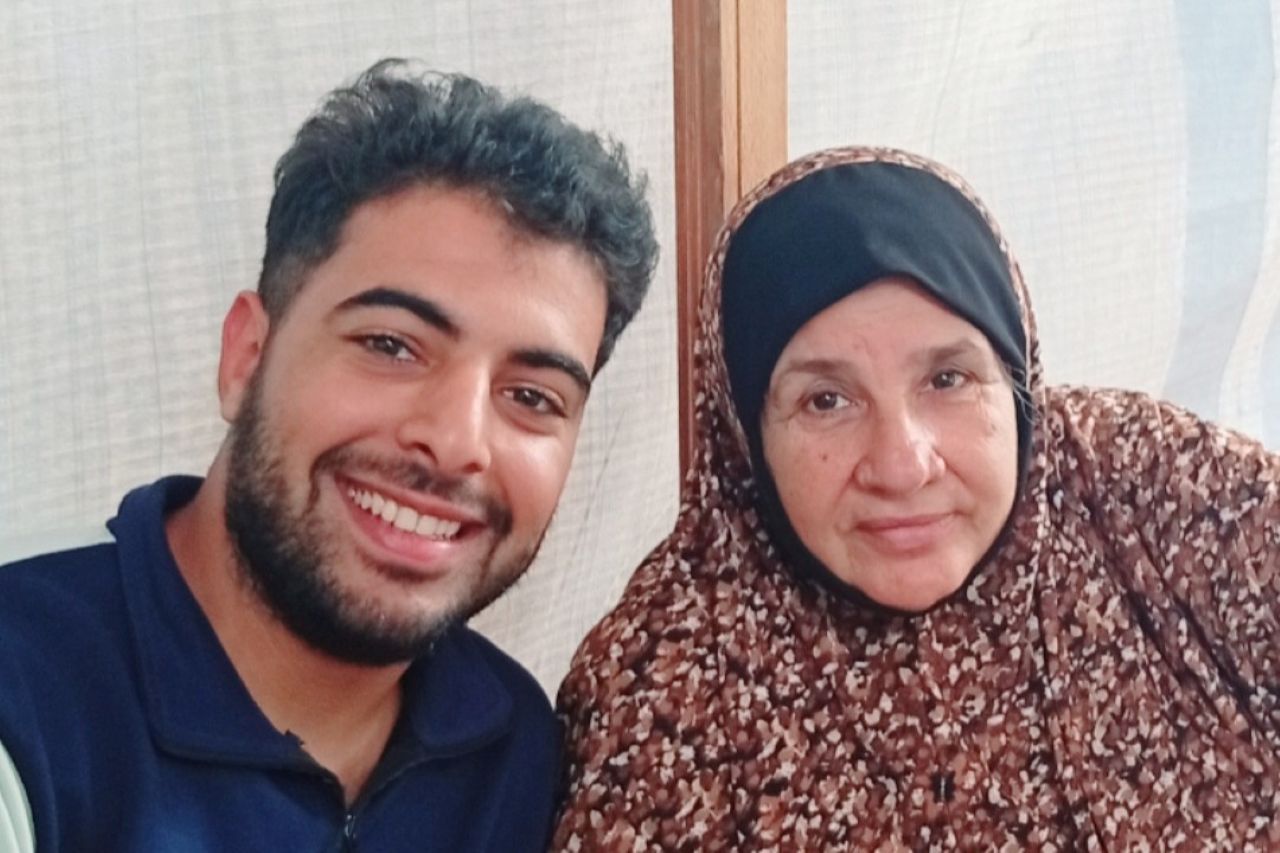
My grandmother did not directly live through the first Nakba. She was born a few years later, but she grew up surrounded by its stories. She used to tell me about the old homes, and about the large keys some families kept for years, as if return was still possible at any moment. She also spoke about how her mother hid gold, clothes, and other belongings underground before fleeing, believing the family would return only a few days later.
When I asked my grandmother whether she saw the Nakba as something that ended decades ago or something still continuing today, she did not hesitate for long.
She was sitting inside her tent in al-Mawasi, Khan Younis, nearly two years after being displaced from her home in Rafah, surrounded by camps that felt closer to a struggle for survival than to real life, with almost no infrastructure and with bombing continuing despite what was being called a ceasefire.
For a few brief seconds, she spoke in a way that seemed to summarize not only her own suffering, but the suffering of an entire generation of Palestinians.
"The Nakba is still ongoing", she told me. “What happened to us in 2023 was worse than the Nakba of 1948.”
Then she added:
“We used to hear about displacement from our parents, and now we are living it with our own eyes.”
And this experience is far from isolated. According to the United Nations, around 90 percent of Gaza’s population has been displaced since the beginning of the genocide, many of them multiple times.
In that moment, I realized that for my grandmother, the Nakba was not simply an old story. It was something passed from one generation to another until it finally reached us, in an even harsher form.
But the Nakba does not look the same for every Palestinian.
I then spoke with one of my relatives living in the occupied West Bank about what the Nakba means to him today. He told me that there, the Nakba does not always appear as tents or displacement the way it does in Gaza, but as a life where everything can change or collapse at any moment.
He said that checkpoints, military raids, and daily fear create a permanent feeling of instability, as if life itself has become temporary.
“Sometimes you feel like you are living in your own homeland,” he said, “but without fully feeling safe or free.”
For him, the Nakba is not only about losing your home. It is also about living without the ability to feel normal, stable, or certain about the future. And when he spoke about Gaza, he said Palestinians are living the same Nakba in different forms. Some live it through bombing and displacement, while others live it through constant fear and suspended lives.
Across the occupied West Bank, Israeli occupation raids, restrictions on movement, arrests, and forced displacement continue in ways many Palestinians see as an ongoing extension of the Nakba.
Abu Hashem, one of my closest friends growing up together, carried yet another meaning of the Nakba.
When he left Gaza to continue his studies abroad, he thought he would only be gone for a few months before returning to his family and normal life. But today, he watches the genocide from afar, following news of displacement and bombardment through his phone, while living with the constant helplessness of being unable to reach or even properly check on his family.
He told me:
“For me, the Nakba is being a Palestinian student living far from home, away from my family, away from the people I love, and away from a life I thought I would return to.”
Later, he added:
“I used to think the Nakba meant being forced to leave your home. Later, I understood that it can also mean not being able to return to it when your family needs you the most.”
For him, the Nakba became a long exile, a constant feeling that you are far away from the place where you are supposed to be, while everything continues there without you being able to do anything.
Then I thought about myself.
On the day I was displaced from my home, I believed it would only be temporary. Like many others, I left thinking I would return after a few days. We left many things behind because we never imagined the absence would last this long. But over time, I began to understand something I had never understood before.
I understood that Palestinians do not need to read history books to know what the Nakba means.
Sometimes, all it takes is losing your home once.
Or waiting for hours at a checkpoint.
Or watching your family being displaced through a phone screen while you are far away.
That is enough to understand that the Nakba was never just an old memory.
After 78 years, the Nakba no longer carries a single meaning for Palestinians. In Gaza, it may mean tents, displacement, and losing your home. In the West Bank, it may mean a suspended life shaped by fear and checkpoints. Outside Palestine, it may mean a long exile and the pain of being unable to reach your family when they need you most.
But despite these differences, one thing remains shared across all these stories: the constant feeling that Palestinian life can be uprooted or changed at any moment.
That is why the Nakba today feels less connected to the past and more connected to the present we are still living through. It is not only an event that happened in 1948, but an ongoing reality that changes from one person to another and from one city to another, while remaining tied to the same root: the ongoing Israeli occupation and the permanent loss of safety, stability, and normal life that comes with it.
And maybe that is why Palestinians do not have a single definition of the Nakba. Because every Palestinian, wherever they are, carries their own version of it.

Hassan Herzallah - Correspondent from Gaza
The war in this region is no longer a breaking news story on our screens: it has become a subtle daily rhythm that inhabits our details, reshapes our consciousness and distorts our collective memory.
As an Iraqi, I see the war not only as a political or military event, but as a heavy presence that has been weighing on our chests for decades, leaving its mark in the language, in the faces of the children, in the tone of the mothers' voices, in the shaking of the doors when fear closes them.
Today, as I watched a scene of panic during the bombing of schools in Mosul, I was not simply seeing children running in panic: I was witnessing history repeating itself with disconcerting audacity. Their cries were not new: we have already heard them in our schools, in our alleys, in our shelters.
There was something painfully familiar in that chaos, in that noise that resembled the sound of the soul when it is taken by surprise by danger. I have seen people flee their places not because they are cowards, but because they are exhausted from being tested in courage every single day.
For us, war is not just material destruction: it is a slow dismantling of our sense of security. Living without trusting calm, being more disturbed by silence than by noise, interpreting every sudden sound as the beginning of a disaster: this is the hidden face of war. Persistent fear, anxiety and tension do not arrive as passing guests, they establish themselves within us as part of our psychological structure.
Even more dangerous is the way people's emotions are reshaped, manipulated and pushed towards sectarianism and hatred. War does not just annihilate bodies, it plants seeds of division in minds and trains hearts to suspicion. Suddenly, the other becomes a threat, belonging becomes a weapon, identity becomes a trench.
What hurts the most - perhaps what scares the most - is listening to the children. Their conversations are no longer about play, dreams or the future, but about planes, bombing and death. They buy plastic weapons, imitate war scenes and recreate what they see with their little eyes.
How far have we fallen? How have we come to teach our children the tools of war instead of the language of peace?
Unfortunately, this is not a passing phenomenon, but a profound change in consciousness. When a child grows up believing that war is normal, we do not just lose his or her childhood: we lose the possibility of building a future. A child who learns about war will grow up carrying it within him or her, even if it ends outside.
As far as I am concerned, war is not an idea: it is a personal story. I lost an uncle in the war; another uncle was a prisoner, and my father bears indelible scars on his body. I was born during the war in 1990, as if I had entered this world through a smoke door. I grew up a little only to find myself in the war of 2003. I was a student then, and that is where I started writing. Perhaps as a means of survival, perhaps as an attempt to understand what cannot be understood.
Then came the civil war in Mosul, and I was among those who tasted the bitterness of violence and terrorism. For me, it was not news flowing on TV, but days lived in fear and anticipation. Then we entered another war against the Islamic State, and death became a daily possibility, life a postponed project. Today we live in a new conflict, as if this land were destined never to rest.
None of these wars passed without leaving a mark. When they end, we do not just remember them: we also live them in their absence.
Here emerges the question that haunts me: when will we experience consecutive years of peace? Has peace become a luxury? How can such a beautiful word be so powerless in the face of the war machine? Perhaps because it is easier than building, thinking, dreaming. Yet, it costs us everything.
As an Iraqi, I am not looking for great answers or slogans. I only long for a moment of calm that is not interpreted as a pause between two wars. I dream of a childhood that is not measured by the number of explosions one has survived. I imagine a country that writes its history not with blood, but with words.
The great powers sharing spheres of influence see nothing in us but maps and interests, waging their cold wars on our burning bodies. As for the United Nations, since its foundation it has appeared impotent or complicit, merely counting the dead instead of protecting them. This international silence is not neutrality: it is another form of violence.
Between political calculations and power interests, it is the human being who pays the price alone, as if his life is worth less than a deal.

Jameel Al-Jameel - Communication Coordinator of Un Ponte Per in Iraq
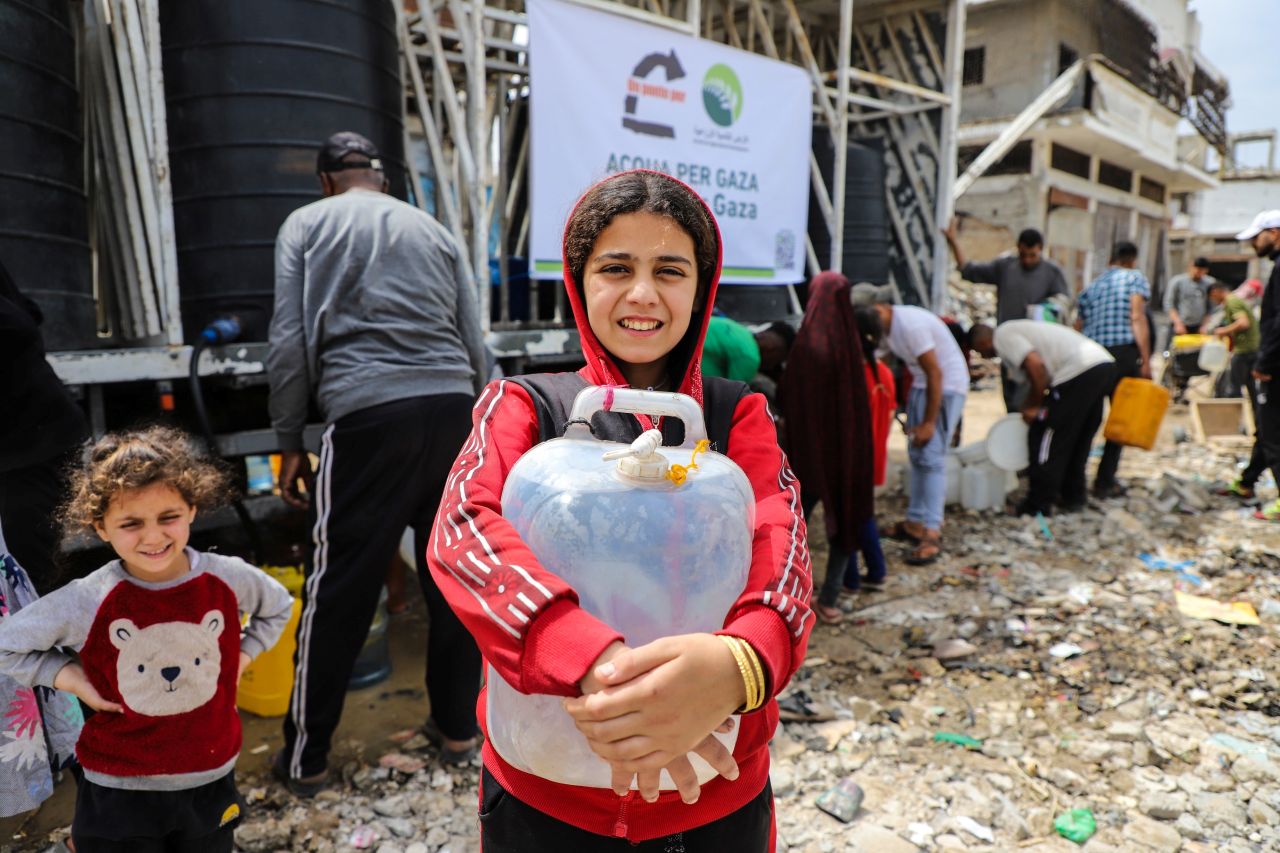
Before people wake up in other parts of the world, the search for water has already begun in Gaza.
Empty plastic jerrycans line up in uneven rows, some cracked, others barely holding together, as voices rise with the approach of a water truck. Shouting, calling, hurried footsteps on rough ground, and bare feet trying to outrun time.
Then, the sound of a horn.
My brother Mohammed and I rush out, barely having washed our faces. There is no time to think, only to reach the front of the line. All we want is to fill a few jerrycans with water. Sometimes, there is not even time to put on shoes. Being just a few minutes late can mean going an entire day without water.
In Gaza today, people are not just searching for water. They are running after it.
Before the genocide, water was not something we thought about. With electricity, a simple switch would turn on the pump, and water would flow up to the rooftop tank without effort. It took nothing more than opening a tap.
But with the start of the war, everything changed. I remember the early days after electricity was completely cut. My father, Mohammed, and I would carry jerrycans from downstairs up to the rooftop, trying to fill the tanks by hand, while the constant buzz of drones filled the sky above us and explosions echoed nearby. In those moments, even filling water was no longer routine. It became a race against time, and against fear.
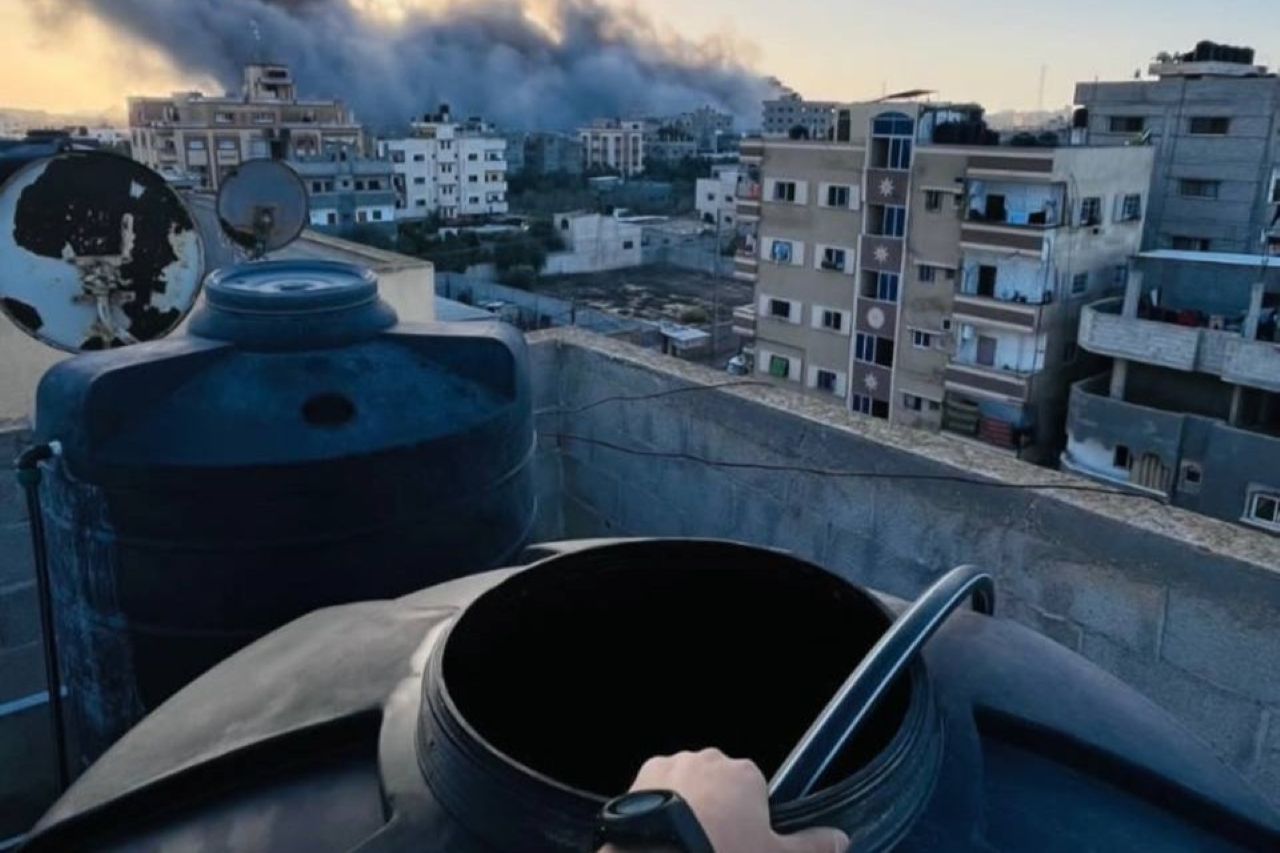
Time passed, the water crisis in Gaza has not eased, even after what is called a ceasfire. The problem is not only scarcity, but also the quality of water itself, which is often unsafe. Many struggle to access water regularly, and even when they do, the amounts fall far below basic daily needs.
This is largely due to the destruction of water infrastructure by the Israeli occupation, turning access to water into a daily challenge.
This crisis did not begin today. For years, over 90% of Gaza’s water has been undrinkable. The genocide and the destruction of water infrastructure by the Israeli Occupation have pushed the system to the brink of collapse, making access to water a daily struggle.
Since municipal water stopped, everything shifted. What once flowed through pipes disappeared, and we became entirely dependent on water trucks. We began filling yellow jerrycans, one after another, waiting for deliveries that might or might not arrive.
Water no longer reached us. We had to chase it.
Hamoda, 21, from al-Mawasi in Khan Younis, lives this reality every day. Before the war, getting water was simple. “We had electricity, we had municipal supply. We used to run the generator and pump water easily,” he says.
Even when we were still in our homes, buying water was affordable. But fear never left. I remember filling the rooftop tank while shelling echoed nearby and drones hovered overhead. Water was no longer just a daily necessity. It became tied to fear.
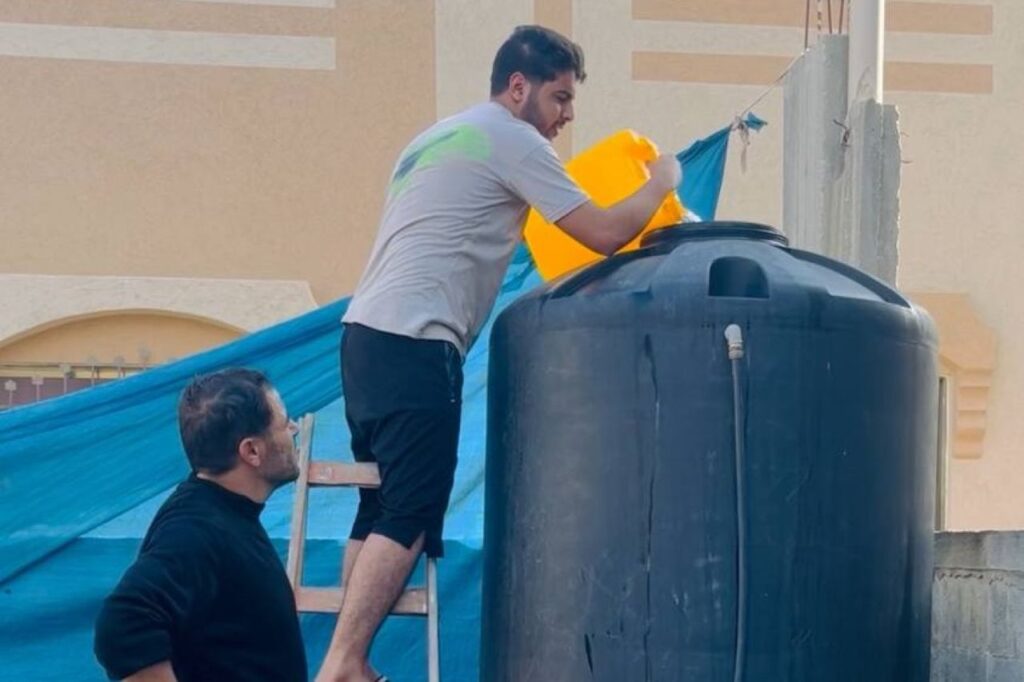
Then came displacement, and with it, a new reality.
Water trucks now arrive every three days, if they arrive at all, and there is no guarantee of quality.
“Sometimes it’s drinkable, sometimes it’s not, but we have no choice.”, he says.
The problem goes beyond taste or salinity. It is about health.
He recalls how his pregnant mum fell ill after drinking the water and had to go to the hospital, where doctors warned her not to drink it. “But what’s the alternative?”, he says.
The alternative is buying water, if you can afford it.
In a collapsed economy, that is not the case for most families. Prices have surged. What once cost a few shekels now costs many times more. With little cash in circulation, even buying water becomes complicated.
“Most of our relatives can’t even afford water,” he says.
The question is no longer whether water is available, but who can afford it.
In this reality, getting water has become a heavy daily burden, often falling on those least able to carry it.
On many days, I am not the one who goes to fetch water. My younger brother, Mohammed, 13, takes on that responsibility. We have two sisters, and I am often away, so the burden falls on him.
He stands for hours in crowded lines, trying to secure a spot before the water runs out. There is no real system, just an open race. Whoever reaches first fills.
When he finally manages to fill the containers, the amount is never enough for a full day.
“What I can carry isn’t enough,” he says.
But it does not stop with our household. After we lost my uncle, his daughters have come to rely on us as well. I try to fill water for them whenever I can, as access is even more difficult for them in such crowded conditions.
In this reality, fetching water is no longer a routine task. It is a daily burden shared by everyone, often carried by the youngest.
These conditions are forcing children to take on responsibilities far beyond their age, in an environment that offers little safety or dignity.
The situation becomes even more severe when the water crisis intersects with illness. With limited treatment and scarce resources, it turns into what can only be described as a silent health crisis.
During my volunteer work in displacement camps in al-Mawasi, I saw that not everyone faces the water crisis in the same way. Those with chronic illnesses, especially kidney patients, suffer the most. For them, it is not just about finding water, but finding clean and safe water.
It is no longer about waiting in line, but about searching for a specific kind of water that may not even be available.
Even during holidays, when joy is supposed to come first, some families are fighting a different battle: securing water that will not harm their children.
They are forced to buy it daily, despite the high cost, because there is no alternative.
While others run after water trucks, these families face a different dilemma. Even the available water is not suitable for them.
In Gaza today, some cannot find water at all. Others find it, but cannot drink it.
Here lies the harshest contradiction. Water, meant to sustain life, has become a source of illness. The crisis is no longer only about access, but about its impact on health.
Even with signs of limited improvement, such as the restoration of water access thousands of children, according to UNICEF, these gains remain partial and do not reflect the daily reality in displacement camps.
In some areas, small water solutions offer a degree of stability.
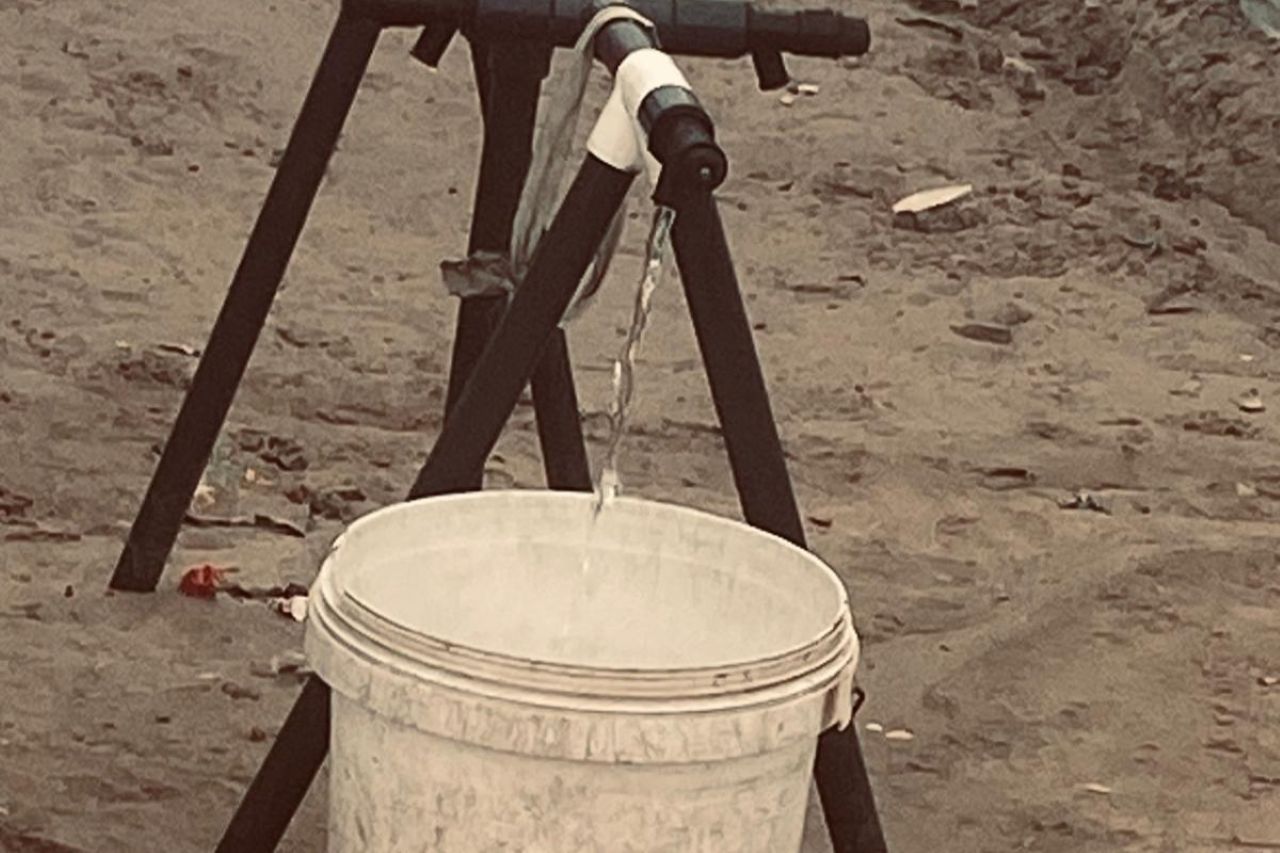
In camps I visited, shared water barrels are refilled every two days, reducing the need to chase trucks and creating a rare sense of stability. In nearby camps, simple wells have been built, allowing people to access water without waiting for trucks, even if the quality is not always sufficient.
But this reality is not everywhere. In other areas, trucks rarely arrive, and access remains unpredictable. This unevenness reveals a simple truth: even suffering is not equally shared.
From what I have seen and heard, the issue is not just water, but the sense of stability and security it brings. People are not only searching for water. They are searching for stability, for a day that can be anticipated, for a moment not dictated by whether a truck arrives or not.
Despite these efforts, solutions remain limited and out of reach for many. As temperatures rise, the demand for water increases, and so does the daily burden.
In Gaza today, water is no longer just water. It is a daily story that captures the full weight of the crisis we live through.
Hassan Herzallah - Correspondent from Gaza
March wasn’t an ordinary month. There wasn’t a single feeling I hadn’t experienced.
People in Gaza are living between the harshness of difficult conditions, the fragility of a ceasefire, and the media blackout on what is happening here. In every tent, there is a story. In every corner, there is suffering that many overlook.
At the beginning of April, I was standing by the sea, trying to think through everything I had lived during the month of March. For us in Palestine, March was not just one month, but several months compressed into one, due to the intensity of events that revealed the reality left behind by a genocide that has not ended to this day.
I began to remember the moments when we wanted to gather with my relatives at my grandmother’s place. We prepared everything, but in a single moment, the weather suddenly changed, and we were forced to stay in our tent out of fear that something might happen. So my family decided that I would go alone.
The journey took more time than I expected. I couldn’t find any means of transportation, not even a horse-drawn cart, and I arrived after the call to prayer. On my way, I remembered that we used to own a car in the past, but now, we have forgotten what a car even looks like.
Even the family gathering we used to have at my grandmother’s place has become something difficult to reach because of the harsh conditions we live in—conditions imposed on us by fear: fear for our fragile tents from rain and storms, and the absence of transportation that we once had.
In this month, I came to understand more deeply the impact and consequences of what the Israeli occupation has done to us. From the moment we invited a woman we know to join us for iftar during Ramadan, but she refused because of what had happened to her teeth and her inability to remove the maskfrom her face.
Then my thoughts moved to the moment when Eid came. We are used to visiting relatives during Eid. My father, being the youngest among his siblings, was the closest to them, and he loved that we visit all our relatives on the first day of Eid.
But on that first day, it seemed that my father did not want to visit anyone, for a reason I did not know. Even though he missed seeing his brothers and sisters in the nearby camps and in different places, I asked him why, but he did not answer. Still, I insisted that we go out together, and eventually we did.
We went to visit one of our relatives - my aunt, who is very close to my father. Her husband was also my father’s friend. When we sat there, she had prepared sweets for us, and it was beautiful to see her after a long time. We began talking about the situation here and how difficult and limited life in the tents has become.
In the middle of the conversation, I asked about her husband,
Forgetting something important—that he had been missing since their home was bombed.
I do not know how I forgot that in that moment. I felt as if something heavy tightened around my chest. My father quickly tried to change the subject, and we continued talking about our past lives—how simple and beautiful they once were.
After a few minutes, we left my aunt’s tent. I expected my father to say something, but he did not.
Then we went to my another aunt, who is one year older than my father. When we arrived, she was very happy to see us, because we are trying to hold on to the traditions of Eid that they were used to.
She told us that she truly wants to visit us, but she cannot—there is no transportation like before, no cashmoney, and she has a problem with her knee that makes it difficult for her to walk long distances, especially since most of the roads are muddy and cracked.
As for us, the daily struggle of fetching water, charging phones, and handling basic needs that were once simple prevents us from even thinking about visiting anyone.
Then she began to talk about her home - how beautiful it was inside. She had bought it just a few months before the genocide, but she did not even have time to memorize its details before everything changed. A single paper forced her to leave Rafah and move into displacement, to an unknown future.
At that moment, she was speaking, but her eyes were speaking even more —filled with grief.
Then her young son came in and said:
“I want to play inside the house.”
He meant the tent next to them.
She replied:
“In home, I had prepared a room for him, but he never saw it. When we were displaced, I was still pregnant with him. Today, Amjad has never seen a home, and he does not know what the word ‘home’ means. The only home he knows is a tent made of cloth.”
After that, we visited more relatives and then returned to our tent.
At that moment, my father said something to me:
“I didn’t want to visit anyone because everywhere we go, there is a different kind of pain in every family we meet.”
Then my thoughts moved to March 21, Mother’s Day. I had planned to write article about it. I went to one of the camps to conduct interviews. I asked a woman about Mother’s Day.
Her eyes filled with tears as she spoke about her missing son. She did not know whether he was killed or imprisoned. I found myself hating the question I had asked.
Then I spoke to another man who told me that he had lost his entire family—his children—and that he was the only survivor. I returned to my tent and abandoned the idea of writing.
Then my thoughts moved to March 30, which is Land Day in Palestine, and at the same time, it was my mother’s birthday.
I wanted to surprise her with a gift. It was not a bag, or perfume, or even a ring - but two kilos of gas, so she would not have to cook using fire especially now, as crossings remain tightly restricted, allowing in only limited supplies, while cooking gas becomes harder to find and increasingly out of reach.
When I went to buy the gas, my friend Al-Nahhal was with me. I kept asking him:
“Do you think my mother will be happy with this gift, or will she laugh?”
He kept telling me that she would be very happy.
Then, in the middle of the conversation, I asked him:
“What did you get your mother for her birthday or Mother’s Day?”
He sighed and said:
“My mother was killed during the genocide.”
I froze. For a few moments, I didn’t know what to say or do. It felt as though my words had turned into chains tightening around my neck. I returned to the tent. My mother was very happy with the unusual gift, but there was still a heavy feeling inside me because of that moment with my friend.
As I stood by the sea, I remembered my father’s words again. Meeting people in Gaza may bring back some of the beautiful moments that once existed, but it also reveals everything that has been lost. Sometimes, a single word or a small detail is enough to open a flood of memories.
My father did not say anything, but his silence was heavier than everything I had heard that day.
On March 30, it was Land Day.
But it was not as we once knew it.
It was no longer a story from the past, but a reality we live every day…
To be connected to a land you can no longer reach.
In Gaza, meeting people is no longer what it used to be.
It carries more of what we have lost than what remains.
All these small details, all these stories, are reflections of a reality created by the Israeli occupation, while the world remains silent.
Perhaps that is why the question is no longer what we are living through…
but how we are still trying to live.
Hassan Herzallah - Correspondent from Gaza
Until 7 October 2023 in the Gaza Strip, despite the siege and many difficulties, thanks to the organisation of the population lə children could still attend schools and kindergartens. Despite the extreme living conditions to which the Israeli siege had reduced Gaza, there was still a daily routine of lessons, relationships and small spaces of normality in which to continue to grow and imagine the future.
The genocide radically transformed the lives of the surviving people. Israel's indiscriminate and genocidal attacks have systematically hit structures essential to the survival of the civilian population, destroying homes, infrastructure, hospitals. And all schools.
Educational spaces have been made inaccessible, while thousands of families have been forced to take refuge in overcrowded camps, where they live in tents and encampments. To the loss of homes has been added the loss of income: more and more families can no longer guarantee food, clothing and basic necessities. And to all this has been added the loss of the future: preventing the right to study for the younger generations means this.
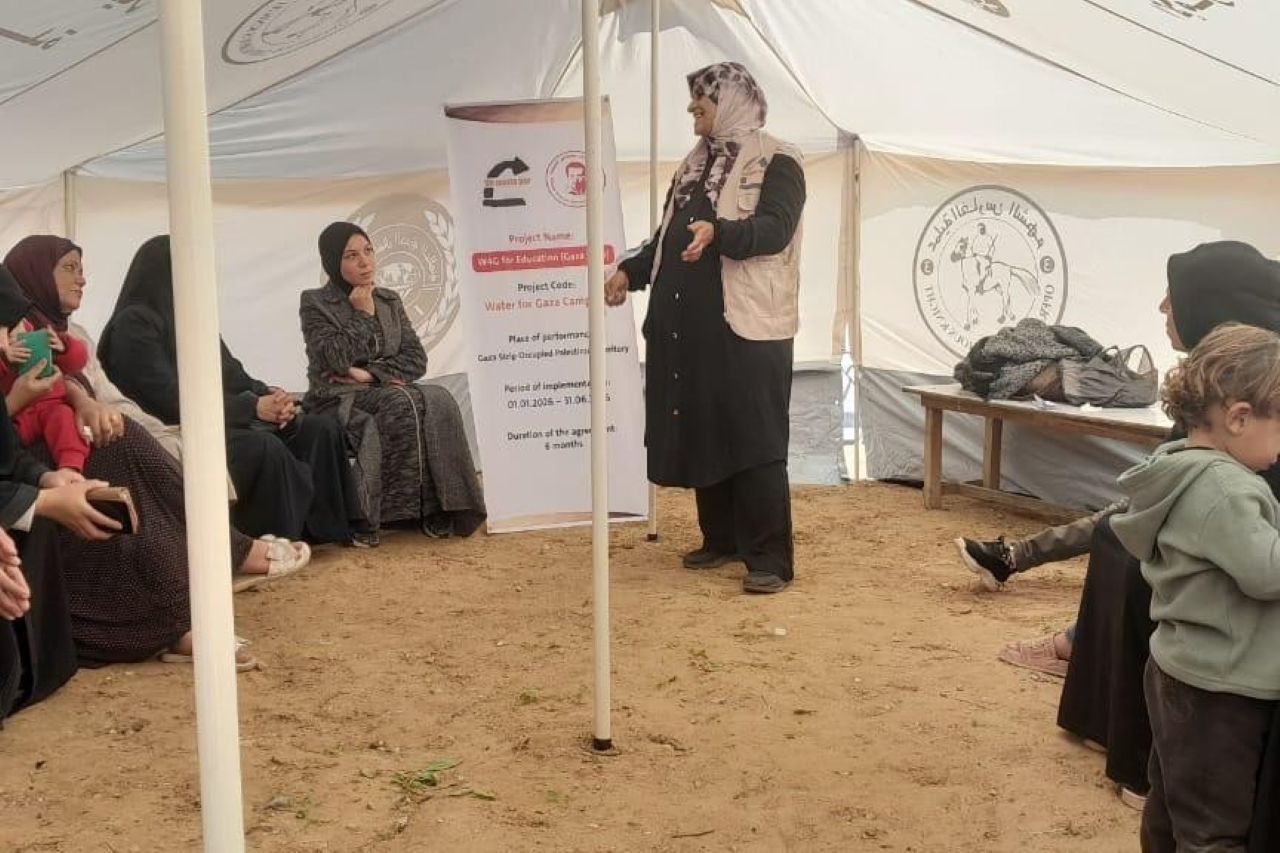
In this disastrous context, lə children have been deprived of their childhood and right to education. Life in the camps exposes them daily to shortages of essential goods, critical hygienic conditions, emotional stress and isolation, and the impossibility of imagining a tomorrow.
This is why, in addition to the emergency interventions we have carried out with the 'Water for Gaza' campaign, we have recently started a new front of solidarity with 'Roots of Resilience'. A project through which, together with the Ghassan Kanafani Development Foundation (GKDF) in Gaza, we try to ensure protection, education and psychosocial wellbeing for children and adolescents.
GUARANTEEING THE RIGHT TO EDUCATION IN GAZA
One goal of this new bridge to Palestine is to ensure that the children have access to the right to education, as far as possible.
Together with the Ghassan Kanafani Association, a Palestinian community organisation working to ensure access to education and psychosocial support for children, and thanks to the generosity of our donor community, we support the creation of temporary spaces for early childhood education and emergency education programmes in the areas of Khan Younis, Deir al-Balah, Nuseirat and Gaza City. Together we organise psychosocial support activities and the distribution of essential materials, such as school supplies and hygiene kits.
In addition to education, another objective is to support the psychological well-being of the children, who have been profoundly affected by war, displacement and the atrocities they have had to endure. Educational activities are therefore integrated with psychosocial support interventions to process stress, regain space for expression and rebuild a sense of security. At the same time, the distribution of hygiene kits helps to improve health conditions and prevent diseases, in contexts where access to water and sanitation is extremely limited.
The work began in January 2026, in a context where returning to create spaces for children was already an act of resistance.
The 'Ghassan Kanafani' association started the first educational and psychosocial support activities involving hundreds of children between 4 and 6 years old, who participated in reading, writing and mathematics lessons, complemented by interactive activities based on play and the use of stimulating educational tools.
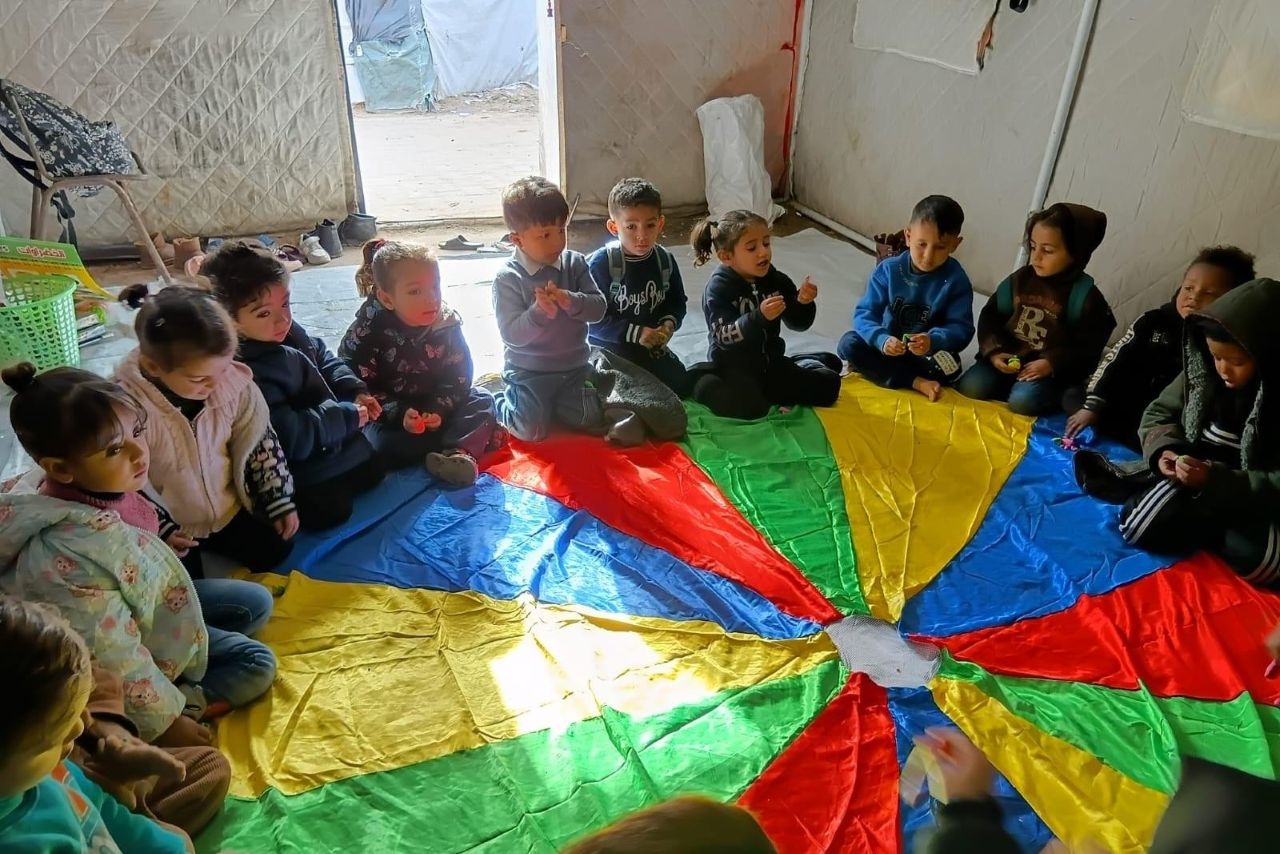
The first results are encouraging. Local partners tell us that lə children attend activities regularly, participate with curiosity and have started to interact more with each other in the classroom. They are also starting to express their emotions through drawing, group games and recreational activities, showing a little more confidence day by day.
Once again, it is not simply a matter of moving in an emergency and trying as best we can to respond to urgent needs, but of defending access to fundamental rights by all means.
All this is possible thanks to the generosity of the donorə community that has always supported us and walked with us, enabling us to take immediate action and respond to the requests of our local partners.
Education and child protection remain an indispensable condition for the dignity and future of the new generations. Especially amidst the rubble of a genocide that is not over, it has only stopped making headlines.
Un Ponte Per, together with civil society organisations committed to the defence of human rights and the promotion of peace, is taking Leonardo S.p.A. and the Italian State to court to stop the sale of arms to Israel and is launching a fundraising campaign to support the legal action.
With the first hearing, to be held on 27 March 2026 at the Civil Court of Rome, the legal action against Leonardo S.p.A. and the Italian State, which we have promoted together with A Buon Diritto, ACLI, ARCI, AssoPacePalestina, ATTAC Italia, and Pax Christi to stop the sale of armaments to Israel, comes to life.
This is a crucial step in a battle that poses a stark question: is it legitimate to continue exporting arms to a country involved in military operations that have caused tens of thousands of civilian casualties and are the subject of serious contestation by the international community?
For us, the answer is clear: no.
A LAWSUIT TO STOP ARMS EXPORTS
On 29 September 2025, we filed a summons with the Civil Court of Rome asking that the arms supply contracts entered into by Leonardo S.p.A. - a company owned by the Italian State - with the State of Israel be declared null and void.
We consider such contracts to be contrary to Article 11 of the Constitution, Law 185/1990 on the arms trade, and international law.
This is not a symbolic protest. It is a judicial action asking the judiciary to verify precise responsibilities.
GAZA, INTERNATIONAL LAW AND ITALIANRESPONSIBILITY
After 7 October 2023, as the Gaza Strip was devastated by bombing and the conflict spread across the region, several European countries introduced restrictions on arms exports to Israel. Italy, on the other hand, did not suspend the authorisations, effectively continuing to allow supplies.
This lawsuit challenges a clear choice: to continue trading in arms even in the face of serious and documented human rights violations. We demand that this choice be judged for what it is.
A FUNDRAISER TO SUPPORT THE CAUSE
Alongside the legal action, we launched a public fundraising campaign to support the costs of the proceedings: legal fees, technical advice and communication activities.
Dealing with a large industrial group and the Italian state in court is a complex challenge that requires adequate resources.
It is an unequal but necessary battle. It is also the only way to turn indignation into a concrete act.
For months we have been watching with anger and helplessness what is happening in Gaza.
Today you can do something concrete. With this legal action you can make your voice heard and turn indignation into action.
Support the fundraising campaign >>
We wanted to share iftar together on the first day of Ramadan, but she refused completely, all because of that black mask on her face. It wasn’t illness that made her refuse, but something deeper than exhaustion, harsher than hunger.
The story begins with Hamdi’s family, which consisted of nine people including him. Before the war, he was a successful trader in the markets. Money was never a worry — he owned property and several businesses that allowed him and his family to live comfortably.
But when the genocide began, day by day, life started changing for Hamdi and his family. Things that were once easy to get became almost impossible. On the first day of May 2024, Hamdi received news that his property and everything he owned had been destroyed by occupation missiles. He couldn’t bear it, and in that moment, his heart stopped, leaving behind a whole family struggling to provide the basics of life on their own. They lived in southern Gaza, in Rafah.
A week later, news came of the invasion of Rafah. More than a million people, including the displaced from Rafah, were forced to flee into the unknown. I was Hamdi’s neighbor. That day, during the displacement, Um Youssef — Hamdi’s wife — didn’t know how to leave the house or what to do. I managed to contact a transport vehicle to take her few belongings. She planned to go temporarily to her sister’s house in central Gaza.
After that day, I didn’t see Um Youssef and her family until November,2025 almost two years into the genocide, after the fragile ceasefire. My mother got a call saying that Um Youssef was looking for a place to set up her tent because she couldn’t find anywhere. We tried to find her a small space on our land, enough for her, her two young children, and her daughters.
A few hours later, Um Youssef and her family arrived. I could barely recognize them except through one of her daughters, who was my age and whom I knew from before. Their faces had changed so much. They came with a small cart carrying their belongings, including a little child who seemed older than his years, having seen too much in life. Youssef, who was nine, tried to carry and unload the items by himself.
Um Youssef wore a mask, at first, I thought it was because of the flu or something like that.
I helped them arrange their belongings, set up the only tent they had, built a temporary bathroom, and organized everything. It was mid-winter, and every day a new storm arrived. The storm wasn’t just weather; it was another test of whether the fragile tent could withstand a world collapsing over it.
Through all this, I watched little Nour Al-Din, her shy child who kept looking away from me. When he laughed for the first time, his innocent smile, when I played with him, I would say, “Kiss me, and I’ll buy you a biscuit?” And that was the end of that day.
A week later, I was sitting with my mother and asked her about Um Youssef. Why, in the cold winter, did she live in a tent? She told me, tears welling in her eyes, that Um Youssef had been living in a tent for over a year, after the area where her sister lived in central Gaza was threatened. She found a place in a shelter center.
Then she moved to southern Gaza called Asdaa to set her tent. She lived there alone with her family in a displacement camp. Her sister’s house had been partially destroyed, making it impossible for her to return, experiencing multiple displacements herself and with her family.
My mother told me that in mid-2025, the Israeli occupation suddenly entered the area where they lived, forcing most families to leave without any belongings. When Um Youssef returned, many of her few possessions had been destroyed. She endured some of the hardest days of hunger, sometimes surviving on just one meal every two days.
During that period, aid entered sporadically and didn’t reach everyone. Prices in small markets doubled every week. A bag of flour became a dream, and a can of sardines had to be divided among several children. The question was no longer, “What will we eat?” but, “Will we eat today?”
I couldn’t stop thinking about this. Even in my own family, with my father and my brother Mohammad, we barely managed to get by. How did others manage? How did they cope with the struggle for the simplest foods, the basics of life, sometimes almost impossible to obtain?
I remembered seeing little Youssef on the first day he arrived. His sharp expression made sense, he carried worries beyond his age, having seen so much despite being only ten. And the mask Um Youssef always wore, what was its story? Why did she wear it all the time?
I asked because in December and January 2026, I went to check on them during harsh winds and heavy reins. I tried to help them tie down anything the wind tore or dig channels in the sand so water wouldn’t flood their tent. Even in those conditions, she kept her mask on.
My mother told me the reason. Before the war, when life was good, Um Youssef jokingly told my mother she wanted a gold tooth. Today, she wears the mask because of her circumstances — she has been robbed of the ability to smile, even at a young age.
I didn’t understand at first. I asked my mother what she meant. She explained: due to hunger, stress, headaches, and the pressures of life, she lost many essential vitamins, and her upper teeth fell out. She tried visiting several dentists to fix them, but the cost — about $4,000 — was impossible. She had to accept reality and wear the mask indefinitely.
The mask didn’t just cover her mouth.
It hid the effects of hunger on her body and her embarrassment in a world that didn’t even leave her the right to smile.
I couldn’t stand that moment. I remembered Hamdi Abu Youssef, always praised for his generosity. I once asked him for a ring as a child, and he brought it the next day. Now, I write for more than ten international platforms, translated into seven languages, and yet I couldn’t help her. I felt helpless, frustrated, and heartbroken. I went to the sea for fresh air, but even that day, the breeze that usually calmed me had no effect.
Ramadan began on February 18. A day before, I wanted to bring them some joy. I tried inviting them to share iftar with us. They refused at first, saying she was sick. In truth, she couldn’t remove her mask to eat in front of anyone.
In Ramadan, families gather around food. She feared the eyes watching her instead.
I saved some money from my writing to provide them with Ramadan necessities, to share small moments of happiness and let them know we were thinking of them. This Ramadan, though lacking its usual signs and traditions, we try to make it through, carrying memories with us every day.
When I look at Um Youssef, I don’t see her alone. I see all of Gaza, trying to hide its cracks beneath a thin layer of patience.
Her story is not unique. There are 57, 000 stories like hers, reflecting the harsh reality of life in Gaza today, under a fragile ceasefire and empty peace slogans that mean nothing.
Hassan Herzallah - Correspondent from Gaza
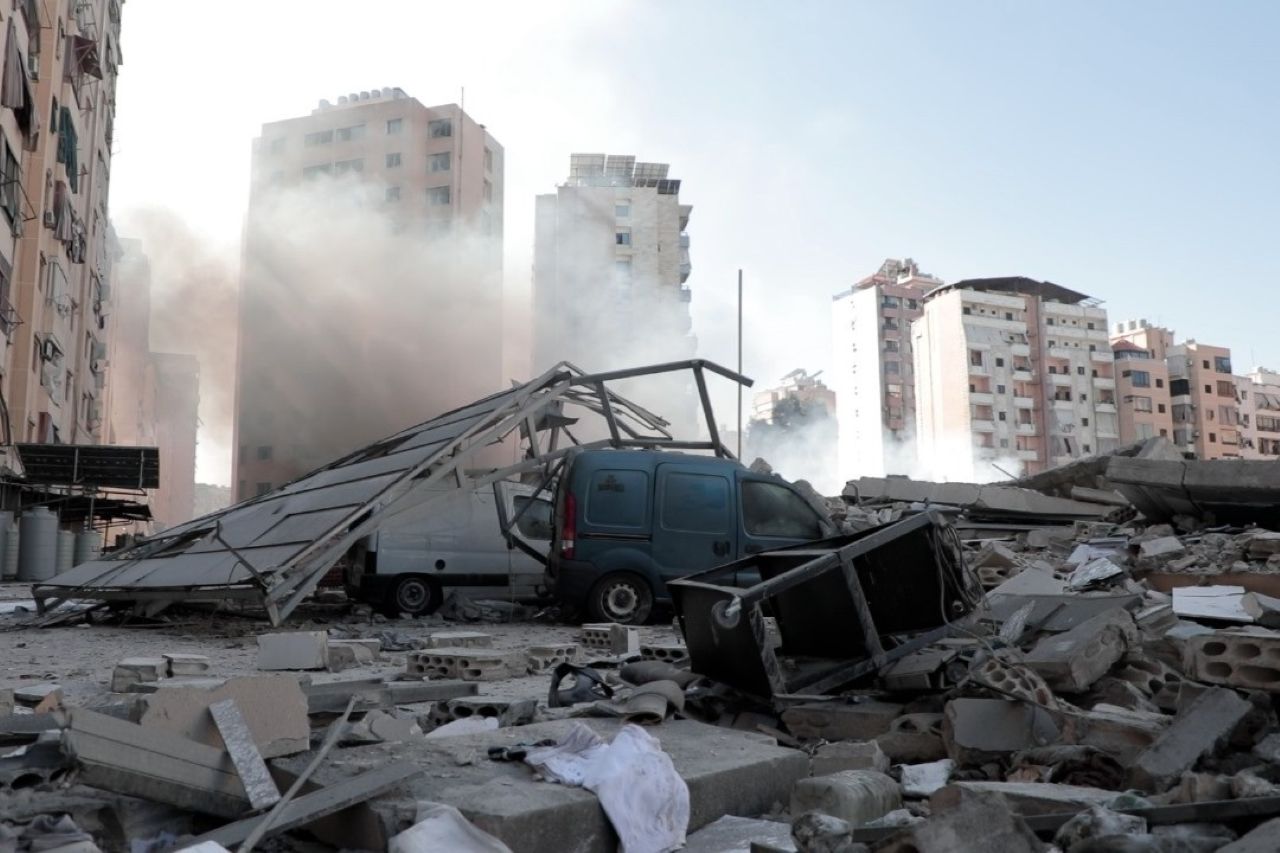
A Bridge For is responding to the new escalation of violence in Lebanon, where hundreds of thousands of people have been forced to flee their homes after Israeli bombings on 2 March 2026 that hit the southern suburbs of Beirut, the south of the country and the Bekaa Valley.
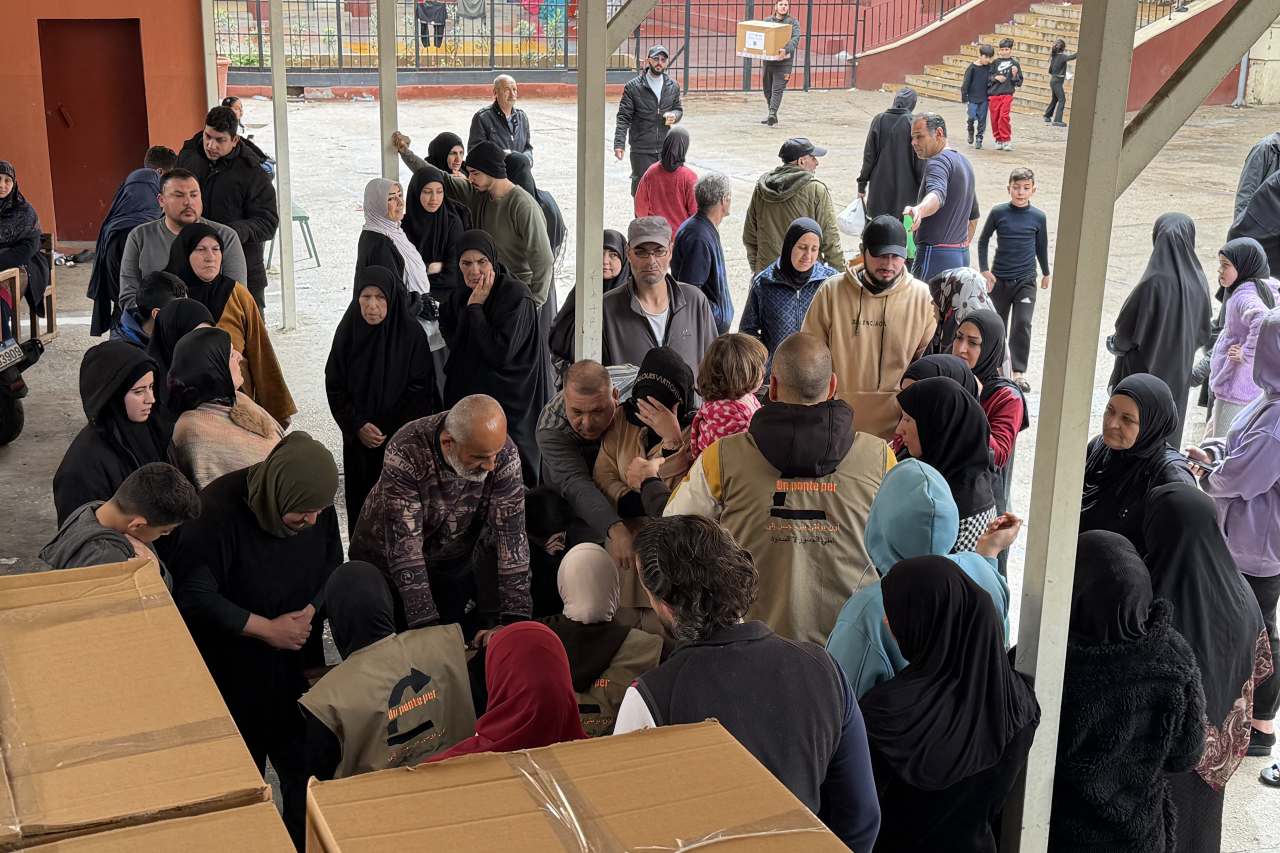
In a matter of hours, entire communities have left their homes to seek refuge in public schools and collective facilities turned into temporary shelters. Many of these spaces are not equipped to accommodate such large numbers of people and conditions are rapidly deteriorating.
"The population most affected by the attacks is in southern Lebanon. This military action represents yet another operation against Lebanon, and it is mainly the civilian population that is paying the price,' our Head of Mission in Beirut, David Ruggini, tells us.
A WAVE OF FORCED DISPLACEMENT
The Israeli army has ordered the immediate evacuation of the entire south of Lebanon, forcing thousands of people to move within hours. Among the areas included in the evacuation order is the Palestinian camp of Shatila, where Un Ponte Per supports a community sports centre and dozens of families with its Distance Support programme.
An evacuation order of this magnitude not only represents a serious violation of international law, but also leaves the most vulnerable people - the elderly, the sick, people with disabilities and families without the means to travel - unprotected, exacerbating an already acute humanitarian crisis.
This new escalation is part of an extremely unstable regional context, marked by growing tensions between Israel, Iran and Hezbollah, and risks further escalating the conflict.
Since 2023, Israeli military operations in Lebanon have had devastating consequences for the civilian population and for the country's infrastructure, which has faced a series of crises in recent years, from the Beirut port explosion of 2020, to UNRWA cuts, to the economic crisis with the subsequent collapse of essential services for the population.
OUR INTERVENTION IN THE FIELD
Un Ponte Per is present in Lebanon and is working with local partners to support displaced people who have found refuge in schools and community centres, where needs are growing rapidly.
Emergency activities include the distribution of essential goods such as family hygiene kits, nappies, water, food and sleeping materials such as mattresses and blankets, to improve living conditions in shelters and support families forced to flee.
A BRIDGE TO LEBANON
Un Ponte Per has been present in Lebanon since 1997, when it started working in the Palestinian refugee camps to guarantee the right to education and health to Palestinian children and refugees from Syria. In the wake of the humanitarian emergencies that have swept through the country, UPP has supported the local organisations with which it has been working for years in strengthening the response and distributing essential aid. Alongside local movements and realities, UPP works to support the difficult process of rebuilding social cohesion following the civil war that bloodied the country for 15 years, promoting the participation of young people and women in peace-building processes.
In a global context marked by conflicts, polarisations and crises, supporting culture means firmly believing in the ability of societies to imagine alternative futures. This is why we at Un Ponte Per have always flanked humanitarian and emergency interventions in the countries where we operate with the protection of local cultural heritage, developing an integrated approach that links peace, human rights, social justice and culture as an essential dimension of human development.
Within this framework, culture is not conceived as an ancillary or purely symbolic domain, but as a social and political infrastructure.
For us, heritage protection, cultural production and the right to self-representation are fundamental tools of community resistance, reconstruction of the social fabric and conflict prevention.
In doing so, we are also attempting to deconstruct Western hegemonic narratives and to return power and expertise to the local communities we have been walking alongside for years.
We have been doing this for decades in Iraq, working on the reconstruction and restoration of the immense book heritage of the National Library in Baghdad, which was destroyed during the war, with the programme 'Knowledge that Resists'. Or by supporting lə young activists in projects to protect and build sustainable tourism routes around places of fundamental importance, such as the Mesopotamian Marshes or the archaeological site of Ur, both of which are UNESCO World Heritage Sites.
Today, we continue to do so in Jordan, through the promotion of cultural, responsible and sustainable tourism in decentralised areas that are rich in history and community heritage.
This is the case with the archaeological area of Jerash, a site of enormous cultural importance but which pays the price for its decentralised geographical location.
Today, the local community benefits only marginally from the positive impact that sustainable and responsible tourism could have in Jerash. In fact, tourists visit the site briefly, then move on to other much better known destinations in the country, without getting to know or stay in the urban area and building very limited interactions with its rich and vibrant local community.
This is why, thanks to the valuable support of the Italian Agency for Development Cooperation (AICS) and together with ARCS, the project leader, we designed and launched 'Sustainable Jerash', a two-year intervention that aims to protect and enhance the city's cultural heritage, to promote inclusive and sustainable local development, creating economic opportunities for the community.
In particular, we will work on the restoration of the Eastern Roman Baths, located in the modern city of Jerash, to enhance them as a connecting point between the urban and archaeological areas.
In doing so, the thermal baths will not only be studied for the first time, but will finally be opened to the public and made accessible, thus encouraging a circular economy and enhancing their heritage.
To do this, we will work together with the Municipality of Jerash, the Ministry of Tourism, and the Department of Antiquities, which will take over the direct management of the site upon completion. But also with organisations such as Monumenta Orientalia and the University of Roma Tre, with whom we will also restore the precious mosaic inside.
For us, as always, the aim is also to make the entire local tourist area more accessible, through the involvement of people with disabilities and local organisations we have been working with for years.
Over the next few months we will be spending time with the Jerash community - citizens, traders, local craftsmen - to gather their impressions of the work we are doing. Follow us for new updates.
The military escalation of these hours between Iran, Israel and the United States reopens a wound we know all too well. The parallel with 2003 and the invasion of Iraq is not just rhetoric. Once again there is talk of a 'pre-emptive strike', once again regime change is evoked - more or less explicitly - as a solution. And once again a spiral is set in motion that threatens to ignite an entire region.
Regional war is not a fatality, it is a political choice. A choice rooted in a vision of power and domination that, in the name of security (whose?) produces permanent instability. We have already seen this in Iraq, Syria, Libya, Afghanistan. External interventions that have destroyed entire countries and populations, weakened civil processes, and stifled transformations from below.
Today we are witnessing dramatic contradictions: in Iran and in the diasporas, there are those who rejoice at the death of the Supreme Guide, those who mourn her, and those who are astonished. But eliminating leading figures does not mean dismantling a pervasive political system that has lasted almost 50 years. It means exposing millions of people to unforeseeable suffering as well as completely denying their self-determination.
As an organisation that has been working in the region for over 30 years, we strongly condemn this new military adventure promoted by the US-Israel axis. It is a choice that dramatically weakens the paths of emancipation and change from below, the same ones that in 2011 and 2019 had animated the Arab springs against authoritarianism and injustice. Rights are not exported by bombing. Democracies are not born from rubble.
At the same time, we stigmatise the dominant media narrative, which uncritically repeats the formula of the 'preventive attack' and struggles to pronounce simple and necessary words: girls, civilians, families. In these hours, there is general talk of 'victims' in a girls' school hit in Iran, but the terrible toll tells of over one hundred girls killed. Words count.
We also denounce Italy's political irrelevance in this scenario, reduced to a logistical tool of a war that has not been publicly discussed or deliberated. Bases on Italian territory, such as Sigonella, cannot and must not be used to fuel regional conflict.
Our concern is greatest for the countries in which we operate and with which we work every day: in addition to Iran and the Gulf monarchies, the crisis is already affecting Lebanon and Iraq. And while international attention is focused on this new front, violence by Israeli settlers and military operations are intensifying in Gaza and the West Bank. The risk is that one war will overshadow the other, multiplying impunity.
We share some testimonies collected in these hours.
IRAN. VOICE FROM THE DIASPORA
One of our Iranian diaspora activists, who has always been critical of the regime in Tehran, tells us about the complexity of these hours
"I am experiencing mixed feelings. Iranian society is much more complex than how it is described in the West. There are those who celebrate, those who mourn, those who are afraid. But it is not by 'eliminating' senior religious and military officials that one dismantles a system rooted in 50 years. The risk is to plunge into a scenario of endless instability, as in Iraq or Syria. And in the meantime, the victims are civilians. There are already so many. They are children."
IRAQ. 'WE DO NOT WANT ANOTHER WAR'.
One of our Iraqi colleagues recounts:
"I was sitting in a bar when two rockets went over our heads. Everyone panicked. My wife called me, terrified. The war will only bring death and collapse. We absolutely do not want another conflict in Iraq. What is happening is a violation of international law: destruction of infrastructure, intimidation of civilians. To all parties involved: stop the bombing immediately. We must learn from the wars we have already endured. Iraq and its people deserve peace."
LEBANON. ESCAPE IN THE NIGHT
Dramatic news comes to us from Lebanon. After rockets were launched from the south towards Israel, the Israeli army's response hit the south of the country and the southern districts of Beirut. Dozens of civilians were killed along with Hezbollah exponents.
The highways were immediately stormed by fleeing families. Our colleague Zaynab, who lives in the south, fled in the night in shock, taking hours to reach a safer area in Mount Lebanon. Local partners, such as the organisation Amel, have some staff stranded in the south awaiting evacuation. An Israeli communiqué called for the total evacuation of 53 villages (!) in the south, while the shelling continues. Shelters have been reopened in Beirut and other areas of the country to accommodate displaced families. The scenario evokes that of 2024, with the fear of an Israeli ground operation. One of the schools supported by our Qalam project has been declared a shelter for displaced people. We are conducting rapid assessments to respond to the emergency.
Un Ponte Per strongly condemns the ongoing military escalation and any war strategy aimed at redrawing political balances by force.
We also condemn the total disregard for international law, now reduced to waste paper. We had built the legal instruments to avoid the omnipotence of the law of the strongest and today these instruments are trampled underfoot.
We demand an end to the instrumental use of territories and populations as theatres of war for imperialist and colonial interests. The people we work with - activists, teachers, health workers, local communities - ask for one simple thing: to live in peace, without being pawns in conflicts they did not choose.
We have already seen where this road leads. We cannot accept history repeating itself, yet again.