We have been working in the Palestinian camps in Lebanon for more than 25 years and know very well the possible consequences on the lives of these people of the choice of some governments, including Italy, to suspend funding to the UN agency UNRWA.
"Cutting funding to UNRWA means not only cutting back on the services that are offered in the Shatila camp or in Lebanon, but in the entire Palestinian diaspora that we can also find in Syria and Jordan," said David Ruggini, Head of Mission in Lebanon of Un Ponte Per.
In 2022, UNRWA provided assistance to some 5.9 million Palestinian people, guaranteeing education, health services and food. The desired suspension of funds represents a frightening slice - some 57 per cent - of the budget that allows these livelihood services to be provided.
A cut that threatens to deprive Palestinian children of the chance to go to school or have access to water or essential medical care. In other words, it means letting these people most likely lose the minimum of dignity and access to rights that keeps their lives going.
"If these policies towards UNRWA continue, the Palestinian children will not have schools, hospitals or medical services to turn to," said Mr. Kassem, founder of Beit Atfal Assumoud, a Palestinian organisation with which we run our Family Happiness Distance Support programme in Lebanon.
What we are witnessing seems to be yet another act of collective punishment against one of the most harassed populations of the last century. The consequences of these choices will affect the lives of millions of people who, in many cases, have never even set foot in Gaza or Palestine.
'Water for Gaza' is our campaign in response to the crisis resulting from Israel's complete siege of the Palestinian people.
Get active today for the Palestinian people and help us bring water to Gaza. With your donation we will provide immediate relief by guaranteeing clean water to 2000 families and support what remains of local agricultural activities.
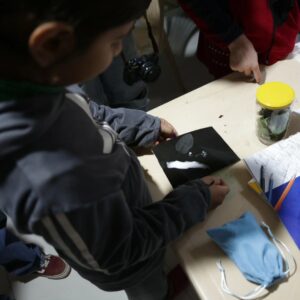
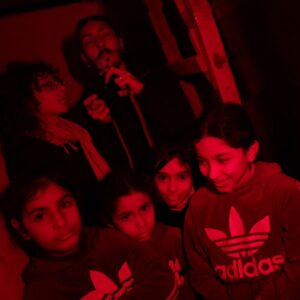
In Lebanon, Un Ponte Per ran photography workshops with Palestinian children from the Shatila Refugee Camp. The popular pedagogy initiative, aimed at stimulating self-recognition, self-expression and awareness of one's own emotions, also brought surprising results in terms of "mapping the needs" of those living in the camp.
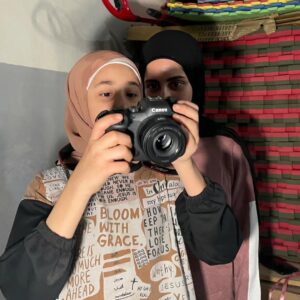
Images have always been a very strong tool to tell about oneself and one's relationship with reality. They are a way of defining each person's story and that of the world around them.
The images(and narratives) of marginal contexts, however, are often imposed by others, by those who do not live those contexts. It happens in our suburbs, which are often superficially recounted in the mainstream media as places of degradation and suffering, without any investigation into the root causes of those phenomena.
Together with about 20 of them, aged between 7 and 11, we organised a photographic workshop of self-narration, even building a small darkroom.
"How do you live your home? What do you feel when you walk down the street? What do youlike and dislike about what you see?" were some of the questions the children tried to answer through pictures.
During the workshop, they also learnt how to build a small handmade darkroom with which to develop their photographs. But above all, they learnt to tell a story, an emotion and even themselves and their own story, through the use of images.
Developing a deeper knowledge of the place experienced often means stimulating a sense of belonging and caring for what one has around one. The children indicated through images what they really needed, building an autonomous narration of their own reality and identity, which can be really important in a key of active, aware and participating 'citizenship'.
[Citizenshipis perhaps an oxymoron, as Palestinian people in Lebanon are not citizens and their status is that of 'refugees', now for several generations].
The result of the workshop is what we could call a very accurate 'map of needs' of the camp, really powerful because it was built from the bottom (in all senses) and by those who live that context every day on their skin, amidst deprivation and invisibility. These were truly exciting days, which show us that the path taken is the right one.
The initiative was realised in the spaces of the Shatila Sport Centre, a multifunctional centre located within the refugee camp where children can play and practice various sports, receive educational support, and take advantage of language, drawing and art courses.
A space that has been renovated, equipped and is still supported with funds donated to "Emergenza Libano" by the private donations of Un Ponte Per and is now attended by about 100 children.
We would like to thank Daniele Napolitano for having imagined, organised and conducted the workshops, with the support of the Peace Corps of Un Ponte Per, Majdi Adam and the girls of Basket Beats Borders who every day carry on an extraordinary work with the children of Shatila.
Jewish people, members of the Roma and Sinti, LGBTQI+ and differently abled communities, militant communists and anti-fascist dissidents, Slavic citizens were rounded up by the millions in every part of Europe, imprisoned, humiliated, stripped of all human dignity, tortured and killed with summary executions and in gas chambers. In the name of the 'purity of the race', an attempt was made through horror to turn the wheel of history backwards, reducing humanity into first-class and inferior persons whose every right, including the right to life, was violated.
Nazi-fascism was born from the fertile womb of Europe: that of racism, of nationalism, of the ideology of white supremacism, of the traumas and brutalities produced by the First World War, of colonialism according to which there are chosen peoples to whom everything is due and peoples who must give up their land, leave or be subjected to a regime of occupation and oppression.
MEMORY is not only the dutiful remembrance of what has been but also imperative so that those horrors are NEVER repeated. On this day so sacred to humanity, our thoughts go not only to the victims of that time, but also to the civilian populations suffering the brutality of war, the destruction of their homes, hospitals, schools, universities, civil infrastructure. To those deprived of food, drinking water, medicine, and forced into the cold and weather. To the children who are cannon fodder for collective punishment or attempts at ethnic cleansing.
Un Ponte Per unites yesterday's memory with today's: we do so in our daily commitment to stop the massacre in Gaza, stop the bombing in Syria, support the Russian, Ukrainian and Belorussian conscientious objectors. In standing side by side with Iraqi, Jordanian and Lebanese civil societies and in supporting those in Israel who shun war and oppose their government's apartheid policies. We recall how the preamble of the United Nations states that the peoples of the world united 'TO FREE HUMANITY FROM THE FLAG OF WAR'.
A commitment that must be carried on every day.
The project 'Learning by cooperating: peace education and the culture of volunteering' focuses on peaceeducation and human rights, the cultural, landscape and environmental promotion of sustainable and solidarity-based tourism, as well as sport as a means of bringing people together and getting to know each other. The duration of the project is 12 months, the available places are 7 (all without board and lodging) divided between Rome (1), Pisa (4), Monza (2). The specific objective of the project is to disseminate peace education in order to combat discrimination and promote the culture of voluntary work as a tool for building a society of solidarity from a civil, cultural and social point of view, working to reduce inequalities and combat climate change.
Specifically, the 7 volunteer operators will dedicate themselves to building:
Seven places are available , all without board and lodging, distributed as follows in the various locations:
Rome (Un Ponte Per) - via Angelo Poliziano(1 place)
Pisa (Un Ponte Per) - via Giuseppe Garibaldi 33(2 places)
Pisa (El Comedor Estudiantil Giordano Liva) - 60 Leopoldo Pilla Street(2 places)
Monza (Un Ponte Per) - via Antonio Rosmini 75(2 places)
The 25 hours of service will be spread over 5 days a week. A knowledge of a foreign language between English, French and Spanish level B2 is a prerequisite. For many activities there are exchanges and interactions with the foreign projects of Un Ponte Per in the Middle East and El Comedor Giordano Liva in Asia and Latin America.
For more information download the complete project sheet here.
To submit an application, click here.
For more information write to info@unponteper.it
Indiscriminate attacks by the Turkish army on north-eastern Syria have been going on for months. They have intensified since 13 January, causing an emergency situation for which the population is paying the price. The testimony of our staff on the ground.
"We are without water, without electricity and severely restricted in our movements. Temperatures meanwhile have dropped below zero. We cannot say how much longer we will be able to guarantee life-saving services."
Rizwan Ul-Haq, Head of Mission of Un Ponte Per in the north east of the country, is worried in the aftermath of the worst bombing in months.
Although the media did not report it, between 13 and 16 January the Turkish armed forces carried out hundreds of bombings on civilian targets: water, fuel and gas stations, power stations and other key facilities, including hospitals, were hit.
At the moment, the work of our staff in the field is highly compromised: 'As humanitarian operatorsə we are asking to be able to continue to provide assistance to the people who have been suffering the effects of the war in Syria for over 12 years, ensuring they have access to the support they need,' Rizwan emphasises.
Turkish attacks in Syria have been going on for months, but as of 13 January there have been more than 220 bombardments targeting the areas between Derik, Qamishlo, Amuda and Kobane, in addition to the launching of another 112 ground attacks. Ninety-two civilian sites have been hit and there are 12 victims. Already 9 power plants have been taken out of service.
The one in Swediyeh, which carried electricity and gas for cooking to about 1 million people, has been taken completely out of service. As many as 96 water wells are currently unusable and another 80 will be soon because the fuel stocks, on which their operation depends, are running out.
"Access to water for more than 800,000 people is no longer guaranteed," they explain from the camp. Since 15 January, 9 out of 10 vital services (including health, nutrition, drinking water, sanitation) have been severely restricted throughout the area due to the enormous damage.
The lack of fuel, water and energy is creating severe limitations to our work. Restrictions on movement will soon prevent us from bringing services and assistance to the population. The absence of electricity and water in the clinics and health facilities we support will make it impossible to provide health care and treatment, even life-saving treatment, to those affected.
The severity of the situation has already forced our field workers to stock up on fuel wherever possible, so as to be able to guarantee some movements and the operation of generators, necessary to keep clinics and hospitals operational.
Eleven major cities and towns, as well as over 2,700 villages and 1,900 schools, are currently completely without electricity.
But the escalation is not sparing the camps for displaced persons, in which we have been working for years to provide people with health care. Since 15 January, fuel has not arrived in the camps, and the inhabitants are unable to heat or cook. The blockage of fuel transfers is also paralysing the transport of life-saving goods, such as medical supplies and food baskets.
We are witnessing a very serious violation of basic human rights and international humanitarian laws, which have been completely trampled on by the Turkish armed forces.
We have been working in north-east Syria since 2015, rebuilding the local health system in cooperation with numerous local partners. In these years together we have ens ured the rehabilitation and establishment of more than 15 clinics and hospitals and an ambulance system, guaranteeing the right to health to the population affected by 12 years of conflict.
We have witnessed numerous crises at first hand, and express our deep concern about this umpteenth escalation, which has remained out of the international spotlight.
Drawings on the walls, carpets, toys, pencils. And colours, colours everywhere. Those that in the city of Raqqa, Syria, ravaged by 12 years of war, are no longer there.
Instead, they return to live in the Safe Space for Children that we have opened in the city to create a place where they can recover what remains of their childhood, overwhelmed by a conflict for which they are not to blame.
Upon entering, they are warmly welcomed by local staff and the sweet smile of Lasu, Un Ponte Per's Protection Specialist.
Their job is to accompany children who have survived violence, trauma or who have been exposed to abuse and child labour with free counselling services. Very often, this is done through play.
"You might think this is just assistance, but this initiative saves lives," Lasu told us when we met him in the Safe Space in Raqqa during our last visit to Syria last September. 'It brings smiles back to the faces of the children', and he smiles too as he explains.
"We work every day to ensure their protection, helping them identify risks and giving them the tools they need to report incidents of violence, exploitation or abuse. I am thinking of an initiative we organised recently for the International Day Against Child Labour. We carried out some activities to create awareness both among the children in the Safe Space and in their community. During the event, one of our children expressed discomfort and the worker immediately noticed it.The child then revealed that he himself was involved in child labour. The discovery of this reality had broken his heart,' recalls Lasu.
The worker was then able to direct the child to the specific support he needed. "This story is just one case among many, but it helps to understand the effectiveness of the activities we do and the importance of creating child-friendly spaces," she stresses.
The war in Syria has taken a heavy toll on their mental health: from a very young age, they suffered bombing, destruction, displacement, and faced terrible bereavements such as the loss of their parents.
Six years after the battle of Raqqa, which liberated the city from the control of the Islamic State (Daehs) that had chosen it as its stronghold, the children are still growing up in the rubble. 60% of them do not go to school, 80% of the buildings are destroyed. Moving around the city it is not uncommon to see them playing in the rubble of destroyed buildings, or to discover that school has become a luxury for them.
This is why the Raqqa Safe Space is so important. For them, and for us too.
Among the youngest regulars are Miriam, Bissan and Ghazal. Three sisters originally from Aleppo, born and raised under the war. Like all the girls and boys we met in the Safe Space, they too have had "experiences that are difficult even for an adult to handle", as Nada, their adoptive mother, told us when we met her in Raqqa.
"They lost their 10-year-old brother and then, in another bombing, their mother". Mariam, Bissan and Ghazal fled their home in Aleppo and arrived in Raqqa where they now live with their father and Nada.
The experience of losing one or both parents is among the most widespread and difficult to cope with, leaving children with a great sense of loneliness and insecurity.
"Mariam, Bissan and Ghazal were shy and never wanted to spend time with other children," Nada told us. "Two years ago their father and I took them to Un Ponte Per's Safe Space and over the past year we are seeing great progress. They interact more and have friends both here and at school."
And it was the three girls who told us how much they love the Space, because there they can "sing, draw, and express our opinions".
Today, what can be heard echoing within the walls of the Raqqa Safe Space are the laughter of the children. Those laughter that we want to continue to protect and ensure, thanks to the efforts of our operators, and the many people who support our work from afar.
To those laughter, which we hope will turn into strength to face the future, we also wanted to dedicate our Christmas campaign 'Libere di Rompere'. Find out what you can do to support us at www.liberedirompere.unponteper.it.
"Peace Support Ukraine" (PSU) is a project supported by the Otto per Mille funds of the Italian Buddhist Institute Soka Gakkai and implemented with the Ukrainian partners Institute for Peace and Common Ground, Ukrainian Leadership Academy, Association for Middle Eastern Studies and the Romanian partner Patrir. The project aims to strengthen Ukrainian civil society and support the active participation of local youth in social cohesion and stability initiatives, bringing the voice of the younger generation to local and international institutions.
By Alessia Massari and Edoardo Cuccagna

From July 2022, Peace Support Ukraine aims to strengthen the capacities of young Ukrainians to engage in social cohesion, resilience to the trauma of war, and creating spaces for their opinions to be heard and included in the country's reconstruction process.
We spoke about this with Laura Pistarini Teixeira Nunes, Programme Manager for Peace Support Ukraine, who told us about the development of the project and the contribution of Ukrainian civil society to peace building.
"The project is divided into three lines of work. The first is youth support, carried out by the Ukrainian Leadership Academy, which has been engaged in the production of podcasts with the aim of informing the Ukrainian and international public about the initiatives and visions of young people regarding the future of their country. With the beginning of the war, in fact, their involvement was very high,' Laura tells us.
"In addition, the Ukrainian Leadership Academy has created a series of online courses, whose target audience is again young people, from high school to young workers. The topics covered by the course modules concern personal resilience, crisis management, but also international dialogues," she continues.
"The course directly reached more than 350 people, exceeding the planned targets by 77%, underlining that Ukrainian civil society has an interest in the actions carried out by Peace Support Ukraine in the territory," Laura explained with satisfaction.
"The second line of work is another sign of the enthusiasm for the project. Together with the partner Institute for Peace and Common Ground, trainings are in fact carried out, both in presence and online," she adds. The focus here is on resilience-related topics - such as trauma support, mediation, dialogue and conflict-sensitive approaches.
"On a practical level, the aim is to put together a methodology for headmasters, teachers, psychologists and mediators on trauma management techniques and in general on an educational approach that takes into account both ongoing conflict and the trauma experienced," he explains.
"In places of crisis, teachers are the first to be in trouble: the aim of these courses and the manual is precisely to provide them with a methodology adapted to the crisis context that can be applied in the Ukrainian school system."

The project framework is enriched by the actions of the Association for Middle Eastern Studies and its network of activists in the occupied territories of eastern Ukraine. The activists of this network work with civil society to carry out non-military resistance (currently the only possible in many territories); through regular meetings with the network and monitoring missions in occupied areas, their goal is to promote the experience of non-violent resistance carried out by civil society in Ukraine.
In this regard, Laura explained the network's ultimate goal: "The dissemination of nonviolent narratives and activist personal stories brings attention to alternative narratives that challenge internal polarisation, clichés and 'black-white' visions of reality. One such example is the view shared by some that communities in the occupied territories would go along with the Russian occupation, which is not true. Instead, knowledge and sharing of the stories of people who have lived through and resisted occupation and oppression can foster a sense of social cohesion'.
This, according to Laura, will be especially important when Ukrainian civil society comes to termswith the post-war period and has to search for a common denominator. Because while it is true that war makes peoples seemingly more united, with it comes social rifts that are very long to recompose. "Unfortunately, the level of oppression is very high, so the work of the network is hampered on a daily basis," he points out.
The reconstruction of the social fabric is also the subject of training and facilitating discussion spaces organised together with Patrir, such as the two 'Kyiv Social Recovery' conferences held in May and November 2023. The aim of these meetings is to support the reconstruction of the social fabric, supporting communities in transforming and managing their conflict-related experiences. The importance of the inclusion of Ukrainian civil society goes hand in hand with the physical reconstruction of infrastructure and the rehabilitation of basic services for the war-affected population in order to contribute as effectively, inclusively and safely as possible to post-conflict recovery. The recovery process itself should be 'conflict sensitive' to prevent the risk of further violence in the country.
"The basic idea is to provide an integrated, people-centred approach. In addition to the events and trainings, two research strands will also be added: one on the concept of 'human-centred recovery', with the specific peculiarities related to the Ukrainian context; and another on how the large-scale invasion has impacted the younger generation, focusing on the problems and issues perceived as most urgent by the young people themselves.
As Laura argues: 'It is not up to us peace builders to imagine a future for Ukraine, but it is up to Ukrainian society to imagine and be authentically supported in building the future of their country'.
Today, the Peace Support Ukraine project is also made possible by the presence of the Civil Peace Corps of Un Ponte Per, which is currently in Romania, a transit country for people who left Ukraine after the beginning of the war, and which to date numbers more than 80,000. With the support of the Civil Peace Corps, they are given the opportunity to integrate into Romanian society through community activities, language courses and advocacy at local and international level for the respect of the rights of displaced populations.
In a country ravaged by conflict, crushed by the weight of a humanitarian and economic crisis, women and girls have to fight for safe spaces in which they can assert themselves, breaking down stereotypes and overcoming enormous difficulties.
By Cecilia Dalla Negra - Communication Manager of Un Ponte Per
Twelve years of conflict, over 6 million internally displaced persons, 14 million in a state of need: these are the numbers of an emergency that is slowly disappearing from the news, considered no longer an emergency even by international donors. These are the numbers of a war that goes on, even when it seems that the weapons are silent, leaving behind it a social fabric to be rebuilt. It is the Syria of 2023, where in the shadows and amidst multiple restrictions, women continue to move. Those who have always, in contexts of conflict, paid the highest price. Those who are doubly oppressed, by war and by patriarchal systems that are only reinforced by those conflicts. But who do not give up, and with determination try to build a future free from gender violence by breaking down the wall of stereotypes and oppression.
Gender Based Violence (GBV) continues to be a central component of the Syrian humanitarian crisis, persistently affecting the lives of millions of women, girls and children. Violence that takes many forms: from physical abuse to early marriage, from sexual exploitation to social oppression, through the lack of space for self-determination, economic independence, freedom of movement, of study, and for the youngest even just of play.
It is a destroyed Raqqa, still prey to its own rubble, that in which we operate with our Safe Spaces for women and girls, also thanks to the support of the Otto per Mille funds of the Italian Buddhist Institute Soka Gakkai.
A city "that is trying to recover from the devastation with all its strength, but which is still extremely unstable," says Aliya, Coordinator of the Un Ponte Per protection team, which has been working for years to guarantee women and girls protected places in which they can express themselves, get to know each other, and try to overcome trauma together thanks to the support of specialised teams and the precious work of our local partners.
"The people who live here in most cases are not originally from Raqqa, but have a history of multiple displacements behind them," Aliya continues. "They do not feel at home, and especially for the youngest, it is urgent to create safe spaces where they can live their childhood freely: go to school, play, grow up in safety," she says. The inability to access education or to complete their studies is also a form of violence to which girls and young women in Syria continue to be subjected because of the war: it is estimated that more than 2 million girls were forced to drop out of school in 2021 alone.
"I believe it is a shared desire everywhere in the world to see boys and girls have access to education and lead a normal life. In Raqqa this is still impossible. Since we opened Safe Spaces 2 years ago, over 3,000 have registered. It was immediately obvious how important they were for the families. We try to accompany them in their growth, let them play, enjoy their childhood; give them basic care tools that are completely absent in a life of conflict and displacement. And in the meantime, we try to support the families, and mothers in particular, to understand if the girls are at risk of child labour or early marriage, to prevent violence,' Aliya continues.
Adolescent girls and young women who survived the war today face multiple levels of violence and discrimination, including on the basis of their age, marital status and displacement conditions. Violence that takes place in the home, in the tents of refugee camps, in the workplace, in the street. They are women penalised by a social system that still struggles to recognise an active role for them: they are less likely to have access to income and are exposed to extremely disadvantaged economic conditions. Years of conflict have only exacerbated this condition, leading society to turn in on itself. Yet it is often these young women who have to carry on their shoulders the weight of families in which husbands, fathers and brothers are dead, displaced, injured. A paradox that squeezes them between the need to survive and the difficulty of being accepted as the driving force of a society trying to take back its future.
"Young women are asked to take on adult responsibilities because of family needs, but at the same time they are exposed to gender-based violence at home as well as in the workplace. Providing safe spaces where they can meet, talk to each other, network to support each other, then becomes crucial,' Aliya explains.
But difficulties and discrimination are transversal, and do not spare older women. Those who have been forced to face the last years of their lives far from homes that have been destroyed, among the tents of refugee camps, often alone and with health problems to deal with. This is why, from a feminist perspective, Gender Based Violence (GBV) is to be seen as part of a larger and more complex system, which goes beyond the humanitarian aspect and questions the conditions of conflict as much as social norms and inequalities in power relations. Which oppress, restrict and control the lives of girls, young women and women. A network in which multiple levels of vulnerability intersect and need to be addressed as a whole.
To claim one's right to a normal childhood amidst the rubble of war; to be free to play and learn; to build one's own economic independence free from male dependency or to be able to access care in the last years of one's life, then become precious and necessary spaces of self-determination, which it is essential to build and defend.
"That is why we will continue to support civil society working in Raqqa to ensure support for their community. This is what we want to do,' says Aliya.
"We want to continue to build networks of women to support each other in their journey of empowerment and self-determination.We want to continue to provide opportunities for them to meet, safe spaces for them and the their children."
With the health project 'Salamtak' ('Your Health') we have been working since 2018. We launched it in Iraq, in the Governorate of Nineveh, to strengthen and empower the Iraqi health system.
This is an area that has paid a very high price in recent years of war: militarily occupied by Daesh, it has experienced years of violence, destruction, conflict.
After the liberation from Daesh, we were among the first to return to the Mosul area. To rebuild from the rubble, and continue to walk alongside the population.
With "Salamtak" in these years, we have managed to guarantee mental health support and reproductive health services to thousands of people: women, children, displaced families who are still struggling to return to the liberated areas, even though they are often still in rubble. Areas where everything is lacking: above all, health facilities that can guarantee the right to health to the local population.
And it is within the framework of "Salamtak", implemented together with Solidarités International in coordination with the Iraqi government, that in recent weeks a new maternity ward was officially inaugurated in the Hamam al-Alil Base Clinic, near Mosul.
The inauguration took place in the presence of the Health Director of Nineveh, the Director of the Hamam al-Alil sub-district, civil society activists and community leaders.
Over the past few months , we have provided training for the health staff, provided logistical support, furniture and medical equipment to set up the ward and rehabilitated the infrastructure that would house it.


Previously, the inhabitants of Hamam al-Alil had to undertake long journeys to reach hospitals in Mosul in order to access adequate care and meet the needs of women, mothers and children. Access to essential care for the local population is much easier thanks to the initiatives we have been able to implement.
The new maternity ward caters for 2-3 deliveries a day and provides an average of 250 consultations a month to women and their babies, avoiding the burden of travel and meeting the needs of 39 small villages near Mosul, inhabited by over 120,000 people.
The Clinic offers essential services including pre- and post-natal care, as well as educational programmes covering family planning and breastfeeding.
"Salamtak" also aims to strengthen the capacity to prevent and manage diseases related to sexual and reproductive health, maternal and child health, and non-communicable diseases, by providing medical staff with continuous training and professional development.
We are proud to have achieved this, bringing a new maternity ward to an area still severely affected by the effects of war.
Thanks to the contributions of so many donors we have been able to take many steps over the years to support the local Iraqi population, and ensure medical care for women and the right to health for all in the areas most affected by the war.
Phase IV of the 'Salamtak' project was realised thanks to the support of the Italian Agency for Development Cooperation (AICS).
By Asmae Dachan*

After more than 12 years of war and terrorism, Syria's economy is on its knees. The demographic change is a tangible sign of this: of the 22 million people who inhabited the country before the start of hostilities, todayaround 7.5 million are internally displaced and just as many are refugees in neighbouring countries, Turkey, Lebanon, Jordan and elsewhere. The productive fabric is decimated,unemployment at an all-time high, as is inflation.
Most refugees do not intend to return because the minimum security conditions are lacking, with detentions, arrests and forced disappearances also denounced by the United Nations Office for Humanitarian Affairs (OCHA) and the Syrian Network for Human Rights.
Also deterring Syrians from returning home are the continuing violence and poverty. According to the UN,90 per cent of the population lives below the poverty line.The Syrian lira continues to lose value, while the prices of basic necessities have risen sharply and the population is now exasperated.
Yet for weeks now,the squares of Syria have once again come alivewith demonstrators, not only in the rebel-held area in the north-west, where they have in fact never stopped, but also in the city ofDaraa, a suburb of Damascus, and inSweida. Among the poorest areas is preciselynorth-west Syria, where about 4.5 million people live,at least 2 million of whom are displaced, and who according to OCHA risk no longer even receiving bread because of the policies ofclosing border crossings imposed by Russia inthe UN Security Council.
Syrian borders hostage to politics
Russia, in its role as a historical ally of the Assad regime, besides actively participating in the bombings and having its warships in the ports of Latakia and Tartous for years,has always vetoed resolutions concerning Syria in the Security Council.Despite the war in Ukraine,Russiaalsocontinues to have great influencein decisions concerning the closing and opening of border crossings between Syria and Turkey, which are the only chance for the population in the northern areas of the country to receive humanitarian aid, essential for survival.
The arrangements to ensure survival: the border with Turkey
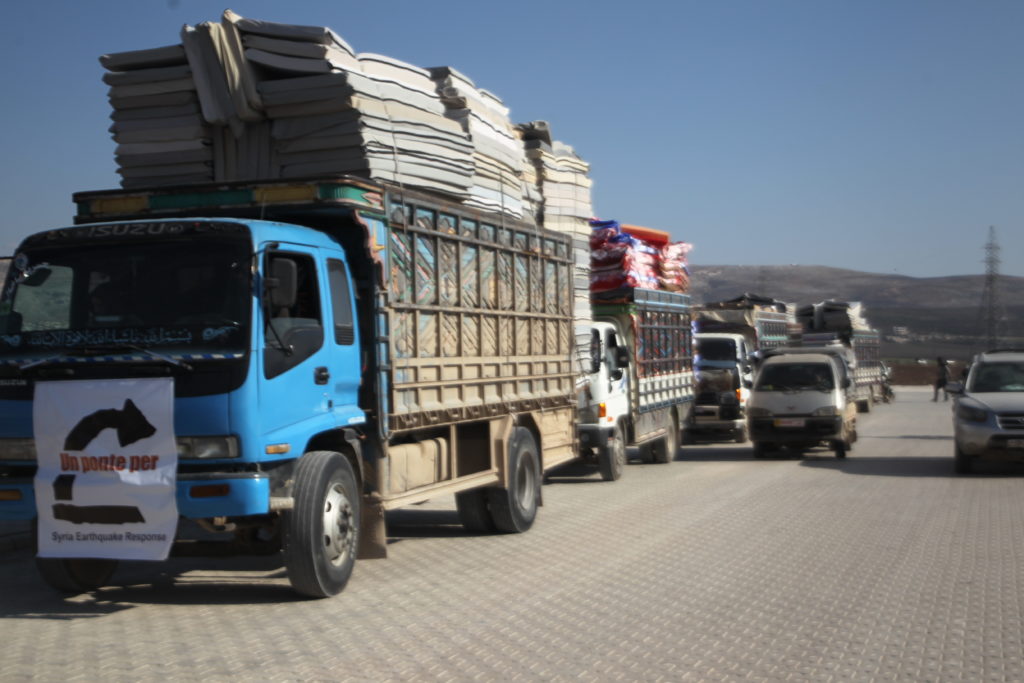
After long negotiations, an agreement was reached on 8 August with the Syrian government and Russia toreopen the main border crossing from Turkeyto allow the delivery of humanitarian aid. For the next six months, theBab al-Hawaborder crossing, which connects southern Turkey to north-west Syria, will be accessible and allow much needed assistance to reach millions of people in north-west Syria. Bab al-Hawa has been in use since 2014, when the UN Security Council authorised cross-border aid deliveries across conflict lines. Since then, about85 per cent of humanitarian aid has passed through Bab al-Hawa. The agreement also included authorisation for the UN to use the Bab al-Salam and Al-Ra'ee border crossings, originally opened earlier this year as part of the emergency response to the earthquake disaster that struck Syria and Turkey on 6 February, for a further three months.
Syria today: the north-west and the veto weapon
The northwestern region is the last opposition stronghold in Syria and aid is delivered from Turkey through a cross-border mechanism first authorised by the UN Security Council in 2014. In July 2023, a first attempt to renew the agreement at the UN Security Council failed due to Russia's veto.
The first draft resolution, submitted by Brazil and Switzerland, called for a nine-month extension and included a paragraph on expanding cross-border operations, increasing funding, strengthening early recovery activities and humanitarian mine action. Although 13 of the 15 Council countries voted in favour of the resolution, it was rejected by the negative vote of Russia,one of the five permanent members.China, another permanent member, abstained. The latest agreementprovides for the delivery of life-saving supplies to populations in the north-west, despite the worrying lack of funding that still hampers the humanitarian response.
The humanitarian crisis in Syria
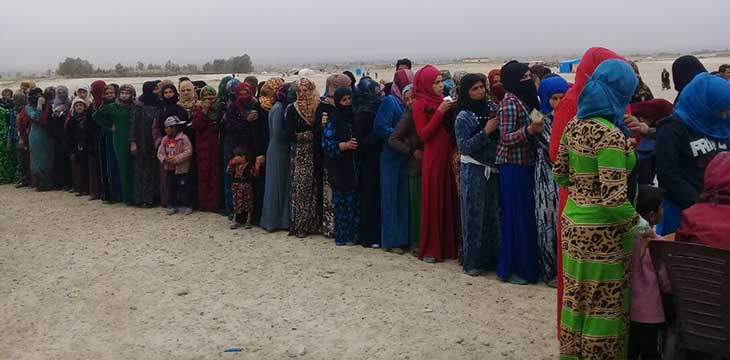
This news comes ashumanitarian needs are at an all-time highafter more than 12 years of war and in the wake of the devastating doubleearthquakesthat hit the region in February. According to the UN,nearly 12 million people- more than half of Syria's population -do not have enough foodand another 2.9 million are at risk of going hungry.
In June, UN humanitarian mission chiefMartin Griffiths warned that '12 years of conflict, economic collapse and other factors have pushed 90 per cent of the population below the poverty line'. The humanitarian operators warned Security Council members earlier this summer that the Syrian population is facing a 'worsening humanitarian crisis'.
OCHA Chief RepresentativeRamesh Rajasingham stated in July that 'despite these severe vulnerabilities, the 2023 humanitarian response plan for Syria is only 12.4 per cent funded'. Rajasingham also warned that in the absence of urgent funding, humanitarian operators will have to make 'difficult choices again this year'. The'unprecedented' funding crisis in Syria has also forced agencies such as theUNWorld Food Programmeto announceextensive cuts in aid supplies, including reductions in monthly food rations.
Reduced assistance to refugees: the case of Jordan
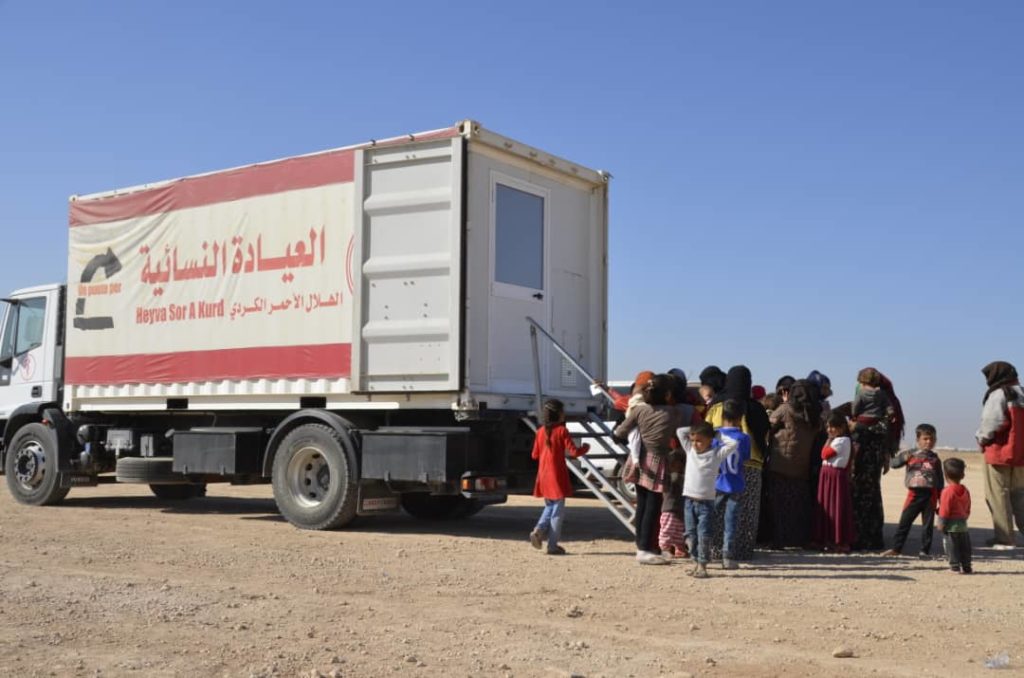
Jordan is home to the second highest per capita refugee population in the world, with over 660,000 refugees, mainly from Syria, registered with UNHCR, the United Nations refugee agency. A recent UNHCR report on the socio-economic situation of refugee families in Jordan, during the first quarter of 2023, showed thatalmost 9 out of 10 were in debt.
The Food Security in Numbers report for the first quarter of 2023, published by the World Food Program, showed thatthe average amount of debt among refugee peoplein both camps and host communities in Jordanincreased by 25 per centover the past year. In July, the Wfp reduced its assistance by one-third to all beneficiaries in host communities, affecting 346,000 of them, according to the latest Wfp Jordan Country Brief report
Assistance received by all 119,000 beneficiaries living in the camps has been reduced by a third since August, the Wfp document says, due to 'an unprecedented and severe funding gap. We are deeply concerned about the potential deterioration of household food security.
Despite prioritising the poorest households and phasing out about 50,000 people from assistance, the report showed thatthe Wfp still needs a total of about USD 30 million to continue providing assistance at reduced levels from October to December 2023.
*This article was originally published in Rights Watch.