THE STORY OF ASTHMAA
When Asmaa opened her tailor's shop, she knew the adventure would not end there. In just one year, his life has turned upside down and he almost struggles to keep track of all the turns he has taken in recent months. She shows us the sign outside her shop that reads 'Sartoria Nur. For women and children'.
"The business management training I received from Un Ponte Per allowed me to plan my business idea in detail. UPP also provided me with a grant that I used to buy tools, such as sewing machines, and to rent the premises'.
STARTING FROM SCRATCH
Asmaa is 36 years old, a widow and mother of 5 children, 3 girls and 2 boys. Her husband and eldest daughter Nur were killed 6 years ago during the furious battle of Raqqa. Since her husband's death, Asmaa's main concern has been to take care of her family. She needed to find a source of income, especially since she wanted her children to continue their studies.
"I had some knowledge of tailoring, so I started doing home repairs for my neighbours and relatives. Despite this, the income was not enough. I depended on the financial help of my brothers'. Like all the inhabitants of Raqqa, Asmaa has experienced some of the heaviest fighting and shelling in the history of the Syrian conflict.

DURING DAESH
During the period under Daesh (ISIS) control between 2013 and the end of 2017, women like Asmaa suffered severe restrictions that limited their freedom of movement, access to health services and education. "The regulations imposed used to control our lives a lot," she tells us. "Now the situation has changed a lot." After the end of Daesh control, Syrian women are emerging as protagonists in society, facing the economic crisis and the challenges of gender inequality.
FROM SEAMSTRESS TO ENTREPRENEUR
Asmaa employed a trainer to teach girls in the neighbourhood the art of tailoring. With the money she earned, she opened a second shop in the centre of Raqqa, which serves as a shop window for her clothing line. Thanks to this economic independence, Asmaa can now take care of her family without having to ask her siblings for help. 'I am a completely new person,' she says proudly.

"I wanted my sons and daughters to continue to study, and to have a better life than I did."

Abdullah, Livelihood Officer of Un Ponte Per a Raqqa, supported Asmaa in developing the business plan, calculating investments and assessing the feasibility of the project. In a labour market still patriarchal and burdened by conflict and economic crisis, supporting women to become active agents of change is crucial.
Join our 'Free to Break' campaign. We need your help to break down the walls of stereotypes and oppression that discriminate against girls and women in North East Syria.
Guarantee women equal access to social and economic life by providing them with training and access to income.

We are deeply saddened by the news of the tragic fire that broke out during a wedding in a small town in northern Iraq, resulting in the loss of so many innocent lives. At least 100 people are reported killed and more than 150 injured, some with very serious burns. We have been working in Qaraqosh for more than 10 years, since before theoccupation by Daesh (Islamic State), alongside religious minorities with peacebuilding programmes, rebuilding schools and health facilities.
In these hours we have received a request for support from the 'Al Horuk' hospital in Mosul, the only public facility in the Nineveh Governorate that specialises in treating burns. We are already supporting this facility and just yesterday we finished equipping the hospital's two emergency rooms, which are overflowing at this time.
In coordination with our partners, we are checking what else we can do in the emergency response. At the moment, our local staff is distributing masks and gloves, and inviting all our contacts to donate blood, which is urgently needed. Fortunately, none of our local staff were affected, but several of their loved ones were.
On this day of sorrow and sadness, we wish to express from Italy our most sincere condolences to the families of the victims and to all those affected by this terrible tragedy. All our sympathy to the Iraqi people.

OPEN LETTER:
"On 31 August, Khaled El Qaisi, respectively husband and son of the writer, was detained by the Israeli authorities and is still imprisoned under a precautionary measure pending verification of elements to formulate a charge. Last Thursday, Khaled, who has dual citizenship, Italian and Palestinian, was crossing the 'Allenby' border crossing with his wife and son after spending the holiday with his family in Bethlehem, Palestine. At the luggage and document check, after a long wait, he was handcuffed under the incredulous gaze of his four-year-old son, his wife, as well as all those present who were waiting to resume their journey. The wife's requests for explanations were not answered, rather she was asked questions and then sent off with her son to Jordanian territory, without telephone, cash or contacts, in a foreign country. In the late afternoon, the wife and child were only able to reach the Italian Embassy thanks to the human generosity of some Palestinian ladies. Khaled, a translator and student of Oriental Languages and Civilisations atLa Sapienza University in Rome, esteemed for his passionate commitment to the collection, dissemination and translation of Palestinian historical material, is one of the founders of the Palestinian Documentation Centre, an association that aims to promote Palestinian culture in Italy. Family, friends, but also those who simply had the opportunity to meet him are eagerly waiting for updates. At the moment, he has not yet been able to meet his lawyer and there is still little news about his safety. All we have heard from the consulate and his lawyer is that he will face a hearing on Thursday, 7 September. In the meantime, we imagine Khaled in complete isolation, with no contact with the outside world, with no real perception of the passage of time, under the pressure of continuous interrogations, anguished about the fate of his own son and his wife left in the lurch with the only image in his eyes of his deportation in handcuffs. The situation is therefore very serious. We await with great anxiety the resolution of this unjust imprisonment. We call on whoever has the power to do so to ascertain Khaled's health condition and, above all, to exert all necessary pressure for his speedy release.
The undersigned:
Francesca Antinucci, wife; Lucia Marchetti, mother".
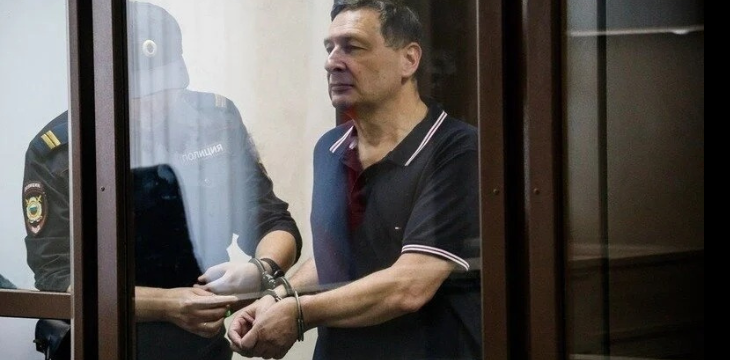

On Sunday 16 July the European Union signed a Memorandum of Understanding with Tunisia. Migration management is one of the five pillars of the agreement: the EU pledges to provide an additional EUR 100 million to Tunisia to strengthen border management, search and rescue operations at sea and 'anti-trafficking' measures in order to reduce the number of arrivals from the country. The securitarian rhetoric and the fight against the 'root causes of migration' waved by the Commission barely disguises its intention to block all forms of mobility from Tunisia to Europe, with the consequence of preventing those seeking protection from accessing the right to asylum.
Since the beginning of the year, 44,151 people have arrived in Italy from Tunisia, and only a fraction of these are Tunisian nationals: these are in fact, increasingly, people from West Africa who, in the North African country, are experiencing a situation of growing racism and violence, primarily at the hands of the institutions.
The signing of the agreement comes to validate the actions of the Tunisian authorities in recent months. Institutional racism, which also draws on theories of so-called ethnic substitution, has taken the form of serious violations of fundamental rights by the authorities:
The signing of the Memorandum with Tunisia not only ratifies the European Union's complicity with Tunisia's violent policies towards migrants, but also takes place in total disregard of the rules and principles that - at least on paper - bind the EU itself.
Under the conditions described so far, how can Tunisia be considered a safe country for third country nationals or even for its own citizens? It is not even clear how it can be considered a 'safe' place for the disembarkation of people rescued at sea, especially for citizens of other countries.
Organising, supporting and financing the systematic interception of people fleeing by sea - this is the clear objective of the reinforcement of the Tunisian Coast Guard established in the agreement - means forcing people stranded at sea to return to a country that, in addition to being plagued by racist violence and characterised by a heavily authoritarian turn of events, lacks a system capable of guaranteeing the protection of the rights and protection of foreign citizens present on its territory.
In this sense, we believe it is essential for international organisations such as IOM and UNHCR to distance themselves from this situation, so that they do not become an instrument of legitimisation and production, in the final analysis, of the violations that will result from the implementation of the Memorandum in a similar way to what is happening in Libya. Their presence and activity in Tunisia cannot be considered a real guarantee of protection for migrants, nor can it obviate the blatant violation of the right to asylum that the blocking policy implemented by the agreement represents. Mechanisms such as resettlement or humanitarian corridors have demonstrated their insufficiency in Libya. Moreover, they have entailed a shift from the level of rights to the level of granting pochз the possibility of leaving the territory of a state, including their own, to seek protection. Similarly, the instrument of voluntary repatriation, in the way it is implemented, presents profiles of serious illegitimacy and constitutes a form of disguised expulsion.
With due differences, the dynamic that is developing seems to have disturbing features in common with the Libyan model both in the way it is implemented and in its consequences. As for the former, this is yet another agreement between actors of international law that is dangerously removed from the rules of treaties and internal constitutional systems: no publicity during negotiations, no control, no ratification by representative bodies. As for the consequences, this agreement also has the effect of systemising indiscriminate violence as a means of deterring mobility, an increasing role for an unscrupulous Coast Guard, a systematic and progressive emptying of the right to asylum through humanitarian instruments that have no real impact in terms of rights.
In the face of this situation we ask
SIGNATORY ORGANISATIONS
Forum Tunisien pour les Droits Économiques et Sociaux (FTDES)
Avocats Sans Frontières (ASF)
Association for Legal Studies on Immigration (ASGI)
Un Ponte Per (UPP)
Action Aid
ARCI
EuroMed Rights
Watch the Med - Alarm Phone
These are times of high social conflict in Iraq, as evidenced by the mass protests that swept across the country in 2019 in what went down in the news as the Thawra Tishreen, the October Revolution. An uprising moved by a young generation of Iraqis tired of living in a country criss-crossed by conflict, which does not guarantee a future, and who fought to build the foundations of a democratic and inclusive state.
It is in this complex scenario that the role of civil society organisations becomes crucial in bridging the gap between communities and authorities at the grassroots level, trying to create change from below and promote constructive dialogue, ensuring respect for human, social and environmental rights as well as equal participation of men and women in community and political life.
To be most effective, however, local organisations need support. To make their way through the meshes of a complex bureaucracy and build autonomous and horizontal spaces of viability. External support that must be respectful, however, of country-specific cultural and social processes.
This is why the two-year project 'Tatweer', funded by the European Union, was conceived and implemented by our Iraqi colleagues. And it is being carried out by them, with great results.

"We want to empower Iraqi civil society organisations to have an impact in the promotion of human, civil and environmental rights; to enable them to respond effectively to the needs of the community, and to collaborate fruitfully with the authorities," explains Bahman, an Iraqi colleague we meet in Rome, who is visiting our headquarters for a few days.
"Iraqi organisations need to increase their advocacy capacities, provide adequate space for young people and women in leadership, the opportunity to learn how to operate, and the availability of spaces where they can meet and grow together. With this in mind, we have opened three centres: open and safe spaces for exchanges of best practices, meetings, workshops and seminars on human rights, environmental and gender issues,' she tells us.
The centres are now in Erbil, Basra and Mosul, the latter a Daesh stronghold in Iraq during one of the darkest pages of Iraqi history, and have already accompanied and supported the birth and work of more than 40 small local organisations.
"The first centre to open its doors was the one in Erbil, in the summer of 2020, right after the pandemic and the lockdown. In February 2021, we opened the one in Mosul, which operates throughout Nineveh and the areas liberated from Daesh. Finally, the one in Basra opened in May 2021,' Bahman says.
There are many fields in which the centre works to support organisations. First of all, legal advice: 'We have lawyers and experts who provide specific advice free of charge to cooperatives, voluntary groups, local NGOs and trade unions. We also provide support at administrative and management level. Everything we use for training is then made available online, through a platform, so that anyone can benefit from it and improve their work. After training members of organisations, we help them to access small tenders to make their intervention sustainable. We follow the whole process: from setting up the local organisation to accessing funds to project completion and advocacy,' he says.
"Our main objective is to support civil society in the creation of realities and structures that represent it in order to create change, so that they work effectively, transparently, democratically, respecting human and labour rights. Since we started, we have managed to accompany many people,' Bahman explains with great satisfaction.
To date, 24 micro-projects have been financed thanks to 'Tatweer'. Of these, 17 had to do with human rights and environmental issues.
Because in Iraq today, the question of access to rights remains central, especially for the generation born after the US-led invasion of 2003, which grew up with the promise of a free and democratic country, but still struggles with corruption, lack of work, and exploitation of resources. And with climate change, a scourge that worries young Iraqis in particular.

'Iraq today is one of the five most environmentally endangered countries in the world,' Bahman reflects. 'In addition to the consequences of climate change, which we face here as everywhere else in the world, there are also issues related to our context: pollution, the construction of the Turkish and Iranian dams that control the flow of our rivers - the Tigris and the Euphrates -, the severe drought that is affecting the south of the country, fossil fuels polluting the aquifers, and the despoiling of land for oil extraction. We are extremely worried,' he says.
And also in his opinion, after 2003, the challenges for Iraq have been, and remain, many. 'For 20 years, the Iraqi people have been trying to build a democratic system, but there are still many obstacles due to corruption, the lack of experience of the political class, and the rules of application of the constitution. The country continues to periodically fall into spirals of conflict compounded by tribal and inter-communal tensions. The Thawra of 2019 has shown that the new generations want real change. They want a state and a country they can take pride in. That is why it is so important to support civil society organisations: because it is the young people who animate them, trying to build change from below that does not come from above. They have lost faith in the authorities and no longer want to sit still and wait: they try to create change at least at the community level so that the generations that will come after them are not forced to live in the same present,' he concludes.

by Silvia Abbà - ICSSI* International Coordinator and author of the book 'My place is everywhere. Voices of women for another Iraq'.
Talking to young Iraqi women and men, it is surprising how much History - the one we read in school books - is intertwined with concrete personal stories, how great events have become embedded in their daily lives, determining their course, geography, and timing. Sahar Salam is a 29-year-old Baghdad woman, who has been working with Un Ponte Per for the past three years as the project manager of "Al Thawra Untha" (The Revolution is Woman), funded by the Dutch Ministry of Foreign Affairs.
"I have lived my whole life in Baghdad, except for two years, since 2008, when my family was forced to move to another governorate. The first week after our return to Baghdad we received an envelope with bullets in it and we said 'Either we stay, or we leave for good'. We decided to stay and take our chances. Luckily it worked out well for us."
Sahar refers to the years of civil conflict that followed the US-led military intervention by the international coalition. The second Gulf War, which started in March 2003, now 20 years ago. She grew up in the new Iraq, in a country without dictators, formally democratic, where women were supposed to be - finally - free. Yet the protests that broke out in October 2019, bringing thousands of people to the squares of Iraqi cities, speak of endemic corruption, a lack of basic services and serious inefficiencies. They are a symptom of a deep crisis of legitimacy of the sectarian system inaugurated in the aftermath of the ouster of Saddam Hussein and the Ba'th party from power. Similar protests, however, had already erupted in previous years. The real novelty this time was the massive participation of women, in the squares and in the virtual spaces of social media.
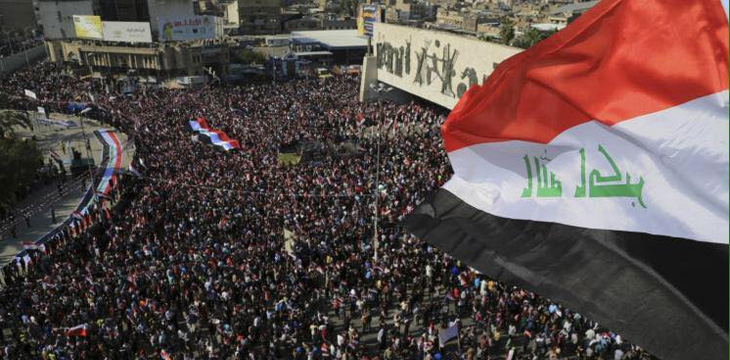
"Before 2019, there had been several other, smaller protests that had no real effect. The October Revolution was a historic moment for feminism because women were at the forefront,' she says. Today, new generations are denouncing the distortions of what was supposed to be the new Iraq, and young women in particular are raising their heads to loudly assert their right to exist, to choose for themselves and their country.
"Being a feminist means making sure that women are treated fairly. To defend their rights regardless of background, religion, nationality,' Sahar explains. The voices of Iraqi activists and feminists guide us in the weaving of new alliances that are sorely needed today to build, together, a world in which we can all be free.
*Iraqi Civil Society Solidarity Initiative (ICSSI) is an Iraqi and international coalition of activists fighting for justice, respect for human rights and peace in Iraq. https://www. iraqicivilsociety.org/

"Together with my brother, we grew 8,000 trees: we had olive, lemon and vine trees. We lost 3,000 of them to Daesh (ISIS), because of the constant fighting. But little did we know that the worst was yet to come: this year we lost another 3,000 due to lack of water."
This was Ahmad's account to Daniela Sala, collected in a beautiful reportage published in the Guardian in 2021. Unfortunately, not much has changed since then, and northern Syria continues to suffer from a severe water shortage. The causes can be found in climate change, but also (and perhaps above all) in the dams upstream of the Euphrates river - in Turkey - which mercilessly cut off the flow of water reaching Syria. Another huge problem is that of waste; more than a decade of war has not only left wounds in people's bodies. The entire landscape is still largely reduced to rubble and the amount of debris everywhere is appalling.
"During sandstorms in the most desert areas, one can see real clouds of rubbish floating in midair".
Our co-chair Angelica Romano, who recently returned from a trip to the country with Alfio Nicotra, also co-chair of Un Ponte Per, told us.
After years of rebuilding hospitals and health facilities, as well as opening clinics in refugee camps, since 2019 we have been working on the recycling and proper disposal of medical waste, supporting over 36 health facilities in the governorates of Hasakeh, Raqqa and Aleppo. Environmental and ecological protection is one of the main axes of commitment for the Autonomous Municipalities of North-East Syria(NES). Last year here, together with our partner Kurdish Red Crescent (KRC), the local authorities and thanks to the support of the Area Metropolitana de Barcelona (AMB) and the Prosolidar Foundation, we laid the foundations for the first pilot project of waste separation and recycling at municipal level in the NES. Not only medical waste, but also common waste, produced by households. Below is the video story of Angelica and Alfio.
In the Municipality of Hasake, we have found particularly fertile ground for these first projects, in which the collaboration between local authorities and citizens is crucial to their success. Obviously, awareness-raising activities were carried out 'house by house', to prepare the population for a new way of collecting waste. Today, we can say that the waste collection system set up is working, also involving some local cooperatives in door-to-door waste collection.
"The waste is collected from the houses, and then taken to a place for sorting and recycling," says Rovand Abdo, co-chairwoman of the Environment Department of the Municipality of Hasake, a really smart woman who confirms the very important link between female leadership and the environment. A pairing that we strongly support, and which is often encapsulated today by the term 'eco-feminism'. Let us remember that Syria is still one of the areas in the world with the highest rates of gender-based violence and a very limited supply of protection services. This is whyRovand's example is even more revolutionary. We can listen to her in the video below, in which she shows the results of the Zero Waste project we are running alongside her.
As you can see in the video, mainly in these early stages of the project, the separate collection and recycling of plastic/metals, paper and organic waste was started. With the organic waste, fertilisers and manure are produced. "Great for the soil," Rovand adds, proudly showing the agricultural fields where it is used to increase the city's green spaces.
"In the next phase of the project, we will try to expand to other neighbourhoods, so that other people can benefit from this programme because it has beneficial effects on the environment, agriculture, hygiene, human health and in general on reducing waste."
concludes co-chair Rovand Abdo with great determination, and we hope with all our hearts that it will happen. Maybe it is just a drop in the bucket, as our co-chair Alfio Nicotra says, or maybe it is the prelude to a bigger change towards a highly sustainable circular economy.
Un Ponte Per has been present in north-eastern Syria since 2015, initially sending humanitarian shipments destined for the Kurdish Red Crescent, and then structuring its intervention since 2016, when several projects were launched to rebuild the area's health system and offer support to the population fleeing Daesh.
Elena Popova, head of the Russian Conscientious Objectors Movement, sends this important update (originally published on the website of the Italian Nonviolent Movement) on the recent decision by the Russian government to outlaw the organisation.
Together with the Russian Conscientious Objectors Movement, founded in 2014 by a group of activists to help the young people avoid the draft, we have been providing online legal and psychological support to conscientious objectors from all regions of Russia, including people from the LGBTQ+ community. Donate now to help us support them.
***
As of last Friday, 23 June, the Conscientious Objector Movement was officially declared by the authorities as a 'foreign agent' in the Russian Federation.
The Ministry of Justice accuses us of disseminating information believed to be false about the government's actions, decisions and policies, as well as opposing Russia's military actions in Ukraine. For the current government of the Russian Federation, these accusations are sufficient to justify outlawing our organisation.
While this is a demonstration of the effectiveness of our work, it is also fundamentally a discriminatory application of the law that tramples on universally accepted human rights and freedoms.
Our team worked tirelessly over the weekend to take measures for the safety of the members of our Movement dedicated to the community we serve. A significant number of our volunteers and coordinators still live in Russia and now face an increased risk of state pressure and persecution. Despite these increasing threats, we remain committed to supporting those who resist war and forced conscription.
We want to assure you that the Conscientious Objector Movement will continue its mission. We remain firm in our principles and values, dedicated to educating people about their right to conscientious objection to military service.
This underlines the importance of our partnership with the global community.
We take this opportunity to remind you of the importance of your continued support. Whether it is amplifying our voice, providing outreach opportunities or assisting with fundraising efforts, your contributions are invaluable in these challenging times.
Thank you for standing with us. We deeply appreciate your continued commitment and support.
Best regards,
Elena
'To stop war it is necessary to make more war'
We hear this every day in the unified media as Western governments continue to send increasingly sophisticated and devastating weaponry into the field. This obstinacy in failing to see the quagmire into which Europe has been thrown by Russia's invasion of Ukraine - an invasion we strongly condemn - represents a veritable clouding of reason. The more the military solution to the conflict proves to be impossible, the more we are driven to pursue it. Since 24 February 2022 we at Un Ponte Per have argued that neither side, Ukraine and Russia, is capable of winning this war and that only negotiation, accompanied by an immediate ceasefire, can help stop it, opening a real discussion on a common security system in which no state can feel threatened by another.
"There are those who sing the praises of war, even nuclear war, heedless of the pain it brings; those who champion various interests, daily bludgeoning those who think critically, zeroing in on confrontation and transforming dialogue into an absurd polarisation: friend of Putin if you are for peace or defender of democracy if you adhere to sending arms to Ukraine. Even the Pope has been declared an 'extremist pacifist', as if calling for peace were cowardly or worse, inept, incapable of 'taking a stand'."
Gianni Minà wrote this, with great lucidity, in his last editorial published a few days before his death. Very topical words. What relationship exists between wanting to support the Ukrainian people and the British decision to poison them by sending depleted uranium weapons? Despite what Her Majesty's Generals claim, the consequences of the use of these armaments on the health of the population are more than clear. According to scientific research reported by The Guardian, leukaemia rates in Iraq as a result of the use of depleted uranium bullets during the war are worse than those recorded after the bombing of Hiroshima. The Falluja bombing caused a 1,260% increase in childhood cancers and 2,200% increase in leukaemia rates. In Japan, they increased by 660%, some 12 years after the bombing (when radiation levels peaked). In Falluja, the increase occurred in a much shorter time span, averaging only 5 to 10 years after the bombing.
Evidence that Iraqis had been exposed to radiation also lies in the infant mortality rate,820% higher than in neighbouring Kuwait. Not to mention the hundreds of Italian soldiers who fell ill as a result of exposure in places where particles released by the high combustion induced by depleted uranium had been released, and who subsequently died over time.
This is also why there will be no victory brought by weapons. The history of the last thirty years in which no war has been won teaches us this. George Bush, who had the audacity to declare victory in Iraq and Afghanistan, has been belied by subsequent events, with tens of thousands of deaths and the growth throughout the Middle East of jihadist terrorism, which has also reached Europe. War is always a bad investment for the peoples, it enriches the arms lobby and the merchants of death, but it brings new hatreds and injustices.
That is why we rebel against the supposed 'realism' of those who plan new walls and iron curtains on our continent. Of those who want us armed to the teeth by diverting immense resources from social to military expenditure. It seems to us an act of unprecedented blindness because not only does it not put war out of history, but it plans it to the point of making it the dominus to which future generations will have to submit.
The very idea of Europe, the one conceived under fascism by the Ventotene internees, dies every day crushed by an uncritical Atlanticism and a muscular idea of international relations.
But the new generations do not want to be cannon fodder for the old and new powers of the planet. That is why we support conscientious objectors in Russia, Ukraine and Belarus. That's why we watch closely the mobilisations of the young against the environmental devastation caused by an economic model that is increasingly incompatible with the survival of living species.
We see in the slogan 'Woman, Life, Freedom', born in Syrian Kurdistan and taken up by Iranian women, something very similar to what the slogan 'Liberté, Égalité, Fraternité' was for humanity. Evidence of the extraordinary consciousness-raising of women in West Asia can be found in the beautiful book by our own Silvia Abbà - 'My place is everywhere. Voices of women for another Iraq' - which we helped to publish and which we warmly invite you to read.
A well known Italian song says 'only peace is the only victory'. That is why we continue every day stubbornly to weave the web of the bearers of hope.
Editorial by Alfio Nicotra - Co-President of Un Ponte Per - at the opening of the new issue of our biannual magazine - no. JUNE 2023 >>